Thanks as always for being a faithful reader of The Voracious Bibliophile. If you like what you see, please like, comment, follow, and subscribe to my email list to get notified of new posts as soon as they drop. You can also email me at fred.slusher@thevoraciousbibliophile.com or catch me on Twitter, Instagram, TikTok, and Pinterest @voraciousbiblog. Keep reading the world, one page (or pixel) at a time.
There will come soft rains and the smell of the ground, And swallows circling with their shimmering sound;
And frogs in the pools singing at night, And wild plum trees in tremulous white,
Robins will wear their feathery fire Whistling their whims on a low fence-wire;
And not one will know of the war, not one Will care at last when it is done.
Not one would mind, neither bird nor tree If mankind perished utterly;
And Spring herself, when she woke at dawn, Would scarcely know that we were gone.
Sara Teasdale (1884-1933), while frequently excluded from mention in conversations surrounding early twentieth century American poetry, was critically acclaimed and lauded by both her peers and the public alike during her lifetime. Her deeply personal and heartfelt poems charted the changing inner landscape of a woman living through one of the most turbulent periods in American history, and we would do well to re-examine her impact on her contemporaries as well as her successors. You can read more about her life and work here.
Thanks as always for being a faithful reader of The Voracious Bibliophile. If you like what you see, please like, comment, follow, and subscribe to my email list to get notified of new posts as soon as they drop. You can also email me at fred.slusher@thevoraciousbibliophile.com or catch me on Twitter, Instagram, TikTok, and Pinterest @voraciousbiblog. Keep reading the world, one page (or pixel) at a time.
They say willingness is what one needs to succeed.
They say one needs to succeed.
*
Our poets do not imagine a screaming
audience.
Our poets are used to padding,
vinyl, on the foldable chairs, bookshelves on casters moved aside to make space for them
A world polite for their words
A well-behaved. A world’s behavior
malformed and they step in as one steps in to a nursery and
quiet
calms the tantrum attempts not to wake the sleeping, the milk-drunk
and burped babe.
Our poets coo.
And beg their feet be placed in a large room.
*
Prize ring. Bull ring. Lion through the ring of flames.
Poets convinced they are ringmaster when it is with big brooms and bins, in fact, they enter to clear the elephant scat.
*
There was an inlet I pulled over once to watch the sunset, which was still another hour or so away, the light just low enough there to begin to change. I should’ve stayed. I should’ve stayed.
*
A life of idle, with money
doing the work. A life beholden, but bestowed. To make reformists of us all,
even the fascists. Especially
of the fascists.
*
But he’s a patron. But he makes a star of us, he makes us of rank.
But he’s a churchgoer
and they place their hands on him and pray and bountiful grow their wives’ bellies, a bully for each family. Exponential doom.
Singing to each other in the private gazebo of their youth.
*
Now sing.
*
I said what I meant but I said it
in velvet. I said it in feathers. And so one poet reminded me
Thanks as always for being a faithful reader of The Voracious Bibliophile. If you like what you see, please like, comment, follow, and subscribe to my email list to get notified of new posts as soon as they drop. You can also email me at fred.slusher@thevoraciousbibliophile.com or catch me on Twitter, Instagram, TikTok, and Pinterest @voraciousbiblog. Keep reading the world, one page (or pixel) at a time.
First having read the book of myths,
and loaded the camera,
and checked the edge of the knife-blade,
I put on
the body-armor of black rubber
the absurd flippers
the grave and awkward mask.
I am having to do this
not like Cousteau with his
assiduous team
aboard the sun-flooded schooner
but here alone.

There is a ladder.
The ladder is always there
hanging innocently
close to the side of the schooner.
We know what it is for,
we who have used it.
Otherwise
it is a piece of maritime floss
some sundry equipment.

I go down.
Rung after rung and still
the oxygen immerses me
the blue light
the clear atoms
of our human air.
I go down.
My flippers cripple me,
I crawl like an insect down the ladder
and there is no one
to tell me when the ocean
will begin.

First the air is blue and then
it is bluer and then green and then
black I am blacking out and yet
my mask is powerful
it pumps my blood with power
the sea is another story
the sea is not a question of power
I have to learn alone
to turn my body without force
in the deep element.

And now: it is easy to forget
what I came for
among so many who have always
lived here
swaying their crenellated fans
between the reefs
and besides
you breathe differently down here.

I came to explore the wreck.
The words are purposes.
The words are maps.
I came to see the damage that was done
and the treasures that prevail.
I stroke the beam of my lamp
slowly along the flank
of something more permanent
than fish or weed

the thing I came for:
the wreck and not the story of the wreck
the thing itself and not the myth
the drowned face always staring
toward the sun
the evidence of damage
worn by salt and sway into this threadbare beauty
the ribs of the disaster
curving their assertion
among the tentative haunters.

This is the place.
And I am here, the mermaid whose dark hair
streams black, the merman in his armored body.
We circle silently
about the wreck
we dive into the hold.
I am she: I am he

whose drowned face sleeps with open eyes
whose breasts still bear the stress
whose silver, copper, vermeil cargo lies
obscurely inside barrels
half-wedged and left to rot
we are the half-destroyed instruments
that once held to a course
the water-eaten log
the fouled compass

We are, I am, you are
by cowardice or courage
the one who find our way
back to this scene
carrying a knife, a camera
a book of myths
in which
our names do not appear.
Thanks as always for being a faithful reader of The Voracious Bibliophile. If you like what you see, please like, comment, follow, and subscribe to my email list to get notified of new posts as soon as they drop. You can also email me at fred.slusher@thevoraciousbibliophile.com or catch me on Twitter, Instagram, TikTok, and Pinterest @voraciousbiblog. Keep reading the world, one page (or pixel) at a time.
Before you know what kindness really is
you must lose things,
feel the future dissolve in a moment
like salt in a weakened broth.
What you held in your hand,
what you counted and carefully saved,
all this must go so you know
how desolate the landscape can be
between the regions of kindness.
How you ride and ride
thinking the bus will never stop,
the passengers eating maize and chicken
will stare out the window forever.

Before you learn the tender gravity of kindness
you must travel where the Indian in a white poncho
lies dead by the side of the road.
You must see how this could be you,
how he too was someone
who journeyed through the night with plans
and the simple breath that kept him alive.

Before you know kindness as the deepest thing inside,
you must know sorrow as the other deepest thing.
You must wake up with sorrow.
You must speak to it till your voice
catches the thread of all sorrows
and you see the size of the cloth.
Then it is only kindness that makes sense anymore,
only kindness that ties your shoes
and sends you out into the day to gaze at bread,
only kindness that raises its head
from the crowd of the world to say
It is I you have been looking for,
and then goes with you everywhere
like a shadow or a friend.
Thanks as always for being a faithful reader of The Voracious Bibliophile. If you like what you see, please like, comment, follow, and subscribe to my email list to get notified of new posts as soon as they drop. You can also email me at fred.slusher@thevoraciousbibliophile.com or catch me on Twitter, Instagram, TikTok, and Pinterest @voraciousbiblog. Keep reading the world, one page (or pixel) at a time.
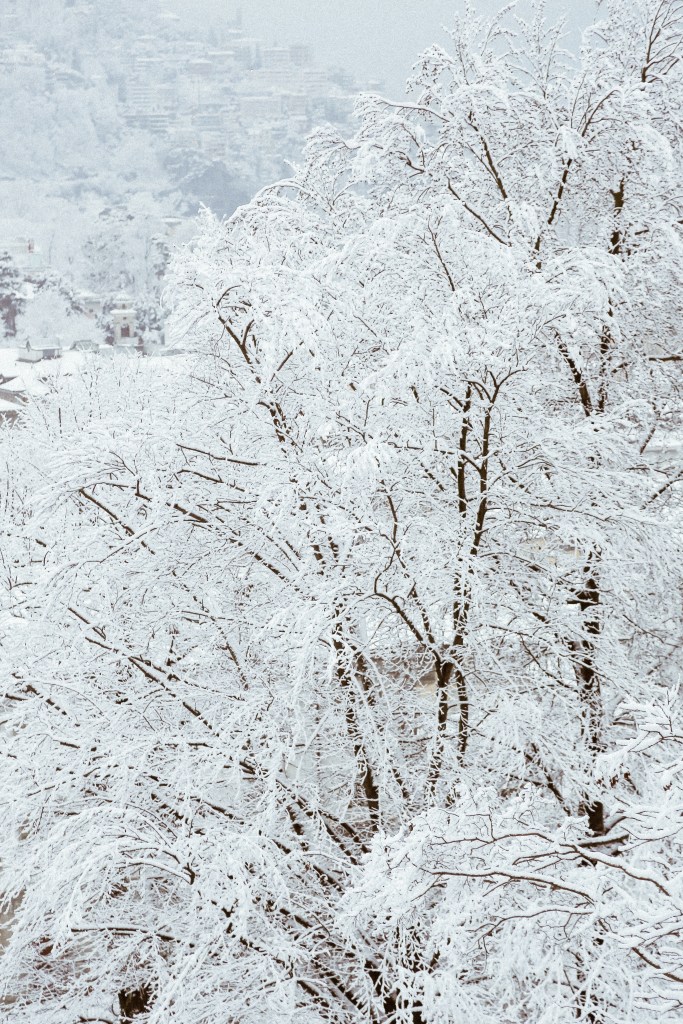
Stopping by Woods on a Snowy Evening by Robert Frost
Whose woods these are I think I know.
His house is in the village though;
He will not see me stopping here
To watch his woods fill up with snow.

My little horse must think it queer
To stop without a farmhouse near
Between the woods and frozen lake
The darkest evening of the year.

He gives his harness bells a shake
To ask if there is some mistake.
The only other sound's the sweep
Of easy wind and downy flake.

The woods are lovely, dark and deep.
But I have promises to keep,
And miles to go before I sleep,
And miles to go before I sleep.
This poem is in the public domain. “Stopping by Woods on a Snowy Evening” is one of Robert Frost’s best-known and most-loved poems. It was written in 1922 and included in his Pulitzer Prize-winning collection New Hampshire, which was published by Henry Holt in 1923.
Thanks as always for being a faithful reader of The Voracious Bibliophile. If you like what you see, please like, comment, follow, and subscribe to my email list to get notified of new posts as soon as they drop. You can also email me at fred.slusher@thevoraciousbibliophile.com or catch me on Twitter, Instagram, TikTok, and Pinterest @voraciousbiblog. Keep reading the world, one page (or pixel) at a time.
My friend and I snickered the first time
we heard the meditation teacher, a grown man,
call himself honey, with a hand placed
over his heart to illustrate how we too
might become more gentle with ourselves
and our runaway minds. It’s been years
since we sat with legs twisted on cushions,
holding back our laughter, but today
I found myself crouched on the floor again,
not meditating exactly, just agreeing
to be still, saying honey to myself each time
I thought about my husband splayed
on the couch with aching joints and fever
from a tick bite—what if he never gets better?—
or considered the threat of more wildfires,
the possible collapse of the Gulf Stream,
then remembered that in a few more minutes,
I’d have to climb down to the cellar and empty
the bucket I placed beneath a leaky pipe
that can’t be fixed until next week. How long
do any of us really have before the body
begins to break down and empty its mysteries
into the air? Oh honey, I said—for once
without a trace of irony or blush of shame—
the touch of my own hand on my chest
like that of a stranger, oddly comforting
in spite of the facts.
Thanks as always for being a faithful reader of The Voracious Bibliophile. If you like what you see, please like, comment, follow, and subscribe to my email list to get notified of new posts as soon as they drop. You can also email me at fred.slusher@thevoraciousbibliophile.com or catch me on Twitter, Instagram, TikTok, and Pinterest @voraciousbiblog. Keep reading the world, one page (or pixel) at a time.
Winter Journal: Threshed Blue, Cardings, Dim Tonsils by Emily Wilson
stripped batting of cloud
glimpsed ligaments
dusk coming up under
lithographic, nib-hatchings
       instruments click
       the fine-sprung locust
       replicate dinge along hill-lines
       tailings of umber, the rust smudge
There is still that hemmed ocean of oaks
       the various reds, the somehow
       silver cast over the brown-gold
       the under-brushed shadows
How can there be more of their dispensing
       into air?
The night-openings of the trees
The thousand clefts into
Their corridors shiver and merge and piece apart
There is no one beside what was once river
Only the carbons incoming
       accreting in leaves
Love of old oaks unencumbering
Root-beauties brought through
crude sieves of bare trees
the few fastened leaves
Those pods are like tongues or like sickles
The blades have been pulled from their sheaths
The backs of the clouds now upturned
They herd from pink seas
They make their untouchable stream
       through regions of steep emptiness
       against which the trees have their gestures
Drop down, drop down toward me
your little sleek scars
Make your bed in rough cedars
clangor of darks numbering in
clusters of trunks and spoked lungs
the thistles that work at the gums
Emily Wilson studied at Harvard University and the University of Iowa Writers’ Workshop. She has taught at the latter, as well as at Colby College, Grinnell College, and the University of Montana. Wilson is the author of four poetry collections: The Keep(University of Iowa Press, 2001); Morpho Terrestre(2006), a limited edition book featuring artwork by Sara Langworthy; Micrographia(University of Iowa Press, 2010); and The Great Medieval Yellows(Canarium Books, 2015).
Writing for Boston Review, James Galvin said of Wilson: “Generous in her spareness, clear in her complexity, matching wildness of diction with precision of sense, nervousness with nerve, her poems are not written for analysis, perhaps not even for approval. As we watch poetical heresies turn into orthodoxies, it becomes clear, especially in a poet like Wilson, that only originality, a signature style, remains steadfastly heretical.”
Thanks as always for being a faithful reader of The Voracious Bibliophile. If you like what you see, please like, comment, follow, and subscribe to my email list to get notified of new posts as soon as they drop. You can also email me at fred.slusher@thevoraciousbibliophile.com or catch me on Twitter, Instagram, TikTok, and Pinterest @voraciousbiblog. Keep reading the world, one page (or pixel) at a time.
Ebeid earned her MFA from the Michener Center for Writers at the University of Texas at Austin and is pursuing her Ph.D. in creative writing from the University of Denver. She currently lives in Colorado where she teaches at Lighthouse Writers Workshop. She also serves as poetry editor at The Rumpusand edits (with her husband, Jeffrey Pethybridge) Visible Binary, an online journal specializing in experimental poetics and avant-garde expression. She has been published in numerous journals both in print and online and has been awarded multiple fellowships, among them fellowships from the Lannan Foundation and the National Endowment for the Arts.
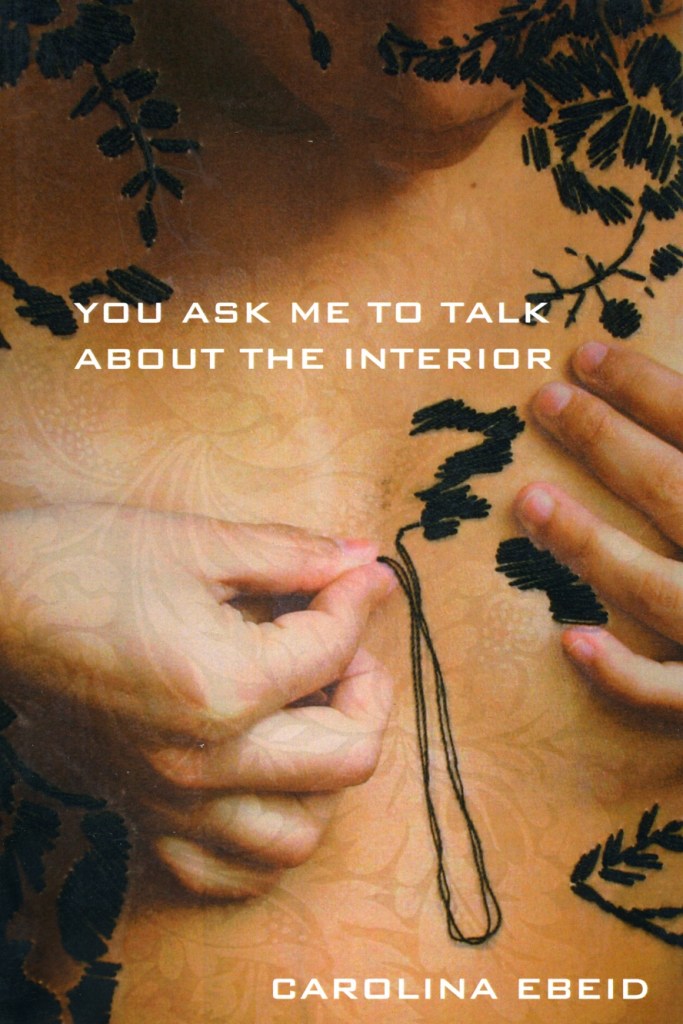
She is the author of the poetry collection You Ask Me To Talk About the Interior, which was published in 2016 by Noemi Press and is available to purchase through Small Press Distribution.
Thanks as always for being a faithful reader of The Voracious Bibliophile. If you like what you see, please like, comment, follow, and subscribe to my email list to get notified of new posts as soon as they drop. You can also email me at fred.slusher@thevoraciousbibliophile.com or catch me on Twitter, Instagram, TikTok, and Pinterest @voraciousbiblog. Keep reading the world, one page (or pixel) at a time.
Nature’s first green is gold,
Her hardest hue to hold.
Her early leaf’s a flower;
But only so an hour.
Then leaf subsides to leaf.
So Eden sank to grief,
So dawn goes down to day.
Nothing gold can stay.
Public domain. “Nothing Gold Can Stay” was originally published in October 1923 in The Yale Review. It was also included in Frost’s collection New Hampshire, which was published that same year by Henry Holt and for which Robert Frost won the 1924 Pulitzer Prize for Poetry.
Thanks as always for being a faithful reader of The Voracious Bibliophile. If you like what you see, please like, comment, follow, and subscribe to my email list to get notified of new posts as soon as they drop. You can also email me at fred.slusher@thevoraciousbibliophile.com or catch me on Twitter, Instagram, TikTok, and Pinterest @voraciousbiblog. Keep reading the world, one page (or pixel) at a time.








 The Voracious Bibliophile