


Breathe, darling. This is just a chapter. It’s not your whole story.
S.C. Lourie
Breathe, darling. This is just a chapter. It’s not your whole story.
S.C. Lourie
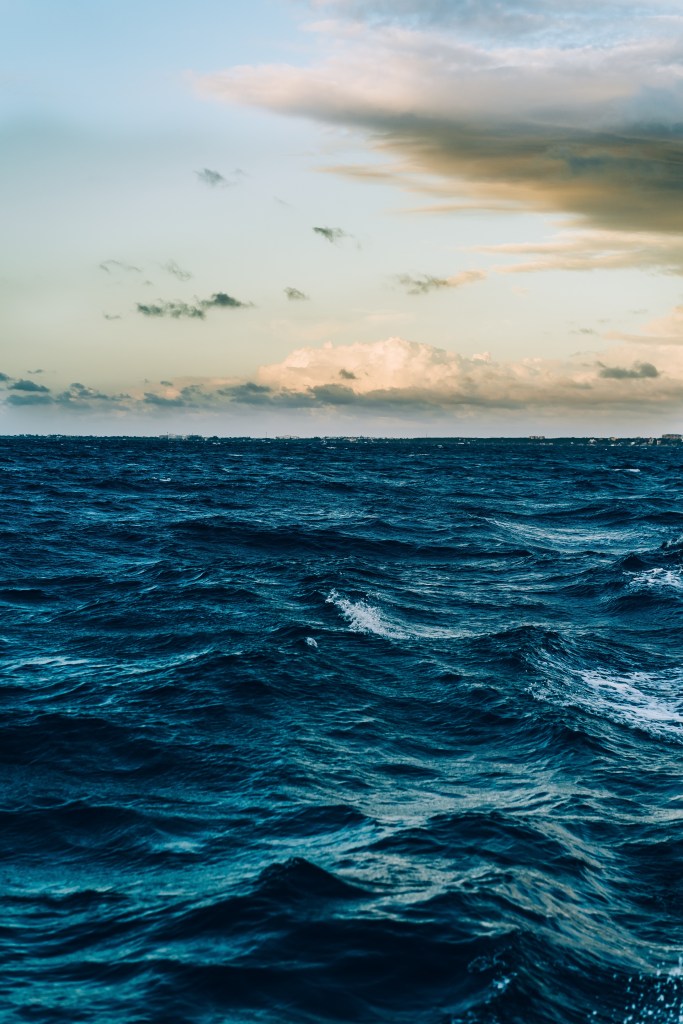
The cure for anything is salt water: sweat, tears or the sea.
Isak Dinesen

What lies behind us and what lies before us are tiny matters compared to what lies within us.
Ralph Waldo Emerson

Electric city.
Love boats made planks on the rocks.
Ruin, my one song.
Thanks as always for being a faithful reader of The Voracious Bibliophile. If you like what you see, please like, comment, follow, and subscribe to my email list to get notified of new posts as soon as they drop. You can also email me at fred.slusher@thevoraciousbibliophile.com or catch me on Twitter and Instagram @voraciousbiblog. Keep reading the world, one page (or pixel) at a time.
© 2021 Fred Slusher. All rights reserved.

I am a little world made cunningly
Of elements and an angelic sprite
But black sin hath betray’d to endless night
My world’s both parts, and on both parts must die.
You which beyond that heaven which was most high
Have found new spheres, and of new lands can write,
Pour new seas in mine eyes, that so I might
Drown my world with my weeping earnestly,
Or wash it, if it must be drown’d no more.
But oh it must be burnt; alas the fire
Of lust and envy have burnt it heretofore,
And made it fouler; let their flames retire,
And burn me O Lord, with a fiery zeal
Of thee and thy house, which doth in eating heal.
John Donne (1572-1631), in addition to being arguably England’s chief metaphysical poet, also served as a cleric in the Anglican Church. He was made Dean of St. Paul’s Cathedral in 1621, where he spent the last decade of his life preaching and writing.
Thanks as always for being a faithful reader of The Voracious Bibliophile. If you like what you see, please like, comment, follow, and subscribe to my email list to get notified of new posts as soon as they drop. You can also email me at fred.slusher@thevoraciousbibliophile.com or catch me on Twitter and Instagram @voraciousbiblog. Keep reading the world, one page (or pixel) at a time.

Every recorded story implies a future reader.
Margaret Atwood
Today’s quote by Margaret Atwood has been stuck in my brain ever since I first came across it. If memory serves me correctly, I believe it was in a new introduction by Atwood to her novel The Handmaid’s Tale, which if you haven’t already read, there’s no better time than the present.
The written word is our receptacle for memory. Without documentation, we have no history, no blueprint for the future, and no constancy to purpose in terms of our collective attempt at living what many philosophers have called the good life. Every time we write, we are holding in our psyches the implied future reader Atwood references. Even if we never write with the intention of publishing our work in mind, there is still a knowing behind committing your thoughts to paper, a compact between yourself and those who may stumble across your words in the future.
Without documentation, we have no history, no blueprint for the future, and no constancy to purpose in terms of our collective attempt at living what many philosophers have called the good life.
When I was a library worker, we got book donations all the time, oftentimes daily. Most of the books were, forgive me, ready for the rubbish bin, but every now and again a folded scrap of paper would fall out with someone’s gnarled script on it and I’d have a new treasure. Most of them I didn’t keep because they were things like checklists or grocery lists or other ephemeral scraps, but there’s one I still have in my possession: a decades-old scrap of notebook paper with a poem on it. It is one of my most treasured possessions.
I was the implied future reader. And this is how we are connected, invisibly and irrevocably.
Perhaps one day I’ll share it on here. The point is I have carried that poem in my heart for years and I don’t even know the author. Only a first name and a date are listed but I think about the writer often. In the poem, they are beseeching God for answers because they’ve lost something (or someone, more likely) dear to them. This person may be long gone by now, passed into eternity, but I still pray for them. I wonder how their life turned out. I was the implied future reader. And this is how we are connected, invisibly and irrevocably.
Thanks as always for being a faithful reader of The Voracious Bibliophile. If you like what you see, please like, comment, follow, and subscribe to my email list to get notified of new posts as soon as they drop. You can also email me at fred.slusher@thevoraciousbibliophile.com or catch me on Twitter and Instagram @voraciousbiblog. Keep reading the world, one page (or pixel) at a time.

——

Nothing will penetrate your sorrow.
Or your loneliness.
This I know.
And yet
here I am singing
a song about doors
at the bottom of dark wells
stuffed already
with rats and corpses.

Here I am telling you
that in reality
and as improbable
as it may seem:
There is no (doorless)
bottom
to this life.

Your vision will become clear only when you look into your heart. Who looks outside, dreams. Who looks inside, awakens.
Carl Jung
So many want to be blessed.
I only want to kneel in a quiet room.
To love what we have or not exist
at all. Nothing to help me sleep.
Only a scrap of paper slipped
into my hand: Your body an ocean,
a song without end. Votive candles
flickering in the dark that made us
larger than life: hip-thrust,
back-arch, mouth-grip, you on top
till we collapsed in the coiled
springs that came to rest. A chair
where you once sat. A bowl of fruit
neither one of us would touch.
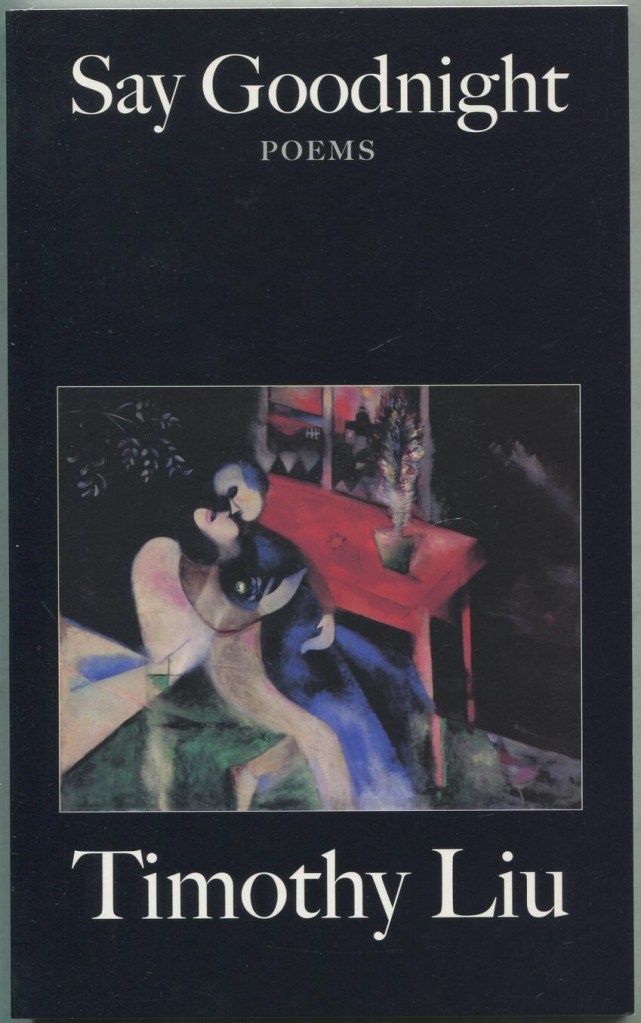
The most resonant part of Vespers for me is the line, “Only a scrap of paper slipped / into my hand: Your body an ocean, a song without end.” So enthralled was I by that particular imagery that I made this little ditty, which I sincerely hope you’ll enjoy (Note: The image is a royalty-free stock image—I have simply added the words to the note in the center):

Thanks as always for being a faithful reader of The Voracious Bibliophile. If you like what you see, please like, comment, follow, and subscribe to my email list to get notified of new posts as soon as they drop. You can also email me at fred.slusher@thevoraciousbibliophile.com or catch me on Twitter and Instagram @voraciousbiblog. Keep reading the world, one page (or pixel) at a time.

People ask me all the time — what kind of stories do you want to tell, Viola? And I say exhume those bodies. Exhume those stories — the stories of the people who dreamed big and never saw those dreams to fruition, people who fell in love and lost.
Viola Davis
 The Voracious Bibliophile