Big parts of us got broken, parts of our hearts, minds, and beings. Yet we keep getting up, lurching on. We dance with a limp.
Anne Lamott, Hallelujah Anyway: Rediscovering Mercy
Resilience isn’t Annie telling you the sun will come out tomorrow; it’s Annie telling you it might not and helping you up anyway.
I love Anne Lamott. She’s like your childhood pastor if your childhood pastor was super-cool and swore sometimes. A large part of her oeuvre, at least what I’ve read, is focused on resilience. Almost everyone has heard of resilience but few people can actually tell you what it is. It is not Live, Laugh, Loving your way through life like a mindless simpleton. Resilience isn’t Annie telling you the sun will come out tomorrow; it’s Annie telling you it might not and helping you up anyway.
Thanks as always for being a faithful reader of The Voracious Bibliophile. If you like what you see, please like, comment, follow, and subscribe to my email list to get notified of new posts as soon as they drop. You can also email me at fred.slusher@thevoraciousbibliophile.com or catch me on Twitter, Instagram, TikTok, and Pinterest @voraciousbiblog. Keep reading the world, one page (or pixel) at a time.
I love discovering artists on social media and TikTok seems to be the best app out there right now for creatives to have a platform for showcasing their work. I was scrolling through TikTok this morning and ran across @songsbyalex and his new single, “Confrontations”. In it, he talks about the double lives queer people are made to live when they’re growing up. There are all these rules and codes you have to follow in order to fit into the larger heteronormative culture, because refusing to do so often leads to ostracism in the best-case scenarios and bullying/harassment/violence in the worst-case scenarios.
That’s really what “Confrontations” is all about—those first forays into learning and unlearning to find out who we really are when we can finally be free.
Even when you come out of the closet, you still have to do a lot of work figuring out who you really are. You’ve spent years, decades even, masking your true self behind behaviors that kept you (and your secret) safe from exposure. You don’t even know which parts of you are authentic and which you had to manufacture in order to make yourself palatable to the rest of the world. That’s really what “Confrontations” is all about—those first forays into learning and unlearning to find out who we really are when we can finally be free.
“Confrontations” is now available to stream wherever you get your music. Do yourself a favor and give Alex a listen.
Thanks as always for being a faithful reader of The Voracious Bibliophile. If you like what you see, please like, comment, follow, and subscribe to my email list to get notified of new posts as soon as they drop. You can also email me at fred.slusher@thevoraciousbibliophile.com or catch me on Twitter, Instagram, TikTok, and Pinterest @voraciousbiblog. Keep reading the world, one page (or pixel) at a time.
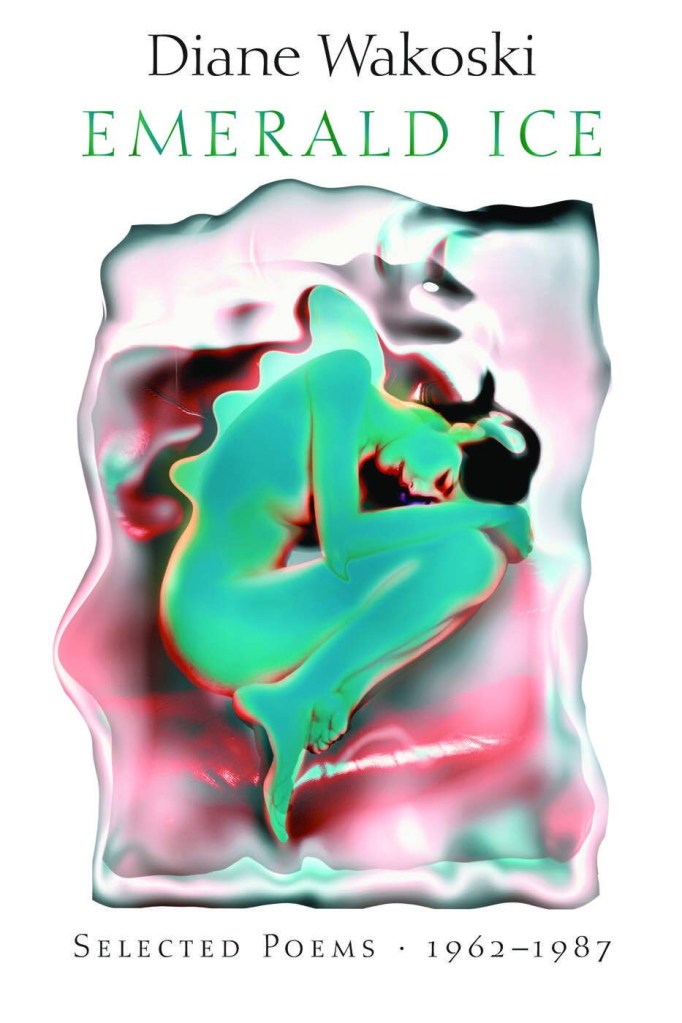
Emerald Ice: Selected Poems 1962-1987 by Diane Wakoski
Thanking My Mother for Piano Lessons by Diane Wakoski
The relief of putting your fingers on the keyboard,
as if you were walking on the beach
and found a diamond
as big as a shoe;

as if
you had just built a wooden table
and the smell of sawdust was in the air,
your hands dry and woody;

as if
you had eluded
the man in the dark hat who had been following you
all week;

the relief
of putting your fingers on the keyboard,
playing the chords of
Beethoven,
Bach,
Chopin
         in an afternoon when I had no one to talk to,
         when the magazine advertisement forms of soft sweaters
         and clean shining Republican middle-class hair
         walked into carpeted houses
         and left me alone
         with bare floors and a few books

I want to thank my mother
for working every day
in a drab office
in garages and water companies
cutting the cream out of her coffee at 40
to lose weight, her heavy body
writing its delicate bookkeeper’s ledgers
alone, with no man to look at her face,
her body, her prematurely white hair
in love
         I want to thank
my mother for working and always paying for
my piano lessons
before she paid the Bank of America loan
or bought the groceries
or had our old rattling Ford repaired.

I was a quiet child,
afraid of walking into a store alone,
afraid of the water,
the sun,
the dirty weeds in back yards,
afraid of my mother’s bad breath,
and afraid of my father’s occasional visits home,
knowing he would leave again;
afraid of not having any money,
afraid of my clumsy body,
that I knew
         no one would ever love

But I played my way
on the old upright piano
obtained for $10,
played my way through fear,
through ugliness,
through growing up in a world of dime-store purchases,
and a desire to love
a loveless world.

I played my way through an ugly face
and lonely afternoons, days, evenings, nights,
mornings even, empty
as a rusty coffee can,
played my way through the rustles of spring
and wanted everything around me to shimmer like the narrow tide
on a flat beach at sunset in Southern California,
I played my way through
an empty father’s hat in my mother’s closet
and a bed she slept on only one side of,
never wrinkling an inch of
the other side,
waiting,
waiting,

I played my way through honors in school,
the only place I could
talk
       the classroom,
       or at my piano lessons, Mrs. Hillhouse’s canary always
       singing the most for my talents,
       as if I had thrown some part of my body away upon entering
       her house
       and was now searching every ivory case
       of the keyboard, slipping my fingers over black
       ridges and around smooth rocks,
       wondering where I had lost my bloody organs,
       or my mouth which sometimes opened
       like a California poppy,
       wide and with contrasts
       beautiful in sweeping fields,
       entirely closed morning and night,

I played my way from age to age,
but they all seemed ageless
or perhaps always
old and lonely,
wanting only one thing, surrounded by the dusty bitter-smelling
leaves of orange trees,
wanting only to be touched by a man who loved me,
who would be there every night
to put his large strong hand over my shoulder,
whose hips I would wake up against in the morning,
whose mustaches might brush a face asleep,
dreaming of pianos that made the sound of Mozart
and Schubert without demanding
that life suck everything
out of you each day,
without demanding the emptiness
of a timid little life.

I want to thank my mother
for letting me wake her up sometimes at 6 in the morning
when I practiced my lessons
and for making sure I had a piano
to lay my school books down on, every afternoon.
I haven’t touched the piano in 10 years,
perhaps in fear that what little love I’ve been able to
pick, like lint, out of the corners of pockets,
will get lost,
slide away,
into the terribly empty cavern of me
if I ever open it all the way up again.
Love is a man
with a mustache
gently holding me every night,
always being there when I need to touch him;
he could not know the painfully loud
music from the past that
his loving stops from pounding, banging,
battering through my brain,
which does its best to destroy the precarious gray matter when I
am alone;
he does not hear Mrs. Hillhouse’s canary singing for me,
liking the sound of my lesson this week,
telling me,
confirming what my teacher says,
that I have a gift for the piano
few of her other pupils had.
When I touch the man
I love,
I want to thank my mother for giving me
piano lessons
all those years,
keeping the memory of Beethoven,
a deaf tortured man,
in mind;
            of the beauty that can come
from even an ugly
past.
Diane Wakoski won the William Carlos Williams Award from the Poetry Society of America for Emerald Ice: Selected Poems 1962-1987. Her most recent collection, Lady of Light: New Poems, was published in 2018 by Anhinga Press and is available to order on their website.
Thanks as always for being a faithful reader of The Voracious Bibliophile. If you like what you see, please like, comment, follow, and subscribe to my email list to get notified of new posts as soon as they drop. You can also email me at fred.slusher@thevoraciousbibliophile.com or catch me on Twitter, Instagram, TikTok, and Pinterest @voraciousbiblog. Keep reading the world, one page (or pixel) at a time.
#2: Read what you want, when you want, in the format you want.
#3: One genre is not better than another.
#4: You don’t have to read the classics. Unless you want to, of course. The “canon” is mostly Eurocentric and a tool of white supremacy.
#5: Re-reading is valid.
#6: Reading fan-fiction is valid.
#7: It doesn’t matter whether you read fast or slow or somewhere in the middle.
#8: Book snobs are fascists. And most likely colonizers.
Thanks as always for being a faithful reader of The Voracious Bibliophile. If you like what you see, please like, comment, follow, and subscribe to my email list to get notified of new posts as soon as they drop. You can also email me at fred.slusher@thevoraciousbibliophile.com or catch me on Twitter, Instagram, TikTok, and Pinterest @voraciousbiblog. Keep reading the world, one page (or pixel) at a time.
When I Grow Up I Want to Be a List of Further Possibilities (Winner of the A. Poulin, Jr. Poetry Prize) by Chen Chen
In the Hospital by Chen Chen
My mother was in the hospital & everyone wanted to be my friend.
But I was busy making a list: good dog, bad citizen, short
skeleton, tall mocha. Typical Tuesday.
My mother was in the hospital & no one wanted to be her friend.
Everyone wanted to be soft cooing sympathies. Very reasonable
pigeons. No one had the tie & our solution to it
was to buy shinier watches. We were enamored with
what our wrists could declare. My mother was in the hospital
& I didn’t want to be her friend. Typical son. Tall latte, short tale,
bad plot, great wifi in the atypical café. My mother was in the hospital
& she didn’t want to be her friend. She wanted to be the family
grocery list. Low-fat yogurt, firm tofu. She didn’t trust my father
to be it. You always forget something, she said, even when
I do the list for you. Even then.
The language in this poem exposes both the terror and banality accompanying seeing someone you love ill. Small details become our refuge and religion.
I thought today’s poem would be apropos for the world we currently live in, where so much of our collective existence is focused on (the avoidance of needing to go to) hospitals. I’ve been enamored with Chen Chen’s poetry for years now, and his collection (pictured above) that includes “In the Hospital” was in my opinion one of the best of the 2010s. The language in this poem exposes both the terror and banality accompanying seeing someone you love ill. Small details become our refuge and religion.
In the end, we cannot do the thing that needs doing the most, which is healing, a return to vitality, a restoration to order.
We pick minutiae that can be controlled, or at least reasonably assessed, and make that our focus. We grapple with our incompetencies and make lists of all the things we can do and all the things we can’t. In the end, we cannot do the thing that needs doing the most, which is healing, a return to vitality, a restoration to order. That is always thanklessly out of our hands.
When I Grow Up I Want to Be a List of Further Possibilities was released in 2017 by BOA Editions, Ltd. and is available to order wherever books are sold.
Thanks as always for being a faithful reader of The Voracious Bibliophile. If you like what you see, please like, comment, follow, and subscribe to my email list to get notified of new posts as soon as they drop. You can also email me at fred.slusher@thevoraciousbibliophile.com or catch me on Twitter, Instagram, TikTok, and Pinterest @voraciousbiblog. Keep reading the world, one page (or pixel) at a time.
dream house, unfinished kitchen where cows now graze.
What angels I would wrestle.
Kevin Young currently serves as the Andrew W. Mellon Director of the Smithsonian’s National Museum of African American History and Culture and has been the poetry editor at The New Yorker since 2017. He was named a Chancellor of the Academy of American Poets in 2020. He previously served as the director of the Schomburg Center for Research in Black Culture. His most recent collection, Stones: Poems, will be released on September 28th, 2021 by Knopf Doubleday Publishing Group and is now available to preorder wherever books are sold.
Thanks as always for being a faithful reader of The Voracious Bibliophile. If you like what you see, please like, comment, follow, and subscribe to my email list to get notified of new posts as soon as they drop. You can also email me at fred.slusher@thevoraciousbibliophile.com or catch me on Twitter, Instagram, TikTok, and Pinterest @voraciousbiblog. Keep reading the world, one page (or pixel) at a time.
won’t you celebrate with me
what i have shaped into
a kind of life? i had no model.
born in babylon
both nonwhite and woman
what did i see to be except myself?
i made it up
here on this bridge between
starshine and clay,
my one hand holding tight
my other hand; come celebrate
with me that everyday
something has tried to kill me
and has failed.
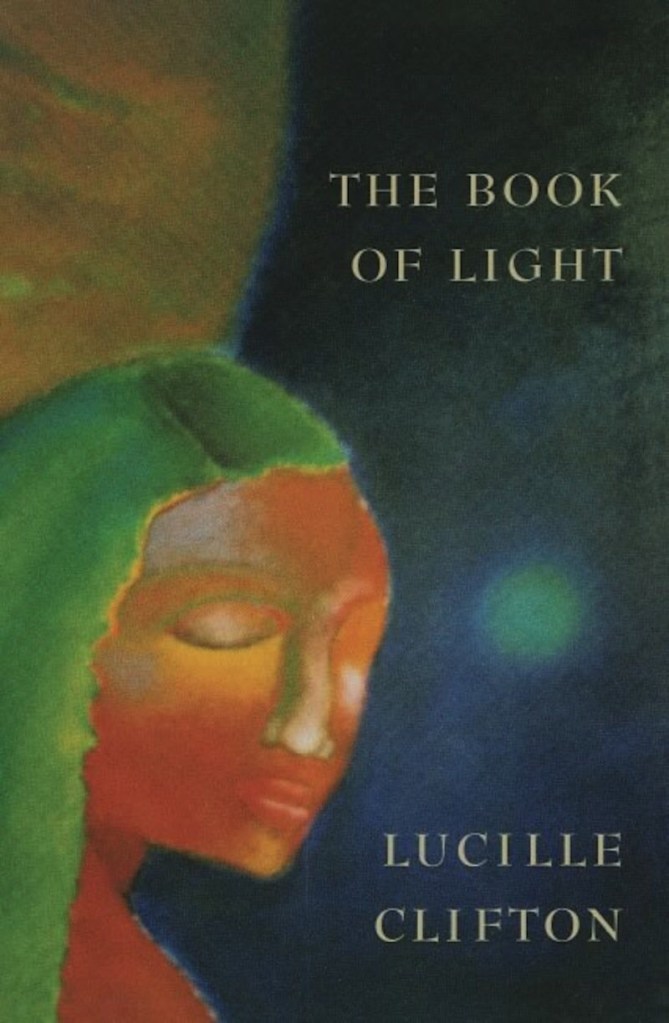
Lucille Clifton was born exactly 64 days after my paternal grandmother, on June 27th, 1936. She was discovered by Langston Hughes, who was shown her poetry by Ishmael Reed, himself an acclaimed Black poet and novelist. Clifton was extremely prolific during her writing career, having more than thirty works published, including poetry collections, children’s books, and memoirs. In addition to many other accolades and awards, she was awarded the Ruth Lilly Poetry Prize in 2007. The Book of Light, the collection from which today’s poem was taken, is available to purchase wherever books are sold.
Thanks as always for being a faithful reader of The Voracious Bibliophile. If you like what you see, please like, comment, follow, and subscribe to my email list to get notified of new posts as soon as they drop. You can also email me at fred.slusher@thevoraciousbibliophile.com or catch me on Twitter, Instagram, TikTok, and Pinterest @voraciousbiblog. Keep reading the world, one page (or pixel) at a time.
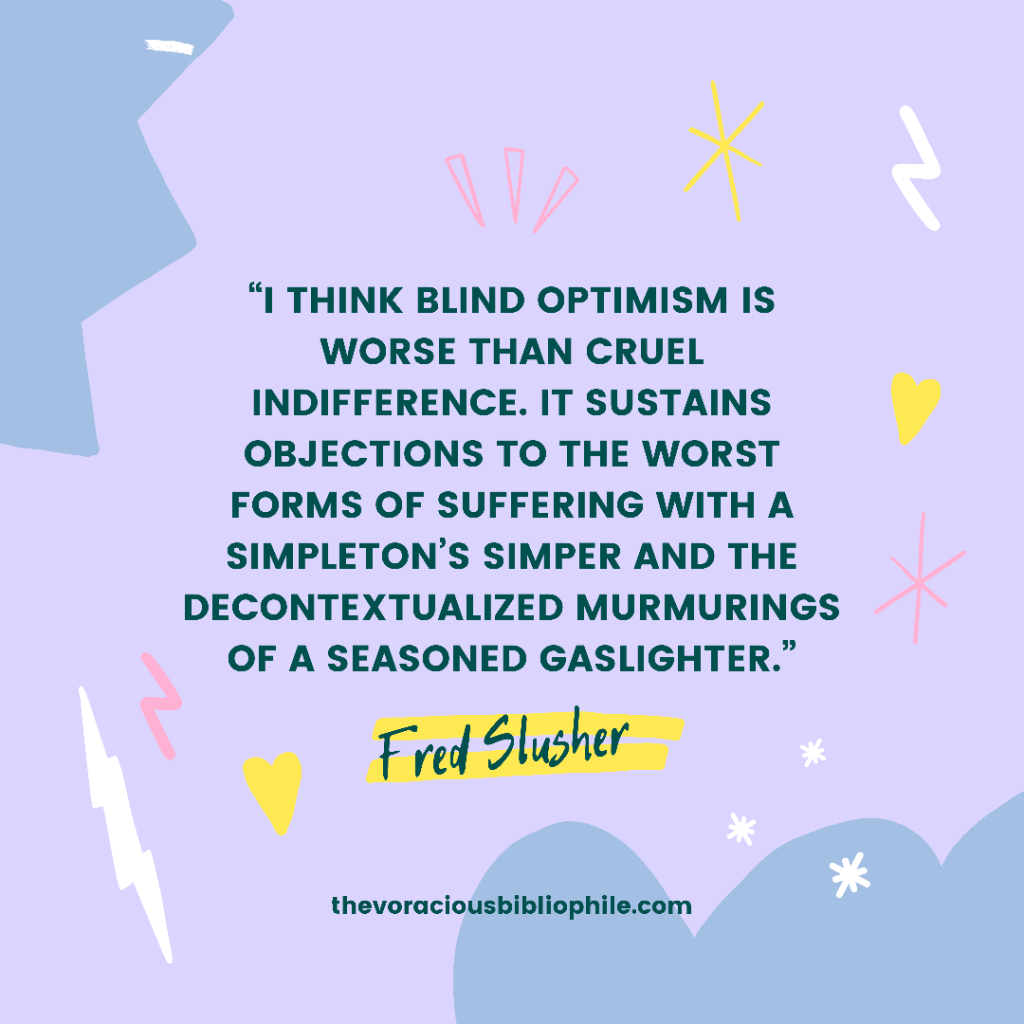
I can’t remember if I mentioned this yet or not, but I created a special Instagram page to post complementary content for this blog. I really enjoy doing amateur graphic design work so being able to churn out simple, sleek, and stylish graphics with relative ease is a definite mood booster. I probably won’t cross-post everything I put on there because I want it to be complementary, not identical, but I couldn’t help but share the one below. Enjoy.
Thanks as always for being a faithful reader of The Voracious Bibliophile. If you like what you see, please like, comment, follow, and subscribe to my email list to get notified of new posts as soon as they drop. You can also email me at fred.slusher@thevoraciousbibliophile.com or catch me on Twitter and Instagram @voraciousbiblog. Keep reading the world, one page (or pixel) at a time.
Where do these stories come from? They emanate from Louise, in a continual flood, without her even thinking about it, without her making the slightest effort of memory or imagination. But in what black lake, in what deep forest has she found these cruel tales where the heroes die at the end, after first saving the world?





 The Voracious Bibliophile