Poem for the Day: October 2nd, 2021

Song by Muriel Rukeyser

Make and be eaten, the poet says,
Lie in the arms of nightlong fire,
To celebrate the waking, wake.
Burn in the daylong light; and praise
Even the mother unappeased,
Even the fathers of desire.

Blind go the days, but joy will see
Agreements of music; they will wind
The shaking of your dance; no more
Will the ambiguous arm-waves spell
Confusion of the blessing given.

Only and finally declare
Among the purest shapes of grace
The waking of the face of fire,
The body of waking and the skill
To make your body such a shape
That all the eyes of hope shall stare.

That all the cries of fear shall know,
Staring in their bird-pierced song;
Lines of such penetration make
That shall bind our loves at last.
Then from the mountains of the lost,
All the fantasies shall wake,
Strong and real and speaking turn
Wherever flickers your unreal.

And my strong ghosts shall fade and pass
My love start fiery as grass
Wherever burn my fantasies,
Wherever burn my fantasies.

April 1955

Muriel Rukeyser (1913-1980) paved the way for and mentored many of the twentieth-century’s greatest writers, among them Alice Walker, Adrienne Rich, and Anne Sexton, just to name a few. It is indeed a shame then that her own name has all but faded into obscurity, known only by a handful of milquetoast academics and the odd literature student lucky enough to come across her verse.

In both works, we see the personal melding with the political, illuminating the human costs of state-sponsored violence.

In addition to her poetry, Rukeyser was also a noted playwright, biographer, children’s book author, and liberal political activist. One can of a surety draw a direct line between Rukeyser’s poetics of resistance and anti-war sentiment in Theory of Flight (1935) all the way to Solmaz Sharif’s Look: Poems, which was composed using language found in a Defense Department dictionary. In both works, we see the personal melding with the political, illuminating the human costs of state-sponsored violence. In both works, lived experiences make the authors both participants and viewers in conflict(s) both interpersonal and global in scale.

For Further Reading

The Paris Review: Muriel Rukeyser, Mother of Everyone by Sam Huber (May 30th, 2018)

Muriel Rukeyser: A Living Archive (website)

Kenyon Review: On The Book of the Dead by Muriel Rukeyser by J.L. Wall

Thanks as always for being a faithful reader of The Voracious Bibliophile. If you like what you see, please like, comment, follow, and subscribe to my email list to get notified of new posts as soon as they drop. You can also email me at fred.slusher@thevoraciousbibliophile.com or catch me on Twitter, Instagram, TikTok, and Pinterest @voraciousbiblog. Keep reading the world, one page (or pixel) at a time.


Poem for the Day: October 1st, 2021

A Toast for Men Yun-Ch’ing by Du Fu and Florence Ayscough (Translator)

Illimitable happiness, 
But grief for our white heads.
We love the long watches of the night, the red candle.
It would be difficult to have too much of meeting,
Let us not be in hurry to talk of separation.
But because the Heaven River will sink,
We had better empty the wine-cups.
To-morrow, at bright dawn, the world’s business will entangle us.
We brush away our tears,
We go—East and West.

Today’s poem was taken from Fir-flower Tablets: Poems Translated from the Chinese, which was published in 1921 by Houghton Mifflin. This collection can be read and/or downloaded for free at Project Gutenberg, a website that makes public domain works readily available to anyone with access to the Internet. Simply click on the link provided here and it will take you to the book’s page, where you can either read it in your web browser or download it for offline reading on your e-reader, tablet, or other mobile device.

Considered one of the foremost poets of the Tang Dynasty, Du Fu (712-770) was born in Henan Province to a civil servant. His mother passed away when he was still very young, so one of his aunts assisted in raising him. His initial aspiration was to become a civil servant like his father, but after failing the test he became somewhat of a drifter, traveling from place to place and writing of his experiences.

Later on, Du Fu made an official petition to the Chinese government for a position in service to the state, and was made registrar in the palace of the crown prince. Unfortunately, it was not to be. Du Fu was unable to begin his post as registrar because of the turmoil unleashed by the start of the An Lushan Rebellion, which began in 755 and continued for several years.

Personal and political turmoil no doubt colored Du Fu’s worldview, but you can also see in his poetry an appreciation of the world’s beauty pushing against the pain we suffer in our short human lives.

Once again forced to live a nomadic lifestyle, Du Fu wrote about the things he witnessed and experienced during his journeys, most of which were extremely painful. Personal and political turmoil no doubt colored Du Fu’s worldview, but you can also see in his poetry an appreciation of the world’s beauty pushing against the pain we suffer in our short human lives.

Thanks as always for being a faithful reader of The Voracious Bibliophile. If you like what you see, please like, comment, follow, and subscribe to my email list to get notified of new posts as soon as they drop. You can also email me at fred.slusher@thevoraciousbibliophile.com or catch me on Twitter, Instagram, TikTok, and Pinterest @voraciousbiblog. Keep reading the world, one page (or pixel) at a time.

Quote for the Day: September 30th, 2021

Don’t be pushed around by the fears in your mind. Be led by the dreams in your heart.

Roy T. Bennett, The Light in the Heart

How you choose to define success is completely up to you.

This is something I’ve been thinking about a lot lately. So many times, we allow our fears to place limits on what we can achieve with our dreams. Now, this is not to say there aren’t other factors at play. I’m not of the bootstraps mentality which says absolutely everything can be overcome through hard work and perseverance. Especially for people who occupy marginalized identities, the amount of success you’re able to attain is based on structural limitations determining how much access you have to the resources which make success possible. And let us also not forget that one person’s definition of success is different from the next person’s. How you choose to define success is completely up to you.

How much are you willing to lose? How often do you prefer to play it safe and hold your cards close to your chest?

That’s my disclaimer. In the most general sense, however, the decisions we make and the framework from which we approach those decisions are often based on the amount of risk we’re willing to operate within. In the business world, that’s called risk tolerance. Basically, the potential reward for any given decision (or investment) is directly proportional to the amount of risk you’re willing to take. How much are you willing to lose? How often do you prefer to play it safe and hold your cards close to your chest?

This is your ballgame. I hope you’ll make the right call.

Now, I’m not making a value judgment on people who choose to play it safe. Life is complex and not everyone is able to tolerate a lot of risk. But for everyone with the time and resources to pursue a dream, it’s not something you can put just 50% of your effort into. It’s all-or-nothing. And no one else is going to do the work for you. This is your ballgame. I hope you’ll make the right call. (P.S. My dad would be so proud that I used a sportsball analogy)

Thanks as always for being a faithful reader of The Voracious Bibliophile. If you like what you see, please like, comment, follow, and subscribe to my email list to get notified of new posts as soon as they drop. You can also email me at fred.slusher@thevoraciousbibliophile.com or catch me on Twitter, Instagram, TikTok, and Pinterest @voraciousbiblog. Keep reading the world, one page (or pixel) at a time.

Poem for the Day: September 30th, 2021

[i carry your heart with me(i carry it in] by E.E. Cummings

i carry your heart with me(i carry it in
my heart)i am never without it(anywhere
i go you go,my dear;and whatever is done
by only me is your doing,my darling)
i fear
no fate(for you are my fate,my sweet)i want
no world(for beautiful you are my world,my true)
and it’s you are whatever a moon has always meant
and whatever a sun will always sing is you

here is the deepest secret nobody knows
(here is the root of the root and the bud of the bud
and the sky of the sky of a tree called life;which grows
higher than soul can hope or mind can hide)
and this is the wonder that's keeping the stars apart

i carry your heart(i carry it in my heart)

© 1952, 1980, 1991 Trustees for the E.E. Cummings Trust.

Today’s poem is taken from Complete Poems: 1904-1962 by E. E. Cummings, which was edited by George J. Firmage and was released in 1991 by Liveright Publishing Corporation.

Thanks as always for being a faithful reader of The Voracious Bibliophile. If you like what you see, please like, comment, follow, and subscribe to my email list to get notified of new posts as soon as they drop. You can also email me at fred.slusher@thevoraciousbibliophile.com or catch me on Twitter, Instagram, TikTok, and Pinterest @voraciousbiblog. Keep reading the world, one page (or pixel) at a time.

Poem for the Day: September 29th, 2021

Suppose the Function Is Praise by Cate Lycurgus

When doctors have given their final shot
or volleys rocket insomniac dark, without thought, lift
your hands. In strobing raids, at pepper spray, with cheek
to asphalt, at fault or not, go on, lift your hands. And stand
though gravel erodes to sea, don’t grovel or stop
as the chopper kicks sand, or knife unleashes shock
and flow—unaided, blood rises—so lift your hands,
given this heart’s un-assisted pump, no matter the lack
of water to quench a jigsaw of dirt, the belly distended—lift
your hands at the child unplanned who you cannot nurse,
then at the curse of also-ran and lift your hands, when
the only man you’ll ever love has a son with someone else.
Or a husband no longer knows the name of the one
you raised together: now, raise a glass instead.
This is occasion for champagne, for all the aspirin
a body can take, for the glint of a chemical sunset’s blaze,
and licking high-fructose glaze off those same fingers, just—
lift them now in don’t shoot please, in fluid go, to save my feet,
at mile sixty when gas burns clean and you’ve made it
past your dead-end streets, with a single album
of soul on repeat—lift your hands, at the great unknown,
the bank account’s mawing O—however infinitesimal
the means become or waist will cinch—infinite—
the ways to lift our hands, to coax them overhead—
limitless, our approach.

© 2017 Cate Lycurgus. All rights reserved.

I love how cinematic and visceral Lycurgus’s language is in this poem. You can feel the still-warm asphalt pressed against a cheek. Your eyes instinctively blink against the harsh fluorescence of the strobe lights. You can taste the bittersweet sting of the well-deserved glass of champagne.

After I first discovered her work, I was sad to see that Cate Lycurgus has not yet released a full collection of her poetry, at least as far as my research can ascertain. For me, that means she’s got a willing buyer for whenever that day comes.

Cate Lycurgus’s poetry has appeared in or is forthcoming in The Best American Poetry 2020, American Poetry Review, Tin House, Boston Review, and The Rumpus, among other publications. She lives south of San Francisco, California where she teaches professional writing.

Thanks as always for being a faithful reader of The Voracious Bibliophile. If you like what you see, please like, comment, follow, and subscribe to my email list to get notified of new posts as soon as they drop. You can also email me at fred.slusher@thevoraciousbibliophile.com or catch me on Twitter, Instagram, TikTok, and Pinterest @voraciousbiblog. Keep reading the world, one page (or pixel) at a time.

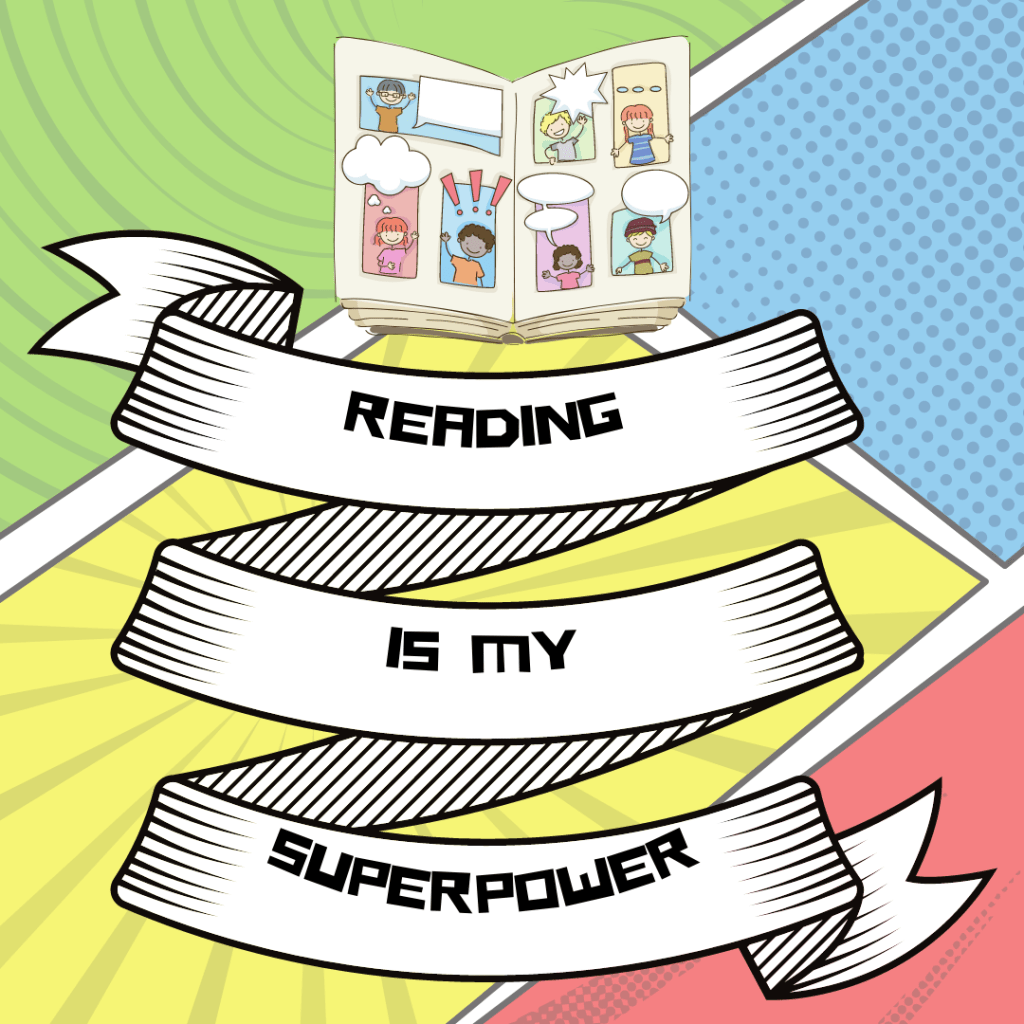
From the Gram: Reading Is My Superpower

I just dropped this graphic on Instagram and wanted to share it here as well. What’s your superpower? Hopefully your answer is the same as mine. Let me know in the comments.

Thanks as always for being a faithful reader of The Voracious Bibliophile. If you like what you see, please like, comment, follow, and subscribe to my email list to get notified of new posts as soon as they drop. You can also email me at fred.slusher@thevoraciousbibliophile.com or catch me on Twitter, Instagram, TikTok, and Pinterest @voraciousbiblog. Keep reading the world, one page (or pixel) at a time.

Poem for the Day: September 28th, 2021

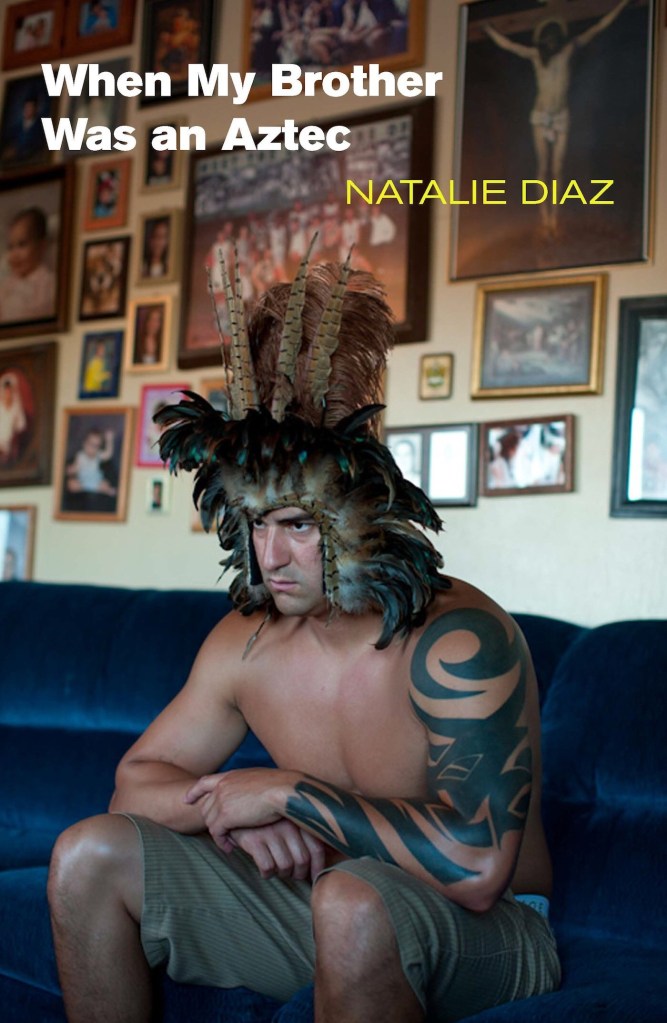
When My Brother Was an Aztec by Natalie Diaz

No More Cake Here by Natalie Diaz

When my brother died
I worried there wasn’t enough time
to deliver the one hundred invitations
I’d scribbled while on the phone with the mortuary:
Because of the short notice no need to rsvp.
Unfortunately the firemen couldn’t come.
(I had hoped they’d give free rides on the truck.)
They did agree to drive by the house once
with the lights on— It was a party after all.

I put Mom and Dad in charge of balloons,
let them blow as many years of my brother’s name,
jails, twenty-dollar bills, midnight phone calls,
fistfights, and er visits as they could let go of.
The scarlet balloons zigzagged along the ceiling
like they’d been filled with helium. Mom blew up
so many that she fell asleep. She slept for ten years—
she missed the whole party.

My brothers and sisters were giddy, shredding
his stained T-shirts and raggedy pants, throwing them up
into the air like confetti.

When the clowns came in a few balloons slipped out
the front door. They seemed to know where
they were going and shrank to a fistful of red grins
at the end of our cul-de-sac. The clowns played toy bugles
until the air was scented with rotten raspberries.
They pulled scarves from Mom’s ear—she slept through it.
I baked my brother’s favorite cake (chocolate, white frosting).
When I counted there were ninety-nine of us in the kitchen.
We all stuck our fingers in the mixing bowl.

A few stray dogs came to the window.
I heard their stomachs and mouths growling
over the mariachi band playing in the bathroom.
(There was no room in the hallway because of the magician.)
The mariachis complained about the bathtub acoustics.
I told the dogs, No more cake here, and shut the window.
The fire truck came by with the sirens on. The dogs ran away.
I sliced the cake into ninety-nine pieces.

I wrapped all the electronic equipment in the house,
taped pink bows and glittery ribbons to them—
remote controls, the Polaroid, stereo, Shop-Vac,
even the motor to Dad’s work truck—everything
my brother had taken apart and put back together
doing his crystal meth tricks—he’d always been
a magician of sorts.

Two mutants came to the door.
One looked almost human. They wanted
to know if my brother had willed them the pots
and pans and spoons stacked in his basement bedroom.
They said they missed my brother’s cooking and did we
have any cake. No more cake here, I told them.
Well, what’s in the piñata? they asked. I told them
God was and they ran into the desert, barefoot.
I gave Dad his slice and put Mom’s in the freezer.
I brought up the pots and pans and spoons
(really, my brother was a horrible cook), banged them
together like a New Year’s Day celebration.

My brother finally showed up asking why
he hadn’t been invited and who baked the cake.
He told me I shouldn’t smile, that this whole party was shit
because I’d imagined it all. The worst part he said was
he was still alive. The worst part he said was
he wasn’t even dead. I think he’s right, but maybe
the worst part is that I’m still imagining the party, maybe
the worst part is that I can still taste the cake.

© 2012 Natalie Diaz. “No More Cake Here” appears in Diaz’s collection, When My Brother Was an Aztec, which was published in 2012 by Copper Canyon Press.

Note: While I have endeavored to ensure this poem was formatted on this page as the author originally intended, there may be slight differences between what is displayed here and what appears in a physical format.

Natalie Diaz is a Latina and Mojave poet and is enrolled as a member of the Gila Indian Community. She currently lives in Arizona and is an Associate Professor at Arizona State University. She is the author of two poetry collections, When My Brother Was an Aztec and Postcolonial Love Poem, which was awarded the 2021 Pulitzer Prize for Poetry.

Thanks as always for being a faithful reader of The Voracious Bibliophile. If you like what you see, please like, comment, follow, and subscribe to my email list to get notified of new posts as soon as they drop. You can also email me at fred.slusher@thevoraciousbibliophile.com or catch me on Twitter, Instagram, TikTok, and Pinterest @voraciousbiblog. Keep reading the world, one page (or pixel) at a time.