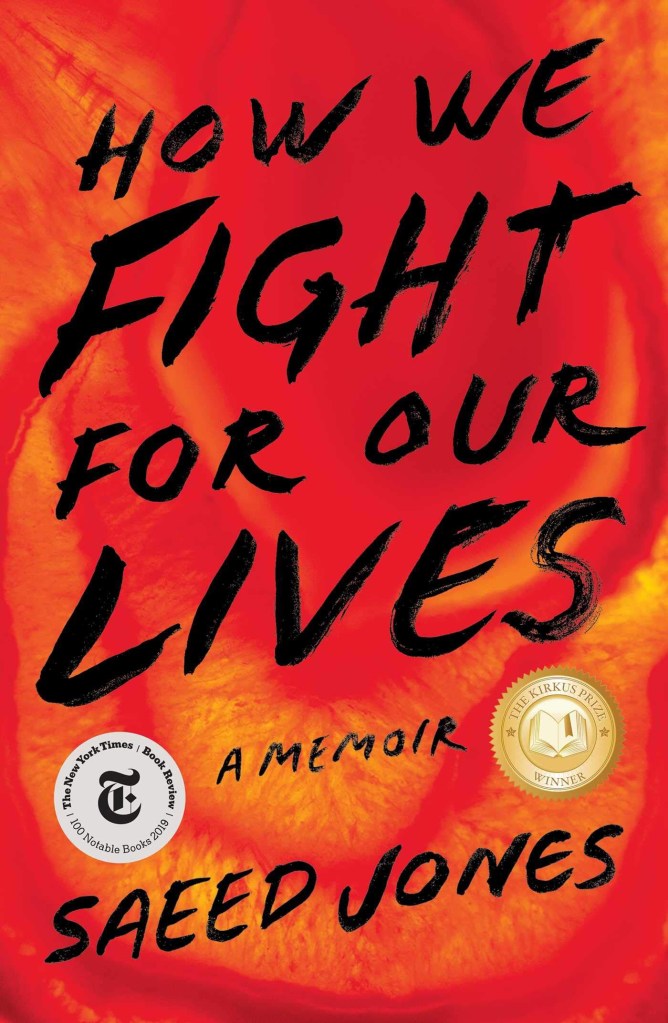
How We Fight For Our Lives: A Memoir by Saeed Jones
Book Review: How We Fight For Our Lives: A Memoir by Saeed Jones
***Note: This review was originally posted to my Goodreads account in October of 2019.***
Everyone has a lie we’re quietly waiting to believe.
With startling economy of language, Saeed Jones tells his story with such precision that after turning the last page you feel as if you’ve been borrowing his skin.
If you read one book this year, let this be it. Please.
Thanks as always for being a faithful reader of The Voracious Bibliophile. If you like what you see, please like, comment, follow, and subscribe to my email list to get notified of new posts as soon as they drop. You can also email me at fred.slusher@thevoraciousbibliophile.com or catch me on Twitter and Instagram @voraciousbiblog. Keep reading the world, one page (or pixel) at a time.
Once I wore a dress liquid as vodka.
My lover watched me ascend
from the subway
like I was an underground spring
breaking through.
I want to stop wanting to be wanted like that.
I’m tired of the song the rain sings in June,
the chorus of hope, the ravenous green,
the earth, her ornate crown of trees
spiking up from her loamy head.
There are things I wanted, like everyone.
But to this angel of wishes I’ve worshiped
so long, I ask now to admit
the world as it is.
If you get close to what you love, who you are is revealed to you.
Ethan Hawke
Today’s quote resonates with me in a very profound way. I think the most beautiful thing in the world must be witnessing, or better yet experiencing, certainty to purpose. So many of us stumble through life chasing things that don’t really hold any value, but when we find something we love, we’re fools if we don’t grab ahold of it and never let it go.
We only have one shot at getting this right. One chance at deciding what matters and who we’re going to be.
My hope for myself, and for all of you reading this, is that we have the courage to wake up every day and choose ourselves, to prioritize our dreams over life’s routines and mundanities. We only have one shot at getting this right. One chance at deciding what matters and who we’re going to be. The stakes couldn’t be higher. Live—and love—with no regrets. Or don’t. It’s up to you.
Thanks as always for being a faithful reader of The Voracious Bibliophile. If you like what you see, please like, comment, follow, and subscribe to my email list to get notified of new posts as soon as they drop. You can also email me at fred.slusher@thevoraciousbibliophile.com or catch me on Twitter and Instagram @voraciousbiblog. Keep reading the world, one page (or pixel) at a time.
Every morning
Days of unfettered glory
Night’s a dram of tears
Thanks as always for being a faithful reader of The Voracious Bibliophile. If you like what you see, please follow, like, comment, and subscribe to my email list to get notified of new posts as soon as they drop. You can also email me at thevoraciousbibliophile@yahoo.com or catch me on Twitter @voraciousbiblog. Keep reading the world, one page (or pixel) at a time.
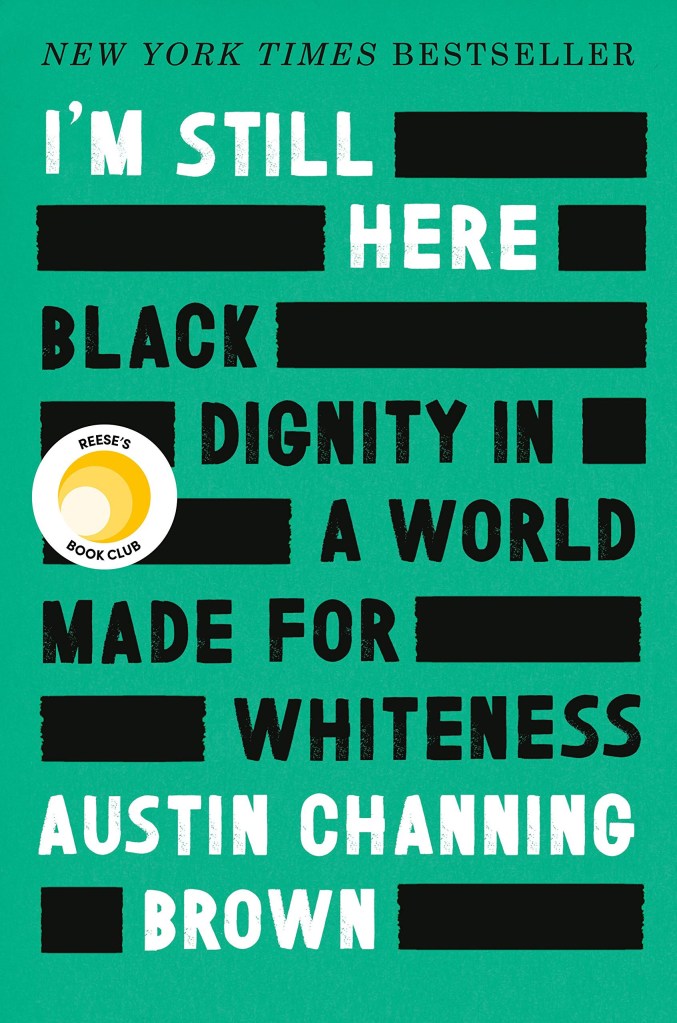
I’m Still Here: Black Dignity in a World Made for Whiteness by Austin Channing Brown
***Note: I originally read this book in June of 2020. The review posted here may be slightly altered from its original version and was first posted on my Goodreads account.***
Review
Austin Channing Brown does a superb job of deconstructing the myth of American progress toward racial equality, tracing the evolution of white supremacy from chattel slavery to Jim Crow and further on down the line to our current world characterized by police violence against Black people and their communities, and the prison industrial complex that warehouses Black people with outsized sentences for non-violent offenses in a modern-day proxy to slavery.
I loved her examples of dealing with—on an everyday basis—well-meaning white people whose ingrained racism and belief in their own goodness prevent them from taking responsibility for their racist microagressive behavior. Brown shows us that racism isn’t a problem that exists only at Klan rallies—it is perpetuated by millions of white people who have deluded themselves into thinking they live in a post-racial society where they get all the clout tokens for “having Black friends” while doing none of the work involved in anti-racist activism.
Brown shows us that racism isn’t a problem that exists only at Klan rallies—it is perpetuated by millions of white people who have deluded themselves into thinking they live in a post-racial society where they get all the clout tokens for “having Black friends” while doing none of the work involved in anti-racist activism.
The work of delegitimizing and dissolving white supremacy is a job that can’t happen unless white people (all white people) acknowledge their complicity in reinforcing racist norms and do their part to effect real change. This is a book every white person needs to read.
Favorite Quotes with Commentary
Rather than dwell on individuals, I speak about the system. About white boardrooms and white leadership teams. About white culture and the organization’s habit of hiring people who perpetuate that culture rather than diversify it. But the white consensus doesn’t want me to point out these things.
So many white people in positions of power like to play the numbers game when it comes to propagating their organization’s own racial diversity. “We can’t be racist because we are *exceeding* EEOC guidelines in hiring racial minorities.” “We hire Black people to work in every department within our organization, so therefore we are committed to equality.” Why is it that white people want a pat on the back for every modicum of human decency they performatively display? Why do we still allow this pablum to be volleyed hither and yon as a marker of a nonexistent racial equity?
Why is it that white people want a pat on the back for every modicum of human decency they performatively display? Why do we still allow this pablum to be volleyed hither and yon as a marker of a nonexistent racial equity?
White supremacy is a tradition that must be named and a religion that must be renounced. When this work has not been done, those who live in whiteness become oppressive, whether intentional or not.
I love that here Brown names white supremacy as a religion, because that’s exactly what it is—a faith tradition grounded in the inferiority of BIPOC and the deification of white skin as morally pure and upright. What makes it so insidious and corrosive is that white supremacists attempt to legitimize their racism by purporting to have faith in a form of Christianity completely excised of the primary teaching of Christ—to love one’s neighbor as oneself.
What makes it [white supremacy] so insidious and corrosive is that white supremacists attempt to legitimize their racism by purporting to have faith in a form of Christianity completely excised of the primary teaching of Christ—to love one’s neighbor as oneself.
Far from an imposing beast, I found that white supremacy is more like a poison. It seeps into your mind, drip by drip, until it makes you wonder if your perception of reality is true.
One thing Brown brings up throughout her book, mentioned in the quote above, is the gaslighting element accompanying subtle racism. As if the accumulation of daily micro-aggressions were not enough, Nice White People love to assuage their own guilt by minimizing the impact their own actions (intentional or not) have on the lived experiences of the Black people they interact with. This is not acceptable. If we are going to create the more perfect union touted by American nationalists of every star and stripe, we have to start, as white people, by first acknowledging our complicity in the structures and systems that we benefit from at the expense of our Black siblings and neighbors.
If we are going to create the more perfect union touted by American nationalists of every star and stripe, we have to start, as white people, by first acknowledging our complicity in the structures and systems that we benefit from at the expense of our Black siblings and neighbors.
The role of a bridge builder sounds appealing until it becomes clear how often that bridge is your broken back.
Why is it that we expect Black people in our circles to be the first ones to initiate change, the first ones to make a step toward understanding? Whenever we talk about EDI (equity, diversity, and inclusion), why do we place the brunt of the labor of coalition-building (emotional and otherwise) on our Black colleagues? We should not expect a person to speak for a whole people. Any efforts we make toward increasing inclusivity in our offices, in our boardrooms, and at every level of our organizations should come from a place of shared goals-setting, not simply (as so often happens) expecting our Black colleagues to hold our hands and erase our own culpability.
We should not expect a person to speak for a whole people.
Whiteness constantly polices the expressions of Blackness allowed within its walls, attempting to accrue no more than what’s necessary to affirm itself. It wants us to sing the celebratory “We Shall Overcome” during MLK Day but doesn’t want to hear the indicting lyrics of “Strange Fruit.”
This is something that really bothers me every February—Black History Month—which purports to celebrate the achievements of Black Americans (which was the original intention) but instead has developed to depoliticize the struggles of liberation through a lens of corporatized sanitization. The lovely ads showing Black and white hands so gloriously intertwined and shots of MLK featuring his most well-known and palatable quotes deliberately ignore a bloody history of enslavement, disenfranchisement, segregation, and incarceration which continues today in modalities not very different from their iterations of the past few centuries.
The lovely ads showing Black and white hands so gloriously intertwined and shots of MLK featuring his most well-known and palatable quotes deliberately ignore a bloody history of enslavement, disenfranchisement, segregation, and incarceration which continues today in modalities not very different from their iterations of the past few centuries.
These actions are vomit-inducing because they celebrate the end of a war that is still being fought and they still place a limit on the level(s) of Blackness which is palatable. They say, “You can be Black, but only on our (white folks’) terms, only in modes and frequencies that we find acceptable.” They say, “It’s fine for you to be Black, as long as your Blackness is coded to uphold my whiteness.” It’s not okay.
This is partly what makes the fragility of whiteness so damn dangerous. It ignores the personhood of people of color and instead makes the feelings of whiteness the most important thing.
One thing we white people need to do better is listen. When the Black people in our circles call out something as racist, we need to stop centering our feelings in the conversation. When our knee-jerk reactions to identifications of racism are focused on the way we feel about them, we are minimizing the actual harm caused to the people who have experienced racism, and adding unneeded emotional labor to our Black friends who have to subsume their own pain to coddle our fragile white feelings. We’ve got to do better, and that starts by listening to and acknowledging the veracity of the acts of racism our Black friends tell us about.
When our knee-jerk reactions to identifications of racism are focused on the way we feel about them, we are minimizing the actual harm caused to the people who have experienced racism, and adding unneeded emotional labor to our Black friends who have to subsume their own pain to coddle our fragile white feelings.
White people desperately want to believe that only the lonely, isolated “whites only” club members are racist. This is why the word racist offends “nice white people” so deeply. It challenges their self-identification as good people. Sadly, most white people are more worried about being called racist than about whether or not their actions are in fact racist or harmful.
If we’re going to be radically honest, racism perpetuates not because of Klan members or Proud Boys or neo-Nazis, but because of morally-upright white blowhards who cluck and clutch their pearls and flinch at the very insinuation they could be racist because they voted for Obama twice and how dare you? 🙄
Because I am a Black person, my anger is considered dangerous, explosive, and unwarranted. Because I am a woman, my anger supposedly reveals an emotional problem or gets dismissed as a temporary state that will go away once I choose to be rational. Because I am a Christian, my anger is dismissed as a character flaw, showing just how far I have turned from Jesus.
How convenient it is for people to selectively remember Jesus the Redeemer and Jesus the Healer, and forget Jesus in his other iterations. My Jesus, and here I believe Brown would agree with me, is Jesus the Wine-Drinker, Jesus the Friend of Sinners, Jesus the Caller-Out of Hypocrites, and Jesus the Table-Flipper. Table-flipping Jesus is by far my favorite.
Thanks as always for being a faithful reader of The Voracious Bibliophile. If you like what you see, please follow, like, comment, and subscribe to my email list to get notified of new posts as soon as they drop. You can also email me at thevoraciousbibliophile@yahoo.com or catch me on Twitter @voraciousbiblog. Keep reading the world, one page (or pixel) at a time.
Sometimes people let the same problem make them miserable for years when they could just say, ‘So what?’ That’s one of my favorite things to say. ‘So what?’
The daffodils can go fuck themselves.
I’m tired of their crowds, yellow rantings
about the spastic sun that shines and shines
and shines. How are they any different

from me? I, too, have a big messy head
on a fragile stalk. I spin with the wind.
I flower and don’t apologize. There’s nothing
funny about good weather. Oh, spring again,

the critics nod. They know the old joy,
that wakeful quotidian, the dark plot
of future growing things, each one
labeled Narcissus nobilis or Jennifer Chang.

If I died falling from a helicopter, then
this would be an important poem. Then
the ex-boyfriends would swim to shore
declaiming their knowledge of my bulbous

youth. O, Flower, one said, why aren’t you
meat? But I won’t be another bashful shank.
The tulips have their nervous joie-de-vivre,
the lilacs their taunt. Fractious petals, stop

interrupting me with your boring beauty.
All the boys are in the field gnawing raw
bones of ambition and calling it ardor. Who
the hell are they? This is a poem about war.
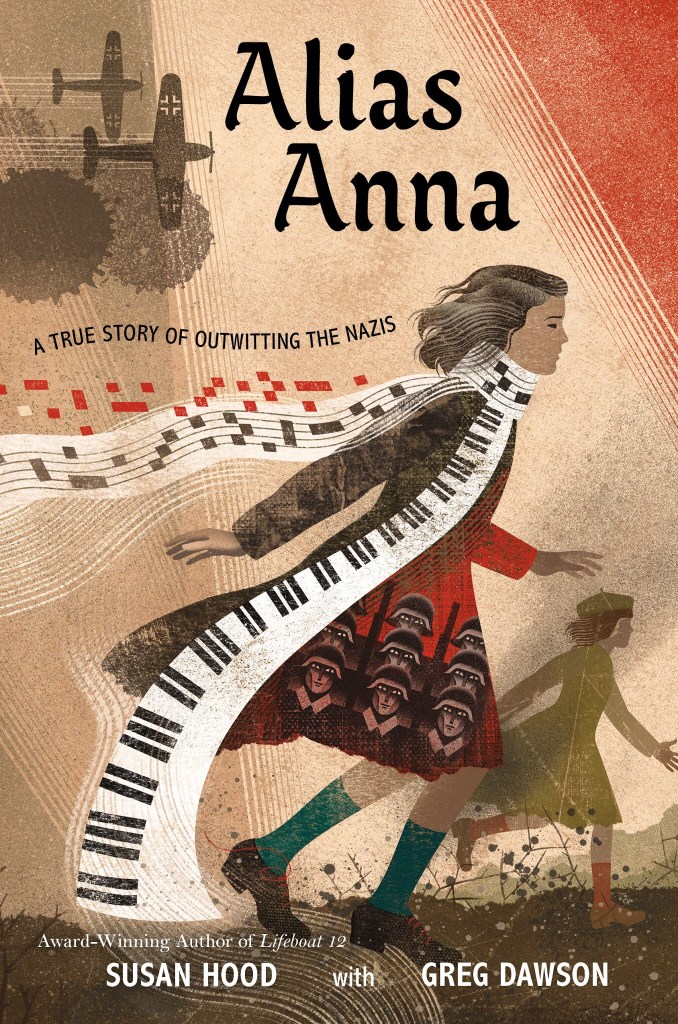
Alias Anna: A True Story of Outwitting the Nazis by Susan Hood with Greg Dawson
***Note: I received a free digital review copy of this book from NetGalley in exchange for an honest review.***
Expected Publication Date: March 22nd, 2022
Publisher: HarperCollins
The Holocaust (also known as the Shoah) was the attempted genocide of the entire Jewish population in Europe carried out by German dictator Adolf Hitler and his collaborators between 1941 and 1945. Crafted as the Final Solution to the Jewish Question, Hitler’s ultimate goal was the extermination of an entire people from the face of the earth, a horrific crime in aggregate.
While the crimes of the Nazis are unparalleled in the history of humanity, forgetting the stories of the people who were murdered and the people who survived is also a crime of incalculable magnitude. It is our duty to call out injustice wherever we see it, to speak truth to power, and to hold in memory the crimes of the past so that we can be the architects of a more just and equitable future.
It is our duty to call out injustice wherever we see it, to speak truth to power, and to hold in memory the crimes of the past so that we can be the architects of a more just and equitable future.
This duty is not one that can be transferred or reassigned. We remember not only as an act of preservation but as one of defiance. Zhanna’s story is one of millions.
We remember not only as an act of preservation but as one of defiance.
Alias Anna: A True Story of Outwitting the Nazis tells the story of Zhanna Arshanskaya and her sister Frina, who survived the Holocaust by quite literally hiding in plain sight, creating new non-Jewish identities for themselves and using their musical abilities to perform for high-ranking Nazi officers, providing entertainment to the very people responsible for the murder of their entire family because they had no other choice. It was play or die. And too much had been sacrificed for the sisters to die.
When most people think of the Holocaust, they conjure up images of concentration camps, of gas chambers and emaciated bodies stacked carelessly in mass graves. There were indeed many concentration camps operated by the Nazis, but they were indifferent to the methods used as long as the job—annihilating the Jewish people from the face of the earth—was done.
For the majority of the Soviet Jews, the Nazis’ primary method of execution was the firing squad, whereby they would march them to pits and ravines and unleash volleys of bullets. They also used fire and carbon monoxide when bullets were deemed insufficient. In December 1941, the Nazis rounded up the majority of the Jews from Kharkov and made them march to an abandoned tractor factory outside the city. After a few weeks of extreme deprivation, given little to no food and having scant protection against the elements, the Jews of Kharkov (including Zhanna, her sister Frina, her parents, and her grandparents) were marched to the ravine at Drobitsky Yar, facing certain execution.
I don’t care what you do. Just live.
Dmitri Arshansky
Before the ill-fated march to Drobitsky Yar, Zhanna and Frina lived what could be called charmed lives with their family in Kharkov. They were musical prodigies of the highest caliber, becoming the youngest students (ages eight and six at the time) ever accepted into and given scholarships to the famed Kharkov Conservatory of Music. It was there that Zhanna was first introduced to her favorite piece of music, her choice composition—Chopin’s Fantaisie-Impromptu. The sheet music for this composition would become Zhanna’s only material possession and thus the only physical reminder of her former life, though she could not have foreseen this.
Dmitri Arshansky was no fool. He knew with absolute certainty that the Nazis were marching them toward their deaths, and he also believed that young Zhanna was the only one who might have a chance of escaping.
Knowing this, his last gift and last act of fatherly love was to give one of their guards his golden pocket watch that he’d managed to hide during the long march in exchange for the man turning a blind eye when his daughter jumped out of line and made her escape. His final admonition to her was this: I don’t care what you do. Just live. The greatest expression of love has to be giving the last thing you have to the person you love the most; if a greater love exists, I am unaware of it.
The greatest expression of love has to be giving the last thing you have to the person you love the most; if a greater love exists, I am unaware of it.
It was Fantaisie-Impromptu that she clutched against her chest as she jumped out of line and blended into a crowd of onlookers. Knowing it was to be the last time she would see her family, she wept and wept. Not knowing where else to go, Zhanna made her way back to Kharkov. Once there, she first sought shelter with her friend and classmate Svetlana Gaponovitch and her family. She thought that since the father of the family was Jewish, despite the fact that he longer lived in the household, she would be shown mercy by people who understood her situation. Instead, she had the door slammed in her face.
Unsure of where to go next and desperately tired, hungry, and cold, she knocked on the door of another classmate, Lida Slipko. Rumor had it that Lida’s mother was an anti-Semite, but young Zhanna was out of options and at the end of her rope. To her great surprise, they (Lida and her mother) hastened her in and shut the door behind her, showing her more compassion and common humanity than she had received at the hands of the Gaponovitch family.
Her brief respite was not to last, however. Zhanna knew that to stay too long in one place would endanger not only herself but the people who sheltered her, and so Lida suggested she go to the home of Nicolai Bogancha, an acquaintance and crush of hers who lived in the same neighborhood as Zhanna did growing up.
The Bogancha family was a saving grace for Zhanna. There in their home she felt safe, cared for, and hopeful for the future. It was also during her time staying with the Bogancha family that she learned something truly miraculous—her sister Frina was still alive. After learning this, one night Nicolai’s father snuck out and retrieved Frina, bringing her to Zhanna, back to the last link she had left in the world. Words are insufficient to describe the absolute elation Zhanna experienced when she learned that her sister had managed to escape. To this day, historians have no idea how Frina managed to escape the death march to Drobitsky Yar. Frina herself never revealed how, not even to Zhanna. Some things are just too painful to share, even with the people we love most.
To this day, historians have no idea how Frina managed to escape the death march to Drobitsky Yar. Frina herself never revealed how, not even to Zhanna. Some things are just too painful to share, even with the people we love most.
Together, the sisters were far too recognizable. After all, they had been performing in public for quite some time, given their enormous talent at such young ages. They knew they had to leave Kharkov, their home, and forge a new path somewhere else, somewhere the Nazis couldn’t reach them. Nicolai’s parents helped the sisters to craft new identities, giving them aliases and a backstory to protect them moving forward. They thus became Anna and Marina Morozova, orphans who had lost both parents—their mother during the German bombing of Kharkov and their father in battle while acting as an officer in Stalin’s Red Army.
As non-Jewish Russian orphans, if they could secure admission into an orphanage they could have identification papers drawn up, legally ratifying their new names and stories and giving them a modicum of protection against Nazi inquiry.
They managed to do just this, and by some act of divine providence or merciful coincidence, the orphanage they ended up at had a decrepit piano. It wasn’t much, this battered and careworn old instrument, but the talented sisters coaxed it to life and made it sing, bringing life and joy to all who heard their beautiful music. German soldiers passing by heard the lovely notes emanating from the run-down orphanage, and the director of the orphanage was so elated at this attention that he hired a piano tuner to make the instrument worthy of its practitioners.
The piano tuner’s name was Misha Alexandrovich, a kindly and intelligent man who took to Zhanna right away. He pleaded with her to come and play for the directors of the music school at Kremenchug. She was highly resistant to this suggestion, naturally not wanting to draw that much attention to herself and her sister. However, in the end she realized it would draw even more attention to refuse such a beneficent offer, and thus agreed to go.
Zhanna and Frina (Anna and Marina) accompanied Misha to Kremenchug, and the director of the school was so taken with them that they were given a studio to live and practice in. The sisters couldn’t believe their good fortune.
There was a catch to the director’s generosity, however. She needed the girls to play piano for the singers and dancers who were required to perform for the Germans at the theater next door to the school. When the theater director heard Zhanna play, he hired the sisters on the spot. And so that is how the Arshanskaya sisters came to play for the very Nazi officers who had upended their lives forever. They had taken away their home, their family, their state, and their very names, but they could not break their spirits. In the end, Zhanna and Frina would reign triumphant while the Nazi regime crumbled.
They had taken away their home, their family, their state, and their very names, but they could not break their spirits. In the end, Zhanna and Frina would reign triumphant while the Nazi regime crumbled.
Alias Anna is a beautiful story of courage, resilience, and the triumph of the human spirit. It is a testament to the Arshanskaya sisters who survived despite all odds and the Jewish people who showed the Nazis and the world that you can destroy the body but you cannot destroy the soul, not with any force or weapon known to man. I want every person living to read this book.
*Conflicting birthdates are given for Zhanna. Alias Anna gives her birthdate as April 1st, 1927 while the oral history recorded with Zhanna by The Breman Museum gives her birthdate as February 1st, 1927. In deference to Greg Dawson, I have kept the date listed in Alias Anna.
More on the Arshanskaya Sisters and the Ukrainian Jewish Population During WWII
Thanks as always for being a faithful reader of The Voracious Bibliophile. If you like what you see, please follow, like, comment, and subscribe to my email list to get notified of new posts as soon as they drop. You can also email me at thevoraciousbibliophile@yahoo.com or catch me on Twitter @voraciousbiblog. Keep reading the world, one page (or pixel) at a time.







 The Voracious Bibliophile