Film Review: The Lost Daughter (2021); Directed by Maggie Gyllenhaal

The Lost Daughter (2021); directed by Maggie Gyllenhaal

Elena Ferrante is one of my favorite writers, so you can imagine how nervous I was when I first heard that The Lost Daughter (2008) was being adapted as a feature film. To give you some context, I have yet to watch a single episode of HBO’s My Brilliant Friend, which is based off Ferrante’s Neapolitan Novels. The series, which includes My Brilliant Friend (2012), The Story of a New Name (2013), Those Who Leave and Those Who Stay (2014), and The Story of the Lost Child (2015), follows two friends, Elena and Lila, from the time they are little girls to when they are elderly women, through love, marriage, heartbreak, and not least of all the changing sociopolitical landscape of their neighborhood in Naples, Italy.

I tried to watch an episode when it first came out, but those books mean too much to me to have them sullied by a less-than-sensational adaptation. There’s a chance it’s decent, yes, but I am not that much of a gambler.

There is no better marriage than that between literature and film, but only when it’s done right.

Then I found out that Maggie Gyllenhaal would be helming the ship as both director and screenwriter of The Lost Daughter, and quelle intrigue, I was starting to feel a little hopeful. There is no better marriage than that between literature and film, but only when it’s done right. Finally, I heard that Olivia Colman was starring as the lead and that sold me. Colman, who won an Oscar for her portrayal of Queen Anne in Yorgos Lanthimos’s 2018 film The Favourite, is a fierce, intelligent, and inimitable talent. She’s nearly unmatched.

Colman, who won an Oscar for her portrayal of Queen Anne in Yorgos Lanthimos’s 2018 film The Favourite, is a fierce, intelligent, and inimitable talent. She’s nearly unmatched.

I mean, how many actors do you know who can hold their own (much less shine, as she did) when paired with someone like Sir Anthony Hopkins? The answer is not many, of course.

The idyllic scene is almost too idyllic, as if something dark and primordial is lurking just beneath the surface, waiting for the veil of darkness to ensnare whom it may.

In The Lost Daughter, Colman plays Leda Caruso, a professor and scholar of comparative Italian literature on holiday in Greece. The idyllic scene is almost too idyllic, as if something dark and primordial is lurking just beneath the surface, waiting for the veil of darkness to ensnare whom it may. The bowl of fruit in Leda’s rented apartment, at first sight so inviting, conceals rot. The gentle breezes blowing through her bedroom carry an insect to her pillow which startles her awake and stains her pillow with its blood.

The shifting tectonics of the fractured idyll create an atmosphere of unease which pervades the entire island.

The shifting tectonics of the fractured idyll create an atmosphere of unease which pervades the entire island. One day, a boisterous family interrupts Leda on the beach and asks her to move her lounge chair so they can all sit close together, unbroken. Owing them nothing and caught off-guard by their crassness, Leda (at first politely) tells them no. She is not interested in moving. Some viewers might watch this scene and think, Why doesn’t she just move? It’s not that big a deal, right? But it’s not really that simple, either. Some people’s lived experiences socialize them to be protective of any space they’re able to carve out for themselves. Naturally, they become fiercely protective of that space and those boundaries. As they should. As we all should.

Some people’s lived experiences socialize them to be protective of any space they’re able to carve out for themselves. Naturally, they become fiercely protective of that space and those boundaries. As they should. As we all should.

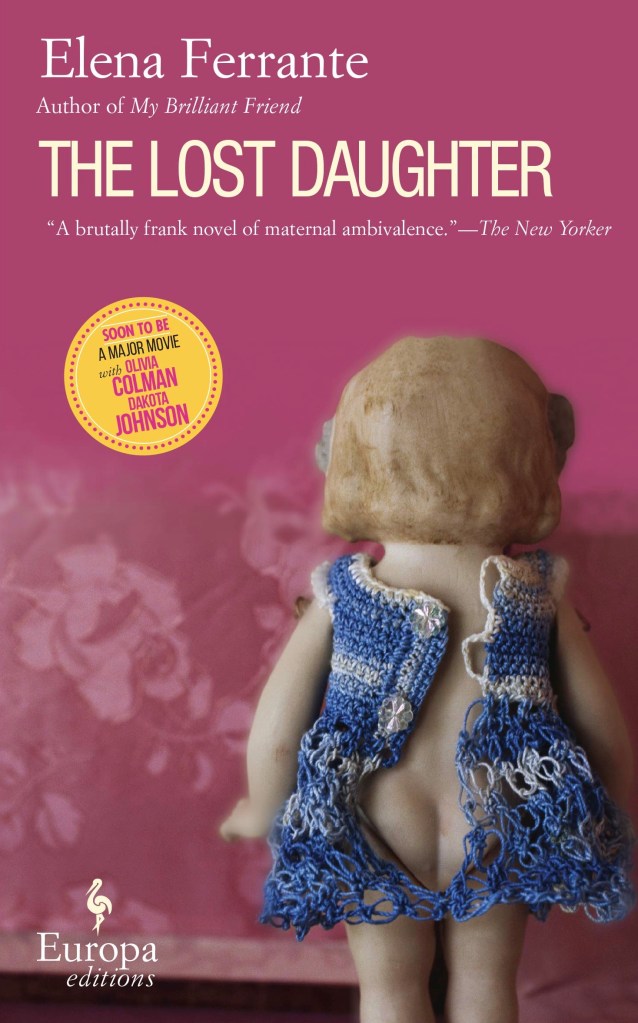
After her initial run-in with some of the members of the family, Leda makes a connection with Nina (Dakota Johnson) after Leda finds Nina’s daughter Elena when she goes missing on the beach. Then Leda does something that at the time seems strange—she steals Elena’s doll. Nina and the rest of her family search high and low for the doll, even going so far as to offer a reward for its safe return. Nina is worn threadbare. Elena is fractious and inconsolable. All the while, Leda is surreptitiously caring for the doll—cleaning it, buying it clothes, and caressing it much like one would an infant.

Nina is worn threadbare. Elena is fractious and inconsolable. All the while, Leda is surreptitiously caring for the doll—cleaning it, buying it clothes, and caressing it much like one would an infant.

Intermittent flashbacks show Leda as a young mother interacting with her daughters, Bianca and Martha. Anyone can see that she loves her daughters fiercely but lacks the mothering instinct often idolized in the popular culture. She feels smothered, bombarded. Every plea and poke strips her of something she’d much rather keep exclusively for herself. She’s like a beachcomber dodging scores of dive-bombing pelicans, a trapeze artist balancing on an ever-thinning wire. She cycles through irritation, rage, and agony like they’re outfits picked for different days of the week. When she begins getting recognized for her scholarship, she feels the pull toward escape like an iron filing to a magnet. Once a successful and handsome colleague (Peter Sarsgaard) gives her the professional validation she seeks as well as the sensual adulation she craves, the frayed apron strings are all but severed entirely.

She feels smothered, bombarded. Every plea and poke strips her of something she’d much rather keep exclusively for herself. She’s like a beachcomber dodging scores of dive-bombing pelicans, a trapeze artist balancing on an ever-thinning wire.

I won’t spoil the ending, mostly because I want everyone who reads this blog and everyone I know in real life to watch this film. Maggie Gyllenhaal and Olivia Colman have gifted us with one of the most honest depictions of motherhood ever seen in any medium. Many scholars have waxed poetic about the divided feminine for years, as anyone who’s had to listen to a lecture on the Madonna-whore complex can tell you. But, Gyllenhaal moves the dial beyond this simplistic dichotomy to encompass all the parts of womanhood seldom spoken about in tandem with motherhood. And she does so, with the help of Colman and Johnson, of course, without placing a value judgment on any of these planes of existence. These women are simply allowed to be, in all of their glorious complexity. That in itself is a tremendous achievement.

The Lost Daughter received a limited theatrical release beginning on December 17th, 2021 and began streaming on Netflix on December 31st, 2021.

Thanks as always for being a faithful reader of The Voracious Bibliophile. If you like what you see, please like, comment, follow, and subscribe to my email list to get notified of new posts as soon as they drop. You can also email me at fred.slusher@thevoraciousbibliophile.com or catch me on Twitter, Instagram, TikTok, and Pinterest @voraciousbiblog. Keep reading the world, one page (or pixel) at a time.

Quote for the Day: January 5th, 2022

The Lost Daughter by Elena Ferrante and Ann Goldstein (Translator)

The hardest things to talk about are the ones we ourselves can’t understand.

Elena Ferrante and Ann Goldstein (Translator), The Lost Daughter

Thanks as always for being a faithful reader of The Voracious Bibliophile. If you like what you see, please like, comment, follow, and subscribe to my email list to get notified of new posts as soon as they drop. You can also email me at fred.slusher@thevoraciousbibliophile.com or catch me on Twitter, Instagram, TikTok, and Pinterest @voraciousbiblog. Keep reading the world, one page (or pixel) at a time.

Quote for the Day: January 4th, 2022

A Promised Land by President Barack Obama

Enthusiasm makes up for a host of deficiencies.

President Barack Obama, A Promised Land

Thanks as always for being a faithful reader of The Voracious Bibliophile. If you like what you see, please like, comment, follow, and subscribe to my email list to get notified of new posts as soon as they drop. You can also email me at fred.slusher@thevoraciousbibliophile.com or catch me on Twitter, Instagram, TikTok, and Pinterest @voraciousbiblog. Keep reading the world, one page (or pixel) at a time.
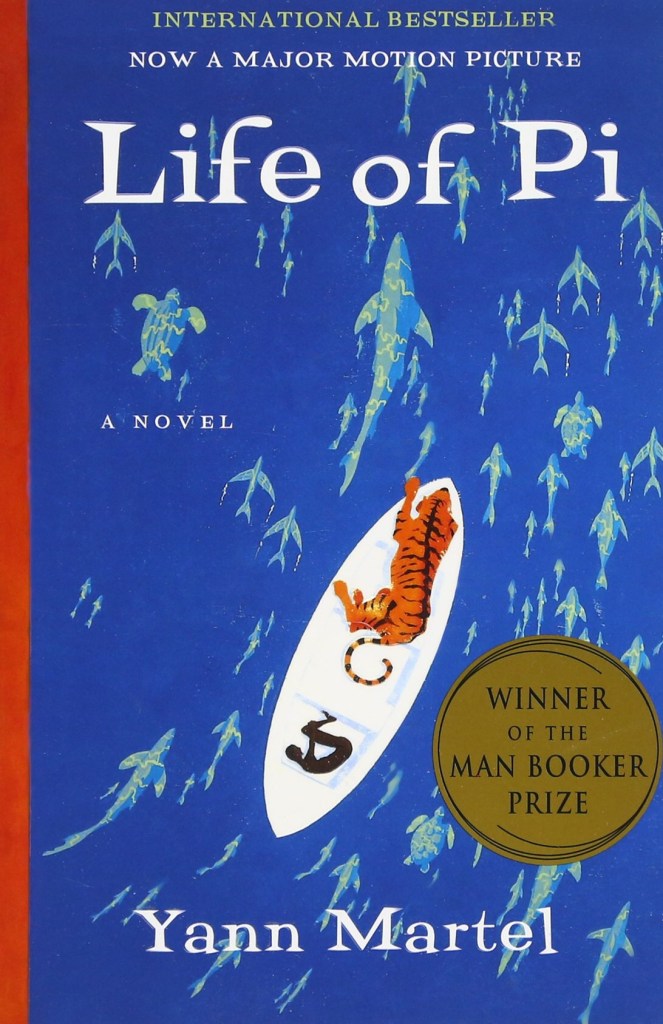
Quote for the Day: January 3rd, 2022

Life of Pi: A Novel by Yann Martel

To choose doubt as a philosophy of life is akin to choosing immobility as a means of transportation.

Yann Martel, Life of Pi: A Novel

Thanks as always for being a faithful reader of The Voracious Bibliophile. If you like what you see, please like, comment, follow, and subscribe to my email list to get notified of new posts as soon as they drop. You can also email me at fred.slusher@thevoraciousbibliophile.com or catch me on Twitter, Instagram, TikTok, and Pinterest @voraciousbiblog. Keep reading the world, one page (or pixel) at a time.
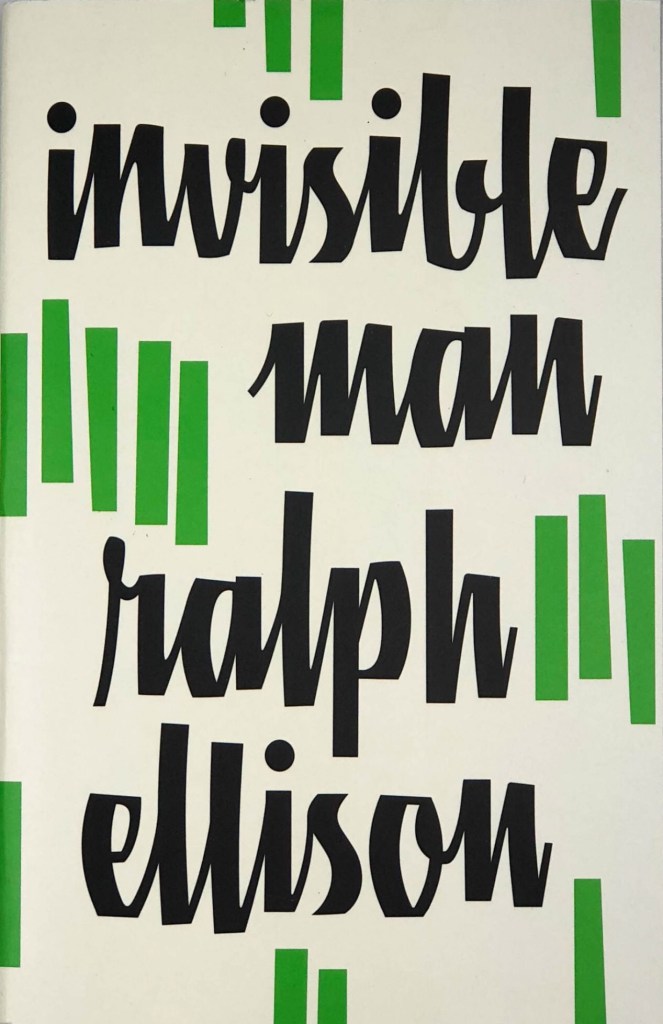
Quote for the Day: January 2nd, 2022

The Color Purple: A Novel by Alice Walker

People think pleasing God is all God cares about. But any fool living in the world can see it always trying to please us back.

Alice Walker, The Color Purple: A Novel

Thanks as always for being a faithful reader of The Voracious Bibliophile. If you like what you see, please like, comment, follow, and subscribe to my email list to get notified of new posts as soon as they drop. You can also email me at fred.slusher@thevoraciousbibliophile.com or catch me on Twitter, Instagram, TikTok, and Pinterest @voraciousbiblog. Keep reading the world, one page (or pixel) at a time.

Quote for the Day: January 1st, 2022

Let our New Year’s resolution be this: We will be there for one another as fellow members of humanity, in the finest sense of the word.

Göran Persson

Thanks as always for being a faithful reader of The Voracious Bibliophile. If you like what you see, please like, comment, follow, and subscribe to my email list to get notified of new posts as soon as they drop. You can also email me at fred.slusher@thevoraciousbibliophile.com or catch me on Twitter, Instagram, TikTok, and Pinterest @voraciousbiblog. Keep reading the world, one page (or pixel) at a time.
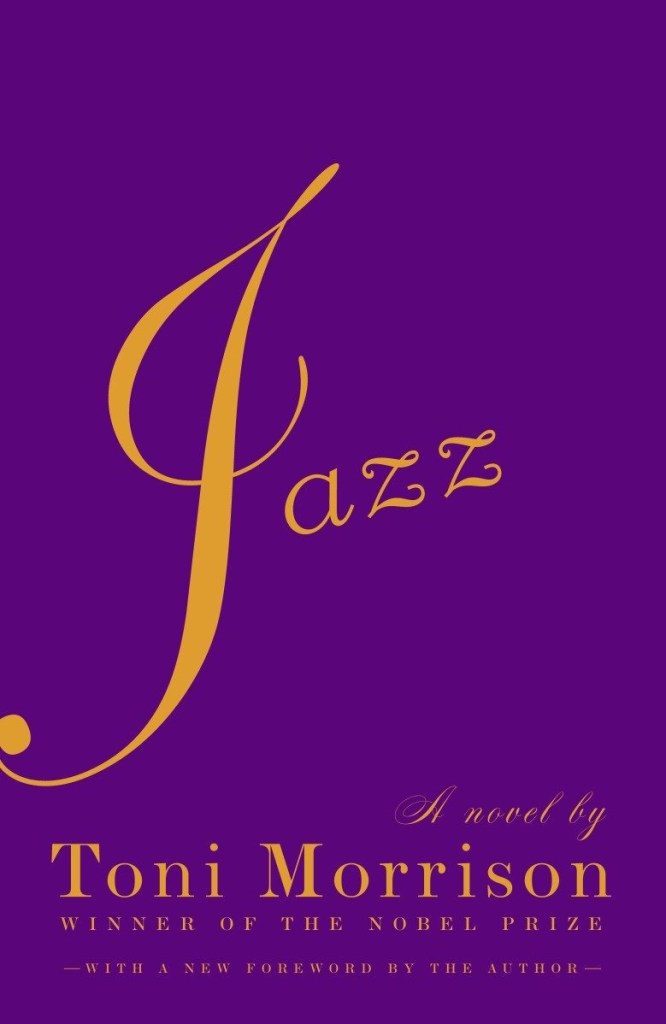
Quote for the Day: December 31st, 2021

Transcendent Kingdom: A Novel by Yaa Gyasi

We don’t know what we don’t know. We don’t even know the questions we need to ask in order to find out, but when we learn one tiny little thing, a dim light comes on in a dark hallway, and suddenly a new question appears.

Yaa Gyasi, Transcendent Kingdom: A Novel

Thanks as always for being a faithful reader of The Voracious Bibliophile. If you like what you see, please like, comment, follow, and subscribe to my email list to get notified of new posts as soon as they drop. You can also email me at fred.slusher@thevoraciousbibliophile.com or catch me on Twitter, Instagram, TikTok, and Pinterest @voraciousbiblog. Keep reading the world, one page (or pixel) at a time.

All Aboard the ARC: Teeny Houdini #1: The Disappearing Act by Katrina Moore (Words) and Zoe Si (Pictures)

Teeny Houdini #1: The Disappearing Act by Katrina Moore (Words) and Zoe Si (Pictures)

***Note: I received a free digital review copy of this book from NetGalley and Katherine Tegen Books in exchange for an honest review.***

Bessie Lee is perhaps the most precocious, mischievous, and big-hearted youngster to enter the scene of children’s literature since Junie B. Jones.

Bessie Lee is perhaps the most precocious, mischievous, and big-hearted youngster to enter the scene of children’s literature since Junie B. Jones. She’s a first-grader who lives with her parents, Gramma, and big sister Bailey. When her teacher, Ms. Stoltz, announces the upcoming First Grade Talent Show, Bessie’s head spins with dreams of grandeur, of wild applause and fame beyond imagination. She just needs a talent to get started with and she’ll be on her way.

Once she’s home, Bessie puts on her thinking hat and goes with her pet, Baby Rabbit, to her sister Bailey’s room to ask for her help in choosing a talent. At first, Bailey plays the part of the beleaguered older sister and insists she be left alone. However, at one point in the mostly one-sided conversation, Bailey looks at Bessie with her hat and clutching her rabbit and says, “What’s up, Houdini?” And thus a star is born. Bailey teaches Bessie all about the world’s most famous magician, and Bessie decides that becoming a Teeny Houdini herself will elevate her above her classmates and make her teeny in their eyes no longer.

As you can well imagine, chaos ensues, with Bessie being forced to learn some hard lessons along the way. In the end, and with a little help, she discovers that everyone has a little magic inside of them and that magic is worth celebrating.

In the end, and with a little help, she discovers that everyone has a little magic inside of them and that magic is worth celebrating.

Katrina Moore has created an instantly likable heroine in Bessie Lee, and Zoe Si’s soft Schulzesque illustrations are utterly adorable. I can’t wait to recommend this series to young readers and their caregivers and I’m eagerly awaiting the second book in the series. Two thumbs way up for Bessie Lee, the Teeny Houdini!

Teeny Houdini #1: The Disappearing Act is due to be released by Katherine Tegen Books on January 4th, 2022 and is now available to preorder wherever books are sold.

Thanks as always for being a faithful reader of The Voracious Bibliophile. If you like what you see, please like, comment, follow, and subscribe to my email list to get notified of new posts as soon as they drop. You can also email me at fred.slusher@thevoraciousbibliophile.com or catch me on Twitter, Instagram, TikTok, and Pinterest @voraciousbiblog. Keep reading the world, one page (or pixel) at a time.
Film Review: Being the Ricardos (2021); Directed by Aaron Sorkin

Promotional poster for Aaron Sorkin’s Being the Ricardos. Copyright 2021 Amazon Studios.

In Being the Ricardos, Kidman lends her talents for transformation to her portrayal of Lucille Ball, almost inarguably the greatest television comedienne to ever work in the medium.

If I hit him in the face until he is bleeding, does our insurance cover that?

Lucille Ball (Nicole Kidman), to her husband Desi Arnaz (Javier Bardem), about an irksome director

By now, American moviegoers are well-acquainted with Nicole Kidman and her talent for transformation. Woe unto the would-be cinephile who neglects to study her performance as Virginia Woolf in Stephen Daldry’s The Hours, for which she was awarded the 2002 Academy Award for Best Actress. In Being the Ricardos, Kidman lends her talents for transformation to her portrayal of Lucille Ball, almost inarguably the greatest television comedienne to ever work in the medium. You have to give props to pioneers Carol Burnett and Betty White as well, but I would argue that they were not possible without Lucille Ball paving the way for them with her grape-stained feet. Javier Bardem stars alongside Kidman as Desi Arnaz, Lucille’s real-life and television husband. Being the Ricardos also benefits from its stellar supporting cast, including Academy Award-winning actor J.K. Simmons as William Frawley, Tony Award-winning actress Nina Arianda as Vivian Vance, and Alia Shawkat as Madelyn Pugh. Linda Lavin portrays an older Pugh in mockumentary-style interviews interspersed throughout the film, and it should be said that any production benefits from Lavin’s inclusion.

Far from being an overarching biopic of Ball’s life or the marriage of Lucy and Desi, Being the Ricardos instead focuses in on one turbulent week during the filming of I Love Lucy.

Far from being an overarching biopic of Ball’s life or the marriage of Lucy and Desi, Being the Ricardos instead focuses in on one turbulent week during the filming of I Love Lucy. I have to mention here that parts of the film are blatantly ahistorical. Desi’s ousting as a philanderer, Lucy’s Communism debacle, and the announcement of her pregnancy did not all occur in the same week. However, I am willing to forgive Aaron Sorkin for condensing more drama into that fateful week than actually existed because we are talking about the cinema here and sometimes the cinema requires a little greasing of the wheels, so to speak.

What chafes me is that Lucy’s deeper involvement with Communism wasn’t explored. If they weren’t going to do it justice it should have been left out entirely. Along with that, certain episodes of I Love Lucy that were discussed in the film were misnumbered for no justifiable reason, allowing the pedantic among us (yours truly included) to itch with irritation.

I feel like the film would have been better served by focusing on one conflict rather than oscillating between numerous subplots that make the narrative shallow when the objective is depth.

I feel like the film would have been better served by focusing on one conflict rather than oscillating between numerous subplots that make the narrative shallow when the objective is depth. They could have eighty-sixed the Communism and the concomitant hokey convo between Desi, J. Edgar Hoover, and the live studio audience near the end of the film. Instead, to give the film its proper denouement, Lucy could have confronted Desi about his philandering right before the taping of the episode, leaving him shocked and shaken while Lucy triumphs once more as America’s most-beloved housewife.

The fact is, I hate to be so critical of a movie I enjoyed so much but I feel like a good movie was robbed of the opportunity to be great simply because Sorkin was trying to do too much at once. In my opinion, the best scenes in the film are the ones between Kidman and Arianda (Vivian Vance) and Kidman and Shawkat (Evelyn Pugh), respectively.

In my opinion, the best scenes in the film are the ones between Kidman and Arianda (Vivian Vance) and Kidman and Shawkat (Evelyn Pugh), respectively.

During the scenes where Lucy is engaged in conversation with the two women, the gender politics of the era (of any era, really) are thrown into sharp relief. Pugh’s presence as a woman in a writer’s room when so few women were given seats at the table provides fodder for excellent conversations about agency, representation, and the sharing of credit in a collective creative process. At the same time, Vance’s body issues and self-consciousness surrounding her weight illuminate the stark contrast in privilege that exists between Lucy, who is thin, trim, and wields enormous power on the set as the title character, and Vance, who is often written as the designated ugly fat friend married to a cantankerous old man when she is so much more than that.

Pugh’s presence as a woman in a writer’s room when so few women were given seats at the table provides fodder for excellent conversations about agency, representation, and the sharing of credit in a collective creative process…At the same time, Vance’s body issues and self-consciousness surrounding her weight illuminate the stark contrast in privilege that exists between Lucy, who is thin, trim, and wields enormous power on the set as the title character, and Vance, who is often written as the designated ugly fat friend married to a cantankerous old man when she is so much more than that.

J.K. Simmons is being lauded for his turn as William Frawley, and while his performance is more than solid, I really want to see the Academy give Nina Arianda some love too, if for nothing else but deftly navigating Vance’s struggles vis-à-vis the gendered body politics of both the entertainment industry and the country at-large during the 1950s. When you see Vance struggling, it reminds you that precious little progress has been made toward body positivity and acceptance of people of all sizes, especially for women and femme-presenting people.

All in all, despite its cluttered script and odd pacing, Being the Ricardos succeeds due to its incredible performances from not only Kidman, who is a revelation, but the rest of the powerhouse cast as well.

Being the Ricardos was released on December 10th, 2021 and is now available to stream on Amazon Prime Video.

Thanks as always for being a faithful reader of The Voracious Bibliophile. If you like what you see, please like, comment, follow, and subscribe to my email list to get notified of new posts as soon as they drop. You can also email me at fred.slusher@thevoraciousbibliophile.com or catch me on Twitter, Instagram, TikTok, and Pinterest @voraciousbiblog. Keep reading the world, one page (or pixel) at a time.

Quote for the Day: December 30th, 2021

Any time we’re growing, it literally hurts. There has to be a cutoff point where you’re like, stop driving yourself crazy.

Regina Slusher, a.k.a. my mom

My mom has talked me down off so many cliffs. In fact, I sort of picture her permanently in residence near the edge, sitting in a lawn chair, maybe reading one of the books she enjoys (aside from The Bible, she loves Amish romances and true-crime stories) and sipping from a bottle of Lipton Green Tea. She waits there patiently near the abyss while from time to time, sometimes more than once a day, I zoom through like the Roadrunner to eagerly embrace my doom.

She waits there patiently near the abyss while from time to time, sometimes more than once a day, I zoom through like the Roadrunner to eagerly embrace my doom.

Because of her, I’m more stable than I used to be. Let’s just admit it: Life leaves none of us unscarred. Having someone who can console you while also telling you to get your sh*t together (without actually saying that because my mother doesn’t swear *ever*) is one of life’s greatest gifts. It doesn’t escape me how incredibly blessed I am to have her in my life, even though she probably thinks she annoys me most of the time.

Life leaves none of us unscarred.

And I’m going to be honest, sometimes she does. But that’s only because I much prefer the uncharted path, the one that I choose for myself. And I discover every time that she was right, that I should have taken her advice, listened to her counsel, learned from her mistakes. But, my dear reader-friends, I’ve learned one time-tested and incontrovertible truth: There’s nothing quite like a scar to keep you from running barefoot through the brambles again.

Thanks for everything, mom. I promise I do try to listen to you.

Thanks as always for being a faithful reader of The Voracious Bibliophile. If you like what you see, please like, comment, follow, and subscribe to my email list to get notified of new posts as soon as they drop. You can also email me at fred.slusher@thevoraciousbibliophile.com or catch me on Twitter, Instagram, TikTok, and Pinterest @voraciousbiblog. Keep reading the world, one page (or pixel) at a time.