Morning dragonflies tricked by the sliding glass door, scattered on the porch like cigarettes torn in half, & a horse in watercolor, its joints light blue circles. Golf carts zoom over the green breasts of the hills. I slept on my hands, flat pillows filled with a puzzle of tiny bones. Loneliness’s
gray blanket, last night’s mascara, loneliness— a dragonfly hovers like spit in slow motion near the glass, promises to fill the pane with itself like his hand, my face reflecting back at him. Half the world is still asleep, my breasts alive & waking from my shirt. Wind in circles
through grass, horses tip in its direction. Saturated circles, faces, move the muted TV screen, broadcast more loneliness: buy this property, try this exercise. A woman with hard breasts isn’t convincing. When I shift in myself, glass breaks inside me, a sky losing over half its stars, desperate dark hands
finding something else to fill it. Like hands, birds clap their wings in desperation’s applause, circling as if their species is dying out. My throat, half gastrolith, half swollen tequila, it’s not loneliness we flying things try to avoid, but in glass a painful logic, one you learn like the breast’s.
A rainbow interrupts the white cloud breasts, like mine, where once his hands lived, then destroyed. My breath against silence’s smooth glass, longing for the wisdom of a tree’s hollow, sex circle, how it endures loneliness by invitations to other survivors of this world from half
Iliana Rocha earned her Ph.D. in Literature and Creative Writing from Western Michigan University. She is currently an Assistant Professor at the University of Tennessee, Knoxville. Her debut collection of poetry, Karankawa, won the 2014 Donald Hall Prize in Poetry. You can read more about Iliana Rocha and her work on her website.
Thanks as always for being a faithful reader of The Voracious Bibliophile. If you like what you see, please like, comment, follow, and subscribe to my email list to get notified of new posts as soon as they drop. You can also email me at fred.slusher@thevoraciousbibliophile.com or catch me on Twitter, Instagram, TikTok, and Pinterest @voraciousbiblog. Keep reading the world, one page (or pixel) at a time.
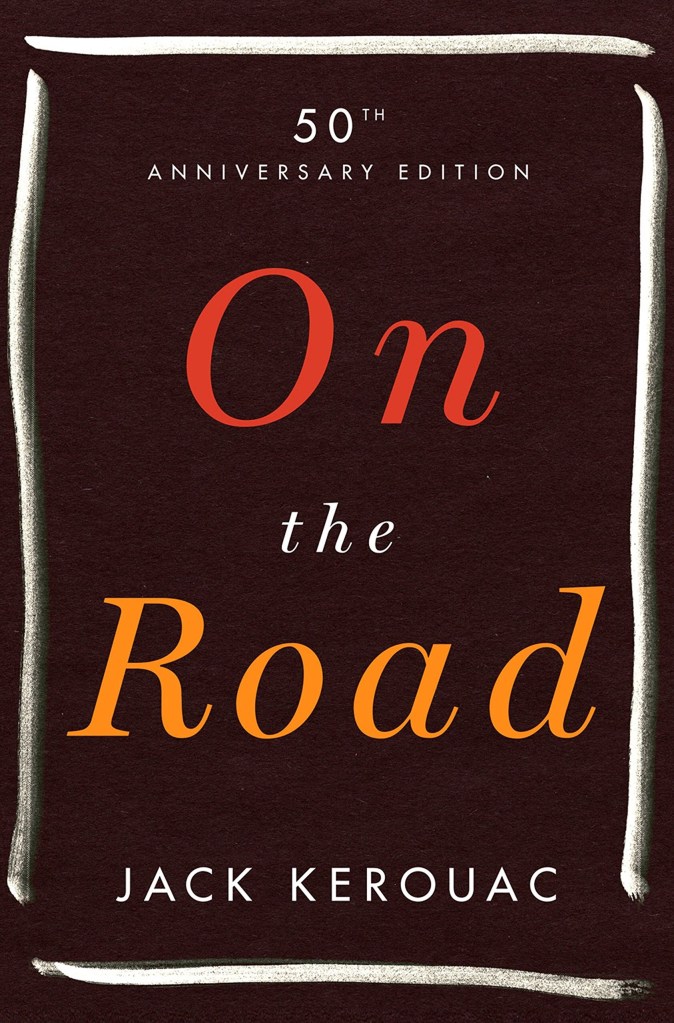
[…]the only people for me are the mad ones, the ones who are mad to live, mad to talk, mad to be saved, desirous of everything at the same time, the ones who never yawn or say a commonplace thing, but burn, burn, burn like fabulous yellow roman candles exploding like spiders across the stars and in the middle you see the blue centerlight pop and everybody goes ‘Aww!’
Thanks as always for being a faithful reader of The Voracious Bibliophile. If you like what you see, please like, comment, follow, and subscribe to my email list to get notified of new posts as soon as they drop. You can also email me at fred.slusher@thevoraciousbibliophile.com or catch me on Twitter, Instagram, TikTok, and Pinterest @voraciousbiblog. Keep reading the world, one page (or pixel) at a time.
Did I really go through all of the nominations for this year’s Oscars to figure out which films received the most nominations? I did. This year, 53 different films have been recognized by the Academy of Motion Picture Arts and Sciences for their cinematic excellence.
One question I ponder quite often when it comes to film is, “What separates a good film from a great film? A great film from an epic film?”
One question I ponder quite often when it comes to film is, “What separates a good film from a great film? A great film from an epic film?” Some of it boils down to personal taste, yes, but most cinephiles (yours truly included) would argue there are certain elements which comprise any film worth its stock, pun very much intended. The first and most important of these elements is cohesiveness. All the parts of a film must work in conjunction with one another to tell a certain story. You can have a great script but it’s worthless if you have mediocre actors reciting lines from it. You can have GOATs like Meryl Streep acting in your movie but if your script is subpar, no amount of Streeping will save it.
For me, a great film is a film where everything is not only in balance but complementary. There’s subtlety, nuance, and most important of all—craft.
For me, a great film is a film where everything is not only in balance but complementary. There’s subtlety, nuance, and most important of all—craft. A great actor can make you experience several different emotions in the same scene. A great set can transport you back through time. A great cinematographer can transcend time and space to make you see things in ways you’ve never seen them before. A score, crafted just so to ebb and flow within a film’s narrative, can emphasize elements that might otherwise have gone unnoticed.
An epic film not only has all of the elements of a great film, but a certain je ne sais quoi that elevates it above the pack, that makes it timeless. An epic film is larger than life even when the story it’s telling is small in scope.
And an epic film? An epic film not only has all of the elements of a great film, but a certain je ne sais quoi that elevates it above the pack, that makes it timeless. An epic film is larger than life even when the story it’s telling is small in scope. It has a universality that makes it resonate with people from all walks of life, from all places and all times. When I think of epic films, I think of The Godfather. The Wizard of Oz. Gone with the Wind. Sunset Boulevard. Titanic. All of these have elements working in conjunction with one another, and all have not a small amount of magic cooked in for good measure. They quite possibly will outlast time, and rightfully so.
See below for a list of all the films nominated for an Academy Award this year. The number in parentheses beside each film indicates how many nominations it has received this Oscars season.
The Power of the Dog (12)
Dune (10)
Belfast (7)
West Side Story (7)
King Richard (6)
Don’t Look Up (4)
Drive My Car (4)
Nightmare Alley (4)
Being the Ricardos (3)
CODA (3)
Encanto (3)
Flee (3)
Licorice Pizza (3)
The Lost Daughter (3)
No Time to Die (3)
The Tragedy of Macbeth (3)
Cruella (2)
The Eyes of Tammy Faye (2)
Parallel Mothers (2)
tick, tick…Boom! (2)
The Worst Person in the World (2)
Affairs of the Art (1)
Ala Kachuu – Take and Run (1)
Ascension (1)
Attica (1)
Audible (1)
Bestia (1)
Boxballet (1)
Coming 2 America (1)
Cyrano (1)
The Dress (1)
Four Good Days (1)
Free Guy (1)
The Hand of God (1)
House of Gucci (1)
Lead Me Home (1)
The Long Goodbye (1)
Luca (1)
Lunana: A Yak in the Classroom (1)
The Mitchells vs. the Machines (1)
On My Mind (1)
Please Hold (1)
The Queen of Basketball (1)
Raya and the Last Dragon (1)
Robin Robin (1)
Shang-Chi and the Legend of the Ten Rings (1)
Spencer (1)
Spider-Man: No Way Home (1)
Summer of Soul (…Or, When the Revolution Could Not Be Televised) (1)
Three Songs for Benazir (1)
When We Were Bullies (1)
The Windshield Wiper (1)
Writing with Fire (1)
The 94th Academy Awards ceremony will take place at the Dolby Theatre in Hollywood, Los Angeles, California, on March 27th, 2022.
Thanks as always for being a faithful reader of The Voracious Bibliophile. If you like what you see, please like, comment, follow, and subscribe to my email list to get notified of new posts as soon as they drop. You can also email me at fred.slusher@thevoraciousbibliophile.com or catch me on Twitter, Instagram, TikTok, and Pinterest @voraciousbiblog. Keep reading the world, one page (or pixel) at a time.
Thanks as always for being a faithful reader of The Voracious Bibliophile. If you like what you see, please like, comment, follow, and subscribe to my email list to get notified of new posts as soon as they drop. You can also email me at fred.slusher@thevoraciousbibliophile.com or catch me on Twitter, Instagram, TikTok, and Pinterest @voraciousbiblog. Keep reading the world, one page (or pixel) at a time.
James Baldwin once said that he was “terrified at the moral apathy, the death of the heart” that he witnessed from his own countrymen. Being a Black gay man born in 1924 certainly guaranteed for Baldwin that he would experience a two-pronged prejudice, a hatred of an insidious and endemic sort, a hatred woven into the fabric of the American ideal. This ideal disenfranchises, stigmatizes, ostracizes, redlines, segregates, colonizes, abuses, rapes, and murders all that deviates from it; all that is not lily-white, heterosexual, capitalistic, and Christian is hewn down and cast into the fire. James Baldwin saw the truth, and he also saw his isolation within that truth. I cannot help but imagine that he must have been an incredibly lonely man.
James Baldwin saw the truth, and he also saw his isolation within that truth. I cannot help but imagine that he must have been an incredibly lonely man.
We still have systemic racism and homophobia, but there’s a new beast in town rearing its ugly head to expose our inequalities: COVID-19. The COVID-19 pandemic is now in its third year of ravaging the world. Because we’ve not reached herd immunity, we’ve cycled through two known variants of the disease, Delta and now Omicron. Don’t misread me: I am not comparing social ills to a global pandemic. However, there is a stark similarity between the former and the latter in terms of the lack of care shown to marginalized groups.
Because we’ve not reached herd immunity, we’ve cycled through two known variants of the disease, Delta and now Omicron.
I can’t tell you how many times I’ve heard someone say something along the lines of, “Well, they were elderly, they probably didn’t have long to live anyway.” Or: “They had underlying conditions, so it wasn’t just COVID that killed them.” Or: “I’m not wearing a mask because I’m vaccinated and I’m not high-risk anyway.” These sentiments reach across political and socioeconomic lines. I’ve seen sentiments like these from both Republicans and Democrats, older people and younger people, well-to-do and poor people, etc. The apathy extended toward the immunocompromised, toward the disabled and sick and otherwise vulnerable, is appalling to me. I am disgusted by it. And I cannot condone it. I can’t stay silent about it any longer.
The apathy extended toward the immunocompromised, toward the disabled and sick and otherwise vulnerable, is appalling to me.
I mean, what is it about taking basic precautions that causes people to be so cavalier with not only their own lives but the lives of countless strangers? Wear a mask. Get vaccinated. Practice social distancing. Wash your hands. Are we really, as a society, so heart-deadened as to not be willing to do these simple things? The evidence tells me yes.
Are we really, as a society, so heart-deadened as to not be willing to do these simple things? The evidence tells me yes.
I understand that part of it is the lack of centralized and non-contradictory guidance from public health authorities, yes, but a larger part of it stems from a bootstraps ethos which prioritizes the needs and wants of the self above the common good. There has to be something wrong with a country, with a world, in which the majority of people can’t be bothered to so much as cover their face to protect an unknown stranger from an agonizing death, alone and isolated from their loved ones. Like Baldwin, I am terrified at the moral apathy and the death of the heart I have seen since this pandemic started.
There has to be something wrong with a country, with a world, in which the majority of people can’t be bothered to so much as cover their face to protect an unknown stranger from an agonizing death, alone and isolated from their loved ones.
Those of you who keep up with my blog know that I recently contracted COVID-19. I tested positive on January 15th. I gave it to both of my parents, who live with me and are disabled. We live in a small two-bedroom apartment so infection was a foregone conclusion. I cannot put in words the terror I’ve experienced wondering if I might kill them by proxy. For more than two years now, I have taken every possible precaution. I’m vaccinated (as are both of my parents). I always wear a mask when I’m around people I don’t live with. I sanitize and wash and disinfect. All of that wasn’t enough to protect me because so many other people failed to do their part. So many other people failed to practice a baseline level of care to keep me safe, to keep my family safe. I don’t know if I am capable of forgiving them for that.
All of that wasn’t enough to protect me because so many other people failed to do their part. So many other people failed to practice a baseline level of care to keep me safe, to keep my family safe. I don’t know if I am capable of forgiving them for that.
The old adage says that it takes a village. Usually it refers to child-rearing, but I think it can equally apply to stopping the spread of a deadly disease. In this case, the majority of the other villagers are off enjoying a feast until they’re plucked into the woods and tied to a tree to die like the rest of us. Forgive me my labored metaphor, but if you’ve been with me here for long, you know how I love to labor my metaphors.
In this case, the majority of the other villagers are off enjoying a feast until they’re plucked into the woods and tied to a tree to die like the rest of us.
After writing the preceding paragraph, I left this post in my drafts for several days before I was emotionally capable of returning to it. After writing the preceding sentence, I stopped to watch a couple of films with my mother. You see, I am hesitant to finish a piece with an unhappy conclusion. I feel like a positive quip here would be disingenuous if not rude and unfeeling. Perhaps it is those of us who feel such palpable rage during this time that are the only ones who are truly living in the world as we know it. Everyone else, it would seem, is floating in a dream.
Everyone else, it would seem, is floating in a dream.
I want everyone to do the right thing. I want everyone to perform a series of correct actions which would render the pandemic all but null. But unfortunately, I cannot make people care who do not. I cannot bully someone into having empathy for other people, inconvenient though that fact may be. The only thing I can do is bear witness—stay awake. We owe the dead our consciousness if nothing else.
The only thing I can do is bear witness—stay awake. We owe the dead our consciousness if nothing else.
Thanks as always for being a faithful reader of The Voracious Bibliophile. If you like what you see, please like, comment, follow, and subscribe to my email list to get notified of new posts as soon as they drop. You can also email me at fred.slusher@thevoraciousbibliophile.com or catch me on Twitter, Instagram, TikTok, and Pinterest @voraciousbiblog. Keep reading the world, one page (or pixel) at a time.
Thanks as always for being a faithful reader of The Voracious Bibliophile. If you like what you see, please like, comment, follow, and subscribe to my email list to get notified of new posts as soon as they drop. You can also email me at fred.slusher@thevoraciousbibliophile.com or catch me on Twitter, Instagram, TikTok, and Pinterest @voraciousbiblog. Keep reading the world, one page (or pixel) at a time.
Thanks as always for being a faithful reader of The Voracious Bibliophile. If you like what you see, please like, comment, follow, and subscribe to my email list to get notified of new posts as soon as they drop. You can also email me at fred.slusher@thevoraciousbibliophile.com or catch me on Twitter, Instagram, TikTok, and Pinterest @voraciousbiblog. Keep reading the world, one page (or pixel) at a time.
Thanks as always for being a faithful reader of The Voracious Bibliophile. If you like what you see, please like, comment, follow, and subscribe to my email list to get notified of new posts as soon as they drop. You can also email me at fred.slusher@thevoraciousbibliophile.com or catch me on Twitter, Instagram, TikTok, and Pinterest @voraciousbiblog. Keep reading the world, one page (or pixel) at a time.
First of all, I’d like to thank the Academy for choosing to reveal this year’s Oscar nominees on my birthday. It was truly a fantastic way to begin the celebrations. Overall, I’d say I’m happy with the choices this year. I was holding my breath when they announced the nominees for Best Actress because I was so afraid Kristen Stewart was going to be snubbed. Thankfully, she pulled out a nomination and who knows? Bella Swan may be walking away with an Oscar come March 27th.
Now I’d like to compare my personal choices in eight major categories with the choices made by the Academy. Without further ado, here they are:
My Choices: Best Picture
Belfast
CODA
Drive My Car
Dune
King Richard
Licorice Pizza
The Lost Daughter
The Power of the Dog
The Tragedy of Macbeth
West Side Story
Official Nominations: Best Picture
Belfast
CODA
Don’t Look Up
Drive My Car
Dune
King Richard
Licorice Pizza
Nightmare Alley
The Power of the Dog
West Side Story
It looks like the Academy agreed with me on all but two films: The Lost Daughter and The Tragedy of Macbeth. I knew The Lost Daughter was a long shot but I’m really offended about Macbeth. In place of the films I picked, the Academy chose Don’t Look Up and Nightmare Alley. All of the films are worthy of the distinction but there can only be so many nominees.
My Choices: Best Director
Paul Thomas Anderson, Licorice Pizza
Kenneth Branagh, Belfast
Jane Campion, The Power of the Dog
Maggie Gyllenhaal, The Lost Daughter
Ryûsuke Hamaguchi, Drive My Car
Official Nominations: Best Director
Kenneth Branagh, Belfast
Ryûsuke Hamaguchi, Drive My Car
Paul Thomas Anderson, Licorice Pizza
Jane Campion, The Power of the Dog
Steven Spielberg, West Side Story
So I overshot on Maggie Gyllenhaal. Sue me. Four out of five isn’t bad.
My Choices: Best Actor
Benedict Cumberbatch, The Power of the Dog
Peter Dinklage, Cyrano
Andrew Garfield, tick, tick… Boom!
Will Smith, King Richard
Denzel Washington, The Tragedy of Macbeth
Official Nominations: Best Actor
Javier Bardem, Being the Ricardos
Benedict Cumberbatch, The Power of the Dog
Andrew Garfield, tick, tick… Boom!
Will Smith, King Richard
Denzel Washington, The Tragedy of Macbeth
Switch Dinklage and Bardem and I nailed it. I’m not surprised Bardem secured a nomination given how much the Academy loves movies about show business, but I still remain unimpressed with his performance. I may need to watch Being the Ricardos again and reevaluate my opinion. If I do, you all will be the first to know.
My Choices: Best Supporting Actor
Bradley Cooper, Licorice Pizza
Ciarán Hinds, Belfast
Troy Kotsur, CODA
Jesse Plemons, The Power of the Dog
Kodi Smit-McPhee, The Power of the Dog
Official Nominations: Best Supporting Actor
Ciarán Hinds, Belfast
Troy Kotsur, CODA
Jesse Plemons, The Power of the Dog
J.K. Simmons, Being the Ricardos
Kodi Smit-McPhee, The Power of the Dog
I’m not surprised about J.K. Simmons. For one thing, he’s already won the Oscar for Best Actor in a Supporting Role once and the Academy tends to reward industry veterans. Combined with that, he was a very convincing William Frawley. Up until now, the award has all but sat atop Kodi Smit-McPhee’s mantle. Now, it’s anyone’s guess who will walk away with Oscar gold. One thing that’s working against Kodi Smit-McPhee is that his costar Jesse Plemons is competing against him in the same category. Greater odds have been surmounted but now that Simmons is in the ring, we’ll have to wait until the night of the ceremony to see who will win.
My Choices: Best Actress
Jessica Chastain, The Eyes of Tammy Faye
Olivia Colman, The Lost Daughter
Nicole Kidman, Being the Ricardos
Frances McDormand, The Tragedy of Macbeth
Kristen Stewart, Spencer
Official Nominations: Best Actress
Jessica Chastain, The Eyes of Tammy Faye
Olivia Colman, The Lost Daughter
Penélope Cruz, Parallel Mothers
Nicole Kidman, Being the Ricardos
Kristen Stewart, Spencer
Frances McDormand is usually a safe bet, but I guess the Academy has decided she’s been recognized enough in the past several years. At any rate and once again, four out of five isn’t bad.
My Choices: Best Supporting Actress
Caitríona Balfe, Belfast
Jessie Buckley, The Lost Daughter
Ariana DeBose, West Side Story
Ann Dowd, Mass
Kathryn Hunter, The Tragedy of Macbeth
Official Nominations: Best Supporting Actress
Jessie Buckley, The Lost Daughter
Ariana DeBose, West Side Story
Judi Dench, Belfast
Kirsten Dunst, The Power of the Dog
Aunjanue Ellis, King Richard
I’m the most angry about Kathryn Hunter being snubbed. Did the Academy voters even watch The Tragedy of Macbeth?
My Choices: Best Original Screenplay
Belfast
Don’t Look Up
The French Dispatch of the Liberty, Kansas Evening Sun
King Richard
Licorice Pizza
Official Nominations: Best Original Screenplay
Belfast
Don’t Look Up
King Richard
Licorice Pizza
The Worst Person in the World
Four out of five. That appears to be how I’m trending.
My Choices: Best Adapted Screenplay
CODA
Dune
The Lost Daughter
The Power of the Dog
The Tragedy of Macbeth
Official Nominations: Best Adapted Screenplay
CODA
Drive My Car
Dune
The Lost Daughter
The Power of the Dog
Well, that’s it. Let me know what you think. Like the rest of you, I’ve got a lot of movies to watch.
Thanks as always for being a faithful reader of The Voracious Bibliophile. If you like what you see, please like, comment, follow, and subscribe to my email list to get notified of new posts as soon as they drop. You can also email me at fred.slusher@thevoraciousbibliophile.com or catch me on Twitter, Instagram, TikTok, and Pinterest @voraciousbiblog. Keep reading the world, one page (or pixel) at a time.
Thanks as always for being a faithful reader of The Voracious Bibliophile. If you like what you see, please like, comment, follow, and subscribe to my email list to get notified of new posts as soon as they drop. You can also email me at fred.slusher@thevoraciousbibliophile.com or catch me on Twitter, Instagram, TikTok, and Pinterest @voraciousbiblog. Keep reading the world, one page (or pixel) at a time.





 The Voracious Bibliophile