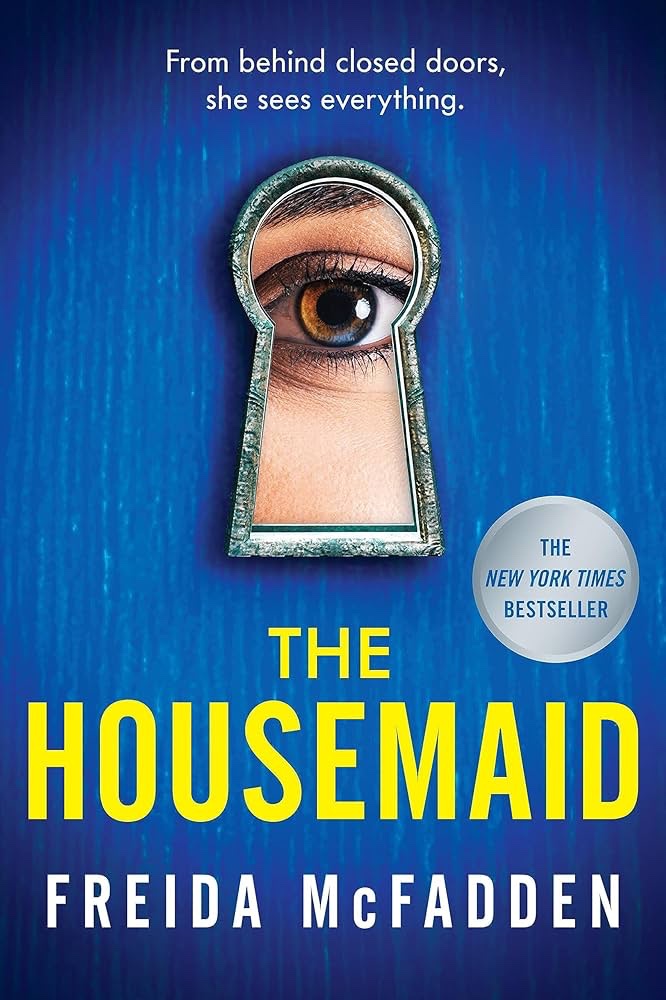
Full of the twists and turns that fans of Freida McFadden have come to expect from the newly-minted Queen of Suspense, The Housemaid is one of those books that takes old tropes and breathes new life into them. I tried my best to be a hater, thinking that no book this hyped could actually be good, but it was a thrill ride from beginning to end. I highly recommend reading it with a friend because you’ll want to have someone to talk to when the twists start coming.
I read it with one of my coworkers and we’re on to the second book now. Several of my customers have told me the second and third books in the series aren’t as good but I guess we’ll find out.
The Housemaidcan be purchased wherever books are sold, but I bought my copy through Books-A-Million, so that’s where I’m linking to.
Thanks as always for being a faithful reader of The Voracious Bibliophile. If you like what you see, please like, comment, follow, and subscribe to my email list to get notified of new posts as soon as they drop. You can also email me at fred.slusher@thevoraciousbibliophile.com or catch me on Twitter, Instagram, TikTok, and Pinterest @voraciousbiblog. Keep reading the world, one page (or pixel) at a time.
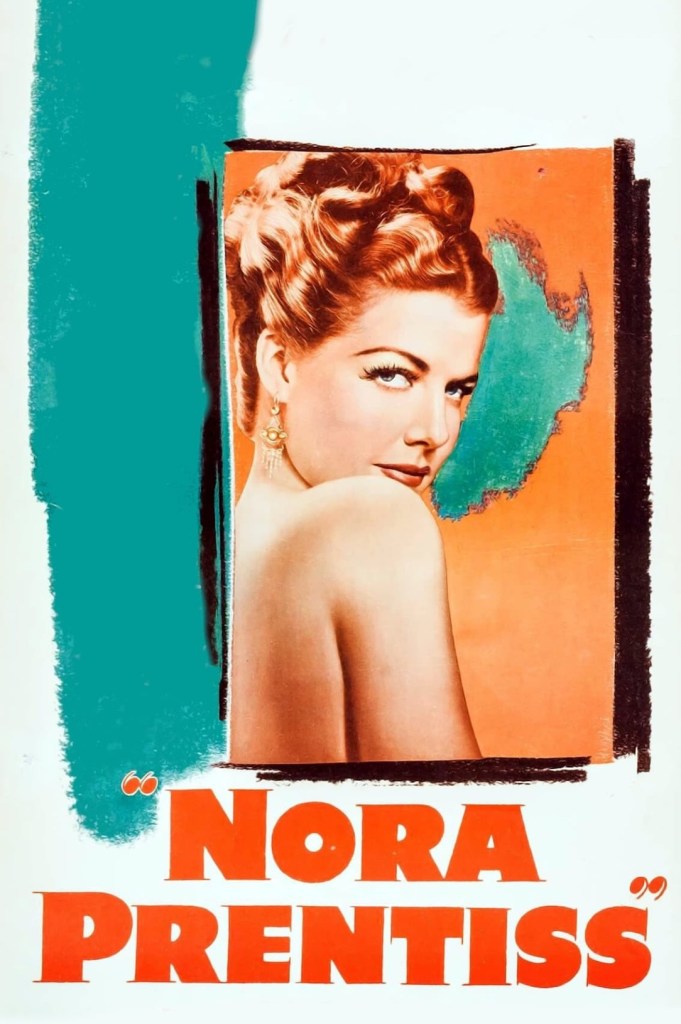
Film poster for Nora Prentiss(1947); directed by Vincent Sherman.
Rarely am I gobsmacked by a film, but Nora Prentissfully smacked my gob. The premise, if not executed as well as it was, reads a trifle ridiculous. A man convicted of his own murder — preposterous, right? Not if all the stars in the universe align at precisely the same time to screw you.
This film wouldn’t have worked if the femme fatale had been a slinky seductress, or the male lead an irredeemable womanizer. No, this is simply a tale of the wrong people falling hopelessly in love with one another when circumstances prevent them from being able to honor that love in a way that doesn’t hurt them both, with other people’s lives as collateral damage.
James Wong Howe’s cinematography and Franz Waxman’s score are both perfect complements to this dark tale of what happens when good people give in to their worst impulses and get in too deep too quickly to escape the pull of oblivion.
Thanks as always for being a faithful reader of The Voracious Cinephile. If you like what you see, please like, comment, follow, and subscribe to my email list to get notified of new posts as soon as they drop. Keep watching the world, one frame at a time.
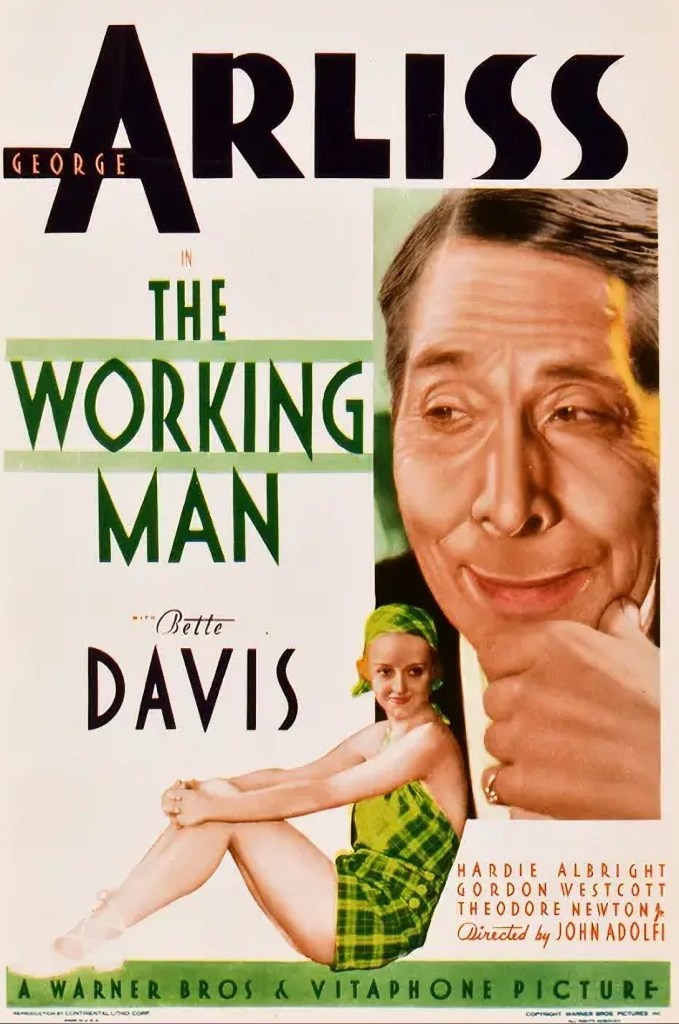
Film poster for The Working Man(1933); directed by John G. Adolfi.
The Working Manis a delightful, utterly charming Pre-Code comedy helmed by George Arliss and Bette Davis, with supporting performances by Theodore Newton, Hardie Albright (who is absolutely adorable here), and Gordon Westcott.
Arliss stars as John Reeves, a shoe magnate cut from the same cloth as Phil Knight. He runs his ship with an iron fist, insisting on growth and excellence despite the challenges of the Great Depression. His only competition comes from his former best friend Tom Hartland, who also owns a shoe company. At the start of the film, Reeves is beside himself because his firm is losing sales to Hartland, despite the purported superiority of the Reeves shoes.
When Hartland unexpectedly dies, Reeves experiences a bevy of complicated feelings. Despite their rivalry, they were once friends and he didn’t hold any real malice toward the man, despite the fact that Hartland had married the love of his life and he had remained a confirmed bachelor ever since.
At the prodding of his nephew, who is also the company’s general manager, he goes on a fishing trip to see an old friend in Maine. Coincidentally, their fishing expedition is interrupted by the mooring of a yacht full of carousing rabble-rousers. The yacht, it turns out, is owned by the Hartland heirs, the son and daughter (played by Theodore Newton and Bette Davis) of his recently deceased former friend. He becomes friendly with them and leaves his friend’s fishing boat to join them on their yacht to play cards.
At first, his intentions are to be nosy and size up his competition, but he quickly learns that the two youngsters have been burning the candle at both ends and squandering the fortune their father worked his entire life to amass for their comfort. It doesn’t help that the company is being terrible mismanaged (maliciously) by Fred Pettison, whom their father had trusted. He surmises that he plans to drive the company into the ground and buy it at a bargain so he can reinvigorate it and make himself rich. When he calls his lawyer to facilitate an offer for the company, Pettison summarily rejects it without evening bringing it to the Hartland siblings.
His suspicions confirmed, Reeves, feeling paternally toward the young man and woman, finagles his way into becoming a trustee and sets about straightening them out and teaching them about business, money, and life itself.
The irony is delicious here, because you watch Arliss as Reeves work overtime to make his competitor a success again, behind the back of his nephew and under an alias to the Hartland siblings.
As with any tale involving assumed identities and dirty business dealings (on Pettison’s part, that is), the house of cards eventually comes tumbling down. The resolution, which is rather predictable, is no less enjoyable to behold.
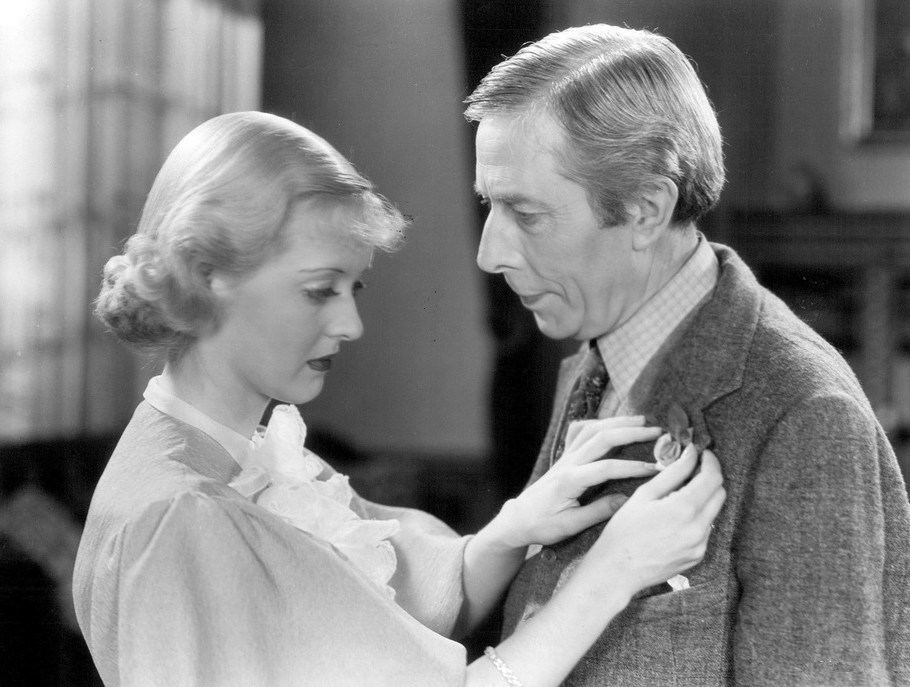
Bette Davis and George Arliss in a still from The Working Man.
This film was made early in Bette Davis’s career, when it was still not apparent to Warner Bros. what she was capable of. Still, even though she’s underutilized, she turns in a good performance. While she would become known for her saucy melodramas, it’s fun to see her in a lighthearted comedy (and as a blonde, no less).
The Working Manis now streaming on Watch TCM and is available to own on DVD through the Warner Archive Collection.
Thanks as always for being a faithful reader of The Voracious Cinephile. If you like what you see, please like, comment, follow, and subscribe to my email list to get notified of new posts as soon as they drop. Keep watching the world, one frame at a time.
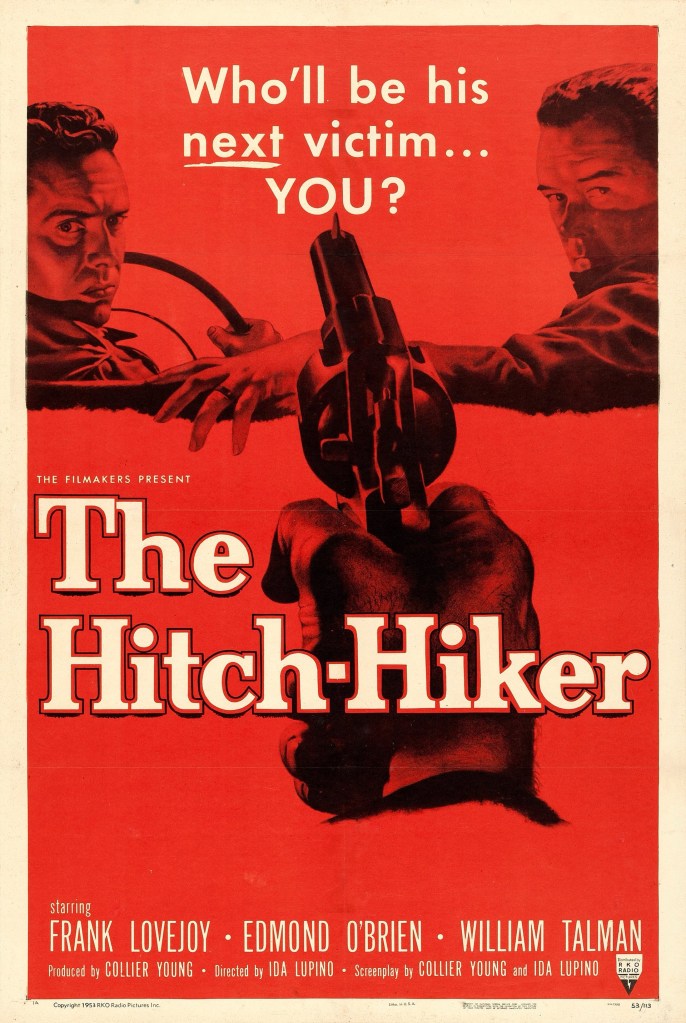
Film poster for The Hitch-Hiker (1953); directed by Ida Lupino.
In his intro or outro to this film (I can’t remember which now) on Noir Alley, Eddie Muller made the comment that it’s been said that only a woman could make a film like this at the time. I think that’s true because I think that women, despite being on the outside of the male psyche, are still the main recipient of the consequences of the decisions made by men.
Only a woman could capture the fragility behind the brand of toxic masculinity displayed by men like Emmett Myers (William Talman). It’s a masculinity that is by its very nature deeply insecure, pathologically violent, and needing constant reaffirmation of its potency. That’s why men like Myers feel the need to dominate women and (lesser, beta) men, to bring them under subjugation. It’s why rape culture exists. It’s why they ascribe characteristics of femininity to men who they read as queer or who they perceive aren’t as strong or masculine as they are. It’s a masculinity that cannot be opposed without the threat of violence, because it does not recognize consent, autonomy, or personal sovereignty, only brute force.
I would argue that this kind of masculinity is an epidemic, as serious and as deadly as any communicable disease or illness. When men like this are imbued with power of any kind, that power is abused to assuage their egos, to confirm to them their superior status. Give a man like that the nuclear codes and access to an arsenal of weapons the likes of which the world has never seen and the world holds it breath.
Based on the real-life case of Billy Cook, a hitchhiking serial killer who murdered six people, including a vacationing family of five between 1950-1951, The Hitch-Hiker follows two friends, Roy Collins (Edmond O’Brien) and Gilbert Bowen (Frank Lovejoy), who pick up a hitchhiker named Emmett Myers (William Talman) who’s recently escaped from prison. What started for them as a nice fishing trip becomes a nightmare experience that you think will never happen to you until it does.
Myers (Talman) wastes no time in pulling his gun on them and calling the shots. They drive him through the Baja California desert to Santa Rosalía, Baja California Sur, where his aim is to evade law enforcement by ferrying across the Gulf of California to Guaymas. He plays sick and sadistic mind games with them, one time making one of them shoot a tin can out of the other’s hand for sport. He takes every opportunity that presents itself to emasculate them and establish his own dominance.
This film had a profound effect on me. Props to Ida Lupino for being able to identify and articulate something that politicians and policymakers still struggle with. Edmond O’Brien, Frank Lovejoy, and William Talman all give career-defining performances here. The cinematography by Nicholas Musuraca is especially good, also among his best. The desert scenes were the best in the film. I thought I recognized the location, and Eddie Muller mentioned that it was used in other films, including High Sierra with Humphrey Bogart and Ida Lupino (cool, huh?).
The Hitch-Hiker was selected for preservation in 1998 by the United States National Film Registry. It has only grown in estimation since its release and remains an exemplar of film noir. Ida Lupino blew open the door for women filmmakers and gave them a blueprint to follow in a profession that is still (in 2026) gate-kept and dominated by men.
Thanks as always for being a faithful reader of The Voracious Cinephile. If you like what you see, please like, comment, follow, and subscribe to my email list to get notified of new posts as soon as they drop. Keep watching the world, one frame at a time.
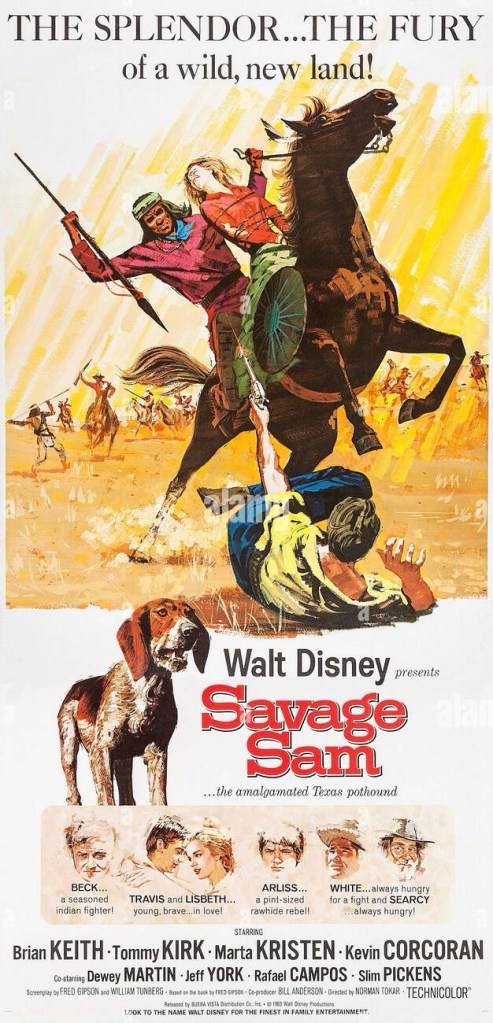
Film poster for Savage Sam (1963); directed by Norman Tokar.
Disclaimer: There’s some pretty serious anti-Indigenous racism on display here, and I’m not excusing that. The land we live on (if you’re reading this in the United States, but it also applies elsewhere) was taken from Indigenous peoples who were here long before white Europeans “settled” it.
That said, the film is both a product and summation of the time period in which it was made and set in, and therefore the attitudes and mores of the prevailing (read: ruling) majority are found therein.
Savage Sam picks up a few years after the events of Old Yeller. Jim and Katie Coates (Fess Parker and Dorothy McGuire, respectively) are away from the family homestead visiting a sick grandmother while 18-year old Travis (Tommy Kirk) is in charge of watching his rambunctious 12-year old brother Arliss (Kevin Corcoran). Their dynamic is the same as it was in Old Yeller, but without the calming influence of their mother Katie to quell the fire between them.
Instead, their Uncle Beck Coates (Brian Keith, who received top billing) acts as the adult mediator between them. Most of the plot revolves around Travis, Arliss, and Lisbeth Searcy (Marta Kristen, who replaced Beverly Washburn in the role from Old Yeller) getting captured by a group of Apaches led by a Comanche.
I’m not going to say that this follow-up comes even close to matching the heart of the first film, but it certainly was entertaining to watch. It’s made me want to watch the other films where Tommy Kirk and Kevin Corcoran play brothers, because I love their chemistry.
Bud Searcy (Jeff York, who also reprised his role from Old Yeller) also provides a lot of comic relief as Lisbeth’s insufferable, lazy, and perpetually hungry father.
As far as cinematic brilliance, you won’t find much here. But if you’re looking for a nostalgic romp with characters you remember from your childhood, then Savage Sam is a good pick.
Savage Sam is available to rent or own on several streaming platforms or on DVD.
Thanks as always for being a faithful reader of The Voracious Cinephile. If you like what you see, please like, comment, follow, and subscribe to my email list to get notified of new posts as soon as they drop. Keep watching the world, one frame at a time.
I’m so tired, y’all. I’ve not been sleeping well and I’ve been working long hours. I’m glad I get to go home early today at least. Getting to see Wicked: For Good on premiere day with my friends Shelby and Chloe was a boon to my soul, and sorely needed.
I’ve also got two books I need to get read that I’m reading with my book club friends. One is Quicksilver by Callie Hart because they’ve all moved on to Brimstone (the sequel). They’re not official book club picks but everyone is just kind of reading them together. The other one I’m buddy reading with my book club friend John is The South Wind by Alexandria Warwick, the third book in a series we’ve read together.
I hope everyone reading this has a great Saturday!
Thanks as always for being a faithful reader of The Voracious Bibliophile. If you like what you see, please like, comment, follow, and subscribe to my email list to get notified of new posts as soon as they drop. You can also email me at fred.slusher@thevoraciousbibliophile.com or catch me on Twitter, Instagram, TikTok, and Pinterest @voraciousbiblog. Keep reading the world, one page (or pixel) at a time.
Film poster for Wicked: For Good (2025); directed by Jon M. Chu.
Don’t believe any of the negative reviews you read about Wicked: For Good. Self-referential and absolutely thrillifying, each part in this sequel sings in harmony. Even being intimately familiar with all of the major plot points that play out didn’t dull the sensation of seeing everything unfold on the big screen.
Self-referential and absolutely thrillifying, each part in this sequel sings in harmony.
Cynthia Erivo as Elphaba Thropp and Jonathan Bailey as Fiyero Tigelaar.
If Wicked saw Elphaba shine, Wicked: For Good sees Glinda shine just as bright. Ariana Grande is a master at playing equal parts comical and tragic, often in the same scene. Make no mistake, what she accomplishes here is far from easy, although she makes it appear to be. Like so many of us are so much of the time, Glinda finds herself trapped between doing what is good versus doing what is convenient; the choices she makes are sometimes sacrificial and sometimes self-aggrandizing. And they have far-reaching ramifications not only for her relationship with Elphaba, but for the future of Oz itself.
Like so many of us are so much of the time, Glinda finds herself trapped between doing what is good versus doing what is convenient
Ariana Grande as Glinda Upland.
Some of the questions asked by this sequel are more important than the answers. What does it mean to be good, or wicked? And at what point do we cross that line? How much of ourselves must we give away to maintain our identity, our innate sense of self? How do we hold space for nuance in the face of evil — and more importantly, should we?
What does it mean to be good, or wicked? And at what point do we cross that line?
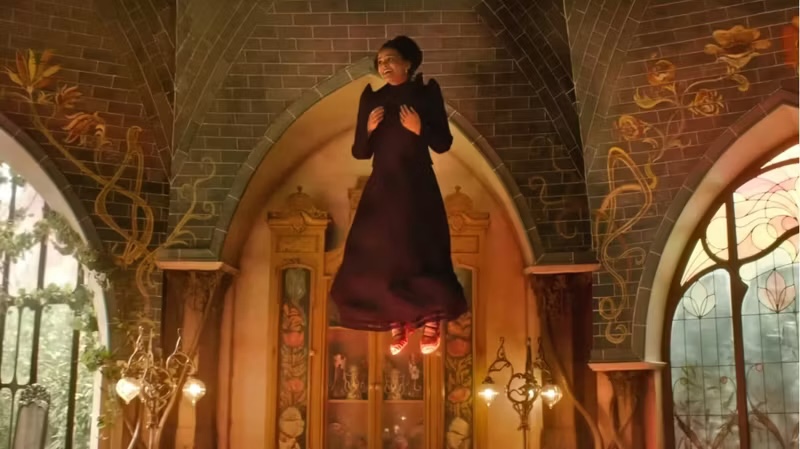
Marissa Bode as Nessarose Thropp.
I also thought a lot during this film about what Hannah Arendt called the “banality of evil”, and how truly horrific acts are committed by people who believe they are just upholding order and the status quo. They make their own morality a question of bureaucratic efficiency. That is, if the cost of doing good exceeds the price they’re willing to pay, no atrocity is too great to be complicit therewith. The lesson, if one could call it that, is this: Some people need to be seen as wicked so that other people can be seen as good. All of us probably land somewhere in the middle.
That is, if the cost of doing good exceeds the price they’re willing to pay, no atrocity is too great to be complicit therewith.
Wicked: For Good is now playing in theaters on a screen near you.
Thanks as always for being a faithful reader of The VoraciousCinephile. If you like what you see, please like, comment, follow, and subscribe to my email list to get notified of new posts as soon as they drop. Keep watching the world, one frame at a time.
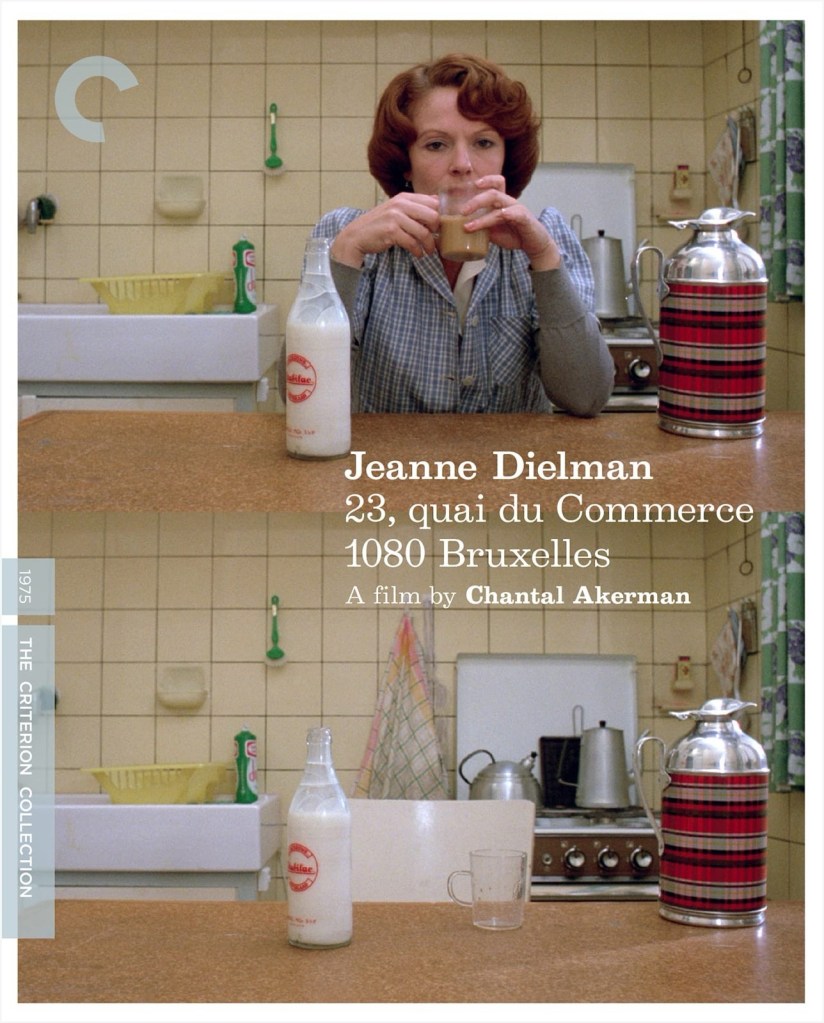
Criterion Collection edition of Jeanne Dielman, 23, quai du Commerce, 1080 Bruxelles (1975); directed by Chantal Akerman.
A less astute viewer might get ten minutes into Jeanne Dielman and decide that it’s too boring to make the effort. Personally, I have no patience for this kind of viewer. People with an over-reliance on plot and dialogue have no imagination. They fail to see beyond the noise.
One of the most brilliant aspects of this film is the fact that the viewer isn’t just invited, but coerced, into participating in Jeanne’s slow unraveling. Everything Jeanne does, every single day, is performed with precision and militaristic attention to detail. She is meticulous, structured. Even the johns who patronize her arrive on a schedule, telling her when they’ll return.
Each frame is a painting, a still life unto itself. Her routinized existence becomes your only reality while watching, and you are therefore highly aware of the deviations that begin to appear: a missed button on a housecoat; potatoes cooked too long; the staccato bursts of forgetfulness, wherein Jeanne goes to perform one of her perfunctory tasks and loses herself in what she was doing. These things would mean nothing in a film with more noise, with a character we didn’t know as well. By the time these disruptions begin and the cracks in the facade become apparent, we know Jeanne very well. Perhaps better than she knows herself, if we may be so bold. And so comes the unraveling.
Each frame is a painting, a still life unto itself.
It’s deeply unsettling, and an actress with less talent wouldn’t be able to pull off what Seyrig does here. There are probably fewer than five pages of dialogue in the entire three-plus hour runtime, so her entire performance is one of intense interiority, an almost unfathomable becoming.
If you’ve tried to watch this film in the past and not been able to make it through it, I implore you to give it another shot. Wake up really early in the morning with nothing else on your schedule, no tasks or chores to distract you. Ensure your notifications are turned off, better yet put your phone on silent in another room. Immerse yourself in this intense exercise of concentrated empathy, and I dare you to remain unchanged.
There are probably fewer than five pages of dialogue in the entire three-plus hour runtime, so her entire performance is one of intense interiority, an almost unfathomable becoming.
Jeanne Dielman, 23, quai du Commerce, 1080 Bruxelles is available to buy from the Criterion Collection wherever their films are available. It is also available to stream on The Criterion Channel here.
Thanks as always for being a faithful reader of The VoraciousCinephile. If you like what you see, please like, comment, follow, and subscribe to my email list to get notified of new posts as soon as they drop. Keep watching the world, one frame at a time.
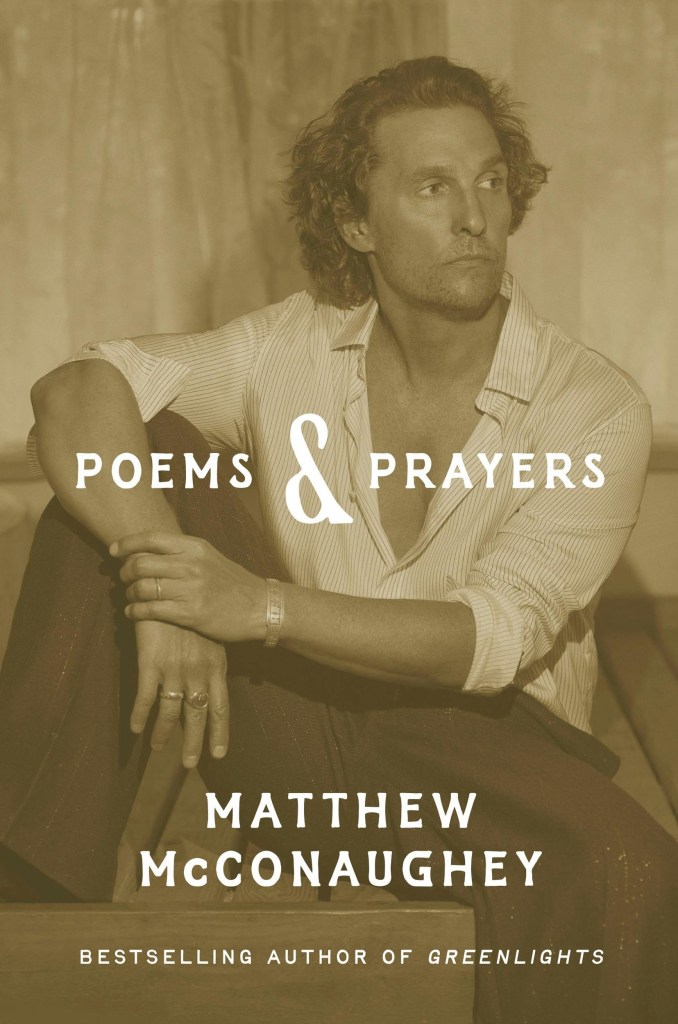
When you finish a book in one sitting, you know it’s good. Filled with the witticism, humor, and wisdom of someone who’s lived a lot of life and tried to live it well, Poems & Prayers chronicles decades of McConaughey’s life distilled into the most important and most reflective moments.
I laughed out loud, bookmarked certain passages to remember and review later, and nodded my head in assent throughout the book. I highly recommend listening to the audiobook. There are riffs and musings in there that aren’t included in the printed text. Myself, I listened to the audiobook and followed along in my printed copy that arrived today. Autographed, because who’s going to miss out on having a signed book by Matthew McConaughey?
Poems & Prayersis available to buy wherever books are sold, but of course I encourage you to buy it at your local Books-a-Million, and if you don’t have one you can buy it online at booksamillion.com.
Thanks as always for being a faithful reader of The Voracious Bibliophile. If you like what you see, please like, comment, follow, and subscribe to my email list to get notified of new posts as soon as they drop. You can also email me at fred.slusher@thevoraciousbibliophile.com or catch me on Twitter, Instagram, TikTok, and Pinterest @voraciousbiblog. Keep reading the world, one page (or pixel) at a time.
This is not me making a plug for Barnes & Noble. As a proud employee of Books-a-Million, I am encouraging you to buy your books at your nearest Books-a-Million or online at booksamillion.com.
That said, I believe in the continued existence of every single brick-and-mortar bookstore and believe that every dollar spent at a physical bookstore that doesn’t go to line the pockets of Jeff Bezos is a good dollar.
Plus, these editions were B&N exclusives so technically I’m not cheating on my spouse.
Thanks as always for being a faithful reader of The Voracious Bibliophile. If you like what you see, please like, comment, follow, and subscribe to my email list to get notified of new posts as soon as they drop. You can also email me at fred.slusher@thevoraciousbibliophile.com or catch me on Twitter, Instagram, TikTok, and Pinterest @voraciousbiblog. Keep reading the world, one page (or pixel) at a time.





 The Voracious Bibliophile