We rip out so much of ourselves to be cured of things faster than we should that we go bankrupt by the age of thirty and have less to offer each time we start with someone new. But to feel nothing so as not to feel anything – what a waste!
André Aciman, Call Me by Your Name: A Novel
I know that if I allowed myself the space and energy to honor all of my feelings, I’d never get anything else done.
Arguably the most powerful moment in either the novel or its film adaptation, this exchange between Elio and his father provides CMBYN with its emotional and philosophical core. It also begs the question: is it possible to live authentically without eventually becoming jaded? How do we honor our feelings without suppressing them and still carry on with the daily grind of life? I know that if I allowed myself the space and energy to honor all of my feelings, I’d never get anything else done.
Life, after all, is not just one singular experience or expression of selfhood. It is so many different things, sometimes all at once.
These are naturally questions without easy answers. Perhaps there is no answer. Life, after all, is not just one singular experience or expression of selfhood. It is so many different things, sometimes all at once. The truth, it seems, must lie somewhere in the middle. What do you think?
God, what a stylish man….anyway, see you next time!
Thanks as always for being a faithful reader of The Voracious Bibliophile. If you like what you see, please like, comment, follow, and subscribe to my email list to get notified of new posts as soon as they drop. You can also email me at fred.slusher@thevoraciousbibliophile.com or catch me on Twitter, Instagram, TikTok, and Pinterest @voraciousbiblog. Keep reading the world, one page (or pixel) at a time.
Note: Even though I took today’s quote from Aciman’s novel, most of my commentary references the film adaptation of the same name. But you know how things go here at The Voracious Bibliophile—we start off on one path together and end up taking another road entirely. Enjoy!
This is, in my opinion, one of the best quotes from CMBYN. I can’t remember exactly how the scene plays out in the novel (time for a re-read), but in the film, Elio (Timothée Chalamet) is being counseled and comforted by his parents, Samuel and Annella (Michael Stuhlbarg and Amira Casar, respectively), about his love troubles. Now, Elio never really comes out and says exactly what (who) is troubling him, but they are not fools. That aside, anyone living in the same house with Elio and Oliver (Armie Hammer), their gorgeous summer house guest, would have to be completely oblivious not to notice the mutual sexual attraction that practically crackles every time they’re in the same room together.
I mean, is there any delicate way to tell your parents not only that you like boys but that you’re both enjoying and being tortured by a once-in-a-lifetime summer love affair with their houseguest?
This scene in particular is as heartwarming as it is awkward. I mean, is there any delicate way to tell your parents not only that you like boys but that you’re both enjoying and being tortured by a once-in-a-lifetime summer love affair with their houseguest? Now, don’t misread me. The Perlmans are highly-educated and cosmopolitan. They have same-sex couple friends and wouldn’t think twice about their son becoming involved with another man. No, their concern stems from that basic parental instinct that kicks in when you know your child is in pain. Annella caresses her son’s hair while he lies in his father’s lap, and she reads from the book containing the line which provides us with today’s quote.
In that moment, you become part of the scene, and a feeling of exposure, of becoming emotionally naked, surrounds you and fills you up. Returning to reality feels not unlike leaving Eden, filled with a beautiful and terrible knowledge.
Anyone who can watch this scene and not ache with longing must have their soul stripped of all feeling. The world around you disappears and the wall that separates the performers from the spectators crumbles. In that moment, you become part of the scene, and a feeling of exposure, of becoming emotionally naked, surrounds you and fills you up. Returning to reality feels not unlike leaving Eden, filled with a beautiful and terrible knowledge.
Bonus: I found a YouTube clip of the scene where this line is spoken, and it’s just as powerful after repeat viewings.
Double Bonus: The entire soundtrack to CMBYN is sublime, but Sufjan Stevens’s “Mystery of Love” is on another plane entirely. It was nominated for the Academy Award for Best Original Song as well as the Grammy Award for Best Song Written for Visual Media.
Thanks as always for being a faithful reader of The Voracious Bibliophile. If you like what you see, please like, comment, follow, and subscribe to my email list to get notified of new posts as soon as they drop. You can also email me at fred.slusher@thevoraciousbibliophile.com or catch me on Twitter, Instagram, TikTok, and Pinterest @voraciousbiblog. Keep reading the world, one page (or pixel) at a time.
Thanks as always for being a faithful reader of The Voracious Bibliophile. If you like what you see, please like, comment, follow, and subscribe to my email list to get notified of new posts as soon as they drop. You can also email me at fred.slusher@thevoraciousbibliophile.com or catch me on Twitter, Instagram, TikTok, and Pinterest @voraciousbiblog. Keep reading the world, one page (or pixel) at a time.
In the secular night you wander around
alone in your house. It’s two-thirty.
Everyone has deserted you,
or this is your story;
you remember it from being sixteen,
when the others were out somewhere, having a good time,
or so you suspected,
and you had to baby-sit.
You took a large scoop of vanilla ice-cream
and filled up the glass with grapejuice
and ginger ale, and put on Glenn Miller
with his big-band sound,
and lit a cigarette and blew the smoke up the chimney,
and cried for a while because you were not dancing,
and then danced, by yourself, your mouth circled with purple.

Now, forty years later, things have changed,
and it’s baby lima beans.
It’s necessary to reserve a secret vice.
This is what comes from forgetting to eat
at the stated mealtimes. You simmer them carefully,
drain, add cream and pepper,
and amble up and down the stairs,
scooping them up with your fingers right out of the bowl,
talking to yourself out loud.
You’d be surprised if you got an answer,
but that part will come later.

There is so much silence between the words,
you say. You say, The sensed absence
of God and the sensed presence
amount to much the same thing,
only in reverse.
You say, I have too much white clothing.
You start to hum.
Several hundred years ago
this could have been mysticism
or heresy. It isn’t now.
Outside there are sirens.
Someone’s been run over.
The century grinds on.
There is also this exactitude, this precision, bound up in elegance and wit, which seems impossible to replicate. At the very least, I have never seen it outside of her work.
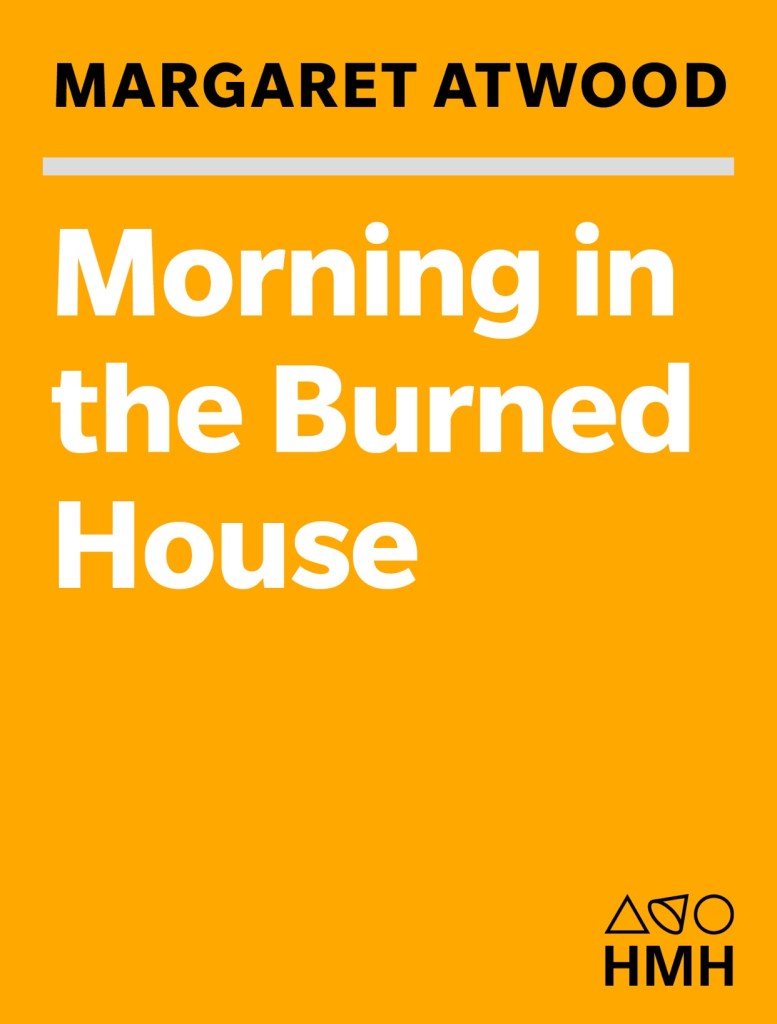
First and foremost, let me state here unequivocally that it is a travesty Margaret Atwood has yet to win the Nobel Prize in Literature. That’s first. Next, I’d like to say that very few writers can scare me like Atwood can. She imbues every work of hers, be it novel, poem, or otherwise, with an otherworldly terror which is simply too close to reality for comfort. There is also this exactitude, this precision, bound up in elegance and wit, which seems impossible to replicate. At the very least, I have never seen it outside of her work.
Though her oeuvre is substantial, history will remember her primarily for her dystopian novel, The Handmaid’s Tale. Published in 1985, it tells the story of Offred, a Handmaid in the Republic of Gilead, which has succeeded the United States’ government via violent overthrow and which treats women with viable uteruses like cattle, meant to be silent, acquiescent, and obedient in discharging their only purpose in life, which is to bare children for their Commanders. They are deprived of all agency and ruled over with an iron fist.
With a conservative-majority SCOTUS waiting like a salivating bloodhound to overturn Roe v. Wade and states like Texas rolling back reproductive rights and severely limiting abortion access, we are just a stone’s throw away from the world Atwood envisioned.
One could say Gilead is patriarchy on steroids, and they’d be right. Gilead looks too much like America in 2021 for my liking. With a conservative-majority SCOTUS waiting like a salivating bloodhound to overturn Roe v. Wade and states like Texas rolling back reproductive rights and severely limiting abortion access, we are just a stone’s throw away from the world Atwood envisioned. Let’s hope there are enough of us left in the world who stand for a woman’s right to choose.
Wow, I started off with a poem and ended up talking about The Handmaid’s Tale. You can certainly see my ADHD at work here, but what the heck? This is my blog and I’ll go off on whatever tangent I darn well please. Mazel tov, my friends.
Thanks as always for being a faithful reader of The Voracious Bibliophile. If you like what you see, please like, comment, follow, and subscribe to my email list to get notified of new posts as soon as they drop. You can also email me at fred.slusher@thevoraciousbibliophile.com or catch me on Twitter, Instagram, TikTok, and Pinterest @voraciousbiblog. Keep reading the world, one page (or pixel) at a time.
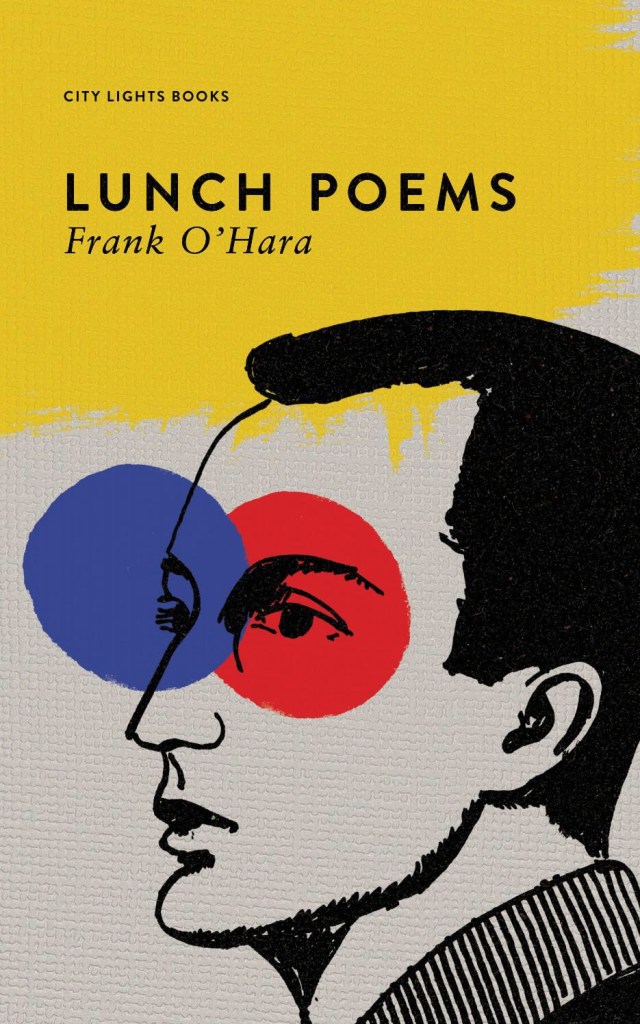
Poem [“Lana Turner has collapsed!”] by Frank O’Hara
Lana Turner has collapsed!
I was trotting along and suddenly
it started raining and snowing
and you said it was hailing
but hailing hits you on the head
hard so it was really snowing and
raining and I was in such a hurry
to meet you but the traffic
was acting exactly like the sky
and suddenly I see a headline
lana turner has collapsed!
there is no snow in Hollywood
there is no rain in California
I have been to lots of parties
and acted perfectly disgraceful
but I never actually collapsed
oh Lana Turner we love you get up
Thanks as always for being a faithful reader of The Voracious Bibliophile. If you like what you see, please like, comment, follow, and subscribe to my email list to get notified of new posts as soon as they drop. You can also email me at fred.slusher@thevoraciousbibliophile.com or catch me on Twitter, Instagram, TikTok, and Pinterest @voraciousbiblog. Keep reading the world, one page (or pixel) at a time.
Purple as tulips in May, mauve
into lush velvet, purple
as the stain blackberries leave
on the lips, on the hands,
the purple of ripe grapes
sunlit and warm as flesh.

Every day I will give you a color,
like a new flower in a bud vase
on your desk. Every day
I will paint you, as women
color each other with henna
on hands and on feet.

Red as henna, as cinnamon,
as coals after the fire is banked,
the cardinal in the feeder,
the roses tumbling on the arbor
their weight bending the wood
the red of the syrup I make from petals.

Orange as the perfumed fruit
hanging their globes on the glossy tree,
orange as pumpkins in the field,
orange as butterflyweed and the monarchs
who come to eat it, orange as my
cat running lithe through the high grass.

Yellow as a goat’s wise and wicked eyes,
yellow as a hill of daffodils,
yellow as dandelions by the highway,
yellow as butter and egg yolks,
yellow as a school bus stopping you,
yellow as a slicker in a downpour.

Here is my bouquet, here is a sing
song of all the things you make
me think of, here is oblique
praise for the height and depth
of you and the width too.
Here is my box of new crayons at your feet.

Green as mint jelly, green
as a frog on a lily pad twanging,
the green of cos lettuce upright
about to bolt into opulent towers,
green as Grand Chartreuse in a clear
glass, green as wine bottles.

Blue as cornflowers, delphiniums,
bachelors’ buttons. Blue as Roquefort,
blue as Saga. Blue as still water.
Blue as the eyes of a Siamese cat.
Blue as shadows on new snow, as a spring
azure sipping from a puddle on the blacktop.

Cobalt as the midnight sky
when day has gone without a trace
and we lie in each other’s arms
eyes shut and fingers open
and all the colors of the world
pass through our bodies like strings of fire.
I know I usually only share one poem a day, but I’ve had a rough week and I’m sure a lot of you can probably say the same. I believe to my core that you can never have too much poetry. I believe poetry acts as a salve when the flames of a world never not on fire manage to singe us. Love and light to all of you. Walk in power.
Thanks as always for being a faithful reader of The Voracious Bibliophile. If you like what you see, please like, comment, follow, and subscribe to my email list to get notified of new posts as soon as they drop. You can also email me at fred.slusher@thevoraciousbibliophile.com or catch me on Twitter, Instagram, TikTok, and Pinterest @voraciousbiblog. Keep reading the world, one page (or pixel) at a time.
Becoming the raspberry stain on the pink of   your cheek,
a tongue’s soft landing spot. Becoming the empty ritual,
what can’t be said. Becoming intercession, my language
becoming yours, the blessing of tongues. Becoming the river
in the belly, implanted language, dead boy’s song. Becoming dry
with manhood. Becoming the doors we’ve closed, those I’ve learned
to open with a tongue. Becoming seen in the body, witnessed, becoming
clarity, the fear of it. Becoming the name I’ve been given,
the honorific, a placeholder. Becoming postured
to my Father’s dilemma, the inherited tongue. Becoming
what I wish I could be on my own. Becoming kept,
becoming stolen, becoming made free to leave when I am not yet ready
to go. Becoming the might of what we serve, the oft-
invisibled. Becoming don’t look back, pillar of salt. Becoming idoled.
Becoming possessed. Becoming the body’s mettle, the tongue’s chisel.
Becoming compass. Becoming the help that I needed, my Father’s hidden
forgiveness. Becoming the secrets I hope to taste in you,
the wounded tongue, braided blood covenant. Becoming forbidden’s
starting point, a bold beginning, the flaying of   what I do not yet know I believe.
“Tongues” appears in the September 2021 issue of Poetry, which is now available to buy from newsstands everywhere or to read on the Poetry Foundation’s website.
Thanks as always for being a faithful reader of The Voracious Bibliophile. If you like what you see, please like, comment, follow, and subscribe to my email list to get notified of new posts as soon as they drop. You can also email me at fred.slusher@thevoraciousbibliophile.com or catch me on Twitter, Instagram, TikTok, and Pinterest @voraciousbiblog. Keep reading the world, one page (or pixel) at a time.
White Apples and the Taste of Stone: Selected Poems 1946-2006 by Donald Hall
Affirmation by Donald Hall
Let us stifle under mud at the pond’s edge
and affirm that it is fitting
and delicious to lose everything.
To grow old is to lose everything.
Aging, everybody knows it.
Even when we are young,
we glimpse it sometimes, and nod our heads
when a grandfather dies.
Then we row for years on the midsummer
pond, ignorant and content. But a marriage,
that began without harm, scatters
into debris on the shore,
and a friend from school drops
cold on a rocky strand.
If a new love carries us
past middle age, our wife will die
at her strongest and most beautiful.
New women come and go. All go.
The pretty lover who announces
that she is temporary
is temporary. The bold woman,
middle-aged against our old age,
sinks under an anxiety she cannot withstand.
Another friend of decades estranges himself
in words that pollute thirty years.
Let us stifle under mud at the pond's edge
and affirm that it is fitting
and delicious to lose everything.
Donald Hall (1928-2018) was considered one of the preeminent writers of his generation. He authored more than fifty books across several genres but he is most well known for his poetry. He was awarded the National Medal of Arts in 2010, which is the highest honor the United States government bestows upon artists and arts patrons.
White Apples and the Taste of Stone: Selected Poems, 1946-2006, the collection from which today’s poem is taken, was published in 2006 by Houghton Mifflin Harcourt and is now available to purchase wherever books are sold.
Thanks as always for being a faithful reader of The Voracious Bibliophile. If you like what you see, please like, comment, follow, and subscribe to my email list to get notified of new posts as soon as they drop. You can also email me at fred.slusher@thevoraciousbibliophile.com or catch me on Twitter, Instagram, TikTok, and Pinterest @voraciousbiblog. Keep reading the world, one page (or pixel) at a time.
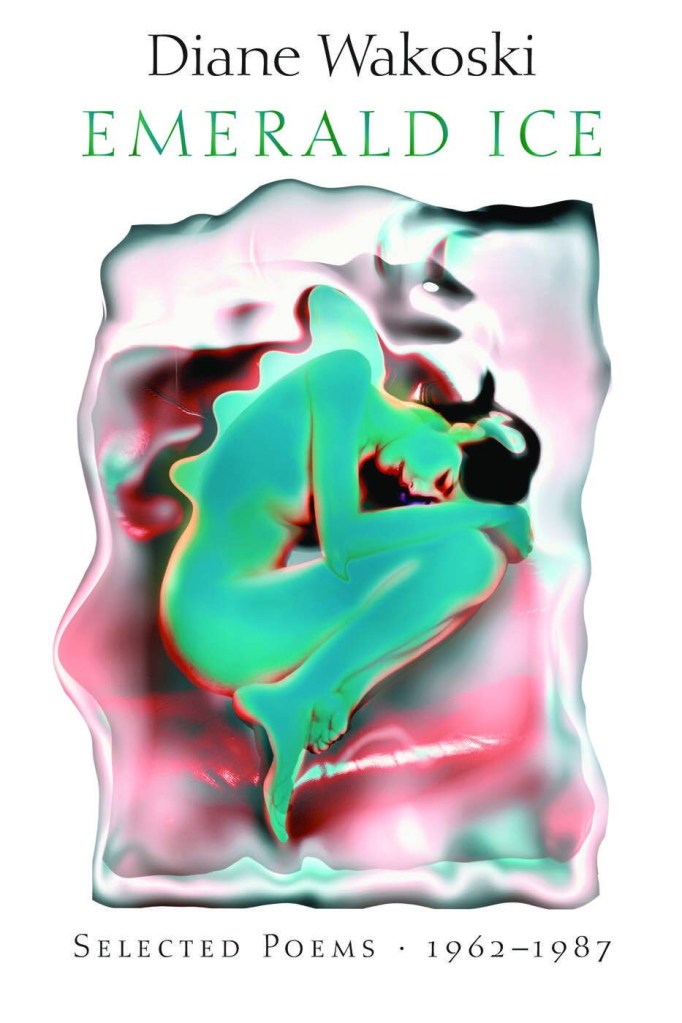
Emerald Ice: Selected Poems 1962-1987 by Diane Wakoski
Thanking My Mother for Piano Lessons by Diane Wakoski
The relief of putting your fingers on the keyboard,
as if you were walking on the beach
and found a diamond
as big as a shoe;

as if
you had just built a wooden table
and the smell of sawdust was in the air,
your hands dry and woody;

as if
you had eluded
the man in the dark hat who had been following you
all week;

the relief
of putting your fingers on the keyboard,
playing the chords of
Beethoven,
Bach,
Chopin
         in an afternoon when I had no one to talk to,
         when the magazine advertisement forms of soft sweaters
         and clean shining Republican middle-class hair
         walked into carpeted houses
         and left me alone
         with bare floors and a few books

I want to thank my mother
for working every day
in a drab office
in garages and water companies
cutting the cream out of her coffee at 40
to lose weight, her heavy body
writing its delicate bookkeeper’s ledgers
alone, with no man to look at her face,
her body, her prematurely white hair
in love
         I want to thank
my mother for working and always paying for
my piano lessons
before she paid the Bank of America loan
or bought the groceries
or had our old rattling Ford repaired.

I was a quiet child,
afraid of walking into a store alone,
afraid of the water,
the sun,
the dirty weeds in back yards,
afraid of my mother’s bad breath,
and afraid of my father’s occasional visits home,
knowing he would leave again;
afraid of not having any money,
afraid of my clumsy body,
that I knew
         no one would ever love

But I played my way
on the old upright piano
obtained for $10,
played my way through fear,
through ugliness,
through growing up in a world of dime-store purchases,
and a desire to love
a loveless world.

I played my way through an ugly face
and lonely afternoons, days, evenings, nights,
mornings even, empty
as a rusty coffee can,
played my way through the rustles of spring
and wanted everything around me to shimmer like the narrow tide
on a flat beach at sunset in Southern California,
I played my way through
an empty father’s hat in my mother’s closet
and a bed she slept on only one side of,
never wrinkling an inch of
the other side,
waiting,
waiting,

I played my way through honors in school,
the only place I could
talk
       the classroom,
       or at my piano lessons, Mrs. Hillhouse’s canary always
       singing the most for my talents,
       as if I had thrown some part of my body away upon entering
       her house
       and was now searching every ivory case
       of the keyboard, slipping my fingers over black
       ridges and around smooth rocks,
       wondering where I had lost my bloody organs,
       or my mouth which sometimes opened
       like a California poppy,
       wide and with contrasts
       beautiful in sweeping fields,
       entirely closed morning and night,

I played my way from age to age,
but they all seemed ageless
or perhaps always
old and lonely,
wanting only one thing, surrounded by the dusty bitter-smelling
leaves of orange trees,
wanting only to be touched by a man who loved me,
who would be there every night
to put his large strong hand over my shoulder,
whose hips I would wake up against in the morning,
whose mustaches might brush a face asleep,
dreaming of pianos that made the sound of Mozart
and Schubert without demanding
that life suck everything
out of you each day,
without demanding the emptiness
of a timid little life.

I want to thank my mother
for letting me wake her up sometimes at 6 in the morning
when I practiced my lessons
and for making sure I had a piano
to lay my school books down on, every afternoon.
I haven’t touched the piano in 10 years,
perhaps in fear that what little love I’ve been able to
pick, like lint, out of the corners of pockets,
will get lost,
slide away,
into the terribly empty cavern of me
if I ever open it all the way up again.
Love is a man
with a mustache
gently holding me every night,
always being there when I need to touch him;
he could not know the painfully loud
music from the past that
his loving stops from pounding, banging,
battering through my brain,
which does its best to destroy the precarious gray matter when I
am alone;
he does not hear Mrs. Hillhouse’s canary singing for me,
liking the sound of my lesson this week,
telling me,
confirming what my teacher says,
that I have a gift for the piano
few of her other pupils had.
When I touch the man
I love,
I want to thank my mother for giving me
piano lessons
all those years,
keeping the memory of Beethoven,
a deaf tortured man,
in mind;
            of the beauty that can come
from even an ugly
past.
Diane Wakoski won the William Carlos Williams Award from the Poetry Society of America for Emerald Ice: Selected Poems 1962-1987. Her most recent collection, Lady of Light: New Poems, was published in 2018 by Anhinga Press and is available to order on their website.
Thanks as always for being a faithful reader of The Voracious Bibliophile. If you like what you see, please like, comment, follow, and subscribe to my email list to get notified of new posts as soon as they drop. You can also email me at fred.slusher@thevoraciousbibliophile.com or catch me on Twitter, Instagram, TikTok, and Pinterest @voraciousbiblog. Keep reading the world, one page (or pixel) at a time.
#2: Read what you want, when you want, in the format you want.
#3: One genre is not better than another.
#4: You don’t have to read the classics. Unless you want to, of course. The “canon” is mostly Eurocentric and a tool of white supremacy.
#5: Re-reading is valid.
#6: Reading fan-fiction is valid.
#7: It doesn’t matter whether you read fast or slow or somewhere in the middle.
#8: Book snobs are fascists. And most likely colonizers.
Thanks as always for being a faithful reader of The Voracious Bibliophile. If you like what you see, please like, comment, follow, and subscribe to my email list to get notified of new posts as soon as they drop. You can also email me at fred.slusher@thevoraciousbibliophile.com or catch me on Twitter, Instagram, TikTok, and Pinterest @voraciousbiblog. Keep reading the world, one page (or pixel) at a time.








 The Voracious Bibliophile