As Kingfishers Catch Fire by Gerard Manley Hopkins
As kingfishers catch fire, dragonflies draw flame;
As tumbled over rim in roundy wells
Stones ring; like each tucked string tells, each hung bell's
Bow swung finds tongue to fling out broad its name;
Each mortal thing does one thing and the same:
Deals out that being indoors each one dwells;
Selves — goes itself; myself it speaks and spells,
Crying Whát I dó is me: for that I came.

I say móre: the just man justices;
Keeps grace: thát keeps all his goings graces;
Acts in God's eye what in God's eye he is —
Chríst — for Christ plays in ten thousand places,
Lovely in limbs, and lovely in eyes not his
To the Father through the features of men's faces.
Today’s poem was taken from Gerard Manley Hopkins: Poems and Prose, which was published by Penguin Classics in 1985 and is available to purchase wherever books are sold.
Thanks as always for being a faithful reader of The Voracious Bibliophile. If you like what you see, please like, comment, follow, and subscribe to my email list to get notified of new posts as soon as they drop. You can also email me at fred.slusher@thevoraciousbibliophile.com or catch me on Twitter, Instagram, TikTok, and Pinterest @voraciousbiblog. Keep reading the world, one page (or pixel) at a time.
Resting on the Ground with My Love in the Rattlesnake Habitat by Alice Lyons
She pronounces Chama the name of the milky green river
with a richness in the ch I cannot muster, puts a hard d
on the end of her ands. anD. anD. anD. Like the river
she is asking to be endless anD shifting. To stream.
I’d scouted the knoll of oaks for rattlers, being beyond the bounds
of Coverage having no means to learn their habits.
So I lay down with her on the ground. Their ground. AnD
I willed to forget the cares of my later-in-life job search. Job.
Which is also Job, a man in the Bible. Which is a book.
The oaks of the knoll were leaning into the Chama like girls
washing their hair in basins. I thought of EB shampooing Lota,
of Frost’s birches, of Plath’s Wych elms which I’d like to have
googled. Did snakes favor oak knolls? Did Georgia O’Keeffe worry
about health insurance costs in Abiquiú? AnD beside me my love
streaming, her poodles distantly nosing the chamisa. Standards.
I thought I had them. Put art at the front of the queue
wych is different from quiú. AnD now this. Biblical
the proportions of this breaking-back-into-a-country-I’d-
locked-myself-out-of phase. Was it scenic? I liked
the pachysandra, branches of oak taking all that space
from the sky. But then everybody disappeared to their offices.
Three times I wrote work work work when woke
was what I wanted to write.
Miniature is the acorn
I fingered in the soft flour-sack pocket of my jeans.
Acorn smaller than East Coast or indeed Irish Oak varieties
wych she handed me anD how hungrily I pocketed its little body.
Thanks as always for being a faithful reader of The Voracious Bibliophile. If you like what you see, please like, comment, follow, and subscribe to my email list to get notified of new posts as soon as they drop. You can also email me at fred.slusher@thevoraciousbibliophile.com or catch me on Twitter, Instagram, TikTok, and Pinterest @voraciousbiblog. Keep reading the world, one page (or pixel) at a time.
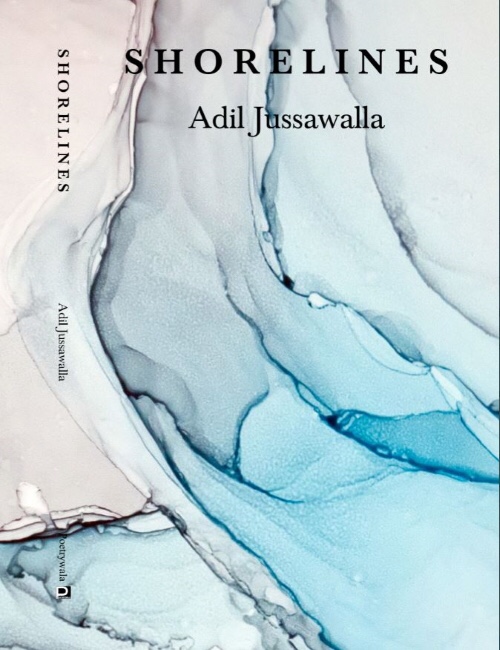
Their bells replaced by tins they rattle,
the city’s lepers don’t mean to warn
but in your face seek the metal you think
they’re worth. For once, for some moments,
as I drop my ransom and make my getaway
— it’s a street that housed the port’s warehouses once —
I hear bells from Surat ringing an evening’s close,
the murmur of crowds dispersing,
watch the harbour’s torches light up a quay
I never stepped on and a grandfather I never met,
his eye on his watch, just beginning to know
how little it takes for a day to be extinguished,
how long for bells to make us believe it has gone.
Thanks as always for being a faithful reader of The Voracious Bibliophile. If you like what you see, please like, comment, follow, and subscribe to my email list to get notified of new posts as soon as they drop. You can also email me at fred.slusher@thevoraciousbibliophile.com or catch me on Twitter, Instagram, TikTok, and Pinterest @voraciousbiblog. Keep reading the world, one page (or pixel) at a time.
Thanks as always for being a faithful reader of The Voracious Bibliophile. If you like what you see, please like, comment, follow, and subscribe to my email list to get notified of new posts as soon as they drop. You can also email me at fred.slusher@thevoraciousbibliophile.com or catch me on Twitter, Instagram, TikTok, and Pinterest @voraciousbiblog. Keep reading the world, one page (or pixel) at a time.
i hold onto
the way the air feels in october
it brings out the best in me
unlike the violating heat
of august that fills the space between
the dirt and the heavens
only a handful of moons prior to
the golden treetops and the
ritualistic pumpkin and maple
that stir our hearts and reveal
our need for stupid, cheery things

the earth is falling asleep
lying its head to rest
in the fading foliage on the ground
folding up the day into smaller
and smaller glimpses of light
but here i am
bathing in the soft wind
here i am
grinning in a grey sweater
here i am
waking up
Thanks as always for being a faithful reader of The Voracious Bibliophile. If you like what you see, please like, comment, follow, and subscribe to my email list to get notified of new posts as soon as they drop. You can also email me at fred.slusher@thevoraciousbibliophile.com or catch me on Twitter, Instagram, TikTok, and Pinterest @voraciousbiblog. Keep reading the world, one page (or pixel) at a time.
On February 7, 1979, Pluto crossed over Neptune’s orbit and became the eighth planet from the sun for twenty years. A study in 1988 determined that Pluto’s path of orbit could never be accurately predicted. Labeled as “chaotic,” Pluto was later discredited from planet status in 2006.
Today, I broke your solar system. Oops. My bad. Your graph said I was supposed to make a nice little loop around the sun.
Naw.
I chaos like a motherfucker. Ain’t no one can chart me. All the other planets, they think I’m annoying. They think I’m an escaped moon, running free.
Fuck your moon. Fuck your solar system. Fuck your time. Your year? Your year ain’t shit but a day to me. I could spend your whole year turning the winds in my bed. Thinking about rings and how Jupiter should just pussy on up and marry me by now. Your day?
That’s an asswipe. A sniffle. Your whole day is barely the start of my sunset.
My name means hell, bitch. I am hell, bitch. All the cold you have yet to feel. Chaos like a motherfucker. And you tried to order me. Called me ninth. Somewhere in the mess of graphs and math and compass you tried to make me follow rules. Rules? Fuck your rules. Neptune, that bitch slow. And I deserve all the sun I can get, and all the blue-gold sky I want around me.
It is February 7th, 1979 and my skin is more copper than any sky will ever be. More metal. Neptune is bitch-sobbing in my rearview, and I got my running shoes on and all this sky that’s all mine.
Fuck your order. Fuck your time. I realigned the cosmos. I chaosed all the hell you have yet to feel. Now all your kids in the classrooms, they confused. All their clocks: wrong. They don’t even know what the fuck to do. They gotta memorize new songs and shit. And the other planets, I fucked their orbits. I shook the sky. Chaos like a motherfucker.
It is February 7th, 1979. The sky is blue-gold: the freedom of possibility.
“Pluto Shits on the Universe” is now probably in my top ten favorite poems of all time. I love Asghar’s irreverence here, the way she plays with the multiple meanings of certain words. Consider this part of the poem:
My name means hell, bitch. I am hell, bitch. All the cold you have yet to feel. Chaos like a motherfucker. And you tried to order me. Called me ninth.
Order here conveys certain ideas singularly and in conjunction with one another:
Order as “a state in which everything is in its correct or appropriate place”.*
Order as “the arrangement or disposition of people or things in relation to each other according to a particular sequence, pattern, or method”.”
Order as “an authoritative command, direction, or instruction”.*
Order as the opposite of Chaos, in Chaos Theory, which is “an interdisciplinary theory and branch of mathematics focusing on the study of chaos: dynamical systems whose apparently random states of disorder and irregularities are actually governed by underlying patterns and deterministic laws that are highly sensitive to initial conditions”.**
*Definition taken from Oxford Languages
**Definition taken from Wikipedia
There is the forced classification, the imposition of hierarchies, the reification of unnatural (human-made) systems, and the stark dismissal of them all.
Chaos like a motherfucker. / And you tried to order me. Called me ninth. There is an acknowledgment of the would-be controlling outside power and its unequivocal rejection. There is the forced classification, the imposition of hierarchies, the reification of unnatural (human-made) systems, and the stark dismissal of them all.
Today, I broke your solar system. Oops. My bad. Y’all. That slaps.
Fatimah Asghar Recites Her Poem, “Pluto Shits on the Universe”
You can learn more about Fatimah Asghar and her work at her website. Her debut poetry collection, If They Come for Us: Poems, was published by One World in August 2018 and is available to purchase wherever books are sold.
Thanks as always for being a faithful reader of The Voracious Bibliophile. If you like what you see, please like, comment, follow, and subscribe to my email list to get notified of new posts as soon as they drop. You can also email me at fred.slusher@thevoraciousbibliophile.com or catch me on Twitter, Instagram, TikTok, and Pinterest @voraciousbiblog. Keep reading the world, one page (or pixel) at a time.
Hymn to Intellectual Beauty by Percy Bysshe Shelley
The awful shadow of some unseen Power
         Floats though unseen among us; visiting
         This various world with as inconstant wing
As summer winds that creep from flower to flower;
Like moonbeams that behind some piny mountain shower,
                It visits with inconstant glance
                Each human heart and countenance;
Like hues and harmonies of evening,
                Like clouds in starlight widely spread,
                Like memory of music fled,
                Like aught that for its grace may be
Dear, and yet dearer for its mystery.

Spirit of BEAUTY, that dost consecrate
         With thine own hues all thou dost shine upon
         Of human thought or form, where art thou gone?
Why dost thou pass away and leave our state,
This dim vast vale of tears, vacant and desolate?
                Ask why the sunlight not for ever
                Weaves rainbows o'er yon mountain-river,
Why aught should fail and fade that once is shown,
                Why fear and dream and death and birth
                Cast on the daylight of this earth
                Such gloom, why man has such a scope
For love and hate, despondency and hope?

No voice from some sublimer world hath ever
         To sage or poet these responses given:
         Therefore the names of Demon, Ghost, and Heaven,
Remain the records of their vain endeavour:
Frail spells whose utter'd charm might not avail to sever,
                From all we hear and all we see,
                Doubt, chance and mutability.
Thy light alone like mist o'er mountains driven,
                Or music by the night-wind sent
                Through strings of some still instrument,
                Or moonlight on a midnight stream,
Gives grace and truth to life's unquiet dream.

Love, Hope, and Self-esteem, like clouds depart
         And come, for some uncertain moments lent.
         Man were immortal and omnipotent,
Didst thou, unknown and awful as thou art,
Keep with thy glorious train firm state within his heart.
                Thou messenger of sympathies,
                That wax and wane in lovers' eyes;
Thou, that to human thought art nourishment,
                Like darkness to a dying flame!
                Depart not as thy shadow came,
                Depart not—lest the grave should be,
Like life and fear, a dark reality.

While yet a boy I sought for ghosts, and sped
         Through many a listening chamber, cave and ruin,
         And starlight wood, with fearful steps pursuing
Hopes of high talk with the departed dead.
I call'd on poisonous names with which our youth is fed;
                I was not heard; I saw them not;
                When musing deeply on the lot
Of life, at that sweet time when winds are wooing
                All vital things that wake to bring
                News of birds and blossoming,
                Sudden, thy shadow fell on me;
   I shriek'd, and clasp'd my hands in ecstasy!

I vow'd that I would dedicate my powers
         To thee and thine: have I not kept the vow?
         With beating heart and streaming eyes, even now
I call the phantoms of a thousand hours
Each from his voiceless grave: they have in vision'd bowers
                Of studious zeal or love's delight
                Outwatch'd with me the envious night:
They know that never joy illum'd my brow
                Unlink'd with hope that thou wouldst free
                This world from its dark slavery,
                That thou, O awful LOVELINESS,
Wouldst give whate'er these words cannot express.

The day becomes more solemn and serene
         When noon is past; there is a harmony
         In autumn, and a lustre in its sky,
Which through the summer is not heard or seen,
As if it could not be, as if it had not been!
                Thus let thy power, which like the truth
                Of nature on my passive youth
Descended, to my onward life supply
                Its calm, to one who worships thee,
                And every form containing thee,
                Whom, SPIRIT fair, thy spells did bind
To fear himself, and love all human kind.
Thanks as always for being a faithful reader of The Voracious Bibliophile. If you like what you see, please like, comment, follow, and subscribe to my email list to get notified of new posts as soon as they drop. You can also email me at fred.slusher@thevoraciousbibliophile.com or catch me on Twitter, Instagram, TikTok, and Pinterest @voraciousbiblog. Keep reading the world, one page (or pixel) at a time.
All night I dreamed of my home,
of the roads that are so long
and straight they die in the middle—
among the spines of elderly weeds
on either side, among the dead cats,
the ants who are all eyes, the suitcase
thrown open, sprouting failures.

   2.
And this evening in the garden
I find the winter
inside a snail shell, rigid and
cool, a little stubborn temple,
its one visitor gone.

   3.
If there were messages or signs,
I might hear now a voice tell me
to walk forever, to ask
the mold for pardon, and one
by one I would hear out my sins,
hear they are not important—that I am
part of this rain
drumming its long fingers, and
of the roadside stone refusing
to blink, and of the coyote
nailed to the fence with its
long grin.

And when there are no messages
the dead lie still—
their hands crossed so strangely
like knives and forks after supper.

   4.
I stay up late listening.
My feet tap the floor,
they begin a tiny dance
which will outlive me.
They turn away from this poem.
It is almost Spring.
Thanks as always for being a faithful reader of The Voracious Bibliophile. If you like what you see, please like, comment, follow, and subscribe to my email list to get notified of new posts as soon as they drop. You can also email me at fred.slusher@thevoraciousbibliophile.com or catch me on Twitter, Instagram, TikTok, and Pinterest @voraciousbiblog. Keep reading the world, one page (or pixel) at a time.
An end is always punishment for a beginning.
If you’re Catholic, sadness is punishment
for happiness, you become the bug you squash
if you’re Hindu, a flinty space opens
in your head after a long night of laughter
and wine. For waking there are dreams,
from French poetry, English poetry,
for light fire although sometimes
fire must be punished by light
which is why psychotherapy had to be invented.
A father may say nothing to a son for years.
A wife may keep something small folded deep
in her underwear drawer. Clouds come in
resembling the terrible things we believe
about ourselves, a rock comes loose
from a ledge, the baby just cries
and cries. Doll in a chair,
windshield wipers, staring off
into the city lights. For years
you may be unable to hear the word monkey
without a stab in the heart because
she called you that the summer she thought
she loved you and you thought you loved
someone else and everyone loved
your salad dressing. And the daffodils
come up in the spring and the snow covers
the road in winter and the water covers
the deep trenches in the sea where all the time
the inner stuff of this earth surges up
which is how the continents are made
and broken.
Thanks as always for being a faithful reader of The Voracious Bibliophile. If you like what you see, please like, comment, follow, and subscribe to my email list to get notified of new posts as soon as they drop. You can also email me at fred.slusher@thevoraciousbibliophile.com or catch me on Twitter, Instagram, TikTok, and Pinterest @voraciousbiblog. Keep reading the world, one page (or pixel) at a time.
Thanks as always for being a faithful reader of The Voracious Bibliophile. If you like what you see, please like, comment, follow, and subscribe to my email list to get notified of new posts as soon as they drop. You can also email me at fred.slusher@thevoraciousbibliophile.com or catch me on Twitter, Instagram, TikTok, and Pinterest @voraciousbiblog. Keep reading the world, one page (or pixel) at a time.









 The Voracious Bibliophile