They multiply, these cities of the heart,
these rooms we lodge our bodies in.

Brief beds: one California night
I swam between the humpbacked coastal ranges

and woke Scotch-tinged, wet, newly dreaming
to smokestacks and sharp dawn in Queens.

Light split the branches of fresh trees.
A stage-set life implied itself from props.

Now morning— pigeon flocks, construction sites,
a Western freeway's glint, a garden filled

with verbena, sage, my childhood light—
this midsummer, too, will go so soon.

O unfinishable homes: You each feel so real so briefly.
I feel you incomplete me, incompletely.
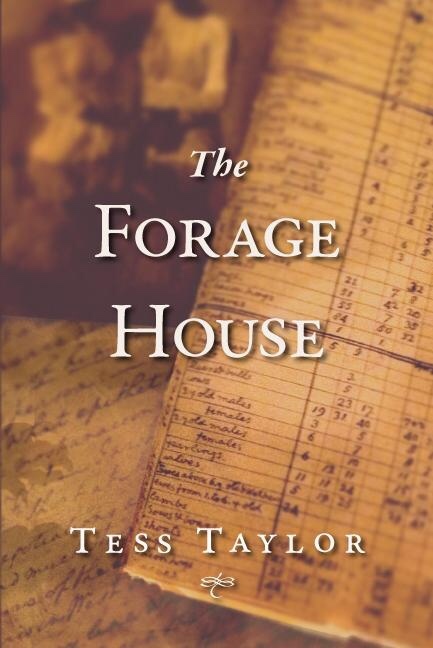
The Forage House by Tess Taylor was published in 2013 by Red Hen Press and is now available to order wherever books are sold.
Thanks as always for being a faithful reader of The Voracious Bibliophile. If you like what you see, please like, comment, follow, and subscribe to my email list to get notified of new posts as soon as they drop. You can also email me at fred.slusher@thevoraciousbibliophile.com or catch me on Twitter, Instagram, TikTok, and Pinterest @voraciousbiblog. Keep reading the world, one page (or pixel) at a time.
Becoming the raspberry stain on the pink of   your cheek,
a tongue’s soft landing spot. Becoming the empty ritual,
what can’t be said. Becoming intercession, my language
becoming yours, the blessing of tongues. Becoming the river
in the belly, implanted language, dead boy’s song. Becoming dry
with manhood. Becoming the doors we’ve closed, those I’ve learned
to open with a tongue. Becoming seen in the body, witnessed, becoming
clarity, the fear of it. Becoming the name I’ve been given,
the honorific, a placeholder. Becoming postured
to my Father’s dilemma, the inherited tongue. Becoming
what I wish I could be on my own. Becoming kept,
becoming stolen, becoming made free to leave when I am not yet ready
to go. Becoming the might of what we serve, the oft-
invisibled. Becoming don’t look back, pillar of salt. Becoming idoled.
Becoming possessed. Becoming the body’s mettle, the tongue’s chisel.
Becoming compass. Becoming the help that I needed, my Father’s hidden
forgiveness. Becoming the secrets I hope to taste in you,
the wounded tongue, braided blood covenant. Becoming forbidden’s
starting point, a bold beginning, the flaying of   what I do not yet know I believe.
“Tongues” appears in the September 2021 issue of Poetry, which is now available to buy from newsstands everywhere or to read on the Poetry Foundation’s website.
Thanks as always for being a faithful reader of The Voracious Bibliophile. If you like what you see, please like, comment, follow, and subscribe to my email list to get notified of new posts as soon as they drop. You can also email me at fred.slusher@thevoraciousbibliophile.com or catch me on Twitter, Instagram, TikTok, and Pinterest @voraciousbiblog. Keep reading the world, one page (or pixel) at a time.
I am still trying to understand how we can think so highly of someone else and so little of ourselves. So, when it feels like every breath leaves a bruise and your hopes are set on the love returning, just know that I wish I could hold you when the darkness feels too great. I wish I could comfort you and remind you the sun will reappear. I wish you could see that all the scars are a reminder; you will survive the ache.
Courtney Peppernell, Pillow Thoughts IV
I apologize that today’s quote is coming later than usual. Life has been pretty hectic for the past couple of days but I want you all to know that I very much appreciate you taking time out of your busy days to read the stuff I post here. All my love, forever and always.
Thanks as always for being a faithful reader of The Voracious Bibliophile. If you like what you see, please like, comment, follow, and subscribe to my email list to get notified of new posts as soon as they drop. You can also email me at fred.slusher@thevoraciousbibliophile.com or catch me on Twitter, Instagram, TikTok, and Pinterest @voraciousbiblog. Keep reading the world, one page (or pixel) at a time.
White Apples and the Taste of Stone: Selected Poems 1946-2006 by Donald Hall
Affirmation by Donald Hall
Let us stifle under mud at the pond’s edge
and affirm that it is fitting
and delicious to lose everything.
To grow old is to lose everything.
Aging, everybody knows it.
Even when we are young,
we glimpse it sometimes, and nod our heads
when a grandfather dies.
Then we row for years on the midsummer
pond, ignorant and content. But a marriage,
that began without harm, scatters
into debris on the shore,
and a friend from school drops
cold on a rocky strand.
If a new love carries us
past middle age, our wife will die
at her strongest and most beautiful.
New women come and go. All go.
The pretty lover who announces
that she is temporary
is temporary. The bold woman,
middle-aged against our old age,
sinks under an anxiety she cannot withstand.
Another friend of decades estranges himself
in words that pollute thirty years.
Let us stifle under mud at the pond's edge
and affirm that it is fitting
and delicious to lose everything.
Donald Hall (1928-2018) was considered one of the preeminent writers of his generation. He authored more than fifty books across several genres but he is most well known for his poetry. He was awarded the National Medal of Arts in 2010, which is the highest honor the United States government bestows upon artists and arts patrons.
White Apples and the Taste of Stone: Selected Poems, 1946-2006, the collection from which today’s poem is taken, was published in 2006 by Houghton Mifflin Harcourt and is now available to purchase wherever books are sold.
Thanks as always for being a faithful reader of The Voracious Bibliophile. If you like what you see, please like, comment, follow, and subscribe to my email list to get notified of new posts as soon as they drop. You can also email me at fred.slusher@thevoraciousbibliophile.com or catch me on Twitter, Instagram, TikTok, and Pinterest @voraciousbiblog. Keep reading the world, one page (or pixel) at a time.
My Village: Selected Poems 1972-2014 by Wu Sheng and John Balcom (Translator)
American Citizenship by Wu Sheng and John Balcom (Translator)
Out here in the sticks
You rarely encounter such genius:
"Come, come, come to Taiwan U
Go, go, go to the US"
Words passed with envy from mouth to mouth
Giving the hometown high hopes

Then I heard you've become an American citizen
You're very busy
With house payments
Credit cards
You rarely have time to write home
You must know unspeakable hardship
At home, mother
Is busy as always
Covering our tuition
Doing never-ending farm work
                season after season
For you to study abroad and
Leave the family in debt

You ought to remember
                at the end of the year you left
Father, who struggled all his life
In wind and rain, in sorching sun and bitter cold
Died in a car accident
Leaving all life's difficulties
To mother, who can't even read
For more than ten years,
                From morning till night
Our illiterate mother
Has had so much
She wanted me to write and tell you
—how she worried about you

And I ought to tell you
Every time there's a wedding in the village
Mother insists
I write your name
In the register
Because you are the eldest son
Our older brother

You left your backward hometown
More than ten years ago
To become an American citizen
In every airmail letter home
You express your disappointment and anger
At your unsuccessful brothers and sisters

Yes, we've all disappointed you
You're ashamed of us
Like this small plot of land
This stupid plot of land
Which provides you no sense of pride or glory
Because we are unwilling to study
Those proud ABCs
We're only willing to work, struggle and sweat in silence
In our homeland
I heard you've become an American citizen
You're very busy
You must have suffered great hardship
I don't know if you miss mother
                The way she misses you
She's growing older thinking about you
Do you ever think about
The potatoes we ate as kids?
They were cheap and tasty
I don't know why
You are so busy in that foreign land
And for whom

1978
My Village: Selected Poems 1972-2014 was released in 2020 by Zephyr Press and is now available to order wherever books are sold.
Thanks as always for being a faithful reader of The Voracious Bibliophile. If you like what you see, please like, comment, follow, and subscribe to my email list to get notified of new posts as soon as they drop. You can also email me at fred.slusher@thevoraciousbibliophile.com or catch me on Twitter and Instagram @voraciousbiblog. Keep reading the world, one page (or pixel) at a time.
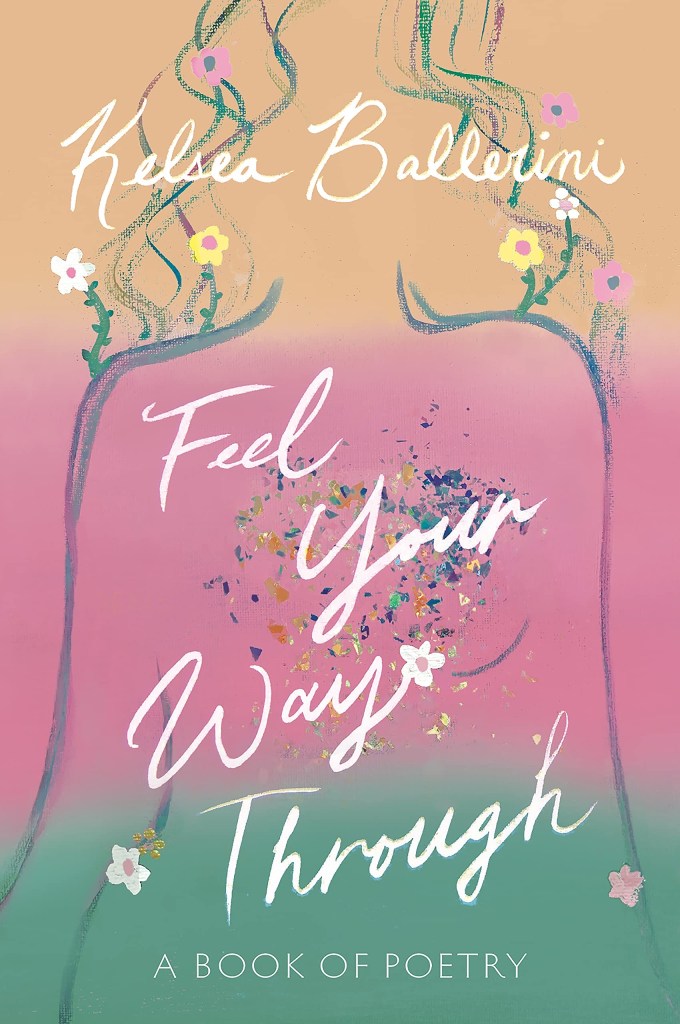
Feel Your Way Through: A Book of Poetry by Kelsea Ballerini
***Note: I received a free digital review copy of this book from NetGalley in exchange for an honest review.***
Kelsea Ballerini is the third singer-celebrity in recent memory to release a poetry collection. Following Lana Del Rey’s Violet Bent Backwards over the Grass and Halsey’s I Would Leave Me If I Could, Ballerini’s Feel Your Way Through is as much a memoir as it is a collection of poetry. It is also delightfully unpretentious and genuine in a way one wouldn’t necessarily expect from an artist who has achieved such success at such a young age.
Poignant, haunting, and yet never overly melancholy, Feel Your Way Through leads the reader on a journey with Ballerini chronicling her life up until now, with all of its fierce loves, heartbreaks, hard knocks, and triumphs. The title itself is revealing and may carry multiple meanings for both readers and Ballerini herself. Feeling one’s way through could refer to moving along a path which you can’t see clearly, so you have to rely on your gut and your instincts to keep from stumbling. It also could be taken more literally, urging readers to lead with their hearts even when it hurts.
Written with a seasoned songwriter’s ear for rhythm, this deeply heartfelt and startlingly intimate collection is sure to delight long-time Ballerini fans as well as people who haven’t listened to her music.
Written with a seasoned songwriter’s ear for rhythm, this deeply heartfelt and startlingly intimate collection is sure to delight long-time Ballerini fans as well as people who haven’t listened to her music. I can confidently say that this is a book I’ll be eagerly putting in the hands of my customers.
Feel Your Way Through: A Book of Poetry is due to be released on November 16th, 2021 by Ballantine Books and is now available to preorder wherever books are sold.
Thanks as always for being a faithful reader of The Voracious Bibliophile. If you like what you see, please like, comment, follow, and subscribe to my email list to get notified of new posts as soon as they drop. You can also email me at fred.slusher@thevoraciousbibliophile.com or catch me on Twitter, Instagram, TikTok, and Pinterest @voraciousbiblog. Keep reading the world, one page (or pixel) at a time.
[The house was just twinkling in the moon light] by Gertrude Stein
The house was just twinkling in the moon light,
And inside it twinkling with delight,
Is my baby bright.
Twinkling with delight in the house twinkling
with the moonlight,
Bless my baby bless my baby bright,
Bless my baby twinkling with delight,
In the house twinkling in the moon light,
Her hubby dear loves to cheer when he thinks
and he always thinks when he knows and he always
knows that his blessed baby wifey is all here and he
is all hers, and sticks to her like burrs, blessed baby
Today’s poem is taken from Baby Precious Always Shines: Selected Love Notes Between Gertrude Stein and Alice B. Toklas which was published by St. Martin’s Press in 1999. It is available to order wherever books are sold.
Thanks as always for being a faithful reader of The Voracious Bibliophile. If you like what you see, please like, comment, follow, and subscribe to my email list to get notified of new posts as soon as they drop. You can also email me at fred.slusher@thevoraciousbibliophile.com or catch me on Twitter and Instagram @voraciousbiblog. Keep reading the world, one page (or pixel) at a time.
Scrabbling bones together like a gathering of river stones

Bones become sacred
Human remains, memories of cartilage
Piled centuries high
Skulls and leg remnants begin to tell the stories of before.

I am the once-severed arm of a young girl
Scrambling for a foothold in this desert
Where once my enemy chased did not live

I am the fingers of a woman whose knuckles live beneath a flower box

We remember each other through these bones
Through the songs of calcium deficiency and famine strings that strum us into night
We are the gathering of old-timers whose eye sockets tell stories of victory

We are a memory shaped by vertebrae
Clappers of rhythm disassembled by the skeletons of time

I am the keeper of a man whose only hope was grounding toil
Scrubbing my skin with the earth for food

I am the elbow of children whose eyes switched at the thought of cold

I am the shin of garbage collectors building stamina for a city to come

We are a memory shaped by vertebrae
Clappers of rhythm disassembled by the skeletons of time
We are the dissipating by the skeletons of time
We are the dissipating cartilage of our great-grandchildren's memory holding to their sockets by a sinew of hope

Making sense of these bones we reassemble history
Making ancestral tapestries in the shape of retaining walls

We are a memory shaped by a vertebrae
Clappers of rhythm disassembled by the skeletons of time

You are the skin behind the clouds
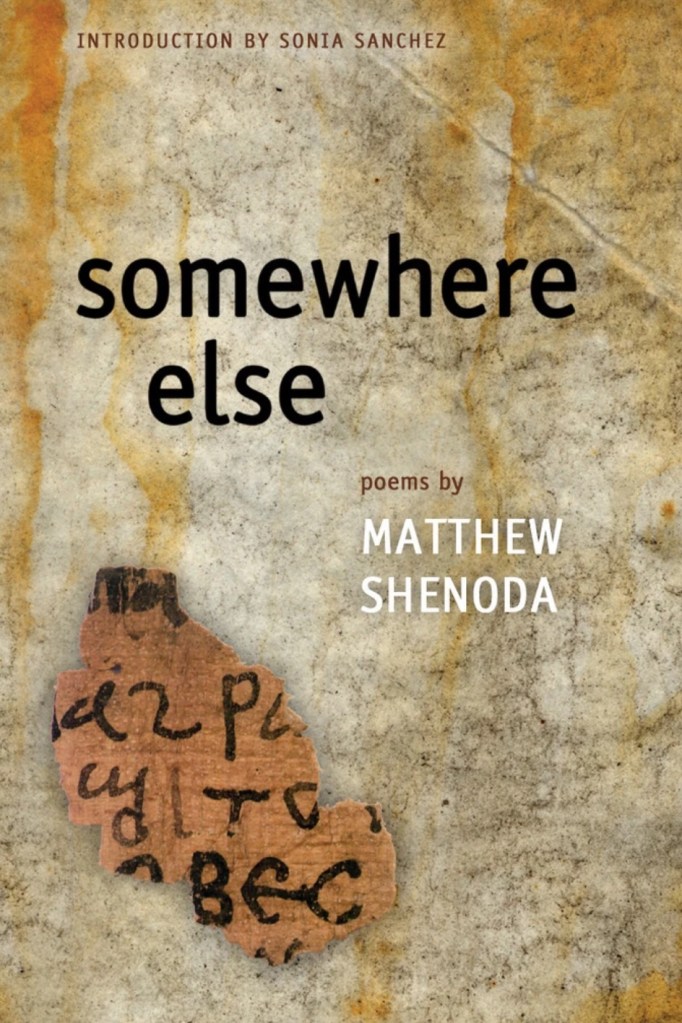
Matthew Shenoda currently teaches at San Francisco State University and works as an activist in the Bay Area. Somewhere Else: Poems was released in 2005 by Coffee House Press and is available to order on their website.
Thanks as always for being a faithful reader of The Voracious Bibliophile. If you like what you see, please like, comment, follow, and subscribe to my email list to get notified of new posts as soon as they drop. You can also email me at fred.slusher@thevoraciousbibliophile.com or catch me on Twitter, Instagram, TikTok, and Pinterest @voraciousbiblog. Keep reading the world, one page (or pixel) at a time.
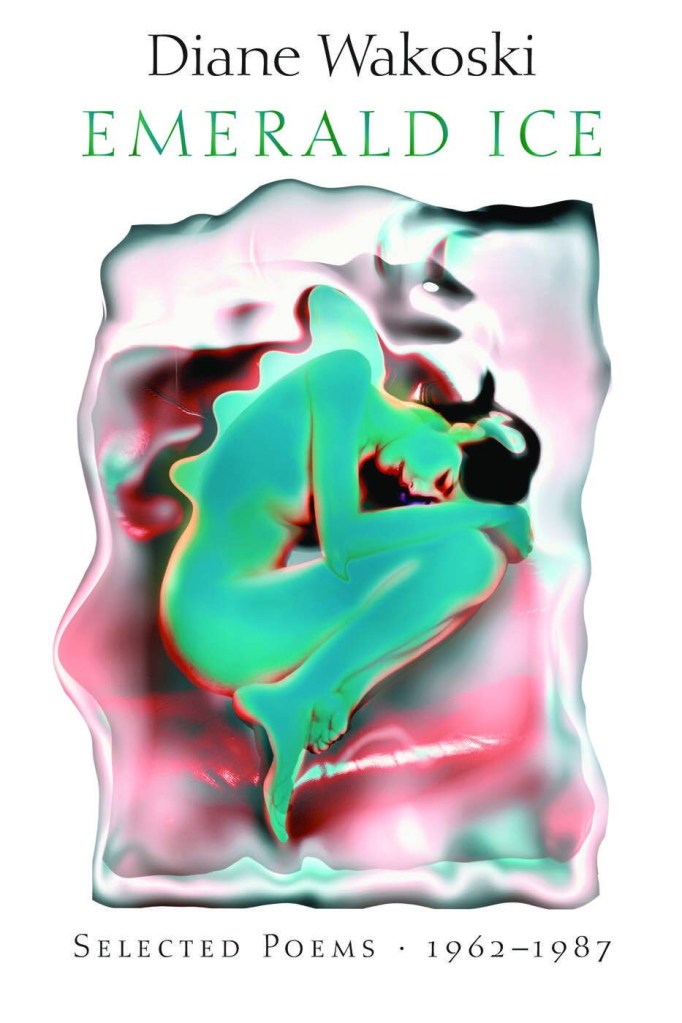
Emerald Ice: Selected Poems 1962-1987 by Diane Wakoski
Thanking My Mother for Piano Lessons by Diane Wakoski
The relief of putting your fingers on the keyboard,
as if you were walking on the beach
and found a diamond
as big as a shoe;

as if
you had just built a wooden table
and the smell of sawdust was in the air,
your hands dry and woody;

as if
you had eluded
the man in the dark hat who had been following you
all week;

the relief
of putting your fingers on the keyboard,
playing the chords of
Beethoven,
Bach,
Chopin
         in an afternoon when I had no one to talk to,
         when the magazine advertisement forms of soft sweaters
         and clean shining Republican middle-class hair
         walked into carpeted houses
         and left me alone
         with bare floors and a few books

I want to thank my mother
for working every day
in a drab office
in garages and water companies
cutting the cream out of her coffee at 40
to lose weight, her heavy body
writing its delicate bookkeeper’s ledgers
alone, with no man to look at her face,
her body, her prematurely white hair
in love
         I want to thank
my mother for working and always paying for
my piano lessons
before she paid the Bank of America loan
or bought the groceries
or had our old rattling Ford repaired.

I was a quiet child,
afraid of walking into a store alone,
afraid of the water,
the sun,
the dirty weeds in back yards,
afraid of my mother’s bad breath,
and afraid of my father’s occasional visits home,
knowing he would leave again;
afraid of not having any money,
afraid of my clumsy body,
that I knew
         no one would ever love

But I played my way
on the old upright piano
obtained for $10,
played my way through fear,
through ugliness,
through growing up in a world of dime-store purchases,
and a desire to love
a loveless world.

I played my way through an ugly face
and lonely afternoons, days, evenings, nights,
mornings even, empty
as a rusty coffee can,
played my way through the rustles of spring
and wanted everything around me to shimmer like the narrow tide
on a flat beach at sunset in Southern California,
I played my way through
an empty father’s hat in my mother’s closet
and a bed she slept on only one side of,
never wrinkling an inch of
the other side,
waiting,
waiting,

I played my way through honors in school,
the only place I could
talk
       the classroom,
       or at my piano lessons, Mrs. Hillhouse’s canary always
       singing the most for my talents,
       as if I had thrown some part of my body away upon entering
       her house
       and was now searching every ivory case
       of the keyboard, slipping my fingers over black
       ridges and around smooth rocks,
       wondering where I had lost my bloody organs,
       or my mouth which sometimes opened
       like a California poppy,
       wide and with contrasts
       beautiful in sweeping fields,
       entirely closed morning and night,

I played my way from age to age,
but they all seemed ageless
or perhaps always
old and lonely,
wanting only one thing, surrounded by the dusty bitter-smelling
leaves of orange trees,
wanting only to be touched by a man who loved me,
who would be there every night
to put his large strong hand over my shoulder,
whose hips I would wake up against in the morning,
whose mustaches might brush a face asleep,
dreaming of pianos that made the sound of Mozart
and Schubert without demanding
that life suck everything
out of you each day,
without demanding the emptiness
of a timid little life.

I want to thank my mother
for letting me wake her up sometimes at 6 in the morning
when I practiced my lessons
and for making sure I had a piano
to lay my school books down on, every afternoon.
I haven’t touched the piano in 10 years,
perhaps in fear that what little love I’ve been able to
pick, like lint, out of the corners of pockets,
will get lost,
slide away,
into the terribly empty cavern of me
if I ever open it all the way up again.
Love is a man
with a mustache
gently holding me every night,
always being there when I need to touch him;
he could not know the painfully loud
music from the past that
his loving stops from pounding, banging,
battering through my brain,
which does its best to destroy the precarious gray matter when I
am alone;
he does not hear Mrs. Hillhouse’s canary singing for me,
liking the sound of my lesson this week,
telling me,
confirming what my teacher says,
that I have a gift for the piano
few of her other pupils had.
When I touch the man
I love,
I want to thank my mother for giving me
piano lessons
all those years,
keeping the memory of Beethoven,
a deaf tortured man,
in mind;
            of the beauty that can come
from even an ugly
past.
Diane Wakoski won the William Carlos Williams Award from the Poetry Society of America for Emerald Ice: Selected Poems 1962-1987. Her most recent collection, Lady of Light: New Poems, was published in 2018 by Anhinga Press and is available to order on their website.
Thanks as always for being a faithful reader of The Voracious Bibliophile. If you like what you see, please like, comment, follow, and subscribe to my email list to get notified of new posts as soon as they drop. You can also email me at fred.slusher@thevoraciousbibliophile.com or catch me on Twitter, Instagram, TikTok, and Pinterest @voraciousbiblog. Keep reading the world, one page (or pixel) at a time.
When I Grow Up I Want to Be a List of Further Possibilities (Winner of the A. Poulin, Jr. Poetry Prize) by Chen Chen
In the Hospital by Chen Chen
My mother was in the hospital & everyone wanted to be my friend.
But I was busy making a list: good dog, bad citizen, short
skeleton, tall mocha. Typical Tuesday.
My mother was in the hospital & no one wanted to be her friend.
Everyone wanted to be soft cooing sympathies. Very reasonable
pigeons. No one had the tie & our solution to it
was to buy shinier watches. We were enamored with
what our wrists could declare. My mother was in the hospital
& I didn’t want to be her friend. Typical son. Tall latte, short tale,
bad plot, great wifi in the atypical café. My mother was in the hospital
& she didn’t want to be her friend. She wanted to be the family
grocery list. Low-fat yogurt, firm tofu. She didn’t trust my father
to be it. You always forget something, she said, even when
I do the list for you. Even then.
The language in this poem exposes both the terror and banality accompanying seeing someone you love ill. Small details become our refuge and religion.
I thought today’s poem would be apropos for the world we currently live in, where so much of our collective existence is focused on (the avoidance of needing to go to) hospitals. I’ve been enamored with Chen Chen’s poetry for years now, and his collection (pictured above) that includes “In the Hospital” was in my opinion one of the best of the 2010s. The language in this poem exposes both the terror and banality accompanying seeing someone you love ill. Small details become our refuge and religion.
In the end, we cannot do the thing that needs doing the most, which is healing, a return to vitality, a restoration to order.
We pick minutiae that can be controlled, or at least reasonably assessed, and make that our focus. We grapple with our incompetencies and make lists of all the things we can do and all the things we can’t. In the end, we cannot do the thing that needs doing the most, which is healing, a return to vitality, a restoration to order. That is always thanklessly out of our hands.
When I Grow Up I Want to Be a List of Further Possibilities was released in 2017 by BOA Editions, Ltd. and is available to order wherever books are sold.
Thanks as always for being a faithful reader of The Voracious Bibliophile. If you like what you see, please like, comment, follow, and subscribe to my email list to get notified of new posts as soon as they drop. You can also email me at fred.slusher@thevoraciousbibliophile.com or catch me on Twitter, Instagram, TikTok, and Pinterest @voraciousbiblog. Keep reading the world, one page (or pixel) at a time.







 The Voracious Bibliophile