A Thousand Vowels by Shuri Kido Translated from the Japanese by Tomoyuki Endo & Forrest Gander
A long slope.
The strong sun dipped, and finally sank.
No matter how long I walked, I stayed in "the middle of the road."
The name torn into pieces.
Just keeping on, climbing higher and higher,
I'd completely forgotten the name.
The west wind shifts the typhoon's course,
the world, for a few hours, is thrown into confusion.
You might name one thing after another,
but each loses its name in that same moment.
Into what we call "nature."
I stood in the middle of nature.
And something was missing, the natural was
draped in a thin shroud.
Vowels scattered,
the name went missing.
When once more the name "nature" was applied
to the desolate-as-ever landscape,
immediately, the name began to weather away.
What is still losing its name,
and what has already lost its name,
those two strands entwine
around the true name.
Those who have wings stay put,
howling out their condition over and over,
"How fragile we are!"
though no one hears them.
Thousands of ripples tell
a story of benthic anguish.
The ripples beach themselves
on the name of each anguish,
vowels scatter by the thousands
over the earth.
Thanks as always for being a faithful reader of The Voracious Bibliophile. If you like what you see, please like, comment, follow, and subscribe to my email list to get notified of new posts as soon as they drop. You can also email me at fred.slusher@thevoraciousbibliophile.com or catch me on Twitter, Instagram, TikTok, and Pinterest @voraciousbiblog. Keep reading the world, one page (or pixel) at a time.
***Note: I received a free digital review copy of this book from NetGalley in exchange for an honest review.***
Like all of Shire’s work, this collection explores themes of immigration, Black womanhood, Muslim identity, mental health, and sexual violence.
Herein the body is more than its corporeal form. It is a border wall limned with barbed wire, a boat tossed on a treacherous sea between nations, a forest aflame, a line of demarcation, a political statement, a war zone, a site of both refuge and terror, a haunted geography, and a mother’s scream, beautiful and terrible. Herein is a voice forged in fire. Bless the Daughter Raised by a Voice in Her Head is perhaps 2022’s most anticipated poetry collection and I for one can say it was worth the long wait.
Like a lot of people, my first experience with Warsan Shire and her poetry came vis-à-vis the visual album for Beyoncé’s Lemonade. For those of you who haven’t watched Lemonade, it is composed of eleven chapters, corresponding with the first eleven songs on the album with names like “Intuition” (for “Pray You Catch Me”) and “Redemption” (for “All Night”). In the interstitial spaces between songs, Beyoncé recites pieces of poetry and prose by Warsan Shire. The British-Somali wunderkind, then relatively-unknown outside of the U.K., was catapulted into the spotlight.
Immediately after listening to Lemonade, I bought Shire’s 2011 chapbook, Teaching My Mother How to Give Birth, which I’ve read several times now. In 2015, she released a chapbook through flipped eye publishing called Her Blue Body, and if you have a copy then you’d be well-advised to hold on tight to it for dear life because I’ve been scouring the Internet for years in search of a copy. I once saw a used copy online for more than $1,000, and if I’d had the money I’d have bought it no questions asked.
Like all of Shire’s work, this collection explores themes of immigration, Black womanhood, Muslim identity, mental health, and sexual violence. I can’t imagine anyone reading it and leaving it unaffected if not completely transformed. Bless the Daughter Raised by a Voice in Her Head is not to be missed.
Thanks as always for being a faithful reader of The Voracious Bibliophile. If you like what you see, please like, comment, follow, and subscribe to my email list to get notified of new posts as soon as they drop. You can also email me at fred.slusher@thevoraciousbibliophile.com or catch me on Twitter, Instagram, TikTok, and Pinterest @voraciousbiblog. Keep reading the world, one page (or pixel) at a time.
On February 7, 1979, Pluto crossed over Neptune’s orbit and became the eighth planet from the sun for twenty years. A study in 1988 determined that Pluto’s path of orbit could never be accurately predicted. Labeled as “chaotic,” Pluto was later discredited from planet status in 2006.
Today, I broke your solar system. Oops. My bad. Your graph said I was supposed to make a nice little loop around the sun.
Naw.
I chaos like a motherfucker. Ain’t no one can chart me. All the other planets, they think I’m annoying. They think I’m an escaped moon, running free.
Fuck your moon. Fuck your solar system. Fuck your time. Your year? Your year ain’t shit but a day to me. I could spend your whole year turning the winds in my bed. Thinking about rings and how Jupiter should just pussy on up and marry me by now. Your day?
That’s an asswipe. A sniffle. Your whole day is barely the start of my sunset.
My name means hell, bitch. I am hell, bitch. All the cold you have yet to feel. Chaos like a motherfucker. And you tried to order me. Called me ninth. Somewhere in the mess of graphs and math and compass you tried to make me follow rules. Rules? Fuck your rules. Neptune, that bitch slow. And I deserve all the sun I can get, and all the blue-gold sky I want around me.
It is February 7th, 1979 and my skin is more copper than any sky will ever be. More metal. Neptune is bitch-sobbing in my rearview, and I got my running shoes on and all this sky that’s all mine.
Fuck your order. Fuck your time. I realigned the cosmos. I chaosed all the hell you have yet to feel. Now all your kids in the classrooms, they confused. All their clocks: wrong. They don’t even know what the fuck to do. They gotta memorize new songs and shit. And the other planets, I fucked their orbits. I shook the sky. Chaos like a motherfucker.
It is February 7th, 1979. The sky is blue-gold: the freedom of possibility.
“Pluto Shits on the Universe” is now probably in my top ten favorite poems of all time. I love Asghar’s irreverence here, the way she plays with the multiple meanings of certain words. Consider this part of the poem:
My name means hell, bitch. I am hell, bitch. All the cold you have yet to feel. Chaos like a motherfucker. And you tried to order me. Called me ninth.
Order here conveys certain ideas singularly and in conjunction with one another:
Order as “a state in which everything is in its correct or appropriate place”.*
Order as “the arrangement or disposition of people or things in relation to each other according to a particular sequence, pattern, or method”.”
Order as “an authoritative command, direction, or instruction”.*
Order as the opposite of Chaos, in Chaos Theory, which is “an interdisciplinary theory and branch of mathematics focusing on the study of chaos: dynamical systems whose apparently random states of disorder and irregularities are actually governed by underlying patterns and deterministic laws that are highly sensitive to initial conditions”.**
*Definition taken from Oxford Languages
**Definition taken from Wikipedia
There is the forced classification, the imposition of hierarchies, the reification of unnatural (human-made) systems, and the stark dismissal of them all.
Chaos like a motherfucker. / And you tried to order me. Called me ninth. There is an acknowledgment of the would-be controlling outside power and its unequivocal rejection. There is the forced classification, the imposition of hierarchies, the reification of unnatural (human-made) systems, and the stark dismissal of them all.
Today, I broke your solar system. Oops. My bad. Y’all. That slaps.
Fatimah Asghar Recites Her Poem, “Pluto Shits on the Universe”
You can learn more about Fatimah Asghar and her work at her website. Her debut poetry collection, If They Come for Us: Poems, was published by One World in August 2018 and is available to purchase wherever books are sold.
Thanks as always for being a faithful reader of The Voracious Bibliophile. If you like what you see, please like, comment, follow, and subscribe to my email list to get notified of new posts as soon as they drop. You can also email me at fred.slusher@thevoraciousbibliophile.com or catch me on Twitter, Instagram, TikTok, and Pinterest @voraciousbiblog. Keep reading the world, one page (or pixel) at a time.
All night I dreamed of my home,
of the roads that are so long
and straight they die in the middle—
among the spines of elderly weeds
on either side, among the dead cats,
the ants who are all eyes, the suitcase
thrown open, sprouting failures.

   2.
And this evening in the garden
I find the winter
inside a snail shell, rigid and
cool, a little stubborn temple,
its one visitor gone.

   3.
If there were messages or signs,
I might hear now a voice tell me
to walk forever, to ask
the mold for pardon, and one
by one I would hear out my sins,
hear they are not important—that I am
part of this rain
drumming its long fingers, and
of the roadside stone refusing
to blink, and of the coyote
nailed to the fence with its
long grin.

And when there are no messages
the dead lie still—
their hands crossed so strangely
like knives and forks after supper.

   4.
I stay up late listening.
My feet tap the floor,
they begin a tiny dance
which will outlive me.
They turn away from this poem.
It is almost Spring.
Thanks as always for being a faithful reader of The Voracious Bibliophile. If you like what you see, please like, comment, follow, and subscribe to my email list to get notified of new posts as soon as they drop. You can also email me at fred.slusher@thevoraciousbibliophile.com or catch me on Twitter, Instagram, TikTok, and Pinterest @voraciousbiblog. Keep reading the world, one page (or pixel) at a time.
An end is always punishment for a beginning.
If you’re Catholic, sadness is punishment
for happiness, you become the bug you squash
if you’re Hindu, a flinty space opens
in your head after a long night of laughter
and wine. For waking there are dreams,
from French poetry, English poetry,
for light fire although sometimes
fire must be punished by light
which is why psychotherapy had to be invented.
A father may say nothing to a son for years.
A wife may keep something small folded deep
in her underwear drawer. Clouds come in
resembling the terrible things we believe
about ourselves, a rock comes loose
from a ledge, the baby just cries
and cries. Doll in a chair,
windshield wipers, staring off
into the city lights. For years
you may be unable to hear the word monkey
without a stab in the heart because
she called you that the summer she thought
she loved you and you thought you loved
someone else and everyone loved
your salad dressing. And the daffodils
come up in the spring and the snow covers
the road in winter and the water covers
the deep trenches in the sea where all the time
the inner stuff of this earth surges up
which is how the continents are made
and broken.
Thanks as always for being a faithful reader of The Voracious Bibliophile. If you like what you see, please like, comment, follow, and subscribe to my email list to get notified of new posts as soon as they drop. You can also email me at fred.slusher@thevoraciousbibliophile.com or catch me on Twitter, Instagram, TikTok, and Pinterest @voraciousbiblog. Keep reading the world, one page (or pixel) at a time.
I am still trying to understand how we can think so highly of someone else and so little of ourselves. So, when it feels like every breath leaves a bruise and your hopes are set on the love returning, just know that I wish I could hold you when the darkness feels too great. I wish I could comfort you and remind you the sun will reappear. I wish you could see that all the scars are a reminder; you will survive the ache.
Courtney Peppernell, Pillow Thoughts IV
I apologize that today’s quote is coming later than usual. Life has been pretty hectic for the past couple of days but I want you all to know that I very much appreciate you taking time out of your busy days to read the stuff I post here. All my love, forever and always.
Thanks as always for being a faithful reader of The Voracious Bibliophile. If you like what you see, please like, comment, follow, and subscribe to my email list to get notified of new posts as soon as they drop. You can also email me at fred.slusher@thevoraciousbibliophile.com or catch me on Twitter, Instagram, TikTok, and Pinterest @voraciousbiblog. Keep reading the world, one page (or pixel) at a time.
White Apples and the Taste of Stone: Selected Poems 1946-2006 by Donald Hall
Affirmation by Donald Hall
Let us stifle under mud at the pond’s edge
and affirm that it is fitting
and delicious to lose everything.
To grow old is to lose everything.
Aging, everybody knows it.
Even when we are young,
we glimpse it sometimes, and nod our heads
when a grandfather dies.
Then we row for years on the midsummer
pond, ignorant and content. But a marriage,
that began without harm, scatters
into debris on the shore,
and a friend from school drops
cold on a rocky strand.
If a new love carries us
past middle age, our wife will die
at her strongest and most beautiful.
New women come and go. All go.
The pretty lover who announces
that she is temporary
is temporary. The bold woman,
middle-aged against our old age,
sinks under an anxiety she cannot withstand.
Another friend of decades estranges himself
in words that pollute thirty years.
Let us stifle under mud at the pond's edge
and affirm that it is fitting
and delicious to lose everything.
Donald Hall (1928-2018) was considered one of the preeminent writers of his generation. He authored more than fifty books across several genres but he is most well known for his poetry. He was awarded the National Medal of Arts in 2010, which is the highest honor the United States government bestows upon artists and arts patrons.
White Apples and the Taste of Stone: Selected Poems, 1946-2006, the collection from which today’s poem is taken, was published in 2006 by Houghton Mifflin Harcourt and is now available to purchase wherever books are sold.
Thanks as always for being a faithful reader of The Voracious Bibliophile. If you like what you see, please like, comment, follow, and subscribe to my email list to get notified of new posts as soon as they drop. You can also email me at fred.slusher@thevoraciousbibliophile.com or catch me on Twitter, Instagram, TikTok, and Pinterest @voraciousbiblog. Keep reading the world, one page (or pixel) at a time.
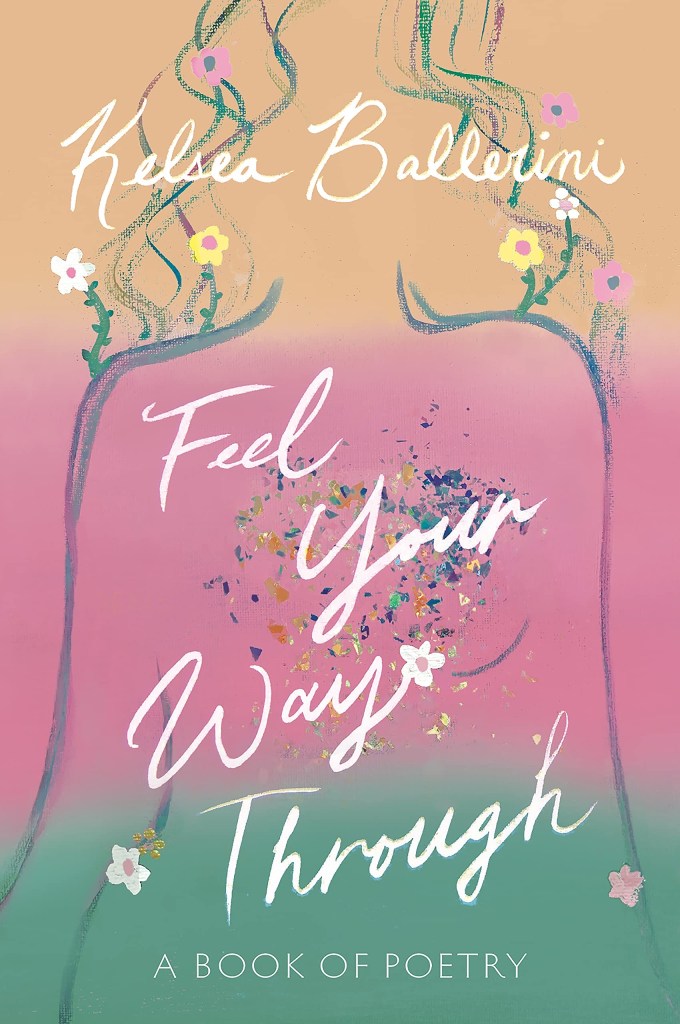
Feel Your Way Through: A Book of Poetry by Kelsea Ballerini
***Note: I received a free digital review copy of this book from NetGalley in exchange for an honest review.***
Kelsea Ballerini is the third singer-celebrity in recent memory to release a poetry collection. Following Lana Del Rey’s Violet Bent Backwards over the Grass and Halsey’s I Would Leave Me If I Could, Ballerini’s Feel Your Way Through is as much a memoir as it is a collection of poetry. It is also delightfully unpretentious and genuine in a way one wouldn’t necessarily expect from an artist who has achieved such success at such a young age.
Poignant, haunting, and yet never overly melancholy, Feel Your Way Through leads the reader on a journey with Ballerini chronicling her life up until now, with all of its fierce loves, heartbreaks, hard knocks, and triumphs. The title itself is revealing and may carry multiple meanings for both readers and Ballerini herself. Feeling one’s way through could refer to moving along a path which you can’t see clearly, so you have to rely on your gut and your instincts to keep from stumbling. It also could be taken more literally, urging readers to lead with their hearts even when it hurts.
Written with a seasoned songwriter’s ear for rhythm, this deeply heartfelt and startlingly intimate collection is sure to delight long-time Ballerini fans as well as people who haven’t listened to her music.
Written with a seasoned songwriter’s ear for rhythm, this deeply heartfelt and startlingly intimate collection is sure to delight long-time Ballerini fans as well as people who haven’t listened to her music. I can confidently say that this is a book I’ll be eagerly putting in the hands of my customers.
Feel Your Way Through: A Book of Poetry is due to be released on November 16th, 2021 by Ballantine Books and is now available to preorder wherever books are sold.
Thanks as always for being a faithful reader of The Voracious Bibliophile. If you like what you see, please like, comment, follow, and subscribe to my email list to get notified of new posts as soon as they drop. You can also email me at fred.slusher@thevoraciousbibliophile.com or catch me on Twitter, Instagram, TikTok, and Pinterest @voraciousbiblog. Keep reading the world, one page (or pixel) at a time.
Scrabbling bones together like a gathering of river stones

Bones become sacred
Human remains, memories of cartilage
Piled centuries high
Skulls and leg remnants begin to tell the stories of before.

I am the once-severed arm of a young girl
Scrambling for a foothold in this desert
Where once my enemy chased did not live

I am the fingers of a woman whose knuckles live beneath a flower box

We remember each other through these bones
Through the songs of calcium deficiency and famine strings that strum us into night
We are the gathering of old-timers whose eye sockets tell stories of victory

We are a memory shaped by vertebrae
Clappers of rhythm disassembled by the skeletons of time

I am the keeper of a man whose only hope was grounding toil
Scrubbing my skin with the earth for food

I am the elbow of children whose eyes switched at the thought of cold

I am the shin of garbage collectors building stamina for a city to come

We are a memory shaped by vertebrae
Clappers of rhythm disassembled by the skeletons of time
We are the dissipating by the skeletons of time
We are the dissipating cartilage of our great-grandchildren's memory holding to their sockets by a sinew of hope

Making sense of these bones we reassemble history
Making ancestral tapestries in the shape of retaining walls

We are a memory shaped by a vertebrae
Clappers of rhythm disassembled by the skeletons of time

You are the skin behind the clouds
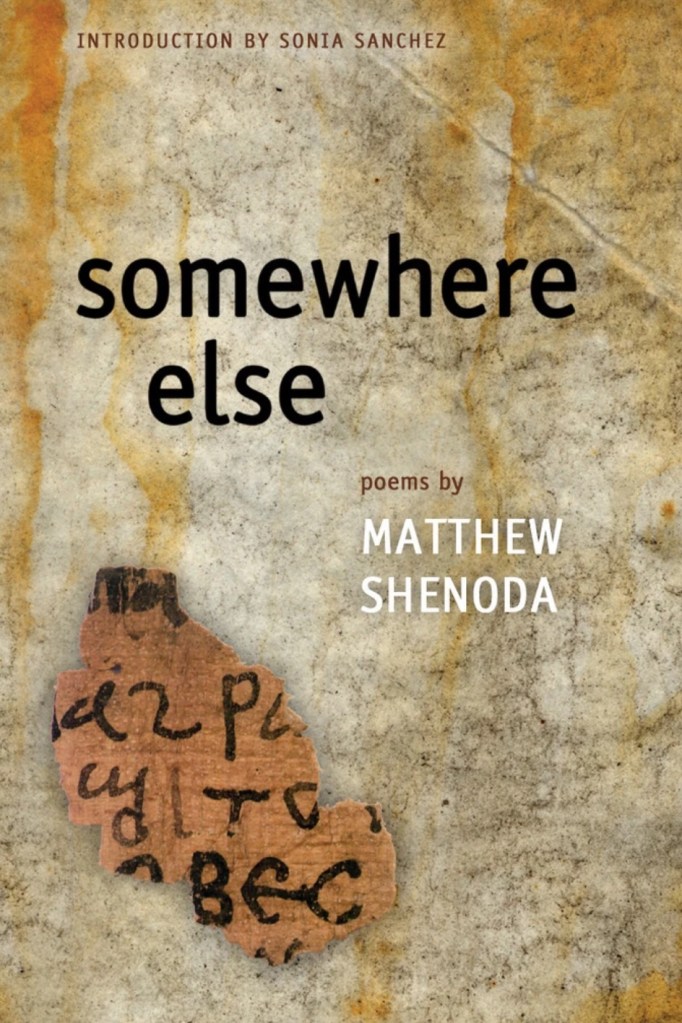
Matthew Shenoda currently teaches at San Francisco State University and works as an activist in the Bay Area. Somewhere Else: Poems was released in 2005 by Coffee House Press and is available to order on their website.
Thanks as always for being a faithful reader of The Voracious Bibliophile. If you like what you see, please like, comment, follow, and subscribe to my email list to get notified of new posts as soon as they drop. You can also email me at fred.slusher@thevoraciousbibliophile.com or catch me on Twitter, Instagram, TikTok, and Pinterest @voraciousbiblog. Keep reading the world, one page (or pixel) at a time.
Emerald Ice: Selected Poems 1962-1987 by Diane Wakoski
Thanking My Mother for Piano Lessons by Diane Wakoski
The relief of putting your fingers on the keyboard,
as if you were walking on the beach
and found a diamond
as big as a shoe;

as if
you had just built a wooden table
and the smell of sawdust was in the air,
your hands dry and woody;

as if
you had eluded
the man in the dark hat who had been following you
all week;

the relief
of putting your fingers on the keyboard,
playing the chords of
Beethoven,
Bach,
Chopin
         in an afternoon when I had no one to talk to,
         when the magazine advertisement forms of soft sweaters
         and clean shining Republican middle-class hair
         walked into carpeted houses
         and left me alone
         with bare floors and a few books

I want to thank my mother
for working every day
in a drab office
in garages and water companies
cutting the cream out of her coffee at 40
to lose weight, her heavy body
writing its delicate bookkeeper’s ledgers
alone, with no man to look at her face,
her body, her prematurely white hair
in love
         I want to thank
my mother for working and always paying for
my piano lessons
before she paid the Bank of America loan
or bought the groceries
or had our old rattling Ford repaired.

I was a quiet child,
afraid of walking into a store alone,
afraid of the water,
the sun,
the dirty weeds in back yards,
afraid of my mother’s bad breath,
and afraid of my father’s occasional visits home,
knowing he would leave again;
afraid of not having any money,
afraid of my clumsy body,
that I knew
         no one would ever love

But I played my way
on the old upright piano
obtained for $10,
played my way through fear,
through ugliness,
through growing up in a world of dime-store purchases,
and a desire to love
a loveless world.

I played my way through an ugly face
and lonely afternoons, days, evenings, nights,
mornings even, empty
as a rusty coffee can,
played my way through the rustles of spring
and wanted everything around me to shimmer like the narrow tide
on a flat beach at sunset in Southern California,
I played my way through
an empty father’s hat in my mother’s closet
and a bed she slept on only one side of,
never wrinkling an inch of
the other side,
waiting,
waiting,

I played my way through honors in school,
the only place I could
talk
       the classroom,
       or at my piano lessons, Mrs. Hillhouse’s canary always
       singing the most for my talents,
       as if I had thrown some part of my body away upon entering
       her house
       and was now searching every ivory case
       of the keyboard, slipping my fingers over black
       ridges and around smooth rocks,
       wondering where I had lost my bloody organs,
       or my mouth which sometimes opened
       like a California poppy,
       wide and with contrasts
       beautiful in sweeping fields,
       entirely closed morning and night,

I played my way from age to age,
but they all seemed ageless
or perhaps always
old and lonely,
wanting only one thing, surrounded by the dusty bitter-smelling
leaves of orange trees,
wanting only to be touched by a man who loved me,
who would be there every night
to put his large strong hand over my shoulder,
whose hips I would wake up against in the morning,
whose mustaches might brush a face asleep,
dreaming of pianos that made the sound of Mozart
and Schubert without demanding
that life suck everything
out of you each day,
without demanding the emptiness
of a timid little life.

I want to thank my mother
for letting me wake her up sometimes at 6 in the morning
when I practiced my lessons
and for making sure I had a piano
to lay my school books down on, every afternoon.
I haven’t touched the piano in 10 years,
perhaps in fear that what little love I’ve been able to
pick, like lint, out of the corners of pockets,
will get lost,
slide away,
into the terribly empty cavern of me
if I ever open it all the way up again.
Love is a man
with a mustache
gently holding me every night,
always being there when I need to touch him;
he could not know the painfully loud
music from the past that
his loving stops from pounding, banging,
battering through my brain,
which does its best to destroy the precarious gray matter when I
am alone;
he does not hear Mrs. Hillhouse’s canary singing for me,
liking the sound of my lesson this week,
telling me,
confirming what my teacher says,
that I have a gift for the piano
few of her other pupils had.
When I touch the man
I love,
I want to thank my mother for giving me
piano lessons
all those years,
keeping the memory of Beethoven,
a deaf tortured man,
in mind;
            of the beauty that can come
from even an ugly
past.
Diane Wakoski won the William Carlos Williams Award from the Poetry Society of America for Emerald Ice: Selected Poems 1962-1987. Her most recent collection, Lady of Light: New Poems, was published in 2018 by Anhinga Press and is available to order on their website.
Thanks as always for being a faithful reader of The Voracious Bibliophile. If you like what you see, please like, comment, follow, and subscribe to my email list to get notified of new posts as soon as they drop. You can also email me at fred.slusher@thevoraciousbibliophile.com or catch me on Twitter, Instagram, TikTok, and Pinterest @voraciousbiblog. Keep reading the world, one page (or pixel) at a time.








 The Voracious Bibliophile