I survived because I was tougher than anybody else.
Bette Davis
Bette Davis was and remains one of the greatest actresses to ever grace the silver screen. In every performance she gave, she crackled with electricity, eliciting laughter as well as fury, and beauty as well as pain. Her career spanned more than fifty years and during that time, she took home two Academy Awards for Best Actress and racked up credits in more than one hundred films.
In every performance she gave, she crackled with electricity, eliciting laughter as well as fury, and beauty as well as pain.
Her work ethic was unparalleled and her wit unmatched. She was one of those rare beings on earth who are aware of their power and own it, wielding it to their advantage. It is my hope for my own life that I can live with the same level of courage, tenacity, and fearlessness that Bette Davis did. I feel like that would be a good start.
Thanks as always for being a faithful reader of The Voracious Bibliophile. If you like what you see, please follow, like, comment, and subscribe to my email list to get notified of new posts as soon as they drop. You can also email me at thevoraciousbibliophile@yahoo.com or catch me on Twitter @voraciousbiblog. Keep reading the world, one page (or pixel) at a time.
BY EMILY BERL/THE NEW YORK TIMES/REDUX. MYLES PHOTOGRAPHED IN WEST HOLLYWOOD IN 2016.
Movies have caused me to become / an artist. I guess I simply / believe that life is not / enough. I spin dreams / of the quotidian out of words I / could not help but choose.
I Must Be Living Twice: New and Selected Poems by Eileen Myles
Myles has always, ever since they first came on the scene, been a master of language. I love the way the artist’s prerogative is characterized here, as something that cannot be chosen, that some other force outside one’s consciousness does the choosing for them.
I love the way the artist’s prerogative is characterized here, as something that cannot be chosen, that some other force outside one’s consciousness does the choosing for them.
I remember reading years ago about someone asking Stephen King why he wrote such horrific stories, and his reply being something along the lines of questioning them as to why they thought he would be able to choose what he wrote.
There is something magical about writing, about any creative outlet really, and also something grueling—fierce and terrible and insistent. Sometimes there’s something you just have to get on paper or you know you’ll combust. A character or a line or an image, something fleeting yet enormous, that demands to be made flesh. So you obey. You commit to memory the thing that lives inside you and hope that eventually it will be sated.
Sometimes there’s something you just have to get on paper or you know you’ll combust. A character or a line or an image, something fleeting yet enormous, that demands to be made flesh. So you obey. You commit to memory the thing that lives inside you and hope that eventually it will be sated.
Thanks as always for being a faithful reader of The Voracious Bibliophile. If you like what you see, please follow, like, comment, and subscribe to my email list to get notified of new posts as soon as they drop. You can also email me at thevoraciousbibliophile@yahoo.com or catch me on Twitter @voraciousbiblog. Keep reading the world, one page (or pixel) at a time.
One of these days, I’ll take a match and set fire to everything.
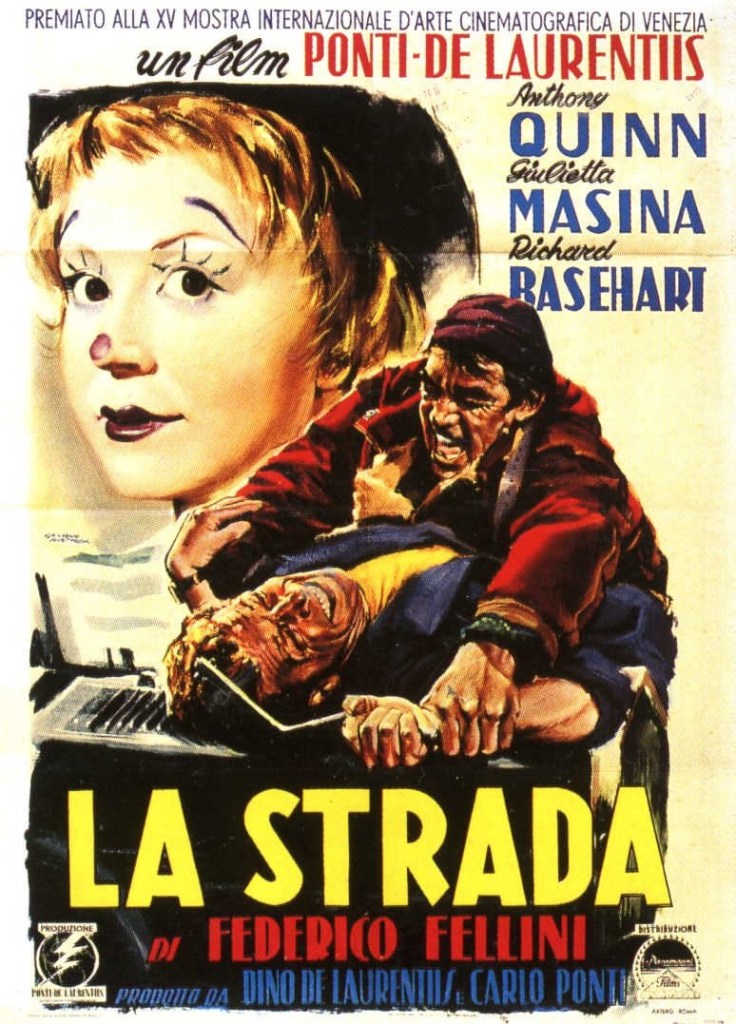
La Strada
Year: 1954
Director: Federico Fellini
Country: Italy
Cast: Giulietta Masina, Anthony Quinn, and Richard Basehart
Score: Nino Rota
Cinematography: Otello Martelli and Carlo Carlini
Streaming: Criterion Channel and HBO Max
Why I Love It: Giulietta Masina, who stars as the simple-minded and tender-hearted Gelsomina, was one of those rare performers who make you forget that the worlds they create are fiction. At the beginning of the film, Gelsomina learns that her sister Rosa has died while traveling with Zampanò (Anthony Quinn), a coarse and somewhat thuggish sideshow performer. Because her mother has other young children to feed and they all appear to be on the brink of starvation, she sells Gelsomina to Zampanò for 10,000 lire, and so begins her journey on the road.
Giulietta Masina, who stars as the simple-minded and tender-hearted Gelsomina, was one of those rare performers who make you forget that the worlds they create are fiction.
La Strada is not your typical Bildungsroman. Gelsomina’s narrative arc is not centered around some destination or goal that she spends the film pursuing. Instead, we see her find tenderness and beauty everywhere, no matter how cruelly Zampanò treats her or how desolate the landscape becomes.
I won’t spoil anything by telling you how the film ends, but I will warn you to make sure you have plenty of tissues handy. La Strada is indeed a journey, and it reveals much about the human condition to those patient enough to sit with it.
La Strada is indeed a journey, and it reveals much about the human condition to those patient enough to sit with it.
Also noteworthy is the gorgeous score by Nino Rita. Usually, cinematography is something I like to discuss more so than scores, but I have a deep and abiding passion for Nino Rota. In addition to La Strada, Rota collaborated with Federico Fellini on several other films, as well as with Fellini’s rival, Luchino Visconti. Other works of his include scores for Franco Zeffirelli’s Romeo and Juliet (1967) and Francis Ford Coppola’s The Godfather (1972) and The Godfather Part II (1974), the latter of which garnered him an Academy Award for Best Original Dramatic Score (shared with Carmine Coppola).
Rating: ⭐️⭐️⭐️⭐️
Thanks as always for being a faithful reader of The Voracious Bibliophile. If you like what you see, please follow, like, comment, and subscribe to my email list to get notified of new posts as soon as they drop. You can also email me at thevoraciousbibliophile@yahoo.com or catch me on Twitter @voraciousbiblog. Keep reading the world, one page (or pixel) at a time.
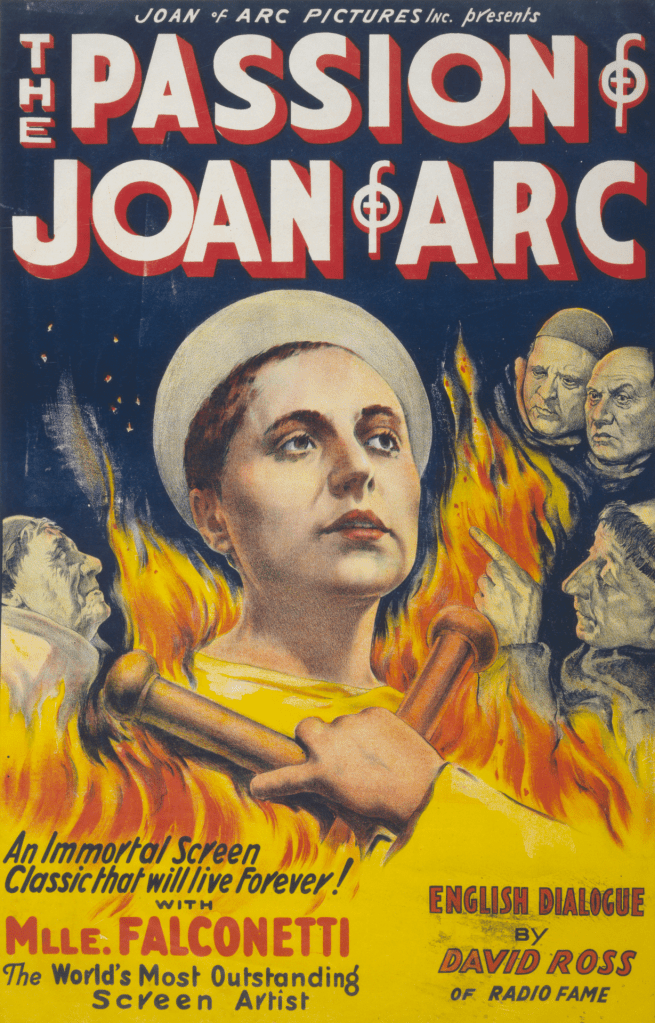
Cast: Renée Jeanne Falconetti, Eugène Silvain, André Berley, and Maurice Schutz
Cinematography: Rudolph Maté
Streaming: HBO Max, Amazon Prime Video, and Apple TV
Why I Love It: Renée Jeanne Falconetti’s performance as Joan of Arc is one of the most moving in cinematic history. This silent masterpiece is full of startlingly intimate close-ups in which Falconetti’s face is the only thing in your field of vision. Because there’s no audible dialogue, she has to convey everything in her performance through movement, through her facial expressions—everything is an exercise in the theater of the body.
Because there’s no audible dialogue, she has to convey everything in her performance through movement, through her facial expressions—everything is an exercise in the theater of the body.
The Passion of Joan of Arc is the first silent film I can remember bringing me to tears. At times it is painful to watch, but films like this one are the reason cinema is its own art form. For the true cinephile, the Criterion Collection edition is a must. Along with numerous other extras which add depth and context to the viewing experience, Criterion’s home release comes with two different presentations of the film: the traditional 24 frames per second and another at 20 frames per second.
Also noteworthy is the expressionistic lighting used by cinematographer Rudolph Maté, who later immigrated to the United States and became a director and producer as well. His cinematography credits during his career in Hollywood include such films as Dodsworth (1936), Stella Dallas (1937), Love Affair (1939), and Foreign Correspondent (1940), among many others. You can clearly see the influence of his earlier work in European Expressionism in his later work in American film noir.
You can clearly see the influence of his [Maté] earlier work in European Expressionism in his later work in American film noir.
How does one begin the process of classifying superlatives in art? Once you start drawing lines of demarcation and establishing hierarchies, it is inevitable that some works just as worthy as those classified as “The Greatest” will be pushed to the margins, relegated to the corners—all but forgotten. But then again, if everything is great then nothing is great.
Once you start drawing lines of demarcation and establishing hierarchies, it is inevitable that some works just as worthy as those classified as “The Greatest” will be pushed to the margins, relegated to the corners—all but forgotten.
So we have experts. We have aestheticians. We have people who spend their entire lives studying one particular subject so we can go to them when we need a professional’s opinion. As in science, so in art. We look to the learned, the credentialed, and the eloquent. We look outside our own limited experiences and perceptions for something that rings true.
We look to the learned, the credentialed, and the eloquent. We look outside our own limited experiences and perceptions for something that rings true.
Why did I say all that? So I could then say this: The Passion of Joan of Arc is one of the greatest films of all time. So say the film scholars, the cineastes, the commentators, and the iconoclasts. And so say I. Don’t trust me. See it for yourself.
I hope you’ve enjoyed the first post in my new series. Check back soon for more of my Favorite Films.
Thanks as always for being a faithful reader of The Voracious Bibliophile. If you like what you see, please follow, like, comment, and subscribe to my email list to get notified of new posts as soon as they drop. You can also email me at thevoraciousbibliophile@yahoo.com or catch me on Twitter @voraciousbiblog. Keep reading the world, one page (or pixel) at a time.
I’m starting a new blog series here on The Voracious Bibliophile that I’m calling Favorite Films. With each post, I’ll highlight a film that I love. These posts won’t be long-form reviews; instead, they’ll include just enough information to entice you to check out the films yourself. Where applicable, I’ll try to add streaming information as well.
Thanks as always for being a faithful reader of The Voracious Bibliophile. If you like what you see, please follow, like, comment, and subscribe to my email list to get notified of new posts as soon as they drop. You can also email me at thevoraciousbibliophile@yahoo.com or catch me on Twitter @voraciousbiblog. Keep reading the world, one page (or pixel) at a time.
Xavier Dolan is, in my opinion, one of the greatest practitioners of film craft of our time. At only 32 years of age, the Québécois auteur has already directed eight feature films, all the while snatching up awards and garnering critical acclaim. While he has been branded an enfant terrible by some, I would not hesitate to call him an iconoclast. It takes a lot of chutzpah to rip out your heart on screen and offer it to your audience, still beating.
It takes a lot of chutzpah to rip out your heart on screen and offer it to your audience, still beating.
In I Killed My Mother, Dolan has provided us with a semi-autobiographical, near-perfect evocation of the vagaries of queer adolescence. It’s all there: angst, rage, confusion, and the tentative eroticism that always accompanies waking up to yourself for the first time.
It’s all there: angst, rage, confusion, and the tentative eroticism that always accompanies waking up to yourself for the first time.
Dolan’s Hubert and Anne Dorval’s Chantale (Hubert’s mother) are at war. Hubert is figuring out who he is (and wants to be) at the same time that Chantale has settled, confused by the man her son is becoming and nostalgic for the easy relationship they once shared.
In one of the several interspersed black-and-white confessionals appearing throughout the film, Hubert laments the state of his relationship with his mother, saying, “We should be able to kill ourselves. In our heads. And then be reborn. To be able to talk, look at each other, be together. As if we never met before.” For him, it’s impossible to move forward, to begin anew, with all the bad blood that exists between him and his mother. To him, she’s gauche, tawdry, and overbearing—more a magpie than a mother. To her, he’s selfish, immature, and pugnacious—an unruly child screaming in the night.
We should be able to kill ourselves. In our heads. And then be reborn. To be able to talk, look at each other, be together. As if we never met before.
Hubert
We find out that Hubert has been in a relationship with Antonin, a friend of his from school, for a couple of months. Antonin’s mother is aware of their relationship and has no qualms about it, making Antonin’s home a place of refuge for Hubert and further alienating him from his mother.
It is not insignificant to any observant viewer that in Antonin’s bedroom hangs a poster of James Dean, from the iconic Torn Sweater series photographed by Roy Schatt for LIFE magazine; in Hubert’s bedroom hangs a poster of River Phoenix, whom every gay male teenager has been in love with since they first watched Stand by Me and (later, of course) My Own Private Idaho. It’s the perfect mise en scène: disaffected queer youth playing out their own dramas onscreen while the (gone too soon) queer youth of years past look on.
It’s the perfect mise en scène: disaffected queer youth playing out their own dramas onscreen while the (gone too soon) queer youth of years past look on.
It’s frenetic and tender all at once: a supernova. There comes a point in the film where you fear Hubert may actually kill his mother, the vitriol between them is so strong. When Chantale goes to a tanning salon with a friend partway through the film, she runs into Antonin’s mother there. Antonin’s mother, either not knowing Hubert’s closeted or not understanding the need for a “closet” in the first place, casually mentions that Antonin and Hubert are celebrating two months together. That word, together, shatters whatever illusions Chantale may have still been harboring.
While Chantale is obviously not virulently homophobic, she is still altogether unequipped to provide the kind of support Hubert needs at this point in his life. One hopes that this revelation will cause Chantale to change course, be the first one to offer the olive branch, beginning the catharsis that will ultimately lead to healing and reunification. Instead, she digs in. She involves Hubert’s heretofore absent father in plotting to send him to boarding school.
Hubert becomes completely unhinged after learning of his parents’ plot to shuffle him away to boarding school. When Chantale drops him off at the bus that will take him there, he asks his mother, “What would you do if I died today?” He’s already walking away when she replies, “I’d die tomorrow”. Anne Dorval utters this line barely above a whisper, but it is arguably the most emotionally resonant moment in the entire film.
Dolan’s artistic thumbprint is the ache that accompanies everything we can’t unsay, even though we become more of ourselves in the saying. “The only thing to kill in this lifetime is the enemy within, the hard core double. Dominating him is an art. How good an artist are we?” How good indeed.
Rating: ⭐️⭐️⭐️⭐️
Thanks as always for being a faithful reader of The Voracious Bibliophile. If you like what you see, please follow, like, comment, and subscribe to my email list to get notified of new posts as soon as they drop. You can also email me at thevoraciousbibliophile@yahoo.com or catch me on Twitter @voraciousbiblog. Keep reading the world, one page (or pixel) at a time.
I didn’t know I needed a film starring both Michelle Pfeiffer and Lucas Hedges. That pairing alone was worth quadruple the amount I paid to watch it. I’ve loved Michelle Pfeiffer ever since I first saw her as Selina Kyle / Catwoman in Tim Burton’s Batman Returns (1992) and I’ve been *in love* with Lucas Hedges since his breakthrough performance in Kenneth Lonergan’s Manchester by the Sea (2016). That love was further cemented by seeing him in films like Lady Bird (2017), Three Billboards Outside Ebbing, Missouri (2017), and Boy Erased (2018). In this house, we love boys who can pull off pathos.
In this house, we love boys who can pull off pathos.
French Exit (2020) is based on the novel of the same name written by Patrick deWitt and published in 2018. Let me just say that for everything this film lacks in narrative clarity and overall believability, it more than makes up for with its impeccable acting, effervescent cinematography, and stylistic panache.
Let me just say that for everything this film lacks in narrative clarity and overall believability, it more than makes up for with its impeccable acting, effervescent cinematography, and stylistic panache.
Michelle Pfeiffer stars as Frances Price, a Manhattan socialite who learns that her well of money has run dry. When asked by her financial advisor what she had planned to do once the money ran out (we learn that this had been coming for quite some time), she replies, “My plan was to die before the money ran out.”
A childhood friend of Frances’s offers her and her adult son Malcolm (Lucas Hedges) the use of her unoccupied Paris apartment for however long they may need it, ostensibly with no strings attached. Ah, to be a member of the haute bourgeoisie, where even in the midst of financial ruin one can scrounge up a chic Paris apartment to exile in.
Ah, to be a member of the haute bourgeoisie, where even in the midst of financial ruin one can scrounge up a chic Paris apartment to exile in.
Watching this film, one gets the feeling that Malcolm thinks he’s his mother’s antithesis, but they are alike in so many ways. For one, they are both codependent to an almost Hitchcockian degree and totally inept at navigating life outside their relationship with each other. Malcolm is adrift in a way only an over-educated trust fund kid can be. Commitment-shy and solipsistic, he frustrates his girlfriend, who unlike him has had to live in the real world while he spent his formative years glancing down on commoners from the ivory tower he shared with his mother. When he informs her that he is moving to Paris, most likely indefinitely, she breaks things off and their relationship ends (here, at least) on a sour note.
For one, they are both codependent to an almost Hitchcockian degree and totally inept at navigating life outside their relationship with each other.
Frances illegally sells what she can of her possessions “under the table”, creating a small nest egg that can sustain them until such time as they gain their bearings. Michelle Pfeiffer was made for this role. She carries herself in a way only someone accustomed to both money and high-class behavior can.
Their time on the boat to Paris and in the City of Love itself is spent collecting a coterie of companions just as neurotic and maladjusted as themselves, which muddles the narrative just as much as it imbues it with charm.
My overall take? I loved it. It’s not going to win any Oscars, not by a long shot, but for indie-loving arthouse-blowhards like yours truly, it hits the spot.
P.S. The family cat is also Malcolm’s dad. 😮👻🐱
Thanks as always for being a faithful reader of The Voracious Bibliophile. If you like what you see, please follow, like, comment, and subscribe to my email list to get notified of new posts as soon as they drop. You can also email me at thevoraciousbibliophile@yahoo.com or catch me on Twitter @voraciousbiblog. Keep reading the world, one page (or pixel) at a time.
***Note: I received a free digital review copy of this book from NetGalley in exchange for an honest review***
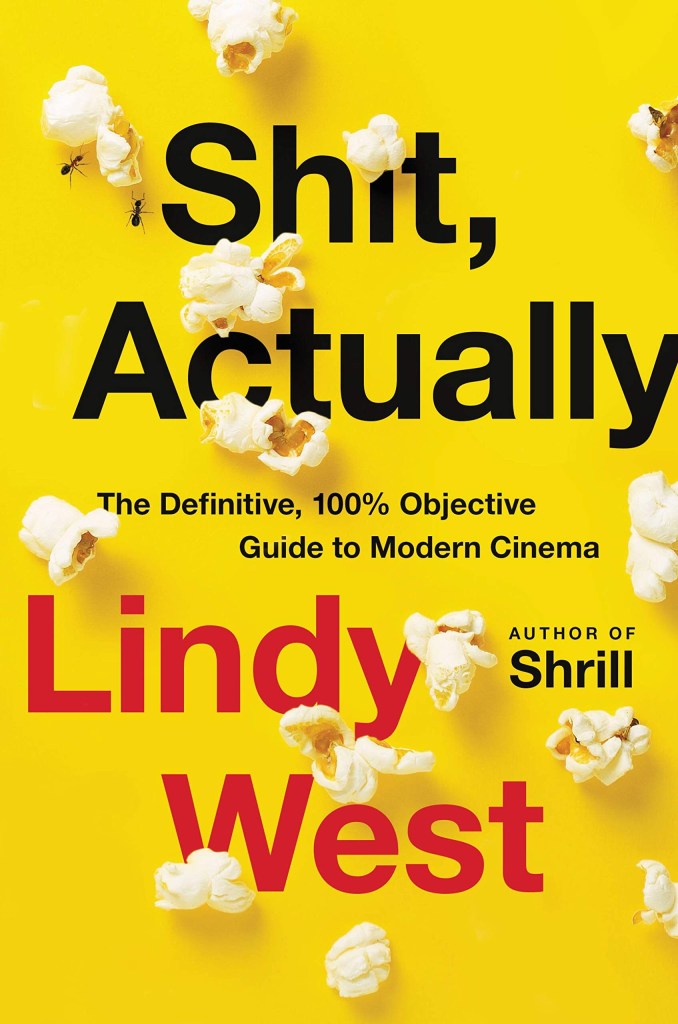
Lindy West is one of our most incisive cultural commentators. Her previous books, Shrill: Notes from a Loud Woman and The Witches Are Coming (I own a signed copy) are seminal feminist texts.
However, if you’re looking for film commentary à la Leonard Maltin, Shit, Actually isn’t for you. Shit, Actually is sly, irreverent, bombastic, and an absolute freaking delight to behold. Highlights for me included West’s reviews (maybe takedowns is a more accurate word here?) of The Notebook, Forrest Gump, and most especially Titanic. Her Fabrizio bits are riotously funny and a master class in comedic snark.
My rating: 27/10 DVDs of The Fugitive.
To learn more about Lindy West and her work, as well as to find links where you can buy her books, visit her website.
Having this blog as a creative outlet has done wonders for my mental health. I love you all! See you next time.
Thanks as always for being a faithful reader of The Voracious Bibliophile. If you like what you see, please follow, like, comment, and subscribe to my email list to get notified of new posts as soon as they drop. You can also email me at thevoraciousbibliophile@yahoo.com or catch me on Twitter @voraciousbiblog. Keep reading the world, one page (or pixel) at a time.







 The Voracious Bibliophile