September Releases I’m Excited About

As many of you know, Fall is the biggest season of the year for new book releases. While I always have a veritable mountain of a TBR stack (is it really a stack at this point?), that pile always grows considerably larger when September rolls around. Below are some of this month’s releases I’m excited about, both for myself and for my customers.
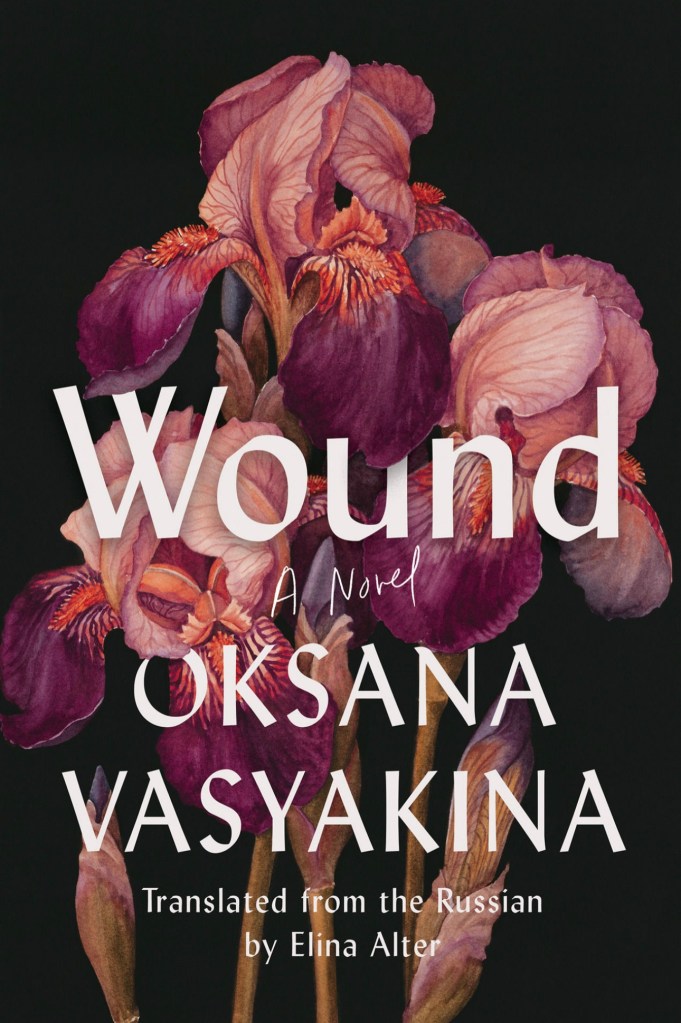
Wound: A Novel by Oksana Vasyakina and Elina Alter (Translator)

I’m such a sucker for non-English language works, be they books or films, and the cover of this book just grabbed my heart so fast. According to the publisher’s description, Wound is perfect “for fans of Maggie Nelson and Eileen Myles” and…say no more. Add to cart. Maggie Nelson’s Bluets is among the most perfect works of literature ever put on paper and Eileen Myles, long an underground punk queer hero, catapulted into the limelight when a character based on them (and portrayed by the rapturous Emmy- and Tony Award-winning Cherry Jones) appeared in Amazon’s Transparent. Myles themself was in a relationship (no longer extant) with the show’s creator, Joey Soloway. Also, I still own a vinyl of Myles’ collection Aloha/irish trees. I’ve already gone through my superqueer phase, thank you very much, but the full moon always returns. The comparison of Wound to Nelson and Myles automatically qualified this title for purchasing by me, and I’ll let you all know what I think when I get it and read it.

From the Publisher:

From one of Russia’s most exciting new voices, Wound follows a young lesbian poet on a journey from Moscow to her hometown in Siberia, where she has promised to bury her mother’s ashes. Woven throughout this fascinating travel narrative are harrowing and at times sublime memories of her childhood and her sexual and artistic awakening. As she carefully documents her grief and interrogates her past, the narrator of Oksana Vasyakina’s autobiographical novel meditates on queerness, death, and love and finds new words for understanding her relationship with her mother, her country, her sexuality, and her identity as an artist.

A sensual, whip-smart account of the complicated dynamics of queer life in present-day Siberia and Moscow, Wound is also in conversation with feminist thinkers and artists, including Susan Sontag, Louise Bourgeois, and Monique Wittig, locating Vasyakina’s work in a rich and exciting international literary tradition.

Wound was released by Catapult on September 5th and is available to purchase at your local bookstore.
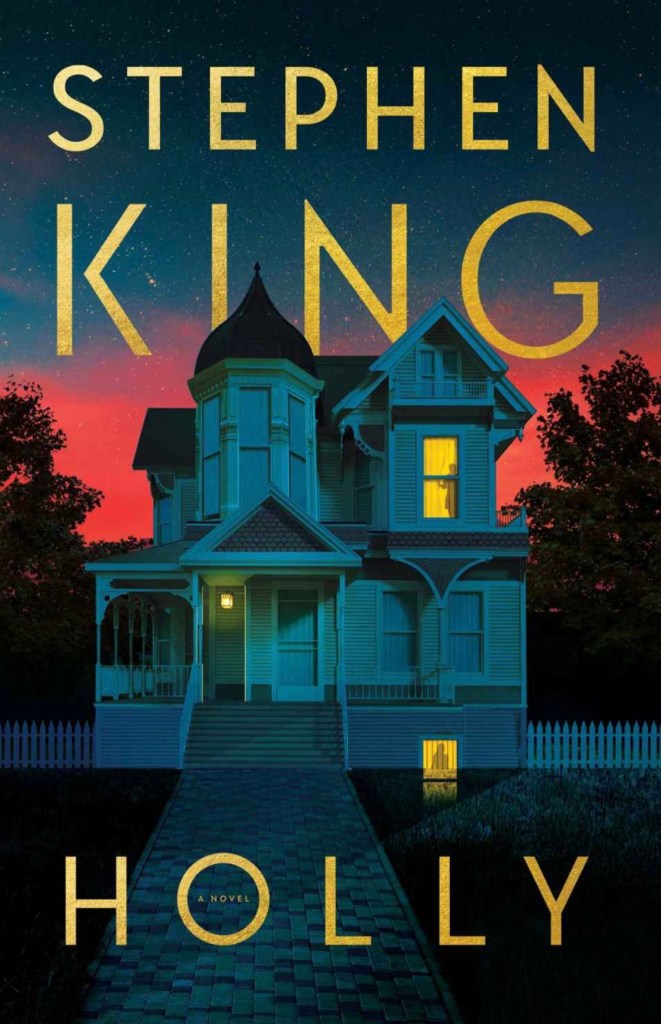
Holly: A Novel by Stephen King

I must admit that Stephen King’s books are not among my usual picks when I’m looking for something to read, but when I have picked up his stuff I’ve been pleased more often than not. In a bookselling world that’s been experiencing a paradigm shift since the onset of the COVID-19 pandemic, wherein trade paperbacks and the backlist generate the lion’s share of publishing revenue, it’s nice to see that authors like King can still sell a heck of a lot of new hardcovers when their books are first released.

My own store has sold through most of the initial stock we put out on release day, and replenishment has been steady. I feel at least partially compelled to read Mr. Mercedes first, but I must admit I’m more drawn to this particular book of King’s in a way I haven’t been since 11/22/63 came out. Note: No, I haven’t watched the miniseries on Hulu and I don’t plan to. Now that Holly is discounted for being my chain’s #1 hardcover seller, I’ll probably pick it up soon.

From the Publisher:

Stephen King’s Holly marks the triumphant return of beloved King character Holly Gibney. Readers have witnessed Holly’s gradual transformation from a shy (but also brave and ethical) recluse in Mr. Mercedes to Bill Hodges’s partner in Finders Keepers to a full-fledged, smart, and occasionally tough private detective in The Outsider. In King’s new novel, Holly is on her own, and up against a pair of unimaginably depraved and brilliantly disguised adversaries.

When Penny Dahl calls the Finders Keepers detective agency hoping for help locating her missing daughter, Holly is reluctant to accept the case. Her partner, Pete, has Covid. Her (very complicated) mother has just died. And Holly is meant to be on leave. But something in Penny Dahl’s desperate voice makes it impossible for Holly to turn her down.

Mere blocks from where Bonnie Dahl disappeared live Professors Rodney and Emily Harris. They are the picture of bourgeois respectability: married octogenarians, devoted to each other, and semi-retired lifelong academics. But they are harboring an unholy secret in the basement of their well-kept, book-lined home, one that may be related to Bonnie’s disappearance. And it will prove nearly impossible to discover what they are up to: they are savvy, they are patient, and they are ruthless.

Holly must summon all her formidable talents to outthink and outmaneuver the shockingly twisted professors in this chilling new masterwork from Stephen King.

Holly was released by Scribner on September 5th and is available to purchase at your local bookstore.
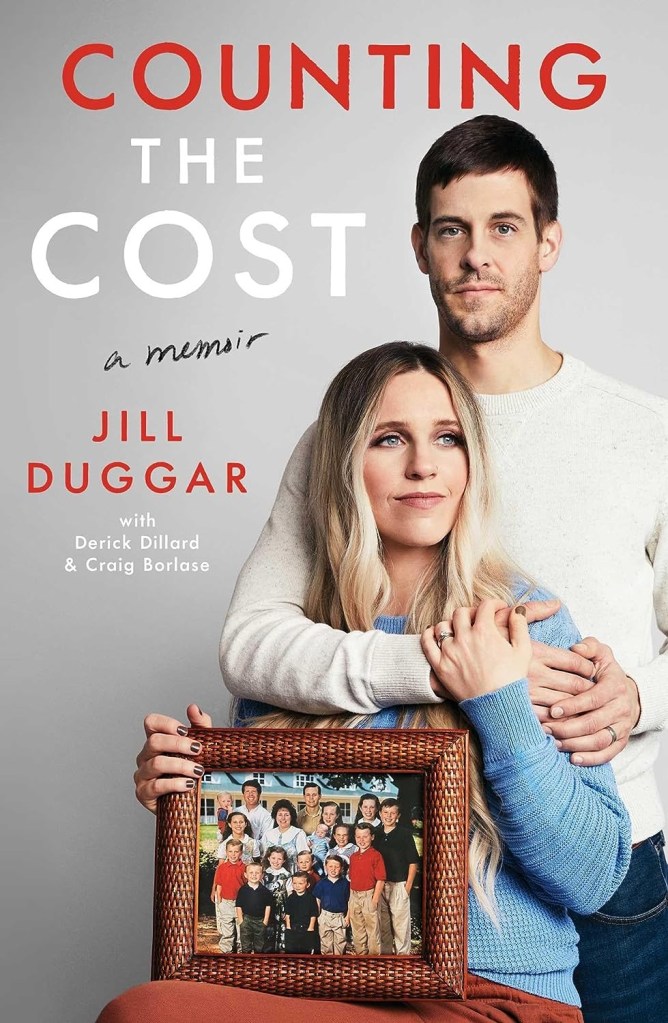
Counting the Cost: A Memoir by Jill Duggar with Derick Dillard & Craig Borlase

I’ve been following the Duggar family from the very beginning, from their first specials on Discovery Health to their very public downfall following Josh’s investigation and ousting as a pedophile. I read Becoming Free Indeed, Jinger Duggar Vuolo’s own tell-all and personal journey as she disentangled IBLP principles she had been taught by her family from what she actually read and understood to be true from the Bible. That was a heck of a read, and when I watched Amazon Original’s Shiny Happy People: Duggar Family Secrets in one sitting with my family, I wanted more. Jill and Derick were the only members of the immediate Duggar family to appear in the documentary (Cousin Amy made an appearance), and I soon found out afterwards that they had a book in the works.

From the buzz I’ve read so far, I can’t wait to dig into this one. It always warms my heart when I see people who’ve been raised in fundamentalist religious circles breaking free from the controlling and dogmatic powers that be. I know this time won’t be any different.

From the Publisher:

Jill and Derick knew a normal life wasn’t possible for them. As a star on the popular TLC reality show 19 Kids and Counting, Jill grew up in front of viewers who were fascinated by her family’s way of life. She was the responsible, second daughter of Jim Bob and Michelle’s nineteen kids; always with a baby on her hip and happy to wear the modest ankle-length dresses with throat-high necklines. She didn’t protest the strict model of patriarchy that her family followed, which declares that men are superior, that women are expected to be wives and mothers and are discouraged from attaining a higher education, and that parental authority over their children continues well into adulthood, even once they are married.

But as Jill got older, married Derick, and they embarked on their own lives, the red flags became too obvious to ignore.

For as long as they could, Jill and Derick tried to be obedient family members—they weren’t willing to rock the boat. But now they’re raising a family of their own, and they’re done with the secrets. Thanks to time, tears, therapy, and blessings from God, they have the strength to share their journey. Theirs is a remarkable story of the power of the truth and is a moving example of how to find healing through honesty.

Counting the Cost was released by Gallery Books on September 12th and is available to purchase at your local bookstore.
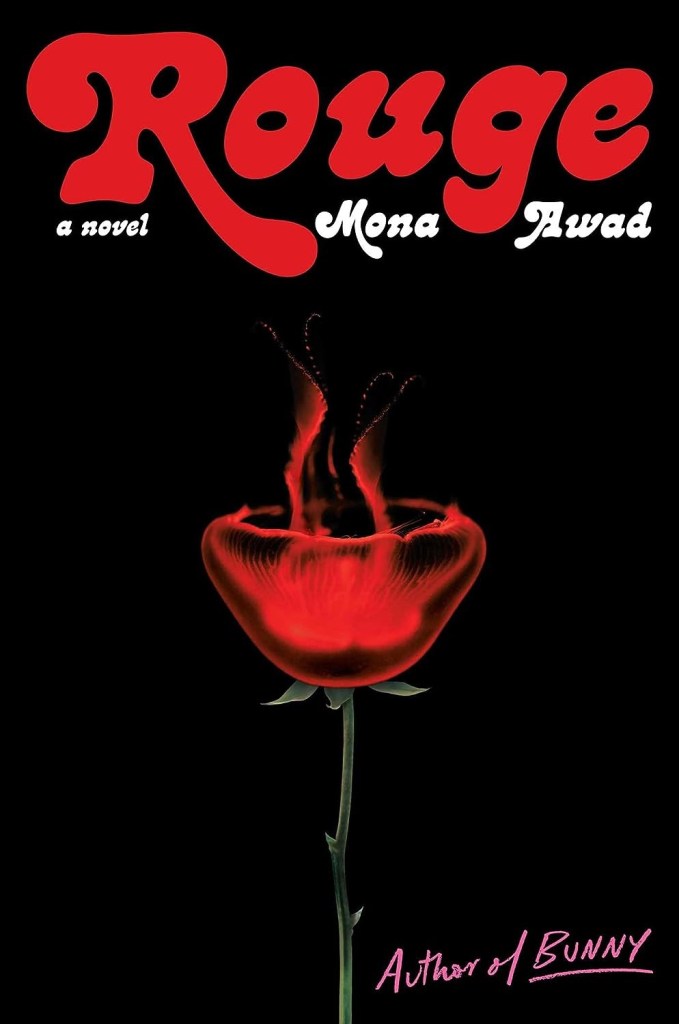
Rouge: A Novel by Mona Awad

Mona Awad’s popularity has been ratcheting up ever since her 2019 book Bunny: A Novel became a #BookTok sensation. I’ve yet to read anything by her but I must admit seeing this book arrive on my store’s truck shipment definitely piqued my interest. I don’t know if I’ll read it right away but I’ll definitely be showing it to customers who are in the mood for something dark.

From the Publisher:

For as long as she can remember, Belle has been insidiously obsessed with her skin and skincare videos. When her estranged mother Noelle mysteriously dies, Belle finds herself back in Southern California, dealing with her mother’s considerable debts and grappling with lingering questions about her death. The stakes escalate when a strange woman in red appears at the funeral, offering a tantalizing clue about her mother’s demise, followed by a cryptic video about a transformative spa experience. With the help of a pair of red shoes, Belle is lured into the barbed embrace of La Maison de Méduse, the same lavish, culty spa to which her mother was devoted. There, Belle discovers the frightening secret behind her (and her mother’s) obsession with the mirror—and the great shimmering depths (and demons) that lurk on the other side of the glass.

Snow White meets Eyes Wide Shut in this surreal descent into the dark side of beauty, envy, grief, and the complicated love between mothers and daughters. With black humor and seductive horror, Rouge explores the cult-like nature of the beauty industry—as well as the danger of internalizing its pitiless gaze. Brimming with California sunshine and blood-red rose petals, Rouge holds up a warped mirror to our relationship with mortality, our collective fixation with the surface, and the wondrous, deep longing that might lie beneath.

Rouge was released by Simon & Schuster/Marysue Rucci Books on September 12th and is available to purchase at your local bookstore.

The Young Man by Annie Ernaux and Alison L. Strayer (Translator)

Once again, I’m such a sucker for anything in translation, and Annie Ernaux has been on my radar ever since she was announced as the recipient of the Nobel Prize in Literature for 2022.

From the Publisher:

The Young Man is Annie Ernaux’s account of her passionate love affair with A., a man some 30 years younger, when she was in her fifties. The relationship pulls her back to memories of her own youth and at the same time leaves her feeling ageless, outside of time— together with a sense that she is living her life backwards.

Amidst talk of having a child together, she feels time running its course, and menopause approaching. The Young Man recalls Ernaux as the “scandalous girl” she once was, but is composed with the mastery and the self-assurance she has achieved across decades of writing. It was first published in France in 2022.

The Young Man was released in paperback by Seven Stories Press on September 12th and is available to purchase at your local bookstore.

Herc: A Queer Mythology Retelling by Phoenicia Rogerson

I wanted Herc as soon as I saw it. As anyone who’s been inside a bookstore in the last year undoubtedly knows, mythology retellings are all the rage. I think all of the writers capitalizing on the trend owe a debt of gratitude to Madeline Miller, whose novels Circe and The Song of Achilles blew up during the first part of the pandemic. Now, mythological retellings are their own subsection on #BookTok and publishers are churning them out as fast as they can. Some are better than others, and most discerning readers can easily sift the wheat from the chaff. But I’m a sucker for anything Hercules. I don’t care if it’s good or not. Credit my Disneyfied upbringing and my closeted little gay self prancing and singing along to “I Won’t Say (I’m In Love)” and I’ll buy anything related to Hunk-ules and his Labors.

I’ve got two customers who I see almost every Sunday who I curate piles of books for (I’m a personal shopper of sorts) and they both love mythology retellings. We’ve agreed to read this one together so you know I had to buy it. I’ll let you know what I think.

From the Publisher:

This should be the story of Hercules: his twelve labours, his endless adventures… everyone’s favorite hero, right?

Well, it’s not.

This is the story of everyone else:

  • Alcmene: Herc’s mother (She has knives everywhere)
  • Hylas: Herc’s first friend (They were more than friends)
  • Megara: Herc’s wife (She’ll tell you about their marriage)
  • Eurystheus: Oversaw Herc’s labours (He never asked for the job)
  • His friends, his enemies, his wives, his children, his lovers, his rivals, his gods, his victims

It’s time to hear their stories.

Told with humour and heart, Herc gives voice to the silenced characters, in this feminist, queer (and sometimes shocking) retelling of classic Hercules myth.

Herc was released by Hanover Square Press, an imprint of HarperCollins Publishers, on September 5th and is available to purchase at your local bookstore.
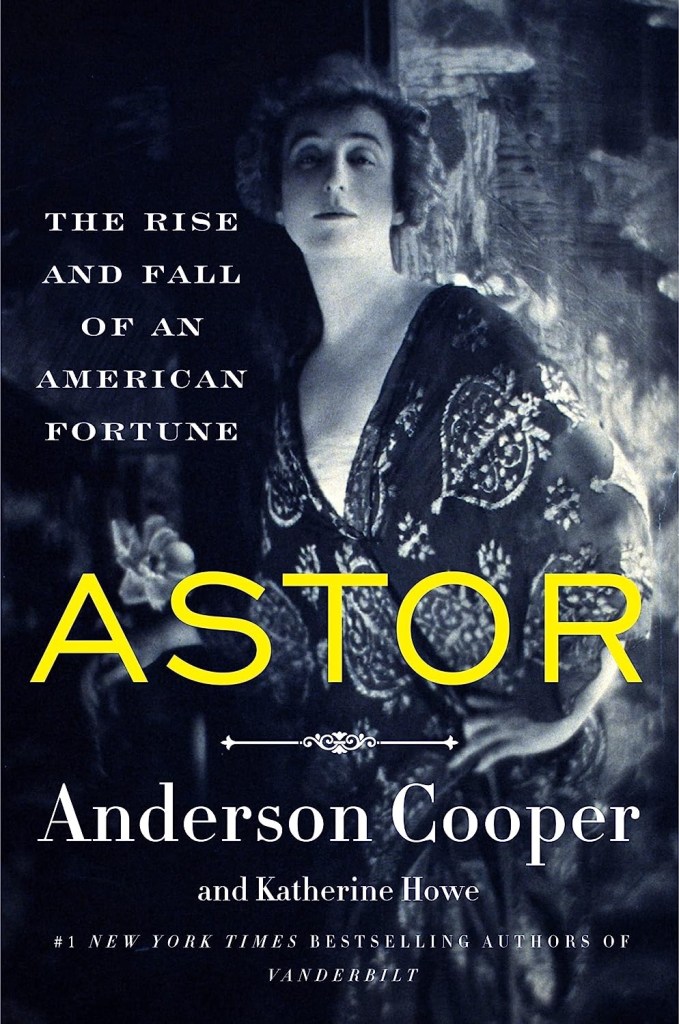
Astor: The Rise and Fall of an American Fortune by Anderson Cooper and Katherine Howe

Anderson Cooper already cut his teeth writing about the rise and fall of one great American dynasty, that of his own family, the Vanderbilts. What family could one write about next if not the Astors? I think immediately of one John Jacob Astor IV, who died in the early morning hours of April 15th, 1912 in the sinking of the Titanic. He was the richest man aboard the ship and among the richest people alive at the time. At the time of his death, he was worth roughly $87 million, equivalent to $2.64 billion in 2022 dollars.

I’ve loved Anderson Cooper since the first time I saw him on CNN, and loved him even more for giving Trump crap during the latter’s successful bid for POTUS. It’s an easy decision for me. I want a signed copy.

From the Publisher:

The story of the Astors is a quintessentially American story—of ambition, invention, destruction, and reinvention.

From 1783, when German immigrant John Jacob Astor first arrived in the United States, until 2009, when Brooke Astor’s son, Anthony Marshall, was convicted of defrauding his elderly mother, the Astor name occupied a unique place in American society.

The family fortune, first made by a beaver trapping business that grew into an empire, was then amplified by holdings in Manhattan real estate. Over the ensuing generations, Astors ruled Gilded Age New York society and inserted themselves into political and cultural life, but also suffered the most famous loss on the Titanic, one of many shocking and unexpected twists in the family’s story.

In this unconventional, page-turning historical biography, featuring black-and-white and color photographs, #1 New York Times bestselling authors Anderson Cooper and Katherine Howe chronicle the lives of the Astors and explore what the Astor name has come to mean in America—offering a window onto the making of America itself.

Astor: The Rise and Fall of an American Fortune will be published by Harper, an imprint of HarperCollins Publishers, on September 19th and is available to preorder at your local bookstore.

Things We Left Behind (Knockemout, #3) by Lucy Score

I haven’t yet read the first two books in this series and to be perfectly honest, I’m not in a particularly big hurry. Why am I excited about it, then? A lot of my customers love Lucy Score and her books, and it’s impossible for me not to get excited when they’re excited. I know I’ll be putting this title in a lot of hands over the upcoming holiday months.

From the Publisher:

There was only one woman who could set me free. But I would rather set myself on fire than ask Sloane Walton for anything.

Lucian Rollins is a lean, mean vengeance-seeking mogul. On a quest to erase his father’s mark on the family name, he spends every waking minute pulling strings and building an indestructible empire. The more money and power he amasses, the safer he is from threats.

Except when it comes to the feisty small-town librarian that keeps him up at night…

Sloane Walton is a spitfire determined to carry on her father’s quest for justice. She’ll do that just as soon as she figures out exactly what the man she hates did to—or for—her family. Bonded by an old, dark secret from the past and the dislike they now share for each other, Sloane trusts Lucian about as far as she can throw his designer-suited body.

When bickering accidentally turns to foreplay, these two find themselves not quite regretting their steamy one-night stand. Once those flames are fanned, it seems impossible to put them out again. But with Sloane ready to start a family and Lucian refusing to even consider the idea of marriage and kids, these enemies-to-lovers are stuck at an impasse.

Broken men break women. It’s what Lucian believes, what he’s witnessed, and he’s not going to take that chance with Sloane. He’d rather live a life of solitude than put her in danger. But he learns the hard way that leaving her means leaving her unprotected from other threats.

It’s the second time he’s ruthlessly cut her out of his life. There’s no way she’s going to give him a third chance. He’s just going to have to make one for himself.

Things We Left Behind (Knockemout, #3) was released by That’s What She Said Publishing on September 5th and is available to purchase at your local bookstore.
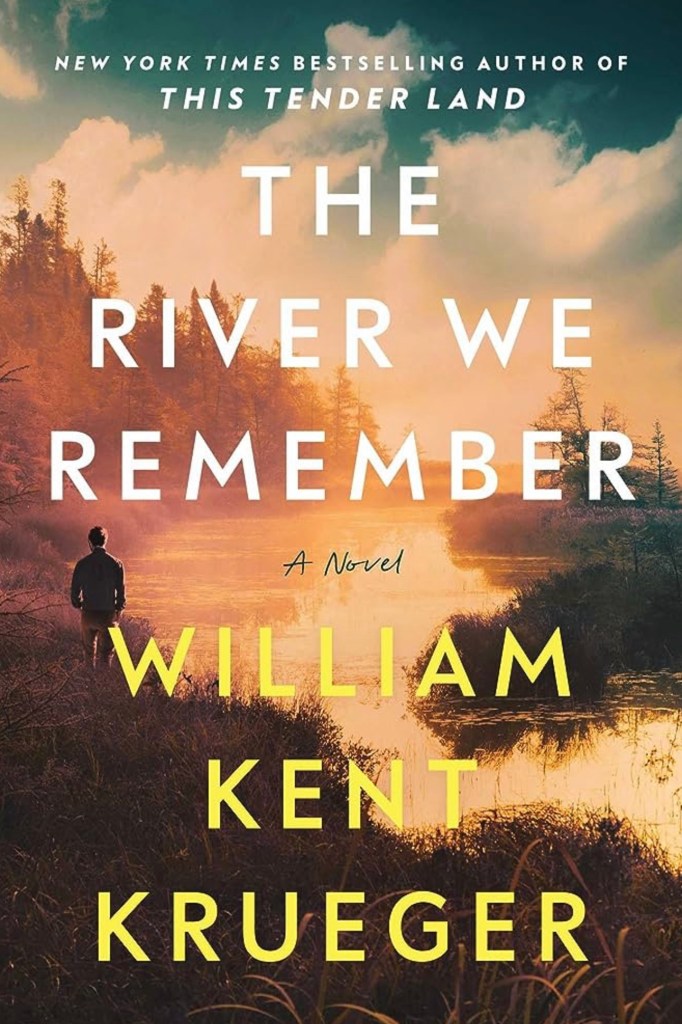
The River We Remember: A Novel by William Kent Krueger

This was one of my BOTM picks, so naturally I’m excited to dig into it. I’m a big fan of historical fiction. I didn’t read Krueger’s This Tender Land, but I remember being intrigued by it and wanting to read it. I think I bought it, too, come to think of it. Anyway, this one sounded too good to pass up.

From the Publisher:

On Memorial Day, as the people of Jewel, Minnesota gather to remember and honor the sacrifice of so many sons in the wars of the past, the half-clothed body of wealthy landowner Jimmy Quinn is found floating in the Alabaster River, dead from a shotgun blast. Investigation of the murder falls to Sheriff Brody Dern, a highly decorated war hero who still carries the physical and emotional scars from his military service. Even before Dern has the results of the autopsy, vicious rumors begin to circulate that the killer must be Noah Bluestone, a Native American WWII veteran who has recently returned to Jewel with a Japanese wife. As suspicions and accusations mount and the town teeters on the edge of more violence, Dern struggles not only to find the truth of Quinn’s murder but also put to rest the demons from his own past.

Caught up in the torrent of anger that sweeps through Jewel are a war widow and her adolescent son, the intrepid publisher of the local newspaper, an aging deputy, and a crusading female lawyer, all of whom struggle with their own tragic histories and harbor secrets that Quinn’s death threatens to expose.

Both a complex, spellbinding mystery and a masterful portrait of midcentury American life from an author of novels “as big-hearted as they come” (Parade), The River We Remember is an unflinching look at the wounds left by the wars we fight abroad and at home, a moving exploration of the ways in which we seek to heal, and a testament to the enduring power of the stories we tell about the places we call home.

The River We Remember was released by Atria Books, an imprint of Simon & Schuster, on September 5th and is available to purchase at your local bookstore.

I hope whatever you’re reading as we slide into Fall brings you joy, makes you cry, and entertains you endlessly. Thanks for reading.

Thanks as always for being a faithful reader of The Voracious Bibliophile. If you like what you see, please like, comment, follow, and subscribe to my email list to get notified of new posts as soon as they drop. You can also email me at fred.slusher@thevoraciousbibliophile.com or catch me on Twitter, Instagram, TikTok, and Pinterest @voraciousbiblog. Keep reading the world, one page (or pixel) at a time.
Quote for the Day: July 24th, 2022

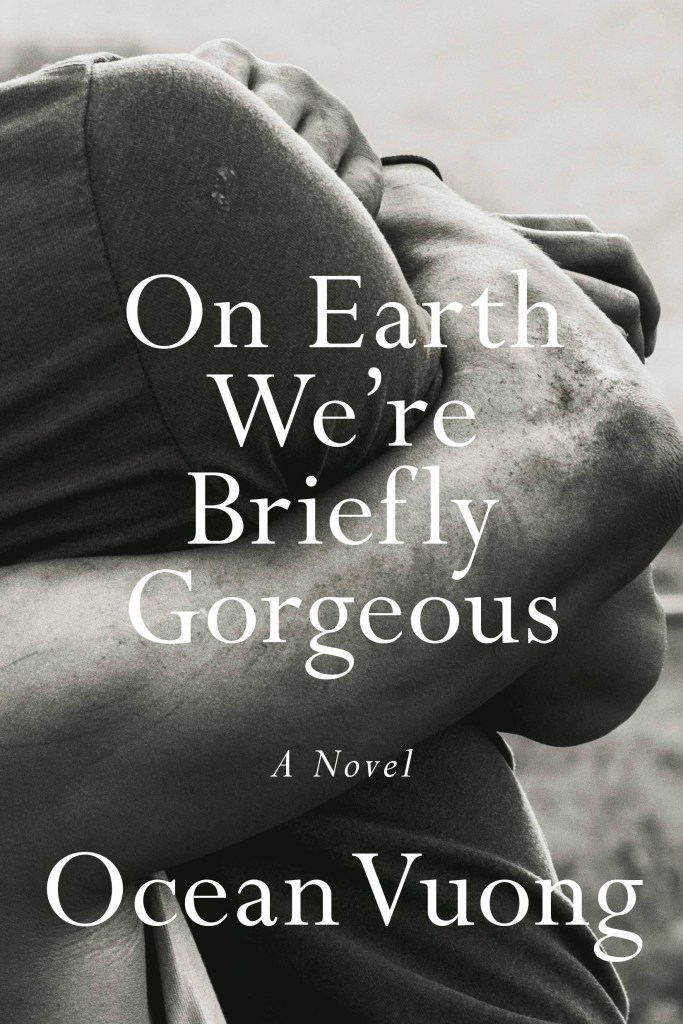
On Earth We’re Briefly Gorgeous: A Novel by Ocean Vuong

They say nothing lasts forever but they’re just scared it will last longer than they can love it.

Ocean Vuong, On Earth We’re Briefly Gorgeous: A Novel

Thanks as always for being a faithful reader of The Voracious Bibliophile. If you like what you see, please like, comment, follow, and subscribe to my email list to get notified of new posts as soon as they drop. You can also email me at fred.slusher@thevoraciousbibliophile.com or catch me on Twitter, Instagram, TikTok, and Pinterest @voraciousbiblog. Keep reading the world, one page (or pixel) at a time.
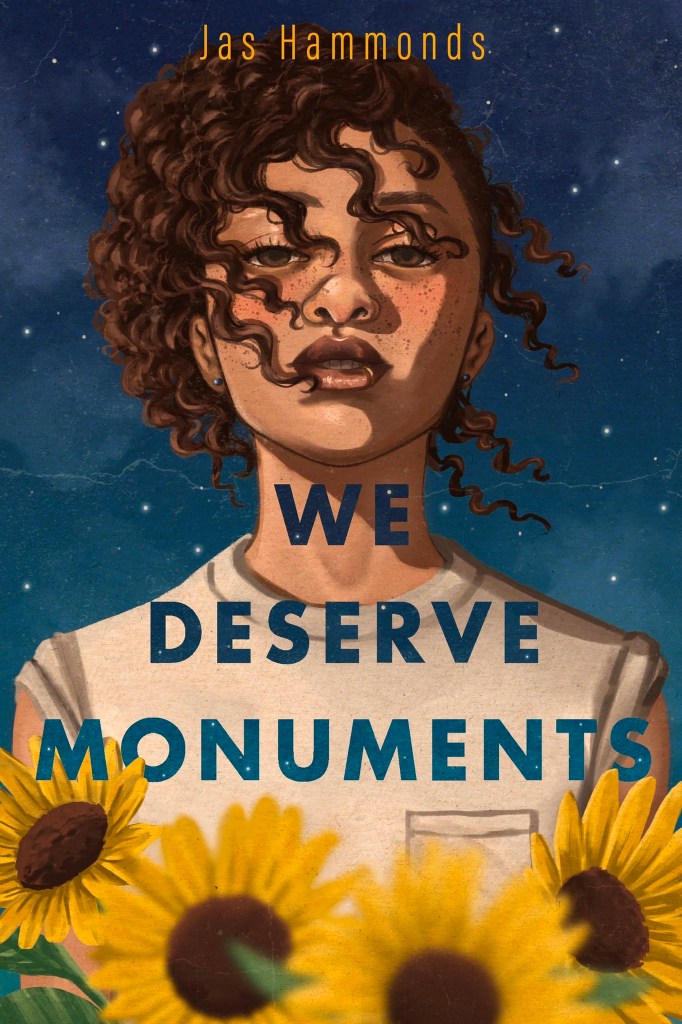
All Aboard the ARC: We Deserve Monuments by Jas Hammonds

***Note: I received a free digital review copy of this book from NetGalley and Macmillan Children’s Publishing Group in exchange for an honest review. I have not received compensation for the inclusion of any links for purchase found in this review or on any other page of The Voracious Bibliophile which mentions We Deserve Monuments, its author, or its publisher.***

Rating: ⭐️⭐️⭐️⭐️⭐️

Review

You know who really deserves a monument? Jas Hammonds, for writing such a breathtaking, heart-stopping, rip-out-your-soul-and-stitch-it-back-together-into-a-magnificent-tapestry gem of a book. I have been struggling for something like a month now to write a review that would do this book justice and you know what? It’s just not possible. So I want you to take me at my word when I tell you that We Deserve Monuments is *the* book you have to read when it comes out later this year. Actually, go ahead and preorder it right now. I’ve already got my copy pre-ordered. It is a testament to Queer Black girls everywhere and a shining example of how love can bring people together, how it can heal the deepest of wounds even when the odds are stacked against them. Rarely does a book contain near-equal doses of mystery, romance, and adventure, but Jas Hammonds understood the assignment and got the mix just right.

Rarely does a book contain near-equal doses of mystery, romance, and adventure, but Jas Hammonds understood the assignment and got the mix just right.

Avery Anderson has a plan. That plan involves staying focused on her studies and getting in and out of her mother’s hometown of Bardell, Georgia as fast as she can. Her plan is to get into Georgetown and study astronomy like her mother, Zora. Moving from Washington, D.C. to Podunk MAGA country at the beginning of her senior year was not in the plan at all, but when her mom receives a letter from her old friend and neighbor Carole that reveals her Mama Letty is dying, the whole Anderson family uproots their lives to go and care for her in her last months.

Avery knows very little about her Mama Letty, especially since her mother never talks about her. Their first meeting doesn’t go very well. When Mama Letty nicknames her Fish after spotting her lip ring and questions whether or not she’s a lesbian now, Avery is ready to run not walk back to D.C. Mama Letty is cantankerous, gruff, and has her walls up so high not even Jericho could compare. How is Avery supposed to get to know someone who won’t even talk to her other than in grunts and monosyllables?

At the same time, Avery was hoping for a break from her old friends Kelsi and Hikari, but she didn’t envision the break being so permanent. Ever since her breakup with Kelsi, fueled by Kelsi’s racist micro-aggressions about Avery being “barely Black” (she’s biracial), things haven’t been the same. Now that she’s in Bardell, D.C. feels like a completely different galaxy. The rules are different. The scenery is different. The people are different. Who will Avery become if she lets all of it in—and who will she become if she doesn’t? The move throws Kelsi and Hikari’s lives into stark contrast compared to her own and there’s nothing that can be said or done to remedy that. And why should she even try to remedy it when they scoffed at her lip ring? When they begged her not to shave her head? When they minimized and tried to erase her Blackness from the equation of her identity? What’s the point of being friends with people who don’t want you to be the most authentic version of yourself possible?

Who will Avery become if she lets all of it in—and who will she become if she doesn’t?

It doesn’t help that something is rotten in the state of Georgia on Sweetness Lane. There’s something that’s being kept from Avery by Zora and Mama Letty, something they don’t talk about but which fuels their arguments and resentments. Avery has vague flashbacks back to when she was little. She can see things being thrown and hear raised voices. She can remember the dissonance of the family fighting while they were supposed to be celebrating Christmas. But neither Zora nor Mama Letty wants to talk about it. No one wants to rip off the bandaid so the wound can heal.

And then there’s Simone, Carole’s daughter. Simone stirs longings in Avery from the first time they meet, but they’re not in Washington, D.C. They’re in Bardell, Georgia, where anti-Black racism and homophobia are alive and well. Thriving, even. Should Avery act on her feelings or tamp them down? Catching feelings for someone new was not part of the plan, but Avery soon discovers that life cares little for our plans.

Catching feelings for someone new was not part of the plan, but Avery soon discovers that life cares little for our plans.

Avery befriends Simone and Simone’s friend Jade. She’s quickly initiated into their friend group and made a part of their rituals. She learns what real friendship looks like, the kind where you don’t have to separate the different parts of yourself out like straining something through a sieve. She also learns that there are weird connections between her family and Jade’s family, who are rich and white and own The Draper Hotel and Spa. In fact, everything in Bardell seems oddly connected to different parts of Avery’s family and their history. Learning hard truths forces Avery to accept that nothing is what it appears to be on the surface and that everyone has something to hide. Will the truths she learns help to heal the fractures in her family, or will Mama Letty die without things being set right? I lost all of my fingernails racing through the pages to find out.

Will the truths she learns help to heal the fractures in her family, or will Mama Letty die without things being set right? I lost all of my fingernails racing through the pages to find out.

It’s so hard for me not to give up too many of the plot details but I just want you to know that I will be talking about this book until it comes out and harassing everyone I know to read it when it finally does.

We Deserve Monuments is due to be released by Macmillan Children’s Publishing Group on November 29th, 2022 and is now available to preorder wherever books are sold.

We Deserve Monuments by Jas Hammonds

Thanks as always for being a faithful reader of The Voracious Bibliophile. If you like what you see, please like, comment, follow, and subscribe to my email list to get notified of new posts as soon as they drop. You can also email me at fred.slusher@thevoraciousbibliophile.com or catch me on Twitter, Instagram, TikTok, and Pinterest @voraciousbiblog. Keep reading the world, one page (or pixel) at a time.

Film Review: The Power of the Dog (2021); Directed by Jane Campion

Film poster for Jane Campion’s The Power of the Dog (2021)

Review

The Power of the Dog was Netflix’s latest and greatest (so far) attempt to secure an Oscar for Best Picture. It had to sting to lose to another streaming player, Apple TV+, which took home the gleaming statuette for crowd-favorite CODA. In addition to Best Picture, CODA also won in the categories of Best Adapted Screenplay (Sian Heder) and Best Supporting Actor (Troy Kotsur, who is now the first Deaf man to win an acting Oscar). For the longest time in the campaigns leading up to the big night, it was The Power of the Dog’s night to shine. With 12 nominations across the board, how could it lose? But it did. In fact, Netflix’s powerhouse Western only took home one statuette on Oscars night — for Best Director (Jane Campion).

But let us not judge a film by its accolades. The truth is, The Power of the Dog is an incredibly powerful yet extremely subtle film, its brilliance easily overlooked if one isn’t paying close enough attention.

The Power of the Dog is an incredibly powerful yet extremely subtle film, its brilliance easily overlooked if one isn’t paying close enough attention.

Jane Campion’s searing portrait of toxic masculinity and repressed sexuality, set against the backdrop of Montana in the 1920s, is in my opinion one of the greatest films of the 21st-century so far, though it’ll probably be years down the line before the majority of cinephiles agree with me. In it, Benedict Cumberbatch gives what is perhaps his most unsympathetic performance yet. It’s arguably his best. As Phil Burbank, Cumberbatch is ruthless, sardonic, and haunted. Campion, who made history at this year’s Oscars ceremony for being the first woman to be nominated for two directing Oscars (winning this year), is a master at creating atmosphere. The vast and wide-open spaces of Montana make for an interesting canvas upon which she paints her tale. Each character, from Cumberbatch’s Phil Burbank to Kirsten Dunst’s beleaguered Rose Gordon, is given more than enough room to explore their respective neuroses, their own private darknesses that spill over into their interactions with each other and with the land itself.

Each character, from Cumberbatch’s Phil Burbank to Kirsten Dunst’s beleaguered Rose Gordon, is given more than enough room to explore their respective neuroses, their own private darknesses…

What makes The Power of the Dog so interesting as a Western is its multilayered exploration of queerness. Now, if you ask any historian worth their salt, they’ll tell you there was all kinds of gay stuff going down in the American West. Put frankly, cowboys were riding each other just as often as they were riding broncos. If you ask a heterosexual purist, they’ll tell you John Wayne would never. And Wayne probably wouldn’t have. But John Wayne wasn’t a real cowboy. He was mostly a fiction. An idealized idol. A paean to hyper-masculinity. Cumberbatch isn’t a real cowboy, either, but his portrayal of one is more honest than Wayne’s ever was. Sorry Duke.

Put frankly, cowboys were riding each other just as often as they were riding broncos.

The central conflict at the heart of The Power of the Dog is between Phil and Rose’s son Peter (Kodi Smit-McPhee). In fact, the opening lines of the film (spoken by Peter) speak to this conflict, which the viewer has not yet been made privy to: “For what kind of man would I be if I did not help my mother? If I did not save her?” What kind of man indeed?

When we meet Peter, though, he looks ill-equipped to protect or save anyone. Lanky and effeminate, his first scene in the film shows him making paper flowers for table settings that Phil will soon sneer at. Looking more closely, the paper flowers could very well be a metaphor for Phil’s repressed homosexuality, which is why he views them with such disdain. Where Peter is delicate and precise, Phil is callous and bombastic. Peter moves through the world like every step must be taken gently, as if the slightest deviation may trigger an explosion or perhaps expose him to the world. Phil, however, revels in his contempt for all of humanity, but most especially for Rose, who ends up marrying his brother George (Jesse Plemons).

Peter moves through the world like every step must be taken gently, as if the slightest deviation may trigger an explosion or perhaps expose him to the world.

This isn’t the first mainstream Western film to address themes of homosexuality. The last really good Western we had that did so was Ang Lee’s Brokeback Mountain (2005). But while Brokeback was at its essence a love story, The Power of the Dog is a story of an unhappy family in fractures. Don’t expect the spirits of Jack and Ennis to manifest in Phil and Peter, because that’s not the kind of story Campion is telling. In fact, a viewer not used to looking for queer subtext may miss that element of the film entirely, so subtle is its execution. While Phil’s queerness is thickly-veiled under layers of ostentatious brutality, Peter’s is as wide-open and hyper-visible as the plains which serve as the backdrop to Campion’s film.

While Phil’s queerness is thickly-veiled under layers of ostentatious brutality, Peter’s is as wide-open and hyper-visible as the plains which serve as the backdrop to Campion’s film.

I’m not going to do the film a disservice by spoiling the ending and telling you what happens, but it’s definitely a wow moment. It’s also calculatingly understated, like most of the elements in the film. I love a good film that doesn’t make an exhibition of itself. I like hints and silences and ruminations. Not everything has to explode in order to burn.

The Power of the Dog is available to stream on Netflix.

Thanks as always for being a faithful reader of The Voracious Bibliophile. If you like what you see, please like, comment, follow, and subscribe to my email list to get notified of new posts as soon as they drop. You can also email me at fred.slusher@thevoraciousbibliophile.com or catch me on Twitter, Instagram, TikTok, and Pinterest @voraciousbiblog. Keep reading the world, one page (or pixel) at a time.

Quote for the Day: March 14th, 2022

Being deeply loved by someone gives you strength, while loving someone deeply gives you courage.

Lao Tzu

Thanks as always for being a faithful reader of The Voracious Bibliophile. If you like what you see, please like, comment, follow, and subscribe to my email list to get notified of new posts as soon as they drop. You can also email me at fred.slusher@thevoraciousbibliophile.com or catch me on Twitter, Instagram, TikTok, and Pinterest @voraciousbiblog. Keep reading the world, one page (or pixel) at a time.
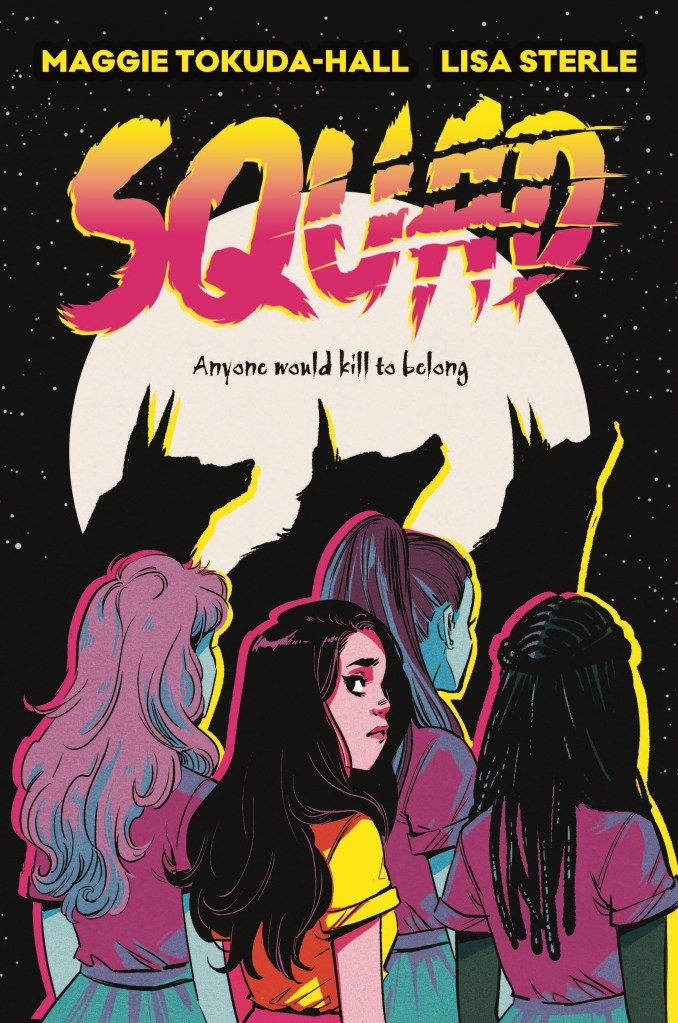
All Aboard the ARC: Squad by Maggie Tokuda-Hall (Author) and Lisa Sterle (Illustrator)

Squad by Maggie Tokuda-Hall (Author) and Lisa Sterle (Illustrator)

***Note: I received a free digital review copy of this book from NetGalley and Greenwillow Books in exchange for an honest review. I have not received compensation for the inclusion of any links found in this review or on any other page of The Voracious Bibliophile which mentions Squad, its creators, or its publisher.***

Rating: ⭐️⭐️⭐️⭐️⭐️

Short Blurb: Maggie Tokuda-Hall takes everything you think you know about werewolves and their lore and gives it a feminist (and sapphic) bent. The result is a graphic novel that’s just a lot of fun to read (and talk about with your squad—no incels allowed, unless of course they’re on the menu).

Review

Maggie Tokuda-Hall’s Squad is a perfect blend of horror, suspense, and believe it or not, romance. It’s sort of like if Mean Girls had a baby with Teen Wolf that grew up to be super freaking gay and not a little sarcastic. Combine that with Lisa Sterle’s vibrant art style reminiscent of the best of the Archie Comics and what you have is a delightful romp just ripe for adaptation. Does anyone have Netflix’s number?

It’s [Squad] sort of like if Mean Girls had a baby with Teen Wolf that grew up to be super freaking gay and not a little sarcastic.

It all starts when Becca moves with her mom from LA to Piedmont in her junior year of high school. Becca has always wanted to fit in, so when a clique of popular girls takes her in, she feels like she has a place for the first time in her life. It turns out though that Becca’s new squad is less of a clique and more of a pack. Of werewolves, that is, with bites far worse than their barks. These werewolves don’t hunt the innocent, though. Their prey are the predators. Sleazy boys oozing generational wealth and privilege who take advantage of girls at parties. Boys who know history and the law is on their side telling them they’ll get away with it because most of the time they do.

Their prey are the predators.

Becca discovers her friends’ secret at a party outside underneath a full moon. A skinny incel named Bart O’Kavanaugh (Tokuda-Hall’s character naming is very tongue in cheek) gets Becca away from the larger group and tries to assault her. Their exchange really is rape culture in a nutshell:

Bart: You’re hella pretty.

Becca: Okay.

Bart moves in to kiss her and Becca squirms away from him.

Bart: Don’t make it weird.

Becca: Don’t make it rapey.

Bart: Why’d you even come with me then?

Becca: Boredom? I don’t know why I even believed you when you said you were gonna show me something cool.

Bart: Yeah, my dick!

Becca tries to turn away from him.

Becca: Let’s go back to the party.

Bart puts his hand on Becca’s shoulder.

Bart: I can tell you want it.

Becca turns again, trying to dislodge his hand off her shoulder, and Bart violently grabs her by the arm while she tries to free herself. She smacks him in the face, tearing up.

Becca: Let me go, dude!

Bart grabs Becca once again and tears are streaming down her face.

Bart: Jesus, don’t be such a bitch!

There’s a rustling nearby. Suddenly Arianna, Marley, and Mandy step into view.

Marley: You know, you gotta be careful around bitches.

The three girls start transforming into wolves, growing fangs, claws, and fur, tongues lolling in anticipation.

Marley: We roll in packs.

You know, you gotta be careful around bitches. We roll in packs.

If that scene isn’t the most patriarchy-toppling in any piece of media ever, I don’t know what is. There’s something extremely satisfying about seeing boys with names like O’Kavanaugh and Weinstein get eaten by girls-turned-werewolves. After they rescue her from Bart, Becca joins the girls’ pack and has to learn to cope with this new aspect of her identity and all it encompasses. Along with being a newly-turned werewolf, Becca also has another secret to keep that’s gurgling just beneath the surface. When you’re young, or any age, really, having to hide part of yourself to stay safe does damage that takes a long time to heal. Sometimes it doesn’t. That’s true for gay people, women, and werewolves.

When you’re young, or any age, really, having to hide part of yourself to stay safe does damage that takes a long time to heal. Sometimes it doesn’t. That’s true for gay people, women, and werewolves.

Fear not, though, dear readers—Squad doesn’t disappoint and isn’t a tragedy by any stretch of the imagination. In this hybrid horror-romance story, the girls get mad, the boys get eaten, and love triumphs over all. And if only for a moment, everyone who’s ever had to say #MeToo feels just a little bit better.

Squad was released by Greenwillow Books on October 5th, 2021 and is available to purchase wherever books are sold.

Thanks as always for being a faithful reader of The Voracious Bibliophile. If you like what you see, please like, comment, follow, and subscribe to my email list to get notified of new posts as soon as they drop. You can also email me at fred.slusher@thevoraciousbibliophile.com or catch me on Twitter, Instagram, TikTok, and Pinterest @voraciousbiblog. Keep reading the world, one page (or pixel) at a time.
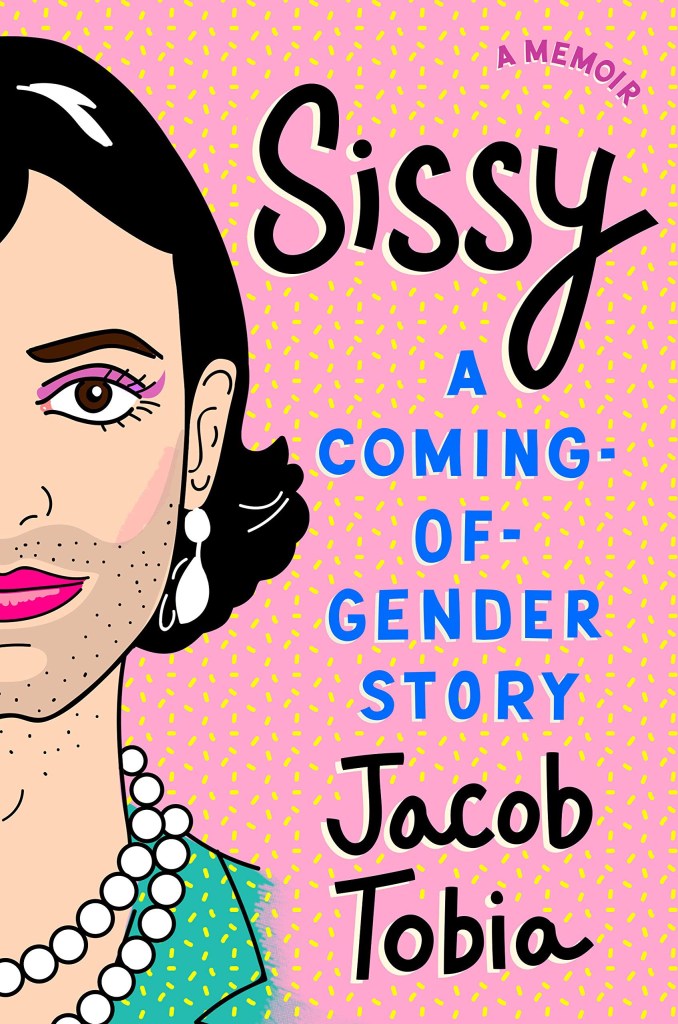
Quote for the Day: January 10th, 2022

Sissy: A Coming-of-Gender Story by Jacob Tobia

When you start to love yourself for the first time, when you start to truly embrace who you are—flaws and all—your scars start to look a lot more like beauty marks.

Jacob Tobia, Sissy: A Coming-of-Gender Story

Thanks as always for being a faithful reader of The Voracious Bibliophile. If you like what you see, please like, comment, follow, and subscribe to my email list to get notified of new posts as soon as they drop. You can also email me at fred.slusher@thevoraciousbibliophile.com or catch me on Twitter, Instagram, TikTok, and Pinterest @voraciousbiblog. Keep reading the world, one page (or pixel) at a time.
Quote for the Day: December 4th, 2021

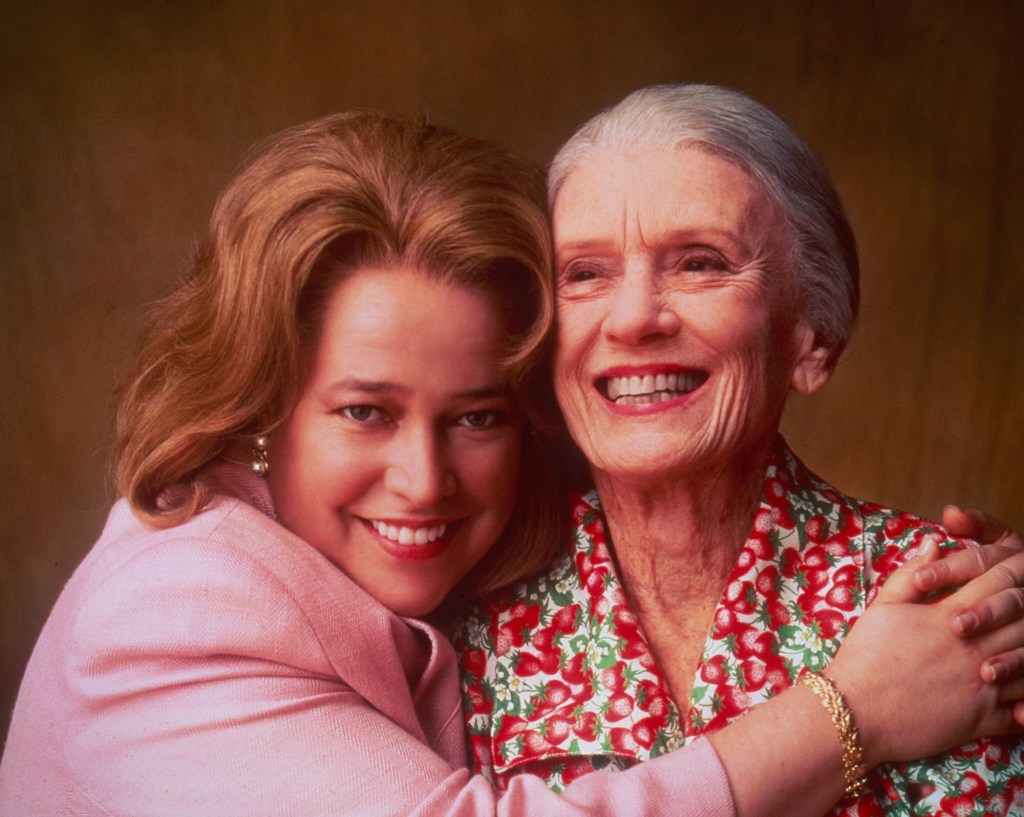
Kathy Bates (Evelyn Couch) and Jessica Tandy (Ninny Threadgoode) in a promotional shot for Jon Avnet’s Fried Green Tomatoes (1991). Fair use.

I found out what the secret to life is: friends. Best friends.

Fried Green Tomatoes (1991); directed by Jon Avnet

Fried Green Tomatoes is one of my favorite movies of all time. As far as films go its got a little bit of something for everybody: adventure, romance, melodrama, and even a murder mystery! The secret’s in the sauce, or at least that’s what I’ve heard. It was made for a paltry sum of just $11 million, and while that’s quite a loot haul for the likes of Joe Schmoe on Main Street, for Hollywood that’s chump change. It grossed more than ten times that amount and proved once again that American audiences love a well-told Southern yarn, especially when the acting is as stellar as it is in Fried Green Tomatoes. I mean, talk about an embarrassment of riches, to have Kathy Bates, Jessica Tandy, and Mary-Louise Parker all in the same film—and as leads, no less!

And Ruth said, Intreat me not to leave thee, or to return from following after thee: for whither thou goest, I will go; and where thou lodgest, I will lodge: thy people shall be my people, and thy God my God:

Ruth 1:16 (KJV)

One thing that was never discussed among my family members when we watched the film together is the lesbian love story at the heart of the film. Now mind you, the onscreen depiction is chaste, but anyone with eyes can clearly see the sparks that fly and the deep love that grows and endures between Idgie Threadgoode (Mary Stuart Masterson) and Ruth Jamison (Mary-Louise Parker). There are even none-too-subtle nods to a queer couple from the Bible itself: Naomi and Ruth. Now, I’m not interested in getting into a historical-theological debate with anyone regarding the canonically gay biblical couple, but perhaps any naysayers reading this would like to check out this excerpt from The Children Are Free: Reexamining the Biblical Evidence on Same-sex Relationships.

…anyone with eyes can clearly see the sparks that fly and the deep love that grows and endures between Idgie Threadgoode (Mary Stuart Masterson) and Ruth Jamison (Mary-Louise Parker).

The same-sex love story at the heart of the larger narrative is frequently straight-washed and written off as simply a superlative example of a great friendship, and it is a story of a great friendship, but it’s also the story of a marriage, one that never received the validation it deserved and was never allowed the public expression it warranted simply because the married people were both women. You can call it what you want but I will call it what it is: love. No one can rightfully condemn it.

You can call it what you want but I will call it what it is: love. No one can rightfully condemn it.

The film won a GLAAD Media Award for Outstanding Film — Wide Release, as well as Oscar noms for Tandy and the adapted screenplay written by Fannie Flagg (who wrote the novel on which the film is based) and Carol Sobieski. There’s so much inside of it (both the film and its source material) to unpack for anyone willing to search it.

I know that I frequently use these “quotes posts” as jumping-off points for whatever tangent I feel like exploring that day, and I really appreciate those of you who are always willing to follow the bread crumbs with me. You have my love and sincerest thanks forever.

Thanks as always for being a faithful reader of The Voracious Bibliophile. If you like what you see, please like, comment, follow, and subscribe to my email list to get notified of new posts as soon as they drop. You can also email me at fred.slusher@thevoraciousbibliophile.com or catch me on Twitter, Instagram, TikTok, and Pinterest @voraciousbiblog. Keep reading the world, one page (or pixel) at a time.

Quote for the Day: November 14th, 2021

In nature, nothing is perfect and everything is perfect. Trees can be contorted, bent in weird ways, and they’re still beautiful.

Alice Walker

You know how sometimes you come across a quote or a line in a book while you’re reading or even hear a lyric in a song on the radio while you’re on your way to work and it’s like the stars align? You feel like the universe sent you those words because it knew you’d need them at that precise moment.

You feel like the universe sent you those words because it knew you’d need them at that precise moment.

Well, that’s how I felt when I first came across today’s quote. Lately, I’ve been feeling like a failure because I can’t be normal despite my best efforts. My therapist and I can’t quite find the right configuration of meds to make me not be a basket case all the time. None of my clothes fit and I’m continuing to gain weight despite all my work to curb that. The only clothes I have that fit me at the moment (aside from underwear and socks) are like three pairs of pants and my branded company shirts I wear to work.

It does, however, make me want to cry and scream and curse every time I go into my closet to try to find something to wear and find that clothes which were loose on me just six months ago are now so tight I can’t breathe in them.

Now, don’t misread me. I do not have a problem, aesthetically speaking, with being a fat person. I don’t think I’m disgusting and I’m not ashamed of the shape of my body. It does, however, make me want to cry and scream and curse every time I go into my closet to try to find something to wear and find that clothes which were loose on me just six months ago are now so tight I can’t breathe in them.

Now, I’ve not made a huge Facebook announcement coming out as gay or anything, but pretty much everyone that’s important to me knows.

Also, and I didn’t think I was going to say this here, but I’ve been really struggling with feeling like I’m accepted by certain members of my family. Now, I’ve not made a huge Facebook announcement coming out as gay or anything, but pretty much everyone that’s important to me knows. I’m out to all of my employees and I’m blessed to work for a company that’s extremely queer-friendly. All of my friends know and it’s probably been more than five years since I first came out to my parents.

Life doesn’t always allow us to be the most authentic version of ourselves with all people at all times.

But as Taylor Swift once sang in “This Is Why We Can’t Have Nice Things”, therein lies the issue. I never imagined being out in the first place so when I came out I wanted to be out out. Like drag show out. But here’s a hard truth: Life doesn’t always allow us to be the most authentic version of ourselves with all people at all times. So ever since I first came out to them I’ve been somewhat of a Hokey Pokey Homo: You put your right foot in (the closet), you put your right foot out (of the closet), you put your right foot (back) in (the closet, because you’re acting far too gay to be palatable to everyone), and you shake it all about (to “Just Dance” by Lady Gaga like the sad queer you are). I bought a purse a month or so ago that was super cute and it was on sale so why wouldn’t I buy it? and I thought my dad was going to have a stroke. To his credit, he didn’t say anything negative to me but I could still tell it made him uncomfortable.

That’s right, I’m contorted, bent in weird ways, and I’m still beautiful. And so are you. Make the world reckon with you on your terms.

So, if you’re still with me here: (A) depressed and anxious; (B) fat; and (C) super duper gay. And I’m going to add another one: (D) PERFECT. That’s right, I’m contorted, bent in weird ways, and I’m still beautiful. And so are you. Make the world reckon with you on your terms.

Thanks as always for being a faithful reader of The Voracious Bibliophile. If you like what you see, please like, comment, follow, and subscribe to my email list to get notified of new posts as soon as they drop. You can also email me at fred.slusher@thevoraciousbibliophile.com or catch me on Twitter, Instagram, TikTok, and Pinterest @voraciousbiblog. Keep reading the world, one page (or pixel) at a time.

Poem for the Day: October 14th, 2021

On Confinement by torrin a. greathouse

I sit across the table from my partner
in the atrium of the psychiatric holding facility

our hands churched into our laps. We are not allowed
to touch. The air between us thick as Perspex.

They tell me all the ways this place resembles a prison.


Everything a sterile white
so clean it could almost disinfect
a memory.


In 1787,
Jeremy Bentham conceived of what would become
the most common prison design:

the panopticon.

Intended to control prisoners through the illusion
that they are always under surveillance.


My partner tells their therapist
they are afraid of taking
their own life,

that they balanced on a building’s edge,
& three officers escort them from the room.


The first cop who ever handcuffed me
[was my father]
left me bound
till my fingers blued.

On the days when I can’t remember
his face,
he becomes the scent of
vodka & zip ties
the sound of
cuffs & a bottle
petaling into blades.


At the booking office they remove my glasses
& the guards blur into a procession
of fathers.


I bring my partner clothes & pads
when the hospital decides to hold them longer,

shove each shirt that could mark them
as queer back inside the closet & shut it [like a mouth].


The word faggot scrawls across
the jail guard’s lips like graffiti.


When I visit my partner
they insist on staying inside

the sky above
the patio cordoned
off  with chicken wire.


I plead my sentence down
in exchange for: my face, my prints, my DNA
& ten years probation.

When I see a cop, I fear
even my breath
criminal

& when my therapist asks me
if  I’m suicidal
I lie.


Perhaps
both are a kind
of  surveillance.


Tear gas floods the street,
sharpens water to a blade
hidden in the orbit of my eye.

& just like this, a squad car
remakes my sadness a weapon.

If my partner snaps cuffs
around my wrists

[& I asked for this]

have they also weaponized
my desire?


A woman in the facility
tells my partner:
I know what you are.
Says:
Sinner.
Says:
Anti-christ.

My partner goads her on,
babbles in false
tongues & is confined
to their room for safety.


Once, a cop dragged me
into an alley &
beat me like he knew
exactly what I was.

What does it say if sometimes
when I ask my partner to hit me

I expect his fist
tightened in their throat, his voice
bruising their tongue?


I am arrested & placed
[in the men’s jail]
in solitary confinement.

They tell me this is protective
custody. That they couldn’t afford
the lawsuit if  I were killed. In this way,
they tell me I am a woman

only when I am no longer
breathing.


The origin of the word prison
is the Latin prehendere — to take.

It follows, then,
that to take your life is to prison
the body beneath dirt.


[Historically,
suicide is a criminal act].


Balanced on a building’s edge, I imagine
some permutation of  this moment

where to fail at death
would be a breach

of my probation.


We both weep for the first time

upon release

when we see the sky.

Pale blue

sliced through

with a single helix

of razor wire & bordered

in sterile white.

© 2018 torrin a. greathouse. Today’s poem first appeared in the November 2018 issue of Poetry.

torrin a. greathouse (she/they) is one of the most innovative and startlingly luminous poets we have writing today. I remember reading “On Confinement” the month it first appeared in Poetry and being arrested by the following lines:

The origin of the word prison

is the Latin prehendere— to take.

It follows, then,

that to take your life is to prison

the body beneath dirt.

Everything in their poem suggests a limitation, a box the world would build around the speaker. Whether the prison is literal (the men’s holding cell in solitary confinement) or metaphorical (the actions and assumptions of people with the authority to categorize and strip away the dignity of the speaker), the effect is the same, which is to police and draw lines of demarcation around the ways in which marginalized people, especially in this case people who are queer and disabled, are allowed to express their humanity and exercise agency.

“On Confinement” also brings into stark relief the Othering Trans* people undergo when they try to access basic social services. Any facility serving members of the general public ought to be devoid of the homo- and transphobia greathouse talks about. Historically, the Trans body is often a site of both state-sanctioned and private violence, and for all our high-handed talk of equality and progressiveness, this is still largely true today. Anyone able to bear witness to these acts of dehumanization and look away from them places their seal of approval on the acts themselves. And shame on them. Shame on a world that makes someone live in constant fear of violence because of who they are and calls it justice. Shame on all of us.

*Trans is an umbrella term for anyone whose gender identity and/or expression in any way deviates from what was assigned to them at birth. Trans people may identify as transgender, gender fluid, gender-expansive, bigender, agender, gender non-conforming, nonbinary, etc. These are just a few of the identifying words Trans people may or may not use to express their identity(ies), but regardless of terminology all humans deserve to be treated with dignity and respect. It is NEVER okay to deliberately misgender someone or use their dead name.

Thanks as always for being a faithful reader of The Voracious Bibliophile. If you like what you see, please like, comment, follow, and subscribe to my email list to get notified of new posts as soon as they drop. You can also email me at fred.slusher@thevoraciousbibliophile.com or catch me on Twitter, Instagram, TikTok, and Pinterest @voraciousbiblog. Keep reading the world, one page (or pixel) at a time.