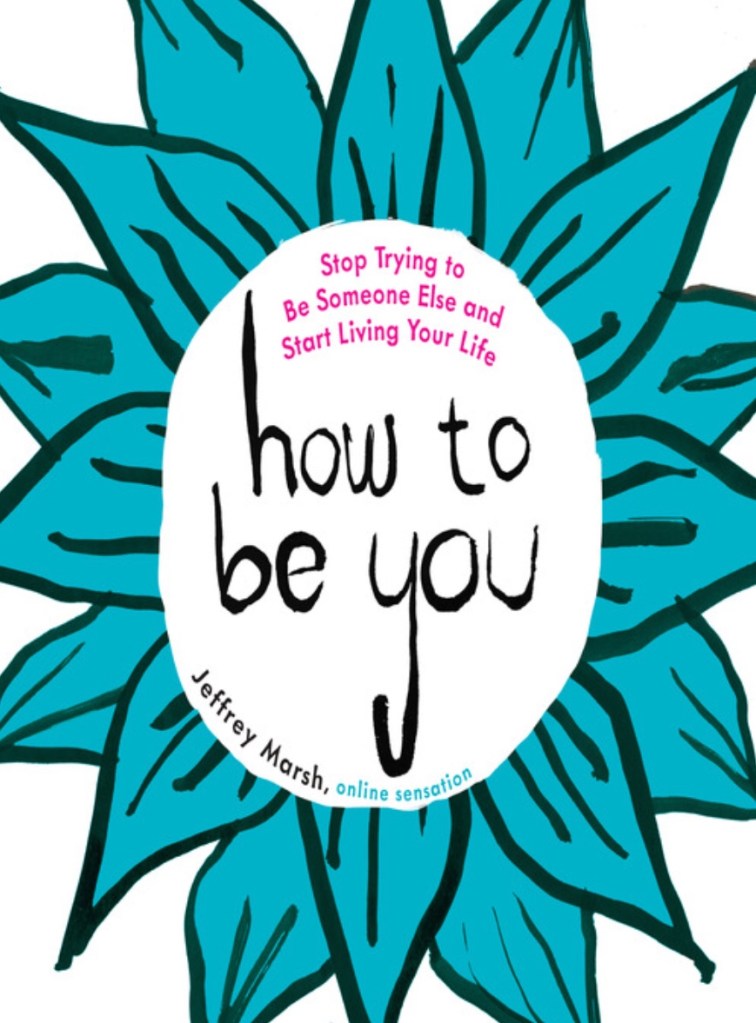
How to Be You: Stop Trying to Be Someone Else and Start Living Your Life by Jeffrey Marsh
I have followed Jeffrey Marsh on Twitter for years. Before I found a therapist, before I got on medication for my anxiety and depression, their videos helped me to be able to take a breath and center myself so I could get through the day. I’m sure I’m not the only person whose life has been impacted by them in this way, but I will forever be grateful for their calm voice affirming my place in the world over and over again until I started to believe it for myself.
How to Be You is the self-love manifesto that everyone in the world needs to read, but it is especially essential for those of us in the LGBTQ+ community. We live in a world that is often hostile to us, a world that bullies, beats, threatens, harasses, disenfranchises, and belittles us to the point of fracture, to the point where our very existence is seen as a threat to the standing order. Jeffrey’s assertion throughout their book is that it is our choice whether or not we are going to capitulate to the people who would make us smaller. We can be expansive or we can shrink. We can grow and learn and change and accept ourselves in all of our glorious complexity or we can draw lines of demarcation around ourselves and always exist as less than our true selves.
We can be expansive or we can shrink. We can grow and learn and change and accept ourselves in all of our glorious complexity or we can draw lines of demarcation around ourselves and always exist as less than our true selves.
I’m not going to lie, a lot of the self-help material circulating in the world today is worthless pablum at best and an avaricious money-grabbing scheme at worst, but Jeffrey Marsh is the real deal. Their work comes from a deep place of understanding what it feels like to be marginalized and maligned for being queer, and I am so grateful for their existence. I am grateful for this book’s existence. Thank you, Jeffrey. A thousand times, thank you.
Favorite Quotes from How to Be You
Confidence comes naturally if trust is present.
Aren’t you lucky that you get this life, this chance, to learn to set aside the yuck and muck of other people’s sometimes nasty words and do your best to live your life as fully as you know how?
Even if it seems like the whole world is against you, you’ve got to trust yourself. Even if no one else will honor you, you must honor what your truth is in any given moment.
Beginning to see yourself as worthy and trustworthy is the start of something beautiful. Why? Because you can finally let go. You don’t need to spend all your time trying not to be too much. You can relax. You can feel safe. You deserve that. Everyone deserves that.
Trusting yourself is the way to claim the life you’ve always been waiting for.
Trust your own self-examination more than you automatically believe someone else’s pronouncement.
Worry and hate are habits, and so are love and forgiveness.
Whatever your imagined crimes were in the past, they are not worth ruining your today for. You deserve to feel free. You deserve to be let off the hook.
Thanks as always for being a faithful reader of The Voracious Bibliophile. If you like what you see, please like, comment, follow, and subscribe to my email list to get notified of new posts as soon as they drop. You can also email me at fred.slusher@thevoraciousbibliophile.com or catch me on Twitter and Instagram @voraciousbiblog. Keep reading the world, one page (or pixel) at a time.
You only have to let the soft animal of your body love what it loves.
You do not have to be good.
You do not have to walk on your knees
For a hundred miles through the desert repenting.
You only have to let the soft animal of your body
love what it loves.
Tell me about despair, yours, and I will tell you mine.
Meanwhile the world goes on.
Meanwhile the sun and the clear pebbles of the rain
are moving across the landscapes,
over the prairies and the deep trees,
the mountains and the rivers.
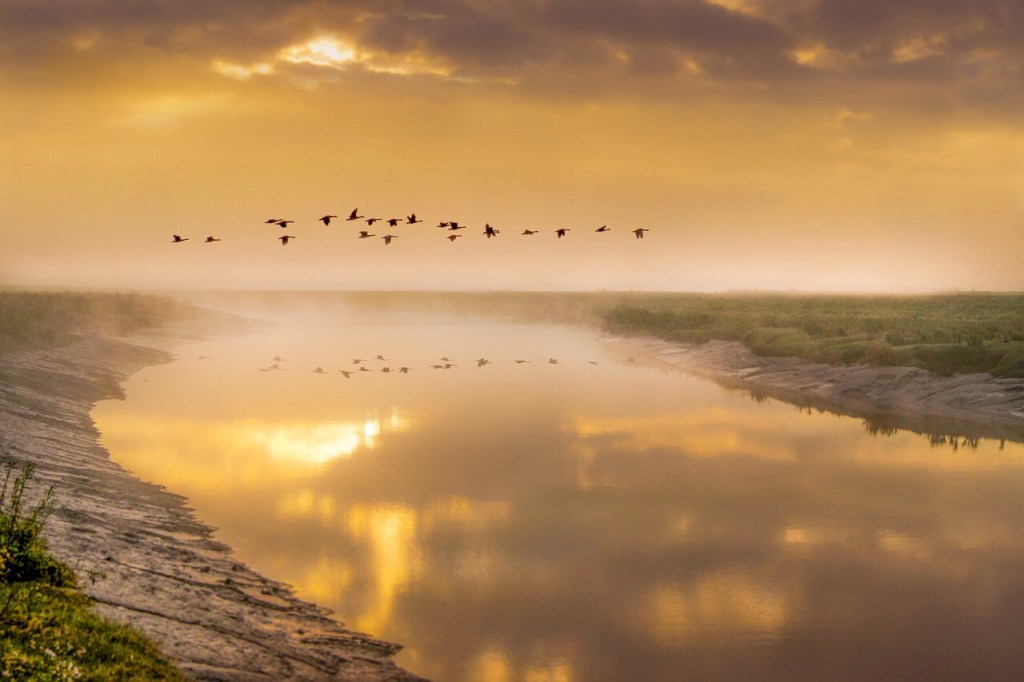
Meanwhile, the wild geese, high in the clean blue air,
are heading home again.
Whoever you are, no matter how lonely,
the world offers itself to your imagination,
calls to you like the wild geese, harsh and exciting—
over and over announcing your place
in the family of things.
If you get close to what you love, who you are is revealed to you.
Ethan Hawke
Today’s quote resonates with me in a very profound way. I think the most beautiful thing in the world must be witnessing, or better yet experiencing, certainty to purpose. So many of us stumble through life chasing things that don’t really hold any value, but when we find something we love, we’re fools if we don’t grab ahold of it and never let it go.
We only have one shot at getting this right. One chance at deciding what matters and who we’re going to be.
My hope for myself, and for all of you reading this, is that we have the courage to wake up every day and choose ourselves, to prioritize our dreams over life’s routines and mundanities. We only have one shot at getting this right. One chance at deciding what matters and who we’re going to be. The stakes couldn’t be higher. Live—and love—with no regrets. Or don’t. It’s up to you.
Thanks as always for being a faithful reader of The Voracious Bibliophile. If you like what you see, please like, comment, follow, and subscribe to my email list to get notified of new posts as soon as they drop. You can also email me at fred.slusher@thevoraciousbibliophile.com or catch me on Twitter and Instagram @voraciousbiblog. Keep reading the world, one page (or pixel) at a time.
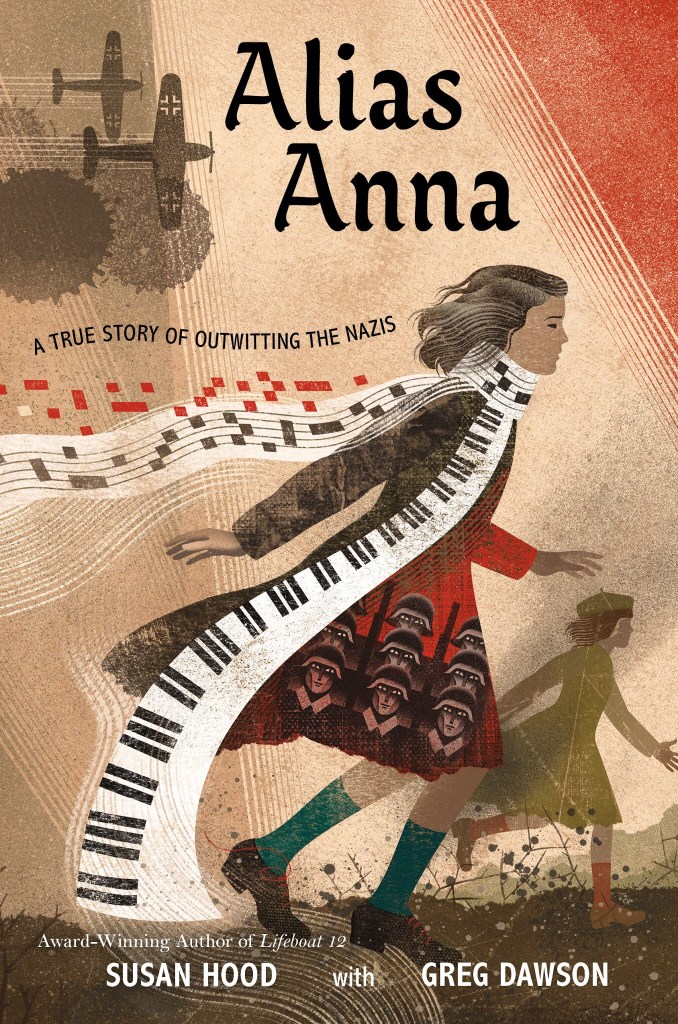
Alias Anna: A True Story of Outwitting the Nazis by Susan Hood with Greg Dawson
***Note: I received a free digital review copy of this book from NetGalley in exchange for an honest review.***
Expected Publication Date: March 22nd, 2022
Publisher: HarperCollins
The Holocaust (also known as the Shoah) was the attempted genocide of the entire Jewish population in Europe carried out by German dictator Adolf Hitler and his collaborators between 1941 and 1945. Crafted as the Final Solution to the Jewish Question, Hitler’s ultimate goal was the extermination of an entire people from the face of the earth, a horrific crime in aggregate.
While the crimes of the Nazis are unparalleled in the history of humanity, forgetting the stories of the people who were murdered and the people who survived is also a crime of incalculable magnitude. It is our duty to call out injustice wherever we see it, to speak truth to power, and to hold in memory the crimes of the past so that we can be the architects of a more just and equitable future.
It is our duty to call out injustice wherever we see it, to speak truth to power, and to hold in memory the crimes of the past so that we can be the architects of a more just and equitable future.
This duty is not one that can be transferred or reassigned. We remember not only as an act of preservation but as one of defiance. Zhanna’s story is one of millions.
We remember not only as an act of preservation but as one of defiance.
Alias Anna: A True Story of Outwitting the Nazis tells the story of Zhanna Arshanskaya and her sister Frina, who survived the Holocaust by quite literally hiding in plain sight, creating new non-Jewish identities for themselves and using their musical abilities to perform for high-ranking Nazi officers, providing entertainment to the very people responsible for the murder of their entire family because they had no other choice. It was play or die. And too much had been sacrificed for the sisters to die.
When most people think of the Holocaust, they conjure up images of concentration camps, of gas chambers and emaciated bodies stacked carelessly in mass graves. There were indeed many concentration camps operated by the Nazis, but they were indifferent to the methods used as long as the job—annihilating the Jewish people from the face of the earth—was done.
For the majority of the Soviet Jews, the Nazis’ primary method of execution was the firing squad, whereby they would march them to pits and ravines and unleash volleys of bullets. They also used fire and carbon monoxide when bullets were deemed insufficient. In December 1941, the Nazis rounded up the majority of the Jews from Kharkov and made them march to an abandoned tractor factory outside the city. After a few weeks of extreme deprivation, given little to no food and having scant protection against the elements, the Jews of Kharkov (including Zhanna, her sister Frina, her parents, and her grandparents) were marched to the ravine at Drobitsky Yar, facing certain execution.
I don’t care what you do. Just live.
Dmitri Arshansky
Before the ill-fated march to Drobitsky Yar, Zhanna and Frina lived what could be called charmed lives with their family in Kharkov. They were musical prodigies of the highest caliber, becoming the youngest students (ages eight and six at the time) ever accepted into and given scholarships to the famed Kharkov Conservatory of Music. It was there that Zhanna was first introduced to her favorite piece of music, her choice composition—Chopin’s Fantaisie-Impromptu. The sheet music for this composition would become Zhanna’s only material possession and thus the only physical reminder of her former life, though she could not have foreseen this.
Dmitri Arshansky was no fool. He knew with absolute certainty that the Nazis were marching them toward their deaths, and he also believed that young Zhanna was the only one who might have a chance of escaping.
Knowing this, his last gift and last act of fatherly love was to give one of their guards his golden pocket watch that he’d managed to hide during the long march in exchange for the man turning a blind eye when his daughter jumped out of line and made her escape. His final admonition to her was this: I don’t care what you do. Just live. The greatest expression of love has to be giving the last thing you have to the person you love the most; if a greater love exists, I am unaware of it.
The greatest expression of love has to be giving the last thing you have to the person you love the most; if a greater love exists, I am unaware of it.
It was Fantaisie-Impromptu that she clutched against her chest as she jumped out of line and blended into a crowd of onlookers. Knowing it was to be the last time she would see her family, she wept and wept. Not knowing where else to go, Zhanna made her way back to Kharkov. Once there, she first sought shelter with her friend and classmate Svetlana Gaponovitch and her family. She thought that since the father of the family was Jewish, despite the fact that he longer lived in the household, she would be shown mercy by people who understood her situation. Instead, she had the door slammed in her face.
Unsure of where to go next and desperately tired, hungry, and cold, she knocked on the door of another classmate, Lida Slipko. Rumor had it that Lida’s mother was an anti-Semite, but young Zhanna was out of options and at the end of her rope. To her great surprise, they (Lida and her mother) hastened her in and shut the door behind her, showing her more compassion and common humanity than she had received at the hands of the Gaponovitch family.
Her brief respite was not to last, however. Zhanna knew that to stay too long in one place would endanger not only herself but the people who sheltered her, and so Lida suggested she go to the home of Nicolai Bogancha, an acquaintance and crush of hers who lived in the same neighborhood as Zhanna did growing up.
The Bogancha family was a saving grace for Zhanna. There in their home she felt safe, cared for, and hopeful for the future. It was also during her time staying with the Bogancha family that she learned something truly miraculous—her sister Frina was still alive. After learning this, one night Nicolai’s father snuck out and retrieved Frina, bringing her to Zhanna, back to the last link she had left in the world. Words are insufficient to describe the absolute elation Zhanna experienced when she learned that her sister had managed to escape. To this day, historians have no idea how Frina managed to escape the death march to Drobitsky Yar. Frina herself never revealed how, not even to Zhanna. Some things are just too painful to share, even with the people we love most.
To this day, historians have no idea how Frina managed to escape the death march to Drobitsky Yar. Frina herself never revealed how, not even to Zhanna. Some things are just too painful to share, even with the people we love most.
Together, the sisters were far too recognizable. After all, they had been performing in public for quite some time, given their enormous talent at such young ages. They knew they had to leave Kharkov, their home, and forge a new path somewhere else, somewhere the Nazis couldn’t reach them. Nicolai’s parents helped the sisters to craft new identities, giving them aliases and a backstory to protect them moving forward. They thus became Anna and Marina Morozova, orphans who had lost both parents—their mother during the German bombing of Kharkov and their father in battle while acting as an officer in Stalin’s Red Army.
As non-Jewish Russian orphans, if they could secure admission into an orphanage they could have identification papers drawn up, legally ratifying their new names and stories and giving them a modicum of protection against Nazi inquiry.
They managed to do just this, and by some act of divine providence or merciful coincidence, the orphanage they ended up at had a decrepit piano. It wasn’t much, this battered and careworn old instrument, but the talented sisters coaxed it to life and made it sing, bringing life and joy to all who heard their beautiful music. German soldiers passing by heard the lovely notes emanating from the run-down orphanage, and the director of the orphanage was so elated at this attention that he hired a piano tuner to make the instrument worthy of its practitioners.
The piano tuner’s name was Misha Alexandrovich, a kindly and intelligent man who took to Zhanna right away. He pleaded with her to come and play for the directors of the music school at Kremenchug. She was highly resistant to this suggestion, naturally not wanting to draw that much attention to herself and her sister. However, in the end she realized it would draw even more attention to refuse such a beneficent offer, and thus agreed to go.
Zhanna and Frina (Anna and Marina) accompanied Misha to Kremenchug, and the director of the school was so taken with them that they were given a studio to live and practice in. The sisters couldn’t believe their good fortune.
There was a catch to the director’s generosity, however. She needed the girls to play piano for the singers and dancers who were required to perform for the Germans at the theater next door to the school. When the theater director heard Zhanna play, he hired the sisters on the spot. And so that is how the Arshanskaya sisters came to play for the very Nazi officers who had upended their lives forever. They had taken away their home, their family, their state, and their very names, but they could not break their spirits. In the end, Zhanna and Frina would reign triumphant while the Nazi regime crumbled.
They had taken away their home, their family, their state, and their very names, but they could not break their spirits. In the end, Zhanna and Frina would reign triumphant while the Nazi regime crumbled.
Alias Anna is a beautiful story of courage, resilience, and the triumph of the human spirit. It is a testament to the Arshanskaya sisters who survived despite all odds and the Jewish people who showed the Nazis and the world that you can destroy the body but you cannot destroy the soul, not with any force or weapon known to man. I want every person living to read this book.
*Conflicting birthdates are given for Zhanna. Alias Anna gives her birthdate as April 1st, 1927 while the oral history recorded with Zhanna by The Breman Museum gives her birthdate as February 1st, 1927. In deference to Greg Dawson, I have kept the date listed in Alias Anna.
More on the Arshanskaya Sisters and the Ukrainian Jewish Population During WWII
Thanks as always for being a faithful reader of The Voracious Bibliophile. If you like what you see, please follow, like, comment, and subscribe to my email list to get notified of new posts as soon as they drop. You can also email me at thevoraciousbibliophile@yahoo.com or catch me on Twitter @voraciousbiblog. Keep reading the world, one page (or pixel) at a time.
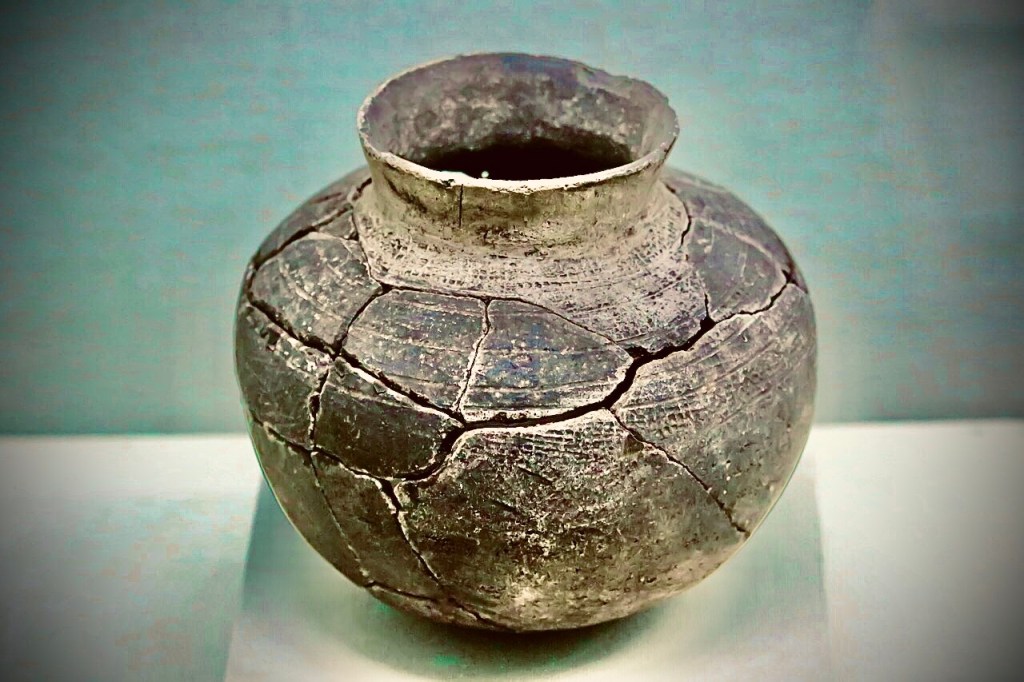
When I chose Strayed for my name, I wasn’t looking at the word’s negative connotations. I was aware at that time in my life that I’d really lost my way, that I’d gone off the path. But the other definitions of that word ‘strayed’ are very powerful too, you know? A stray is somebody who makes, or has to make, his or her own way in the world. A stray is someone who lives without the essential mother and the essential father, which is how I lived. So I was embracing that word, that name, for all of its darkness and all of its light, and I hoped I would keep growing and living into the name, sort of embodying it in my life, you know…It’s like my heritage. I feel it is my real name.
Alexandra Billings, Actress and Trans Activist, via Instagram
My first encounter with the work of Alexandra Billings was through her role as Davina Rejennae on Amazon’s Transparent. Luminous is too dim a word to describe what she brings to her performances, because it is apparent that she is imbuing each character with the wisdom gleaned from her own lived experience as a trans woman of color.
Today’s quote is taken from a video post Billings made on Instagram a few years ago. Sadly, I didn’t bookmark the exact day but I did write down the quote for posterity because it was too good not to. What exactly, though, does it mean to stand in the center of your own grace? For me, it means that you accept everything that has brought you to the present moment, acknowledging that what you’ve been through has made you into the person you are. It also means that you absolve yourself of blame, and its fugly cousin shame, for what you’ve done to survive. It means that you are cognizant of the fact that you are here because of what you’ve been through, not despite what you’ve been through, and you do not owe the world an explanation or an apology for taking up space.
Thanks as always for being a faithful reader of The Voracious Bibliophile. If you like what you see, please follow, like, comment, and subscribe to my email list to get notified of new posts as soon as they drop. You can also email me at thevoraciousbibliophile@yahoo.com or catch me on Twitter @voraciousbiblog. Keep reading the world, one page (or pixel) at a time.
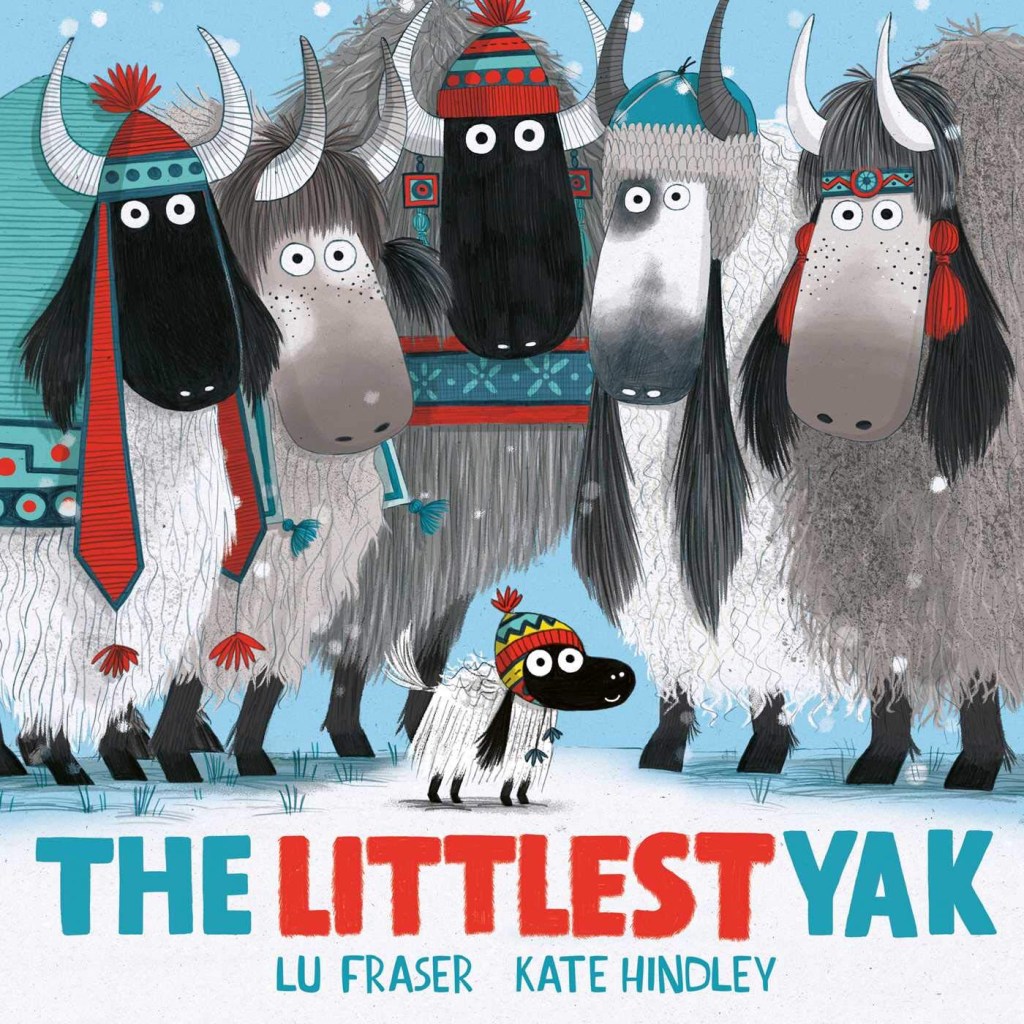
The Littlest Yak by Lu Fraser (Author) and Kate Hindley (Illustrator)
***Note: I received a free digital review copy of this book from NetGalley in exchange for an honest review.***
Gertie is a little yak with a big heart. Eager to be big and tall like the other yaks in her herd, Gertie tries her hardest to make herself bigger and stronger but finds her negative self-perception tested when an emergency calls for someone smaller like her.
In the end, Gertie learns that it’s not the size of your horns that matter but the strength of your character, and that everyone in the herd has something amazing to offer regardless of their size or ability. Reminiscent of the story of Rudolph with his blinking red nose or Kyo Maclear’s picture book Spork, The Littlest Yak shows readers of all ages that sometimes the things we don’t like about ourselves end up becoming our greatest assets. Five stars and two thumbs way up for Gertie, who now holds a coveted spot as one of my favorite heroines in all of children’s literature.
Five stars and two thumbs way up for Gertie, who now holds a coveted spot as one of my favorite heroines in all of children’s literature.
The Littlest Yak is due to be released in the U.S. on October 1st, 2021 and is now available to preorder wherever books are sold.
Thanks as always for being a faithful reader of The Voracious Bibliophile. If you like what you see, please follow, like, comment, and subscribe to my email list to get notified of new posts as soon as they drop. You can also email me at thevoraciousbibliophile@yahoo.com or catch me on Twitter @voraciousbiblog. Keep reading the world, one page (or pixel) at a time.
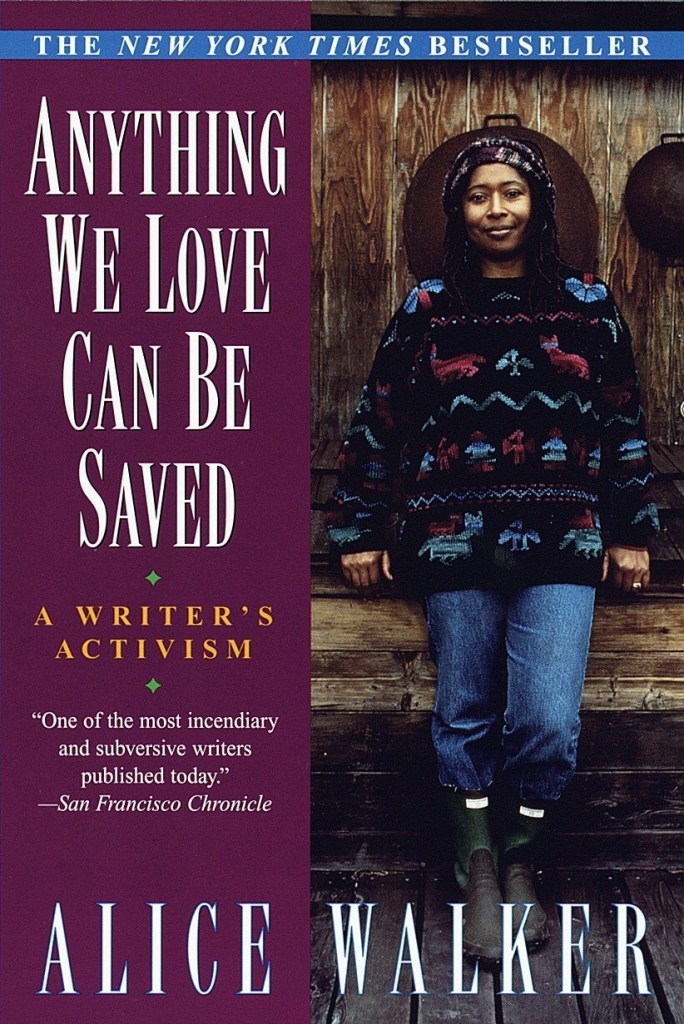
Anything We Love Can Be Saved: A Writer’s Activism by Alice Walker
We are all substantially flawed, wounded, angry, hurt, here on Earth. But this human condition, so painful to us, and in some ways shameful – because we feel we are weak when the reality of ourselves is exposed – is made much more bearable when it is shared, face-to-face, in words that have expressive human eyes behind them.





 The Voracious Bibliophile