Film Review: Cool Hand Luke (1967); Directed by Stuart Rosenberg

Film poster for Cool Hand Luke (1967); directed by Stuart Rosenberg.

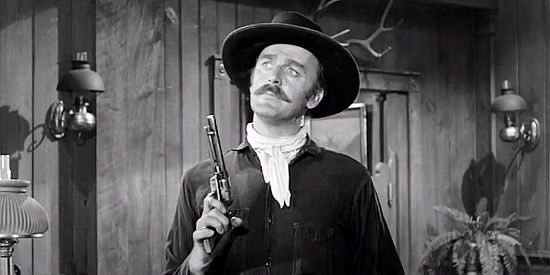
“What we’ve got here is failure to communicate.”

Captain (Strother Martin)

It might just be me, but this saga of a man named Luke (Paul Newman), crushed but not deterred under the weight of a system designed to deprive him of his body, mind, and soul, is the perfect metaphor for late-stage capitalism and rising fascism in 2025. The circumstances are somewhat different, but still startlingly relevant as it concerns the prison industrial complex, police brutality, and slavery. Some people might call that last one a stretch, but what are prisons if not legal warehouses of forced labor and deprivation of liberty? If your labor creates economic value for someone who isn’t you or your family and you aren’t allowed to leave, are you not a slave? 

I mean, let’s be serious for a moment. Luke was a nonviolent offender sentenced to two years of extremely hard labor in deplorable conditions for destroying some parking meters and stealing the change out of them. And the captain and guards are given free rein to treat the incarcerated men however they see fit, up to and including executing them for trying to escape said conditions. They can even manufacture circumstances ex post facto to justify actions they take in the moment. There are no oversight or accountability mechanisms in place to discourage their violent conduct. One wonders if the wrong people are deprived of their freedom. 

The captain and guards are soldiers in the war of the death of these men’s souls. These violent men (the guards, not the inmates) derive pleasure from and revel in the control they wield over every move the inmates make. It’s sickening and morally reprehensible, but very realistic and apt, even and especially in 2025. 

The captain and guards are soldiers in the war of the death of these men’s souls.

There’s one particularly striking moment in the film where Luke’s mother (Jo Van Fleet) passes away and news of her passing reaches Luke. Rather than let him go and pay his respects to her, they lock him in a wooden shed called The Box, sentencing him to solitary confinement for no reason other than to deter his escape. Let it be noted that up until this point he had given no indication of a desire to escape.

This hot, enclosed shed is dark, dank, and reeking of shit and piss. Right before one of the guards (or bosses, as the inmates refer to them) locks him up in The Box, he says, “Sorry, Luke. I’m just doing my job. You gotta appreciate that.” And Luke responds, “Nah – calling it your job don’t make it right, boss.” 

“Nah – calling it your job don’t make it right, boss.”

Luke (Newman)

That moment hit me like lightning. So many horrific acts of cruelty have been committed by people “just doing their jobs”. Slave catchers were just doing their jobs. The cops who arrested Rosa Parks were just doing their jobs. The SS were just doing their jobs. The same for ICE agents and Republican lawmakers who craft the law in favor of the rich and powerful and punish the poor for the sin of being poor. They’re all just doing their jobs. 

One must have a moral compass, a sense of duty and responsibility to common humanity that transcends legality, convention, and organized religion. I included that last one because so many people use religion (mostly Christianity, in the context of the United States) as a pretext for depriving others of their rights and freedoms. Their moral superiority obfuscates the actual dictates of their prescribed beliefs and therefore gives them a license to ignore those dictates in favor of advancing an agenda of their own creation. They worship power, and reap desolation. 

One must have a moral compass, a sense of duty and responsibility to common humanity that transcends legality, convention, and organized religion.

Paul Newman as Luke.

They worship power, and reap desolation.

Strother Martin as Captain.

The only way to beat the system, to stick it to The Man, is to keep a part of yourself that can’t be touched or corrupted by evil men. They can take your body, but they can’t touch your soul. Just like Luke. 

Thanks as always for being a faithful reader of The Voracious Bibliophile. If you like what you see, please like, comment, follow, and subscribe to my email list to get notified of new posts as soon as they drop. You can also email me at fred.slusher@thevoraciousbibliophile.com or catch me on Twitter, Instagram, TikTok, and Pinterest @voraciousbiblog. Keep reading the world, one page (or pixel) at a time.

Cinema as a Vehicle for Empathy

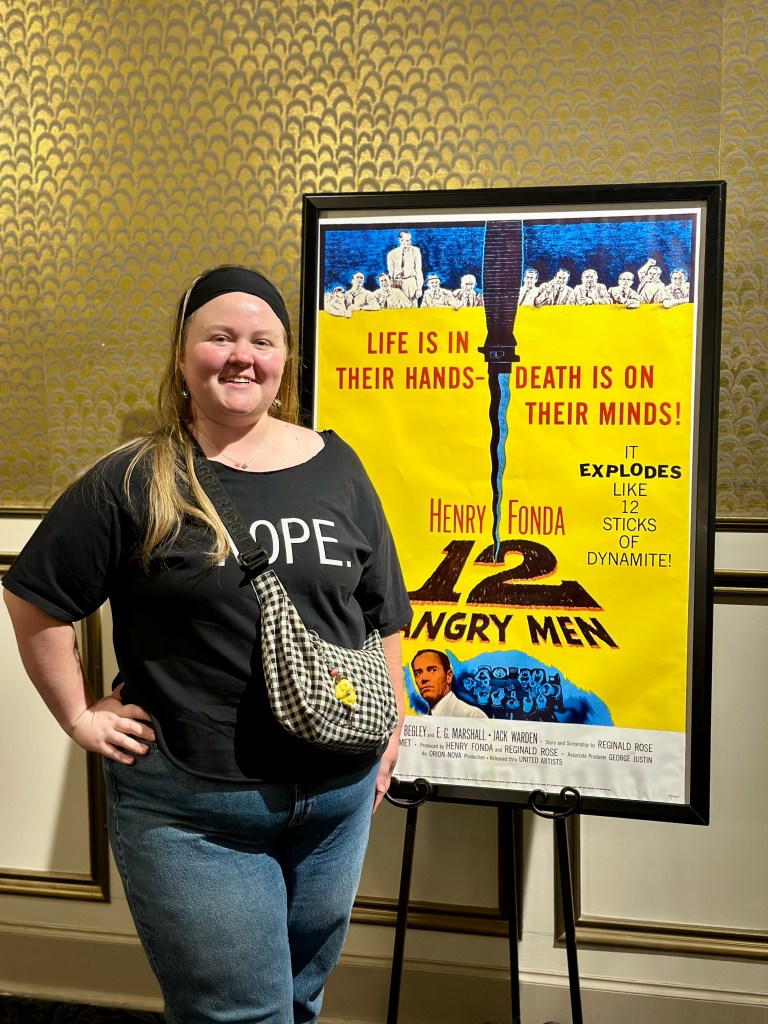
Me in front of the movie poster for 12 Angry Men.
Shelby in front of the movie poster for 12 Angry Men.
We saw this cool mural in Lexington while we were out walking trying to find a place to eat.
Me and Shelby in the car after we made it back home.

I’m on vacation this week (today is actually my last day), and one of the things I did this week was go on a date with my friend Shelby to the Kentucky Theatre in Lexington to see 12 Angry Men. We are both hardcore cinephiles. She recently made a joke on her Instagram about when she and her sisters were in a vendors mall that looked like the Criterion Closet and she filmed a little clip showing her picks. We love the movies everyone else likely hates, aside from film lovers like ourselves. Our tastes range from the artsy-yet-accessible to the experimental and avant-garde.

I had a recurring thought while 12 Angry Men was playing on the screen: It was highly probable that it had shown in the very screening room we were sitting in during its original run. What a full circle moment.

12 Angry Men made the third film we’ve seen in this theater (the first two were The Brutalist and I’m Still Here), which is one of the oldest in Kentucky. It has been in operation ever since the 1920s, so it feels particularly poignant and weighty in the best way to sit and watch a film here. I had a recurring thought while 12 Angry Men was playing on the screen: It was highly probable that it had shown in the very screening room we were sitting in during its original run. What a full circle moment.

If you’ve never had the chance to watch it, it’s truly one of the most electrifying and relevant films ever made. I feel like it’s more relevant now than it was in 1957. Directed by Sidney Lumet in his directorial debut, 12 Angry Men stars an ensemble cast which includes Henry Fonda, Lee J. Cobb, and Ed Begley. The story follows a jury of 12 men in a deliberation room after hearing a case of a young man (still a teenager) accused of killing his father. All the flimsy yet convenient circumstantial evidence points to his overwhelming guilt. On the surface level, it is easy to not see any possible reason why it was not this young man who killed his father. However, hesitant to end a man’s life without being absolutely certain of his guilt, Juror 8 (Henry Fonda) insists the men carefully review the facts of the case before they send him on his way to the electric chair.

All the flimsy yet convenient circumstantial evidence points to his overwhelming guilt.

12 Angry Men is one of those brilliant films that uses an enclosed space (these films are commonly referred to as chamber pieces) to heighten dramatic tension and force the characters therein to reckon with not only each other, but with themselves, on the deepest and most human level. The only other chamber piece I can think of that does this as well as 12 Angry Men is Rear Window, although an argument can also be made for The Shining. But I don’t think it’s fair to even call The Shining a chamber piece when there’s a significant portion of the film that occurs outside the Overlook Hotel.

12 Angry Men is one of those brilliant films that uses an enclosed space (these films are commonly referred to as chamber pieces) to heighten dramatic tension and force the characters therein to reckon with not only each other, but with themselves, on the deepest and most human level.

I’m not going to spoil how the rest of the movie goes, mainly because I want everyone alive in the Age of Trump to watch it. It has a lot of very important things to say about democracy, the pitfalls of a mob mentality, due process, and who is entitled to due process. It absolutely astounds me that this film didn’t receive any acting nominations at the Academy Awards, although it was nominated for Best Picture, Best Director, and Best Adapted Screenplay. Fonda himself should have been nominated for Best Actor. Lee J. Cobb and Joseph Sweeney also should have been nominated as Best Supporting Actors.

Henry Fonda as Juror 8.
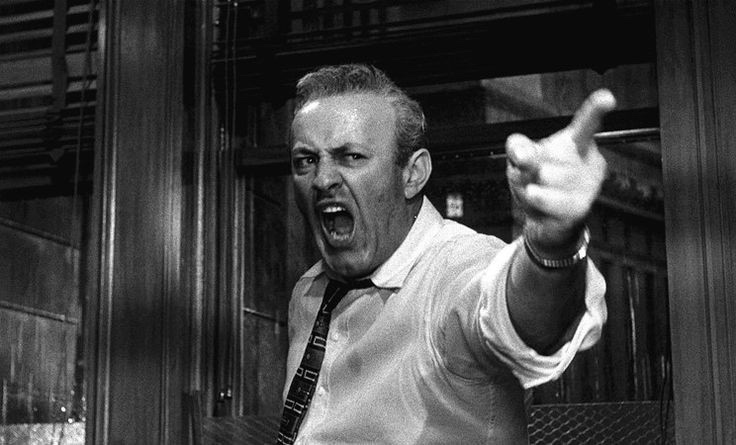
Lee J. Cobb as Juror 3.
Joseph Sweeney as Juror 9.

The Kentucky Theatre is doing a Summer Classics series with more classic film showings throughout the summer and I hope we’re able to go and see more of them. For anyone reading this, I want to encourage you to support your local theater in any way you can. Cinema is a living art form that teaches us not only about our past, present, and future, but offers us possibilities about other ways of living. About the ways in which other people live and love and believe and dream. Cinema at its core is a vehicle for empathy. There’s something sacred and profound about sitting a room with other people, watching the same moving image at the same time, and feeling a part of a conversation that started long before you were born and will be going on long after you’re dead. It is a holy space of being unlike any other in the world, and it deserves to be cherished and protected. It transmutes grief into hope, isolation into community, and sorrow into profoundest joy.

It [the cinema] is a holy space of being unlike any other in the world, and it deserves to be cherished and protected. It transmutes grief into hope, isolation into community, and sorrow into profoundest joy.

Thanks as always for being a faithful reader of The Voracious Bibliophile. If you like what you see, please like, comment, follow, and subscribe to my email list to get notified of new posts as soon as they drop. You can also email me at fred.slusher@thevoraciousbibliophile.com or catch me on Twitter, Instagram, TikTok, and Pinterest @voraciousbiblog. Keep reading the world, one page (or pixel) at a time.

Film Review: A Lady Without Passport (1950); Directed by Joseph H. Lewis

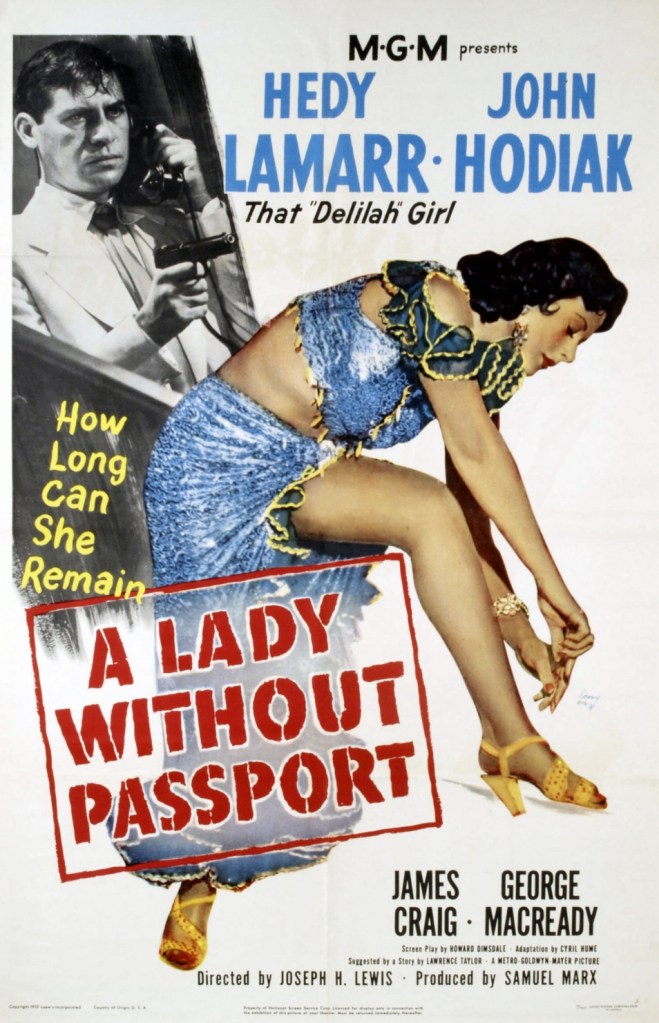
Film poster for A Lady Without Passport (1950); directed by Joseph H. Lewis.

Review

A Lady Without Passport was the Noir Alley selection on TCM for September 14th. For those of you who are unfamiliar with Noir Alley, it is my favorite programming block on TCM (Turner Classic Movies) and it showcases films in the film noir genre. While I’ll fallen off from time to time due to work and school commitments, I’ve been a devout viewer and fan from the beginning. Eddie Muller, the host, is one of my favorite people. His encyclopedic knowledge of film noir as well as his verbose intros and outros, make him an excellent host.

I can’t exactly blame him [Lewis] for bilking the King Brothers for a chance at making a film with the bright lights, big-budget “Tiffany” studio MGM, but there’s something to be said about less money, more creative control, and the way tighter purse strings spur innovation.

One of the best things about Eddie is his straight-shooter, no-nonsense analyses. When something doesn’t quite land or is, to be frank, hot garbage with interesting window dressing, he says so. I’ve taken a few days to digest A Lady Without Passport and to be honest, it’s shocking to the system that this is the film Joseph H. Lewis made directly after Gun Crazy. I can’t exactly blame him for bilking the King Brothers for a chance at making a film with the bright lights, big-budget “Tiffany” studio MGM, but there’s something to be said about less money, more creative control, and the way tighter purse strings spur innovation.

Mostly, I’d say that I concur with what The New York Times had to say about the film*:

Romance is slightly more important than reason in this number and while the scenery, meaning Havana and Florida, is authentic and picturesque, the goings-on are as intriguing as those in any garden variety melodrama. The ring of connivers who are dedicated to smuggling aliens into this country get their come-uppance but it hardly seems worth all the effort.

I’m not disappointed I watched the movie, not least of all because John Hodiak was exceedingly handsome in the picture, but I don’t really think it bears repeat viewing either.

I’m not disappointed I watched the movie, not least of all because John Hodiak was exceedingly handsome in the picture, but I don’t really think it bears repeat viewing either. If you’re looking for a good John H. Lewis film to watch, Gun Crazy is a much better choice (and it does bear repeat viewing).

*The quote was taken from a review in The New York Times titled “Hedy Lamarr as ‘Lady Without Passport’” (linked here).

Thanks as always for being a faithful reader of The Voracious Bibliophile. If you like what you see, please like, comment, follow, and subscribe to my email list to get notified of new posts as soon as they drop. You can also email me at fred.slusher@thevoraciousbibliophile.com or catch me on Twitter, Instagram, TikTok, and Pinterest @voraciousbiblog. Keep reading the world, one page (or pixel) at a time.
Film Review: To Have and Have Not (1944); Directed by Howard Hawks

Film poster for To Have and Have Not (1944).

Review

To Have and Have Not was a landmark film for several reasons, not least of all because it introduced Lauren Bacall to the world and became the backdrop for the beginning of one of Hollywood’s most famous marriages. In fact, I’d say the only Hollywood love affair that topped it would have to be Liz and Dick, but that’s not really a fair comparison. To Have and Have Not is based loosely on the 1937 novel of the same name by Ernest Hemingway. Hemingway was friends with Howard Hawks, the director of the film, and it was during a fishing trip they took together that Hawks told Hemingway he could make a great movie out of Hemingway’s worst novel, which in his estimation was To Have and Have Not.

Whether or not he was successful in his quest is not really up for debate, because anyone that sees the film can’t easily forget it. From the time that Lauren Bacall first explodes onto the screen asking if anyone has a match to her infamous line about whistling (watch the scene with the line here), every frame is a delight.

Garfield’s tortured desperation is more fitting and far more interesting than Bogart’s stalwart stoicism.

I say that even though To Have and Have Not isn’t even my favorite adaptation of Hemingway’s novel. The Breaking Point (1950), directed by Michael Curtiz of Casablanca fame and starring John Garfield (in his penultimate role), Patricia Neal, and Phyllis Thaxter, is the far superior film. I know this statement is sure to arouse a lot of strong feelings in some, and I welcome the discourse. It is only my opinion, but I stand by it wholeheartedly. Garfield’s tortured desperation is more fitting and far more interesting than Bogart’s stalwart stoicism. And while Bacall is truly a revelation in this her first film role, her performance has nothing on Phyllis Thaxter’s pleading anguish when trying to convince Harry (Garfield) to reverse course.

It would be really easy to turn a character like that into a stereotype or a caricature, but Brennan is far too capable to let that happen.

Perhaps one of my favorite parts from the film, aside from Bogie and Bacall, of course, is Walter Brennan’s performance as Eddie. Brennan’s Eddie is really a tragic character, but not an obviously tragic one. His alcoholism makes him vulnerable and is also probably one of the driving forces behind Morgan’s (Bogart’s) de facto adoption of him. He’s the kind of person you want to protect but that is seemingly helpless in the face of their own demons. It would be really easy to turn a character like that into a stereotype or a caricature, but Brennan is far too capable to let that happen.

If you’ve seen the film or are inspired to watch it after reading this post, let me know and we can talk about it.

Production Stills

Thanks as always for being a faithful reader of The Voracious Bibliophile. If you like what you see, please like, comment, follow, and subscribe to my email list to get notified of new posts as soon as they drop. You can also email me at fred.slusher@thevoraciousbibliophile.com or catch me on Twitter, Instagram, TikTok, and Pinterest @voraciousbiblog. Keep reading the world, one page (or pixel) at a time.

Happy Belated 100th Birthday to Lauren Bacall

Bogie and Bacall in The Big Sleep (1946).

She was the kind of person you’d only want to serve your good wine to, because anything less than the best would’ve been an insult.

Although she is no longer with us, yesterday would have been Lauren Bacall’s 100th birthday. She is TCM’s Star of the Month, and they’ve been showcasing some of her best and most iconic performances on Monday nights in September.

Yesterday, they showed the four films she starred in with her first leading man and later husband, Humphrey Bogart: To Have and Have Not (1944) (which was also her film debut), The Big Sleep (1946), Dark Passage (1947), and Key Largo (1948).

I’ve seen Dark Passage twice and Key Largo years ago, but until last night I’d never managed to catch To Have and Have Not and The Big Sleep when they were on. The funny thing about that is I own them both on DVD, but it’s a lot more fun to watch them when they air on TCM (especially if there’s an intro and outro from one of the hosts, who I consider my own personal friends even though I’ve never spoken to any of them).

The thing I love most about Lauren Bacall, aside from her effortless acting ability, is how elegant she was. She classed up a room just by walking into it. She was the kind of person you’d only want to serve your good wine to, because anything less than the best would’ve been an insult.

Thanks as always for being a faithful reader of The Voracious Bibliophile. If you like what you see, please like, comment, follow, and subscribe to my email list to get notified of new posts as soon as they drop. You can also email me at fred.slusher@thevoraciousbibliophile.com or catch me on Twitter, Instagram, TikTok, and Pinterest @voraciousbiblog. Keep reading the world, one page (or pixel) at a time.
Criterion Collection: My Personal Top 10: Purple Noon

Logo for The Criterion Collection

For cinephiles everywhere, The Criterion Collection represents the best that cinema has to offer. From the Silent Era to the Golden Age of Hollywood and beyond, The Criterion Collection selects only films that are groundbreaking, feature powerhouse performances, are technically astute, and/or have otherwise had a significant impact on the culture at large. According to their Mission, Criterion “has maintained its pioneering commitment to presenting each film as its maker would want it seen, in state-of-the-art restorations with special features designed to encourage repeated watching and deepen the viewer’s appreciation of the art of film.” (Full Mission available here)

One of the regular features on Criterion’s website is its Top 10 Lists, wherein filmmakers, musicians, writers, and other artists share their favorite films available in Criterion Collection editions. Along those lines, I thought it would be cool if I shared my (current) personal Top 10 with everyone who reads this blog. I am not going to present them in a ranked order because picking a favorite film is like trying to pick a favorite potato dish and that’s just not possible.

Purple Noon (1960); directed by
René Clément

It seems appropriate to highlight Purple Noon first, not just because it’s a terrific film, but because Alain Delon, the star of the film, just recently passed on August 18th at the age of 88. He was one of the greatest French actors to ever grace the screen. An argument can be made that he be given the superlative title of The Greatest French Actor of All Time. He had a charisma and a vitality that are rarely seen and when they are, they are rarely accompanied by the level of talent he displayed in front of a camera.

He [Alain Delon] had a charisma and a vitality that are rarely seen and when they are, they are rarely accompanied by the level of talent he displayed in front of a camera.

Purple Noon is adapted from The Talented Mr. Ripley, the first book in the Ripley series by Patricia Highsmith. The book has been adapted several times, first as an episode of the U.S. television anthology series Studio One, then the French/Italian co-production of Purple Noon, and so on. I won’t go into details on any of the other adaptations, not least of all because I haven’t seen them (yet).

The most gripping aspect of Purple Noon, aside from Delon’s sheer animal magnetism, is the lush and saturated cinematography. The colors in this film are breathtaking, and no one watching it could call it anything but beautiful. If they could, don’t trust them. You don’t want friends with that kind of taste, or lack thereof.

The most gripping aspect of Purple Noon, aside from Delon’s sheer animal magnetism, is the lush and saturated cinematography. The colors in this film are breathtaking, and no one watching it could call it anything but beautiful.

The Criterion Collection edition of Purple Noon is the newest (as of this writing) digital restoration of the film, with an uncompressed monaural soundtrack. All of the extras included add to the viewer’s appreciation of the film, but I particularly enjoyed the archival interviews with Alain Delon and Patricia Highsmith, who in addition to The Talented Mr. Ripley is also the author of Carol (or The Price of Salt) and Strangers on a Train, which both also boast excellent cinematic adaptations.

Check back soon for the rest of my Top 10 Criterion Collection picks!

Thanks as always for being a faithful reader of The Voracious Bibliophile. If you like what you see, please like, comment, follow, and subscribe to my email list to get notified of new posts as soon as they drop. You can also email me at fred.slusher@thevoraciousbibliophile.com or catch me on Twitter, Instagram, TikTok, and Pinterest @voraciousbiblog. Keep reading the world, one page (or pixel) at a time.

My Predictions for the 96th Academy Awards

It’s almost time for what is inarguably Hollywood’s biggest night. I know it’s been radio silence from me for a little while here, but I don’t think there’s any better time to hear from me than on my favorite holiday of the year (yes, the Oscars count as a holiday!).

Without further ado, here they are:

Being as how Oppenheimer has won virtually all of the precursor awards leading up to the Oscars, as well as its broad box office appeal, I think it’s the safest bet of the night. I really enjoyed it and appreciated the level of craft that went into making it, but I would be equally pleased if either of the Sandra Hüller vehicles, Anatomy of a Fall (YOUR GENEROSITY CONCEALS SOMETHING DIRTIER AND MEANER) or The Zone of Interest, won.

Give the man his flowers, already. He’s earned them.

This is the race I’m most conflicted about. While I’ve long been a fan of Emma Stone, I don’t want Poor Things elevated on any greater a platform than that upon which it already stands. I might make a longer post and explain in more depth at a later date, but just take my word for it for now.

While I picked Lily Gladstone and want her desperately to win, I feel like Annette Bening, Carey Mulligan, and Sandra Hüller are also deserving. We’ll see how it shakes out.

I’ve long been a fan of Murphy’s, but I wouldn’t be upset if Paul Giamatti won for his iconic performance in The Holdovers, which was one of my favorite films this year.

Since Randolph has already won every precursor award leading up to the Oscars, her win feels like a foregone conclusion. However, if Danielle Brooks won for The Color Purple I would dance with joy and say, “Look what God has done.”

I guess. I think a more inspired choice would be Ryan Gosling as Ken in Barbie or Sterling K. Brown in American Fiction, who really pulled at my heart strings. And let us not forget Robert De Niro’s quiet menacing in Killers of the Flower Moon, in which he does some of the best work we’ve seen from him this century.

I’ll burn something if this falls any other way, except maybe in the case of The Holdovers or Past Lives.

I don’t know, I just have a feeling. Also, American Fiction was the only film that I remember making me laugh out loud this year, so that counts for something.

I bet France is kicking themselves right now, but they deserve to lose for submitting The Taste of Things for consideration over Anatomy of a Fall.

I’m still rooting for The Boy and the Heron, which would be the most inspired choice here. But this category rarely rewards the most deserving film.

Too topical not to win, especially following Navalny’s win last year. I’ve read that Bobi Wine: The People’s President might be a dark horse in this particular race.

No other choice would be fitting or appropriate here, except maybe Killers of the Flower Moon.

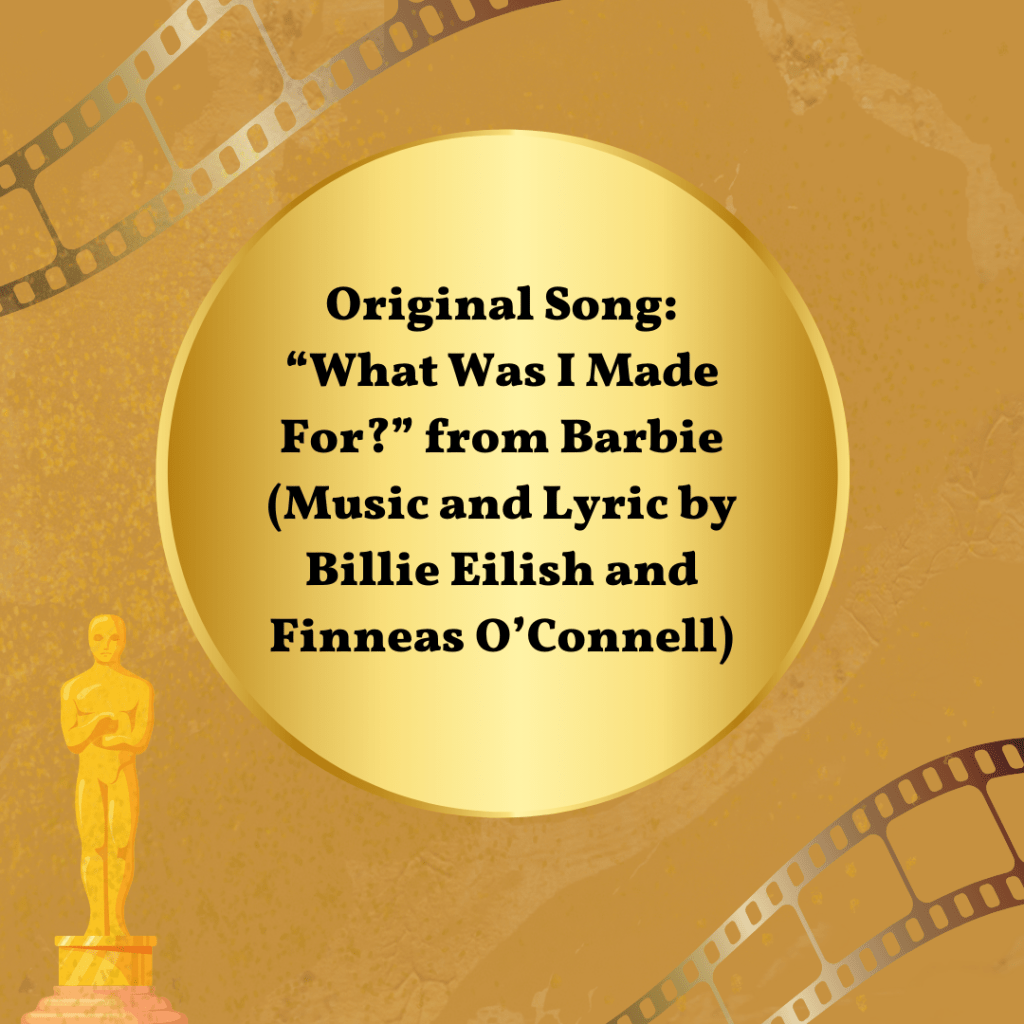
Billie supremacy. Give her a second one.

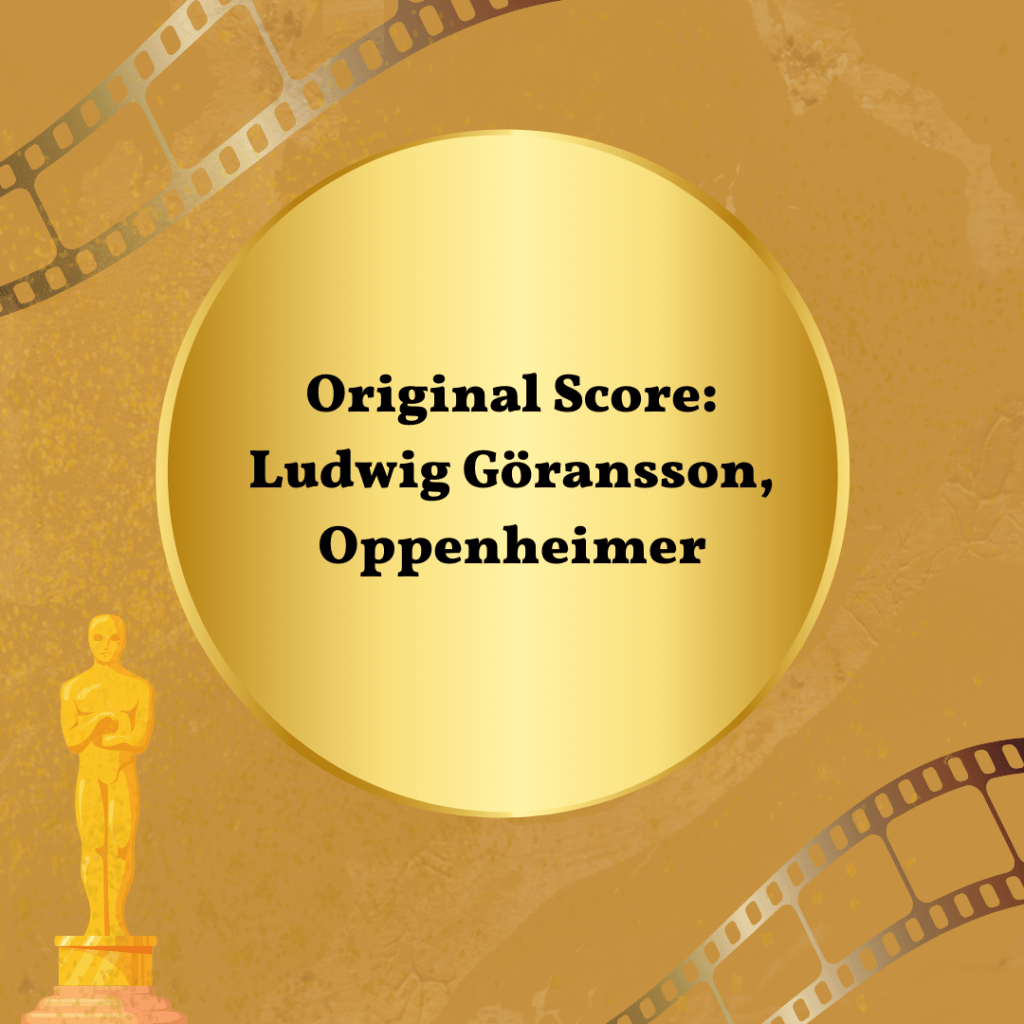
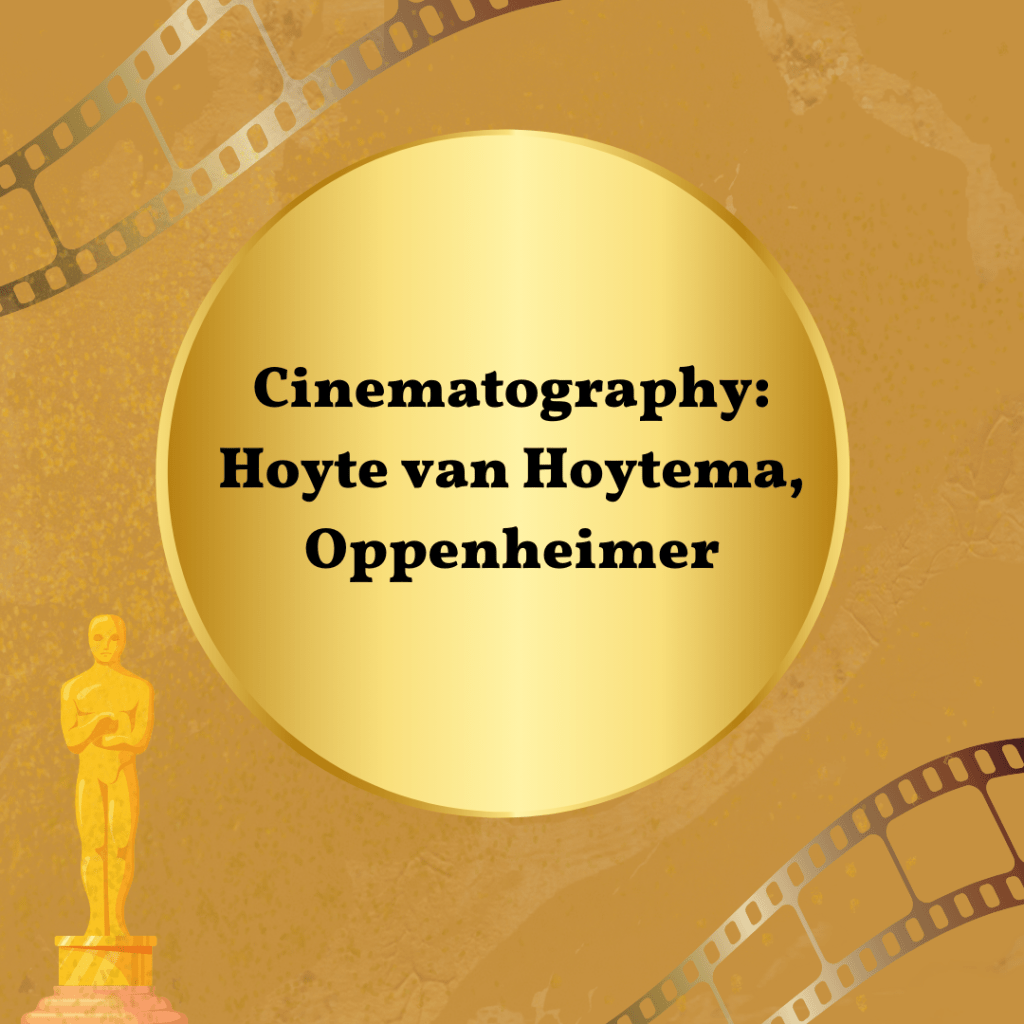
This one was tough for me to pick. Oppenheimer is a safe bet in almost any race tonight, but there was also some excellent cinematography work done in Maestro (God, that one shot where Felicia is watching Leonard from the edge of the stage and his literal shadow consumes her…pure cinematic storytelling genius), Poor Things (as much as it pains me), and Killers of the Flower Moon.

Poor Things would also be a good choice here, but I’d be remiss to vote against Barbie and Jacqueline Durran.

This is not a contest. The editing in Oppenheimer made a 3-hour film feel like half that length. Anxiety-inducing and utterly riveting.

They’ll without a doubt throw Maestro a bone here, as it’s unlikely to win in any other category. Which is really sad because it’s really a remarkable film, but the deck is stacked this year with a lot of great films and performances.

Poor Things is also a contender, but I can’t vote against Barbie here.

Oppenheimer is the favorite to win, but I’ll never not be haunted by the sound in The Zone of Interest.

I don’t know, it seemed like a safe bet.

Okay, so this is the only nominated film in this category I managed to watch in time, but I can’t imagine anything surpassing it. Truly magnificent.

Everything I’ve read points in the direction of Wes Anderson here, so fingers crossed.

I picked The ABCs of Book Banning but Nai Nai & Wài Pó literally brought tears to my eyes so I want it to win with all my heart.

Alright, y’all…just under an hour to go until showtime. See y’all on the flip side.
Thanks as always for being a faithful reader of The Voracious Bibliophile. If you like what you see, please like, comment, follow, and subscribe to my email list to get notified of new posts as soon as they drop. You can also email me at fred.slusher@thevoraciousbibliophile.com or catch me on Twitter, Instagram, TikTok, and Pinterest @voraciousbiblog. Keep reading the world, one page (or pixel) at a time.
My Oscar Nominations Predictions for the 96th Academy Awards

Life has, as usual, been quite a lot to deal with as of late. If you’ve kept up with this blog, you know that my posts have been infrequent. Going into this new year, it’s my intention to remedy that. Even if posts are shorter and/or less polished than I like, then so be it. Better something than nothing.

That said, you all know that Oscars season is my favorite season of the year, and there are several proverbial horses in the race that I’m betting on. I can’t remember feeling this strongly about an awards season since at least 2017. There are several important films I haven’t seen yet, but I intend on remedying that soon as well. The films I have seen have left indelible impressions on me, especially Oppenheimer, Barbie, and Killers of the Flower Moon. I will go ahead and throw the gauntlet down now: If Cillian Murphy and Lily Gladstone walk away without little golden men come Oscars night, I will personally riot.

Without further ado, here are my predictions for who and what will be nominated for some of the major Oscars races:

Best Picture

Anatomy of a Fall

Barbie

The Color Purple

The Holdovers

Killers of the Flower Moon

Maestro

Oppenheimer

Past Lives

Poor Things

Saltburn

Best Director

Greta Gerwig, Barbie

Yorgos Lanthimos, Poor Things

Christopher Nolan, Oppenheimer

Alexander Payne, The Holdovers

Martin Scorsese, Killers of the Flower Moon

Best Actor

Bradley Cooper, Maestro

Colman Domingo, Rustin

Paul Giamatti, The Holdovers

Barry Keoghan, Saltburn

Cillian Murphy, Oppenheimer

Best Actress

Fantasia Barrino, The Color Purple

Lily Gladstone, Killers of the Flower Moon

Carey Mulligan, Maestro

Margot Robbie, Barbie

Emma Stone, Poor Things

Best Supporting Actor

Willem Dafoe, Poor Things

Robert De Niro, Killers of the Flower Moon

Robert Downey Jr., Oppenheimer

Ryan Gosling, Barbie

Charles Melton, May December

Best Supporting Actress

Emily Blunt, Oppenheimer

Danielle Brooks, The Color Purple

Taraji P. Henson, The Color Purple

Rosamund Pike, Saltburn

Da’Vine Joy Randolph, The Holdovers

Nominations for the 96th annual Academy Awards will be announced on January 23rd at 8:30 a.m. ET/5:30 a.m. PT by Zazie Beetz and Jack Quaid live from the Samuel Goldwyn Theater in Los Angeles.

Thanks as always for being a faithful reader of The Voracious Bibliophile. If you like what you see, please like, comment, follow, and subscribe to my email list to get notified of new posts as soon as they drop. You can also email me at fred.slusher@thevoraciousbibliophile.com or catch me on Twitter, Instagram, TikTok, and Pinterest @voraciousbiblog. Keep reading the world, one page (or pixel) at a time.
Film Review: Elvis (2022); Directed by Baz Luhrmann

Elvis (2022); directed by Baz Luhrmann

Rating: ⭐️⭐️⭐️⭐️⭐️

Review

I don’t know what I really expected going into Elvis, the recent biopic about the world-famous and best-selling solo musician of all time, Elvis Presley. Knowing that Baz Luhrmann was the director was certainly a big draw. If nothing else, his films are stylistic dreamscapes: lush, ostentatious, and to be quite frank, extremely pretty. The Australian auteur is no stranger to the telling of epic stories, and I don’t think any other director could have tackled the story of Elvis Presley with more grace, grit, passion, or panache. His respect for his subject is evident in every frame, as is his love for glitter and bombast. The man loves his pyrotechnics, and any film about the King of Rock and Roll would be remiss without them.
If nothing else, his [Luhrmann’s] films are stylistic dreamscapes: lush, ostentatious, and to be quite frank, extremely pretty.

Austin Butler’s Elvis is no caricature. It would have been extremely easy to allow a performance such as this one to veer into mockumentary territory, but Butler has the acting chops to steer the ship in a much more honest and human direction. His Elvis is wholly real. His dreams and ambitions, choked and stymied by the pressures of fame and the realities of being the biggest star in the world, take a back burner to maintaining the image of Elvis, the moneymaker and icon as opposed to the man himself. He’s not only playing Elvis; for 2 hours and 39 minutes, he is Elvis.

His dreams and ambitions, choked and stymied by the pressures of fame and the realities of being the biggest star in the world, take a back burner to maintaining the image of Elvis, the moneymaker and icon as opposed to the man himself.

Butler’s universally-acclaimed performance already has many talking about him as the front-runner for next year’s Oscar for the Best Actor in a Leading Role. I agree. It goes without saying that he will be nominated, and unless I see another performance that is so riveting it takes my breath away, I will safely assume he’ll be walking away with a golden statue that night. The film also benefits from strong supporting performances from everyman Tom Hanks, who plays Presley’s slimy manager/promoter Colonel Tom Parker; and Olivia DeJonge, in her mainstream debut as Priscilla Presley. According to DeJonge in an interview she did with British Vogue, she found out she had landed the role some four months after her audition in a text message from Luhrmann’s team. Needless to say, I think we’ll be seeing much more from her.

Finally, I want to talk about the costumes in this film. With a style icon like Elvis Presley as the subject matter, any costume designer would have more than a full plate’s worth of work ahead of them in recreating the entertainer’s iconic looks. Catherine Martin, a four-time Oscar winner and the wife of Baz Luhrmann, has worked on a slew of his previous films: Romeo + Juliet (1996), Moulin Rouge! (2001), Australia (2008), and The Great Gatsby (2013). Her work in Elvis is nothing short of spectacular, somehow managing to take the familiar and making it fresh, vivacious, and exciting. I think she’ll be adding another Oscar to her shelf come next year.

Her [Martin’s] work in Elvis is nothing short of spectacular, somehow managing to take the familiar and making it fresh, vivacious, and exciting.

All in all, I really enjoyed Elvis. Was it a perfect film? No, but I don’t think there is such a thing as a perfect film, at least not when you’re recreating the lives of real people, some of whom are still living. I think it captured the spirit of Elvis and what he’s meant to American culture. I also think it managed to illuminate who he was as a person apart from the bright lights and big stages he graced while on Earth. The pain is there, sure, but so is the passion. The love and devotion, the heartache, the beauty and the fame. The flame snuffed out far too soon. That’s more than anyone could ask.

The pain is there, sure, but so is the passion. The love and devotion, the heartache, the beauty and the fame. The flame snuffed out far too soon. That’s more than anyone could ask.

Elvis was released in the United States on June 24th, 2022 by Warner Bros. Pictures and is now available to stream on HBO Max as well as other streaming and video on demand platforms.

Thanks as always for being a faithful reader of The Voracious Bibliophile. If you like what you see, please like, comment, follow, and subscribe to my email list to get notified of new posts as soon as they drop. You can also email me at fred.slusher@thevoraciousbibliophile.com or catch me on Twitter, Instagram, TikTok, and Pinterest @voraciousbiblog. Keep reading the world, one page (or pixel) at a time.

Film Review: The Lost City (2022); Directed by Adam Nee and Aaron Nee

The Lost City (2022); Directed by Adam Nee and Aaron Nee

Rating: ⭐️⭐️⭐️⭐️⭐️

Review

Warning: Please note that the following review may contain plot spoilers for The Lost City. If you’ve not yet seen the film and don’t want any aspects of the plot to be spoiled for you, stop reading now. Actually, bookmark the page, go watch the movie, and then come back and read my review. Enjoy!

I think I really needed something as purely fun, entertaining, and heartwarming as The Lost City. It was like a bag of Skittles in movie form: full of color, variety, and sweet but with just enough of a bite to keep you on the edge of your seat until the very end. Movies like this give you a guaranteed HEA (Happily Ever After for the uninitiated among you) so you don’t have to worry about having your heart ripped out of your chest while it’s still beating. To be honest, that’s usually my schtick—sad mumblecore indie movies with little-to-no plot, lots of philosophical rumination on the human condition, and confusing endings that may or may not be happy. Sometimes they don’t even really end at all, they just sort of fizzle out until the credits roll.

It [The Lost City] was like a bag of Skittles in movie form: full of color, variety, and sweet but with just enough of a bite to keep you on the edge of your seat until the very end.

The Lost City starts off with Loretta Sage (Sandra Bullock), romance author extraordinaire, receiving a call from her publisher (Da’Vine Joy Randolph) about her upcoming book tour for the latest book in her wildly successful series starring Dr. Angela Lovemore and Dash McMahon, Dr. Lovemore’s hunky, dyed-in-the-wool-of-Fabio love interest. As part of the book tour, Loretta has to appear with the cover model who has portrayed Dash on all of Loretta’s book covers in the series, Alan Caprison (Channing Tatum).

Production still of Sandra Bullock and Channing Tatum in The Lost City. © Kimberley French / Paramount Pictures

Loretta is not up for a book tour and hasn’t wanted anything to do with the limelight since her husband passed away. She’s much happier sinking into a bubble bath and sipping an iced Chardonnay, away from the rest of the world. Her publisher is insistent, however, and her reader-fans themselves are insatiable. During the first Q&A promoting the latest Lovemore adventure, it’s apparent that the fans are much more enamored with the cover model fantasy of Dash than they are with anything Loretta has to say about the book. Even Alan/Dash himself seems to have a hard time separating his actual self from the fictional representation made popular by Loretta’s books. He answers to Dash and poses for pictures with fans as Dash. Loretta sees him as nothing more than another obstacle keeping her from going back into seclusion and sinking into her tub.

Loretta sees him as nothing more than another obstacle keeping her from going back into seclusion and sinking into her tub.

When Loretta makes it out of the venue and has a car summoned to take her home, she’s instead picked up by the henchmen of Abigail Fairfax (Daniel Radcliffe), a madcap billionaire who’s discovered that a lot of the lore and events that take place in Loretta’s novels are based on research she conducted with her deceased archaeologist husband. He believes that a priceless treasure, the “Crown of Fire” mentioned in Loretta’s novels, is located in a lost city on an island in the Atlantic. He kindly asks Loretta to help him (by “help” of course he means he needs her to do all of the work) in deciphering the meaning of some words on a piece of old parchment. Fairfax believes that the message on the parchment will lead him to the treasure and bring him fame and accolades to surpass that of his favored brother. A tale as old as time really, with some minor adjustments. When she declines his request, he knocks her out with chloroform and takes her to the island against her will.

Fairfax believes that the message on the parchment will lead him to the treasure and bring him fame and accolades to surpass that of his favored brother.

Meanwhile, Alan/Dash (hereinafter referred to solely as Alan) witnessed Loretta being kidnapped. It is apparent to the viewer that he has somewhat of a crush on her and so intends to do anything and everything in his power to bring her back. After talking to Loretta’s publisher Beth and her social media manager Allison (Patti Harrison), Alan contacts Jack Trainer (Brad Pitt), a former Navy SEAL, for help. Jack is able to help them locate her whereabouts by using the “Find My” feature for Loretta’s smart watch on her phone, which Beth luckily has. Jack agrees to go to the island to rescue Loretta. In Alan’s mind, he believes this will be a cooperative venture in which Jack assists him in rescuing Loretta but he still gets to be the fabled knight in shining armor.

In Alan’s mind, he believes this will be a cooperative venture in which Jack assists him in rescuing Loretta but he still gets to be the fabled knight in shining armor.

When they meet up at the island, it becomes clear that Alan is more of an obstacle to retrieving Loretta than an assistant, but that doesn’t stop him from trying. Jack is able to breech the place Loretta is being held but is shot in the head before the trio can make it back to the airport and hightail it out of Dodge. Loretta escapes (still tied to a chair, I might add) with Alan and the parchment Fairfax wanted her to translate, and then off into the jungle they go.

Loretta escapes (still tied to a chair, I might add) with Alan and the parchment Fairfax wanted her to translate, and then off into the jungle they go.

You can only imagine the hijinks that ensue as Loretta and Alan are chased and tracked by Fairfax and his goons. The Lost City is both tenderhearted and hilarious in equal measure, and that of course can be chalked up in no small part to the incredible chemistry between Bullock and Tatum. My favorite part of the film has to be the scene where the pair wades through a river while trying to outrun Fairfax and Co. and once they’re out of it, Loretta notices that Alan is covered in leeches that she has to pick off from him, including several on his voluptuous buttocks. Yes, I said voluptuous. If you can look at Channing Tatum’s rear end and come up with a better descriptor, be my guest.

The Lost City is both tenderhearted and hilarious in equal measure, and that of course can be chalked up in no small part to the incredible chemistry between Bullock and Tatum.

As you know, I don’t really like to spoil endings here on The Voracious Bibliophile, but I do promise that this movie has a happy one. Loretta and Alan both learn that sometimes miracles (and love) come from unexpected places and that we don’t always know people as well as we think we do. People (and books, for that matter) are almost always more than they appear to be on the surface.

Loretta and Alan both learn that sometimes miracles (and love) come from unexpected places and that we don’t always know people as well as we think we do.

Before I leave you, I’d also like to note that I love the age-gap at play in this movie. Channing Tatum is Sandra Bullocks’ love interest in this movie and in real life he is fifteen years her junior. Way to go for making a big-budget Hollywood picture where the woman is significantly older than the man and it’s never even mentioned. How’s that for progress?

The Lost City was released theatrically in the United States on March 25th, 2022 and is available to stream on several different video on-demand platforms.

Thanks as always for being a faithful reader of The Voracious Bibliophile. If you like what you see, please like, comment, follow, and subscribe to my email list to get notified of new posts as soon as they drop. You can also email me at fred.slusher@thevoraciousbibliophile.com or catch me on Twitter, Instagram, TikTok, and Pinterest @voraciousbiblog. Keep reading the world, one page (or pixel) at a time.