Film Review: Being the Ricardos (2021); Directed by Aaron Sorkin

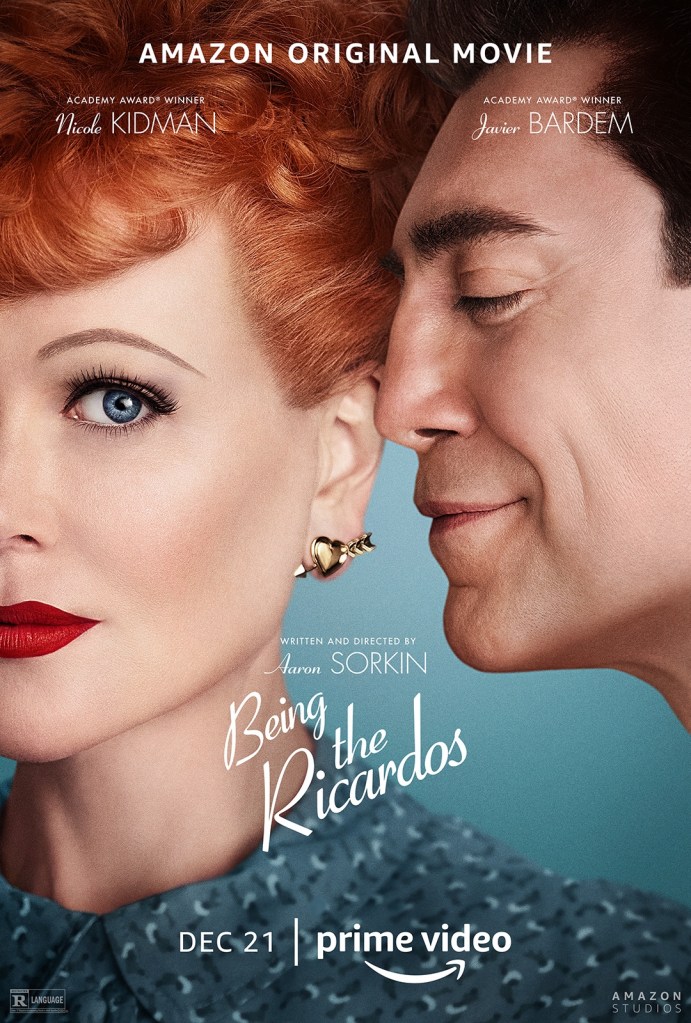
Promotional poster for Aaron Sorkin’s Being the Ricardos. Copyright 2021 Amazon Studios.

In Being the Ricardos, Kidman lends her talents for transformation to her portrayal of Lucille Ball, almost inarguably the greatest television comedienne to ever work in the medium.

If I hit him in the face until he is bleeding, does our insurance cover that?

Lucille Ball (Nicole Kidman), to her husband Desi Arnaz (Javier Bardem), about an irksome director

By now, American moviegoers are well-acquainted with Nicole Kidman and her talent for transformation. Woe unto the would-be cinephile who neglects to study her performance as Virginia Woolf in Stephen Daldry’s The Hours, for which she was awarded the 2002 Academy Award for Best Actress. In Being the Ricardos, Kidman lends her talents for transformation to her portrayal of Lucille Ball, almost inarguably the greatest television comedienne to ever work in the medium. You have to give props to pioneers Carol Burnett and Betty White as well, but I would argue that they were not possible without Lucille Ball paving the way for them with her grape-stained feet. Javier Bardem stars alongside Kidman as Desi Arnaz, Lucille’s real-life and television husband. Being the Ricardos also benefits from its stellar supporting cast, including Academy Award-winning actor J.K. Simmons as William Frawley, Tony Award-winning actress Nina Arianda as Vivian Vance, and Alia Shawkat as Madelyn Pugh. Linda Lavin portrays an older Pugh in mockumentary-style interviews interspersed throughout the film, and it should be said that any production benefits from Lavin’s inclusion.

Far from being an overarching biopic of Ball’s life or the marriage of Lucy and Desi, Being the Ricardos instead focuses in on one turbulent week during the filming of I Love Lucy.

Far from being an overarching biopic of Ball’s life or the marriage of Lucy and Desi, Being the Ricardos instead focuses in on one turbulent week during the filming of I Love Lucy. I have to mention here that parts of the film are blatantly ahistorical. Desi’s ousting as a philanderer, Lucy’s Communism debacle, and the announcement of her pregnancy did not all occur in the same week. However, I am willing to forgive Aaron Sorkin for condensing more drama into that fateful week than actually existed because we are talking about the cinema here and sometimes the cinema requires a little greasing of the wheels, so to speak.

What chafes me is that Lucy’s deeper involvement with Communism wasn’t explored. If they weren’t going to do it justice it should have been left out entirely. Along with that, certain episodes of I Love Lucy that were discussed in the film were misnumbered for no justifiable reason, allowing the pedantic among us (yours truly included) to itch with irritation.

I feel like the film would have been better served by focusing on one conflict rather than oscillating between numerous subplots that make the narrative shallow when the objective is depth.

I feel like the film would have been better served by focusing on one conflict rather than oscillating between numerous subplots that make the narrative shallow when the objective is depth. They could have eighty-sixed the Communism and the concomitant hokey convo between Desi, J. Edgar Hoover, and the live studio audience near the end of the film. Instead, to give the film its proper denouement, Lucy could have confronted Desi about his philandering right before the taping of the episode, leaving him shocked and shaken while Lucy triumphs once more as America’s most-beloved housewife.

The fact is, I hate to be so critical of a movie I enjoyed so much but I feel like a good movie was robbed of the opportunity to be great simply because Sorkin was trying to do too much at once. In my opinion, the best scenes in the film are the ones between Kidman and Arianda (Vivian Vance) and Kidman and Shawkat (Evelyn Pugh), respectively.

In my opinion, the best scenes in the film are the ones between Kidman and Arianda (Vivian Vance) and Kidman and Shawkat (Evelyn Pugh), respectively.

During the scenes where Lucy is engaged in conversation with the two women, the gender politics of the era (of any era, really) are thrown into sharp relief. Pugh’s presence as a woman in a writer’s room when so few women were given seats at the table provides fodder for excellent conversations about agency, representation, and the sharing of credit in a collective creative process. At the same time, Vance’s body issues and self-consciousness surrounding her weight illuminate the stark contrast in privilege that exists between Lucy, who is thin, trim, and wields enormous power on the set as the title character, and Vance, who is often written as the designated ugly fat friend married to a cantankerous old man when she is so much more than that.

Pugh’s presence as a woman in a writer’s room when so few women were given seats at the table provides fodder for excellent conversations about agency, representation, and the sharing of credit in a collective creative process…At the same time, Vance’s body issues and self-consciousness surrounding her weight illuminate the stark contrast in privilege that exists between Lucy, who is thin, trim, and wields enormous power on the set as the title character, and Vance, who is often written as the designated ugly fat friend married to a cantankerous old man when she is so much more than that.

J.K. Simmons is being lauded for his turn as William Frawley, and while his performance is more than solid, I really want to see the Academy give Nina Arianda some love too, if for nothing else but deftly navigating Vance’s struggles vis-à-vis the gendered body politics of both the entertainment industry and the country at-large during the 1950s. When you see Vance struggling, it reminds you that precious little progress has been made toward body positivity and acceptance of people of all sizes, especially for women and femme-presenting people.

All in all, despite its cluttered script and odd pacing, Being the Ricardos succeeds due to its incredible performances from not only Kidman, who is a revelation, but the rest of the powerhouse cast as well.

Being the Ricardos was released on December 10th, 2021 and is now available to stream on Amazon Prime Video.

Thanks as always for being a faithful reader of The Voracious Bibliophile. If you like what you see, please like, comment, follow, and subscribe to my email list to get notified of new posts as soon as they drop. You can also email me at fred.slusher@thevoraciousbibliophile.com or catch me on Twitter, Instagram, TikTok, and Pinterest @voraciousbiblog. Keep reading the world, one page (or pixel) at a time.
Film Review: Spencer (2021); Directed by Pablo Larraín

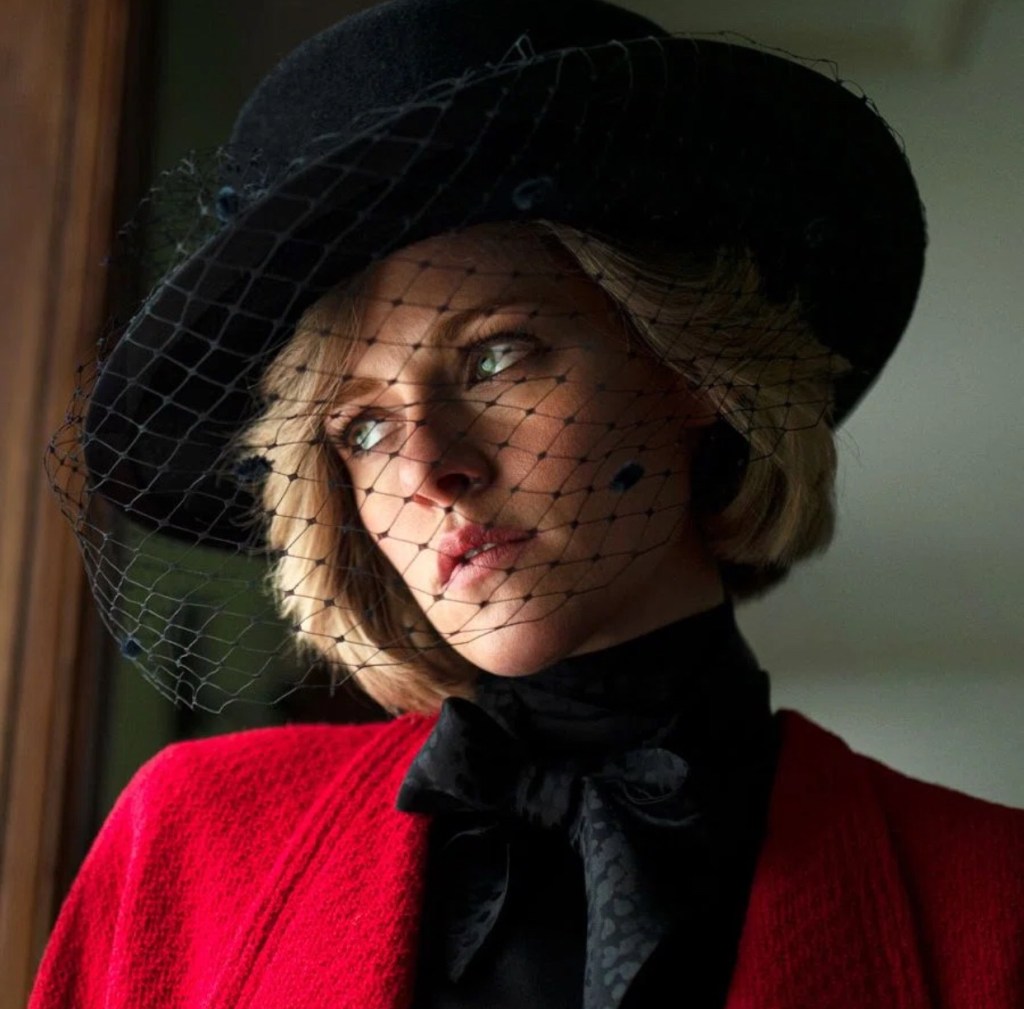
Kristen Stewart as Diana, Princess of Wales in Spencer (2021); directed by Pablo Larraín. Copyright 2021 Neon.

When we first meet Kristen Stewart’s Princess Diana, she is running late to spend the Christmas holiday with other members of the royal family at Sandringham House, one of Queen Elizabeth’s sprawling country estates. She is desperate and harried as she drives aimlessly through the countryside, her frustration mounting when she can’t seem to find her destination. Discordant notes and flourishes, which characterize the film’s score, heighten the moment’s anxiety, thereby drawing the viewer into concert with Diana’s inner turmoil.

Discordant notes and flourishes, which characterize the film’s score, heighten the moment’s anxiety, thereby drawing the viewer into concert with Diana’s inner turmoil.

It will not escape the notice of the attentive viewer that the story of Diana chosen to be told by the filmmakers is that of the events surrounding the royals’ Christmas holiday in 1991. Sandringham House lies in close proximity to Park House, the abandoned neighboring estate which was Diana’s childhood home. Periodic flashbacks return Diana to that idyllic past, one which remains for her devastatingly out of reach.
Stewart’s Diana is a luminous and haunted creature, much like she was in real life. She is surrounded by the ghosts of all the lives she is not allowed to live and constrained by a future she can predict with startling accuracy. Throughout the course of the film, she is made at every turn to feel like she’s dancing on the knife edge of sanity, but to the working class viewer Diana appears to be the only sane one in the group of royals. I mean, how hard should it be to get someone to turn the heat on? And is it really asking too much to not want to be weighed before entering the hallowed premises like some Holstein cow at a livestock auction?

She is surrounded by the ghosts of all the lives she is not allowed to live and constrained by a future she can predict with startling accuracy.

To a far lesser degree, I feel as if I understand Diana’s plight. I know what it’s like to have seemingly everyone in the world wanting something from you that you feel ill-equipped to give, wanting nothing more for yourself than to be left alone. During one scene from the film, Diana is secretly eating when one of the Sandringham House caretakers accosts her and tells her that because of the recent media attention she’s attracted, she would do well to close her blinds while she changes clothes. It’s a little early to speculate, but if (and this is a big if) Stewart wins the Oscar for Best Actress, it will be in large part because of her retort, which I’m including below:

Their lenses are more like microscopes, really. And I’m the insect in the dish. See, they’re pulling my wings and my legs off one by one — making notes on how I react.

At every turn she is weighed and found wanting until there is nothing left of her but the image and the simulacrum of the person she wants to be.

Princess Diana was one of the first women castigated on a truly global scale by the mass media. Every grain of her private life was excavated and inspected for its potential value. The scales at Sandringham House become a metaphor for Diana’s entire existence: At every turn she is weighed and found wanting until there is nothing left of her but the image and the simulacrum of the person she wants to be.

It [Spencer] is a snapshot, a few pages torn from the diary of a life. It’s a deeply-felt character study of a woman flirting with the darkness in her own mind.

Whatever you want to call Spencer, it is not a biopic. It is a snapshot, a few pages torn from the diary of a life. It’s a deeply-felt character study of a woman flirting with the darkness in her own mind. There are parts of the film I wouldn’t hesitate to call Hitchcockian, and it wouldn’t surprise me a bit if Stewart watched Kim Novak’s performance in Vertigo before filming a pivotal scene at the ruins of Park House.

All in all, Spencer is a delightfully stylish, if unsettling portrait of one of the most beloved, misunderstood, and mercurial figures of the twentieth century. Just give Stewart the freaking Oscar already.

Spencer was released on November 5th, 2021 and is now available to stream on YouTube, Google Play Movies & TV, Amazon Prime Video, Apple TV, and Vudu.

Thanks as always for being a faithful reader of The Voracious Bibliophile. If you like what you see, please like, comment, follow, and subscribe to my email list to get notified of new posts as soon as they drop. You can also email me at fred.slusher@thevoraciousbibliophile.com or catch me on Twitter, Instagram, TikTok, and Pinterest @voraciousbiblog. Keep reading the world, one page (or pixel) at a time.

Quote for the Day: November 28th, 2021

The Life of Emile Zola (1937); directed by William Dieterle

All my friends have told me that it was insane for a single person to oppose the immense machinery of the law, the glory of the army, and the power of the state. They warned me that my actions would be mercilessly crushed, that I would be destroyed. But what does it matter if an individual is shattered if only justice is resurrected?

The Life of Emile Zola (1937); directed by William Dieterle

Thanks as always for being a faithful reader of The Voracious Bibliophile. If you like what you see, please like, comment, follow, and subscribe to my email list to get notified of new posts as soon as they drop. You can also email me at fred.slusher@thevoraciousbibliophile.com or catch me on Twitter, Instagram, TikTok, and Pinterest @voraciousbiblog. Keep reading the world, one page (or pixel) at a time.
Quote for the Day: November 27th, 2021

The Life of Emile Zola (1937); directed by William Dieterle

Each serves his country in his own way – one with a sword, the other with a pen. Posterity will choose between your name and mine.

The Life of Emile Zola (1937); directed by William Dieterle

Thanks as always for being a faithful reader of The Voracious Bibliophile. If you like what you see, please like, comment, follow, and subscribe to my email list to get notified of new posts as soon as they drop. You can also email me at fred.slusher@thevoraciousbibliophile.com or catch me on Twitter, Instagram, TikTok, and Pinterest @voraciousbiblog. Keep reading the world, one page (or pixel) at a time.
Favorite Films 🎥: La Strada (1954)

One of these days, I’ll take a match and set fire to everything.

La Strada

Year: 1954

Director: Federico Fellini

Country: Italy

Cast: Giulietta Masina, Anthony Quinn, and Richard Basehart

Score: Nino Rota

Cinematography: Otello Martelli and Carlo Carlini

Streaming: Criterion Channel and HBO Max

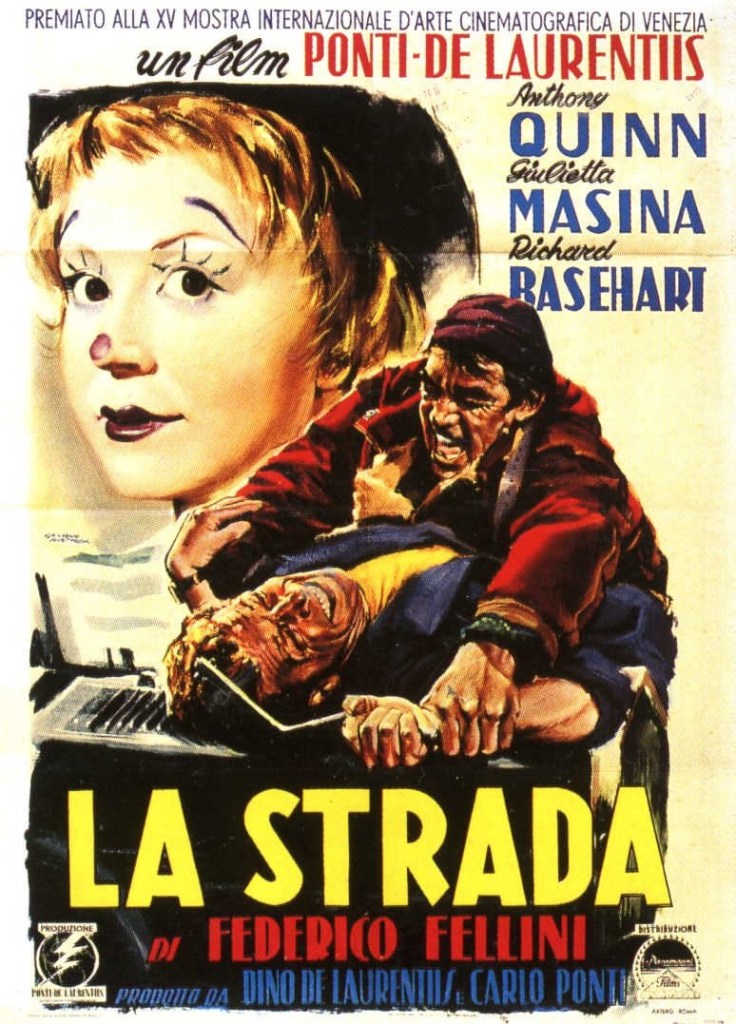
Why I Love It: Giulietta Masina, who stars as the simple-minded and tender-hearted Gelsomina, was one of those rare performers who make you forget that the worlds they create are fiction. At the beginning of the film, Gelsomina learns that her sister Rosa has died while traveling with Zampanò (Anthony Quinn), a coarse and somewhat thuggish sideshow performer. Because her mother has other young children to feed and they all appear to be on the brink of starvation, she sells Gelsomina to Zampanò for 10,000 lire, and so begins her journey on the road.

Giulietta Masina, who stars as the simple-minded and tender-hearted Gelsomina, was one of those rare performers who make you forget that the worlds they create are fiction.

La Strada is not your typical Bildungsroman. Gelsomina’s narrative arc is not centered around some destination or goal that she spends the film pursuing. Instead, we see her find tenderness and beauty everywhere, no matter how cruelly Zampanò treats her or how desolate the landscape becomes.

I won’t spoil anything by telling you how the film ends, but I will warn you to make sure you have plenty of tissues handy. La Strada is indeed a journey, and it reveals much about the human condition to those patient enough to sit with it.

La Strada is indeed a journey, and it reveals much about the human condition to those patient enough to sit with it.

Also noteworthy is the gorgeous score by Nino Rita. Usually, cinematography is something I like to discuss more so than scores, but I have a deep and abiding passion for Nino Rota. In addition to La Strada, Rota collaborated with Federico Fellini on several other films, as well as with Fellini’s rival, Luchino Visconti. Other works of his include scores for Franco Zeffirelli’s Romeo and Juliet (1967) and Francis Ford Coppola’s The Godfather (1972) and The Godfather Part II (1974), the latter of which garnered him an Academy Award for Best Original Dramatic Score (shared with Carmine Coppola).

Rating: ⭐️⭐️⭐️⭐️

Thanks as always for being a faithful reader of The Voracious Bibliophile. If you like what you see, please follow, like, comment, and subscribe to my email list to get notified of new posts as soon as they drop. You can also email me at thevoraciousbibliophile@yahoo.com or catch me on Twitter @voraciousbiblog. Keep reading the world, one page (or pixel) at a time.

Favorite Films 🎥: The Passion of Joan of Arc (1928)

Year: 1928

Director: Carl Theodor Dreyer

Country: France

Cast: Renée Jeanne Falconetti, Eugène Silvain, André Berley, and Maurice Schutz

Cinematography: Rudolph Maté

Streaming: HBO Max, Amazon Prime Video, and Apple TV

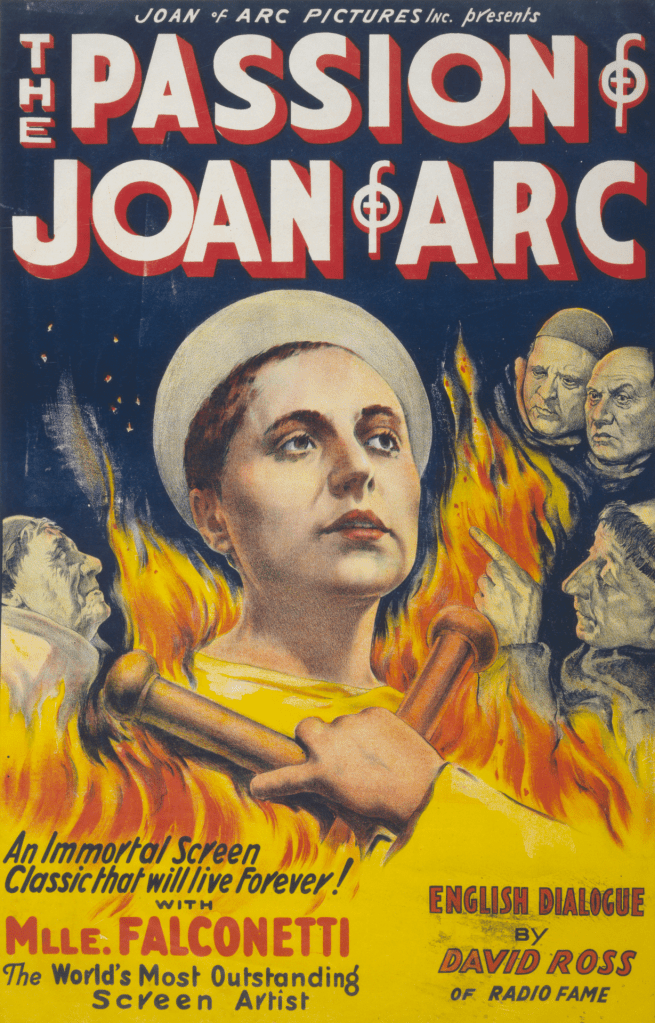
Why I Love It: Renée Jeanne Falconetti’s performance as Joan of Arc is one of the most moving in cinematic history. This silent masterpiece is full of startlingly intimate close-ups in which Falconetti’s face is the only thing in your field of vision. Because there’s no audible dialogue, she has to convey everything in her performance through movement, through her facial expressions—everything is an exercise in the theater of the body.

Because there’s no audible dialogue, she has to convey everything in her performance through movement, through her facial expressions—everything is an exercise in the theater of the body.

The Passion of Joan of Arc is the first silent film I can remember bringing me to tears. At times it is painful to watch, but films like this one are the reason cinema is its own art form. For the true cinephile, the Criterion Collection edition is a must. Along with numerous other extras which add depth and context to the viewing experience, Criterion’s home release comes with two different presentations of the film: the traditional 24 frames per second and another at 20 frames per second.

Also noteworthy is the expressionistic lighting used by cinematographer Rudolph Maté, who later immigrated to the United States and became a director and producer as well. His cinematography credits during his career in Hollywood include such films as Dodsworth (1936), Stella Dallas (1937), Love Affair (1939), and Foreign Correspondent (1940), among many others. You can clearly see the influence of his earlier work in European Expressionism in his later work in American film noir.

You can clearly see the influence of his [Maté] earlier work in European Expressionism in his later work in American film noir.

How does one begin the process of classifying superlatives in art? Once you start drawing lines of demarcation and establishing hierarchies, it is inevitable that some works just as worthy as those classified as “The Greatest” will be pushed to the margins, relegated to the corners—all but forgotten. But then again, if everything is great then nothing is great.

Once you start drawing lines of demarcation and establishing hierarchies, it is inevitable that some works just as worthy as those classified as “The Greatest” will be pushed to the margins, relegated to the corners—all but forgotten.

So we have experts. We have aestheticians. We have people who spend their entire lives studying one particular subject so we can go to them when we need a professional’s opinion. As in science, so in art. We look to the learned, the credentialed, and the eloquent. We look outside our own limited experiences and perceptions for something that rings true.

We look to the learned, the credentialed, and the eloquent. We look outside our own limited experiences and perceptions for something that rings true.

Why did I say all that? So I could then say this: The Passion of Joan of Arc is one of the greatest films of all time. So say the film scholars, the cineastes, the commentators, and the iconoclasts. And so say I. Don’t trust me. See it for yourself.

I hope you’ve enjoyed the first post in my new series. Check back soon for more of my Favorite Films.

Further Reading

Out of Darkness: The Influence of German Expressionism by Matt Millikan

Suffering the Inscrutable: The Ethics of the Face in Dreyer’s ‘The Passion of Joan of Arc’ by Chadwick Jenkins

Thanks as always for being a faithful reader of The Voracious Bibliophile. If you like what you see, please follow, like, comment, and subscribe to my email list to get notified of new posts as soon as they drop. You can also email me at thevoraciousbibliophile@yahoo.com or catch me on Twitter @voraciousbiblog. Keep reading the world, one page (or pixel) at a time.

New Blog Series: Favorite Films 🎥

I’m starting a new blog series here on The Voracious Bibliophile that I’m calling Favorite Films. With each post, I’ll highlight a film that I love. These posts won’t be long-form reviews; instead, they’ll include just enough information to entice you to check out the films yourself. Where applicable, I’ll try to add streaming information as well.

Thanks as always for being a faithful reader of The Voracious Bibliophile. If you like what you see, please follow, like, comment, and subscribe to my email list to get notified of new posts as soon as they drop. You can also email me at thevoraciousbibliophile@yahoo.com or catch me on Twitter @voraciousbiblog. Keep reading the world, one page (or pixel) at a time.

Film Review: J’ai tué ma mère (I Killed My Mother) (2009)

Xavier Dolan is, in my opinion, one of the greatest practitioners of film craft of our time. At only 32 years of age, the Québécois auteur has already directed eight feature films, all the while snatching up awards and garnering critical acclaim. While he has been branded an enfant terrible by some, I would not hesitate to call him an iconoclast. It takes a lot of chutzpah to rip out your heart on screen and offer it to your audience, still beating.

It takes a lot of chutzpah to rip out your heart on screen and offer it to your audience, still beating.

In I Killed My Mother, Dolan has provided us with a semi-autobiographical, near-perfect evocation of the vagaries of queer adolescence. It’s all there: angst, rage, confusion, and the tentative eroticism that always accompanies waking up to yourself for the first time.

It’s all there: angst, rage, confusion, and the tentative eroticism that always accompanies waking up to yourself for the first time.

Dolan’s Hubert and Anne Dorval’s Chantale (Hubert’s mother) are at war. Hubert is figuring out who he is (and wants to be) at the same time that Chantale has settled, confused by the man her son is becoming and nostalgic for the easy relationship they once shared.

In one of the several interspersed black-and-white confessionals appearing throughout the film, Hubert laments the state of his relationship with his mother, saying, “We should be able to kill ourselves. In our heads. And then be reborn. To be able to talk, look at each other, be together. As if we never met before.” For him, it’s impossible to move forward, to begin anew, with all the bad blood that exists between him and his mother. To him, she’s gauche, tawdry, and overbearing—more a magpie than a mother. To her, he’s selfish, immature, and pugnacious—an unruly child screaming in the night.

We should be able to kill ourselves. In our heads. And then be reborn. To be able to talk, look at each other, be together. As if we never met before.

Hubert

We find out that Hubert has been in a relationship with Antonin, a friend of his from school, for a couple of months. Antonin’s mother is aware of their relationship and has no qualms about it, making Antonin’s home a place of refuge for Hubert and further alienating him from his mother.

It is not insignificant to any observant viewer that in Antonin’s bedroom hangs a poster of James Dean, from the iconic Torn Sweater series photographed by Roy Schatt for LIFE magazine; in Hubert’s bedroom hangs a poster of River Phoenix, whom every gay male teenager has been in love with since they first watched Stand by Me and (later, of course) My Own Private Idaho. It’s the perfect mise en scène: disaffected queer youth playing out their own dramas onscreen while the (gone too soon) queer youth of years past look on.

It’s the perfect mise en scène: disaffected queer youth playing out their own dramas onscreen while the (gone too soon) queer youth of years past look on.

It’s frenetic and tender all at once: a supernova. There comes a point in the film where you fear Hubert may actually kill his mother, the vitriol between them is so strong. When Chantale goes to a tanning salon with a friend partway through the film, she runs into Antonin’s mother there. Antonin’s mother, either not knowing Hubert’s closeted or not understanding the need for a “closet” in the first place, casually mentions that Antonin and Hubert are celebrating two months together. That word, together, shatters whatever illusions Chantale may have still been harboring.

While Chantale is obviously not virulently homophobic, she is still altogether unequipped to provide the kind of support Hubert needs at this point in his life. One hopes that this revelation will cause Chantale to change course, be the first one to offer the olive branch, beginning the catharsis that will ultimately lead to healing and reunification. Instead, she digs in. She involves Hubert’s heretofore absent father in plotting to send him to boarding school.

Hubert becomes completely unhinged after learning of his parents’ plot to shuffle him away to boarding school. When Chantale drops him off at the bus that will take him there, he asks his mother, “What would you do if I died today?” He’s already walking away when she replies, “I’d die tomorrow”. Anne Dorval utters this line barely above a whisper, but it is arguably the most emotionally resonant moment in the entire film.

Dolan’s artistic thumbprint is the ache that accompanies everything we can’t unsay, even though we become more of ourselves in the saying. “The only thing to kill in this lifetime is the enemy within, the hard core double. Dominating him is an art. How good an artist are we?” How good indeed.

Rating: ⭐️⭐️⭐️⭐️

Thanks as always for being a faithful reader of The Voracious Bibliophile. If you like what you see, please follow, like, comment, and subscribe to my email list to get notified of new posts as soon as they drop. You can also email me at thevoraciousbibliophile@yahoo.com or catch me on Twitter @voraciousbiblog. Keep reading the world, one page (or pixel) at a time.

Film Review: French Exit (2020)

I didn’t know I needed a film starring both Michelle Pfeiffer and Lucas Hedges. That pairing alone was worth quadruple the amount I paid to watch it. I’ve loved Michelle Pfeiffer ever since I first saw her as Selina Kyle / Catwoman in Tim Burton’s Batman Returns (1992) and I’ve been *in love* with Lucas Hedges since his breakthrough performance in Kenneth Lonergan’s Manchester by the Sea (2016). That love was further cemented by seeing him in films like Lady Bird (2017), Three Billboards Outside Ebbing, Missouri (2017), and Boy Erased (2018). In this house, we love boys who can pull off pathos.

In this house, we love boys who can pull off pathos.

French Exit (2020) is based on the novel of the same name written by Patrick deWitt and published in 2018. Let me just say that for everything this film lacks in narrative clarity and overall believability, it more than makes up for with its impeccable acting, effervescent cinematography, and stylistic panache.

Let me just say that for everything this film lacks in narrative clarity and overall believability, it more than makes up for with its impeccable acting, effervescent cinematography, and stylistic panache.

Michelle Pfeiffer stars as Frances Price, a Manhattan socialite who learns that her well of money has run dry. When asked by her financial advisor what she had planned to do once the money ran out (we learn that this had been coming for quite some time), she replies, “My plan was to die before the money ran out.”

A childhood friend of Frances’s offers her and her adult son Malcolm (Lucas Hedges) the use of her unoccupied Paris apartment for however long they may need it, ostensibly with no strings attached. Ah, to be a member of the haute bourgeoisie, where even in the midst of financial ruin one can scrounge up a chic Paris apartment to exile in.

Ah, to be a member of the haute bourgeoisie, where even in the midst of financial ruin one can scrounge up a chic Paris apartment to exile in.

Watching this film, one gets the feeling that Malcolm thinks he’s his mother’s antithesis, but they are alike in so many ways. For one, they are both codependent to an almost Hitchcockian degree and totally inept at navigating life outside their relationship with each other. Malcolm is adrift in a way only an over-educated trust fund kid can be. Commitment-shy and solipsistic, he frustrates his girlfriend, who unlike him has had to live in the real world while he spent his formative years glancing down on commoners from the ivory tower he shared with his mother. When he informs her that he is moving to Paris, most likely indefinitely, she breaks things off and their relationship ends (here, at least) on a sour note.

For one, they are both codependent to an almost Hitchcockian degree and totally inept at navigating life outside their relationship with each other.

Frances illegally sells what she can of her possessions “under the table”, creating a small nest egg that can sustain them until such time as they gain their bearings. Michelle Pfeiffer was made for this role. She carries herself in a way only someone accustomed to both money and high-class behavior can.

Their time on the boat to Paris and in the City of Love itself is spent collecting a coterie of companions just as neurotic and maladjusted as themselves, which muddles the narrative just as much as it imbues it with charm.

My overall take? I loved it. It’s not going to win any Oscars, not by a long shot, but for indie-loving arthouse-blowhards like yours truly, it hits the spot.

P.S. The family cat is also Malcolm’s dad. 😮👻🐱

Thanks as always for being a faithful reader of The Voracious Bibliophile. If you like what you see, please follow, like, comment, and subscribe to my email list to get notified of new posts as soon as they drop. You can also email me at thevoraciousbibliophile@yahoo.com or catch me on Twitter @voraciousbiblog. Keep reading the world, one page (or pixel) at a time.