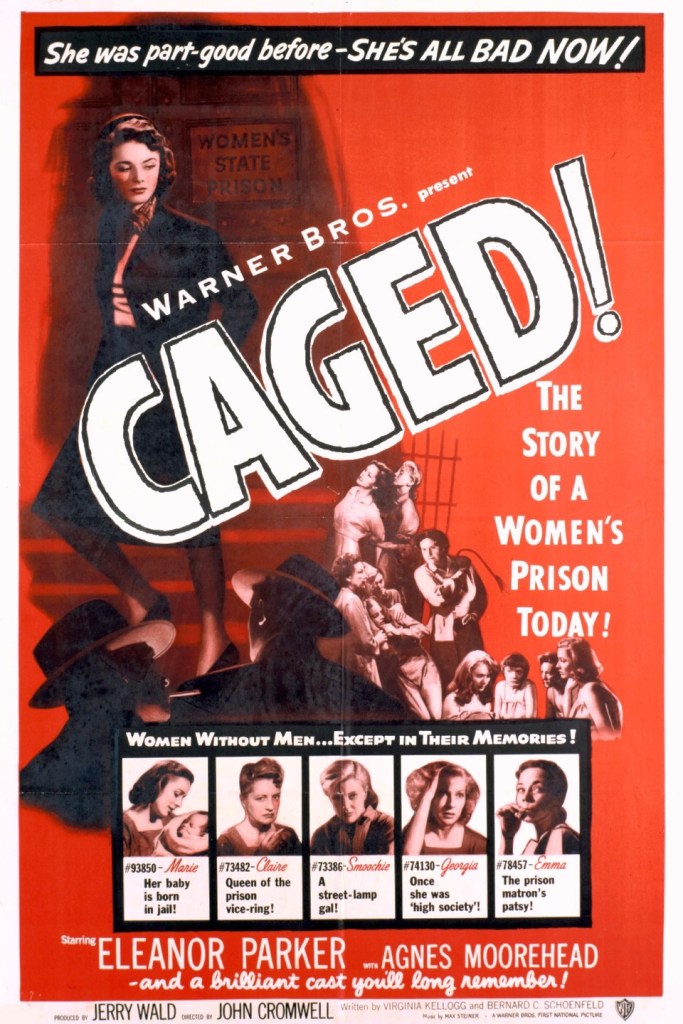
Film poster for Caged (1950); directed by John Cromwell.
Review
This is your warning that there are spoilers ahead. If you don’t want any of the plot of Caged spoiled, stop reading now until you’ve seen the film.
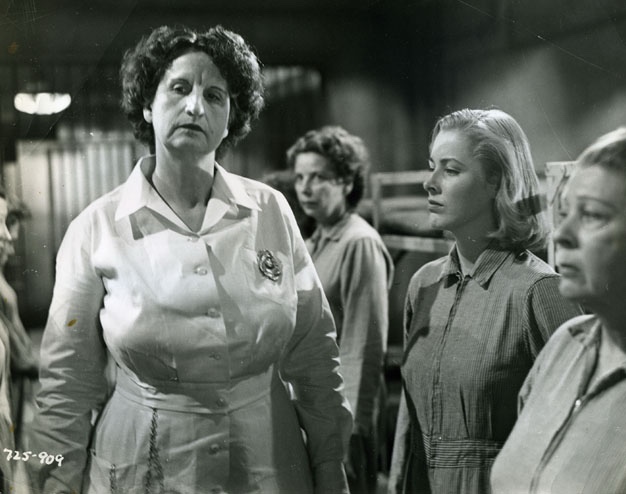
What a delicious, delightful treat this movie is. Hope Emerson is the ultimate screen baddie, and this is the meatiest role she ever got as prison matron Evelyn Harper. Emerson’s Evelyn is queer-coded to the nines, and there’s very little subtext. We love Evil Gays.
We love Evil Gays.
Hope Emerson (farthest left) as women’s prison matron Evelyn Harper. Image subject to copyright.
Eleanor Parker makes the biggest transformation of any of the characters in the film, going from a doe-eyed ingenue to a hardened criminal after losing her baby to adoption and finding out that the system is designed to keep her incarcerated, not help her transition to life on the outside.
Agnes Moorehead plays a rare sympathetic role as prison superintendent Ruth Benton, a no-nonsense but very caring woman who works overtime in the cruel and corrupt system to make her prison a place for rehabilitation and healing, not punishment and brutality.
Last but certainly not least, Betty Garde’s character Kitty Stark reminds one of Kate Mulgrew’s Red in Netflix’s Orange Is the New Black, so much so that one wonders if Mulgrew took inspiration from Garde. Garde as Kitty Stark is sardonic and hardened, but not unfeeling. She’s someone who’s had to play the cards she’s dealt, and she makes no apology for it. Seeing Evelyn break her is heartbreaking. But she gets what’s coming to her, thank God!
Cagedis streaming now on Watch TCM and was recently featured on Eddie Muller’s Noir Alley programming block on the channel.
Thanks as always for being a faithful reader of The Voracious Cinephile. If you like what you see, please like, comment, follow, and subscribe to my email list to get notified of new posts as soon as they drop. Keep watching the world, one frame at a time.
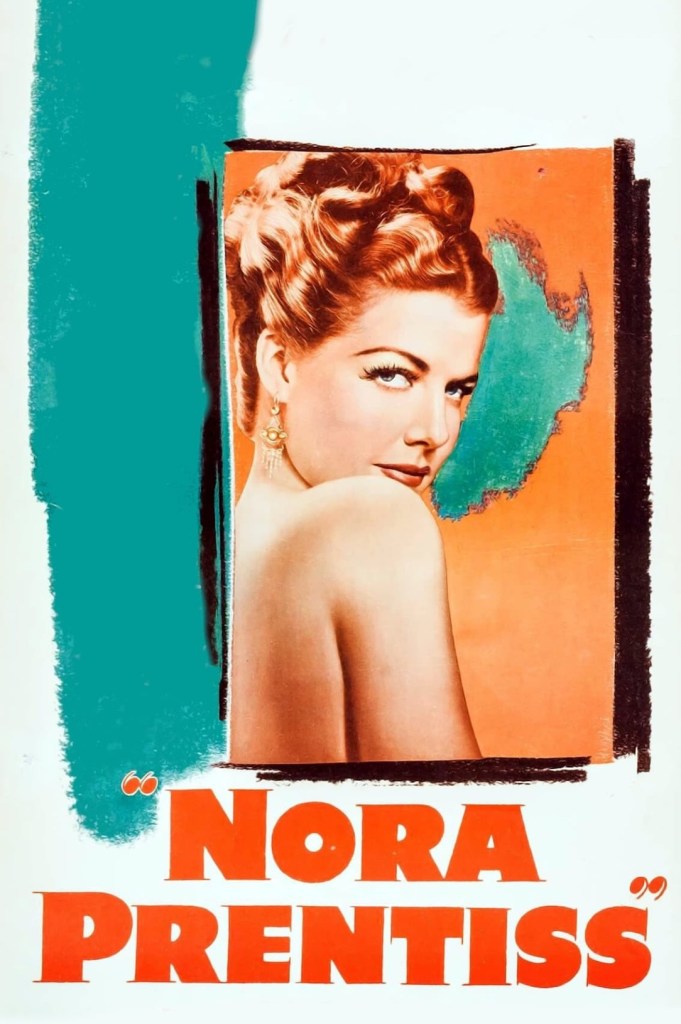
Film poster for Nora Prentiss(1947); directed by Vincent Sherman.
Rarely am I gobsmacked by a film, but Nora Prentissfully smacked my gob. The premise, if not executed as well as it was, reads a trifle ridiculous. A man convicted of his own murder — preposterous, right? Not if all the stars in the universe align at precisely the same time to screw you.
This film wouldn’t have worked if the femme fatale had been a slinky seductress, or the male lead an irredeemable womanizer. No, this is simply a tale of the wrong people falling hopelessly in love with one another when circumstances prevent them from being able to honor that love in a way that doesn’t hurt them both, with other people’s lives as collateral damage.
James Wong Howe’s cinematography and Franz Waxman’s score are both perfect complements to this dark tale of what happens when good people give in to their worst impulses and get in too deep too quickly to escape the pull of oblivion.
Thanks as always for being a faithful reader of The Voracious Cinephile. If you like what you see, please like, comment, follow, and subscribe to my email list to get notified of new posts as soon as they drop. Keep watching the world, one frame at a time.
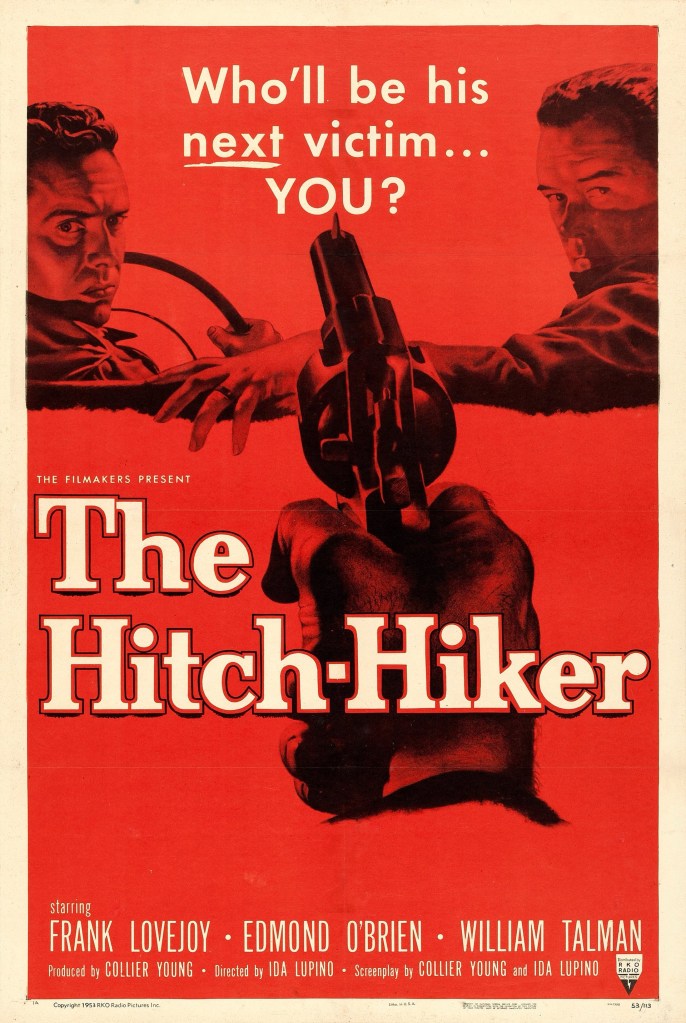
Film poster for The Hitch-Hiker (1953); directed by Ida Lupino.
In his intro or outro to this film (I can’t remember which now) on Noir Alley, Eddie Muller made the comment that it’s been said that only a woman could make a film like this at the time. I think that’s true because I think that women, despite being on the outside of the male psyche, are still the main recipient of the consequences of the decisions made by men.
Only a woman could capture the fragility behind the brand of toxic masculinity displayed by men like Emmett Myers (William Talman). It’s a masculinity that is by its very nature deeply insecure, pathologically violent, and needing constant reaffirmation of its potency. That’s why men like Myers feel the need to dominate women and (lesser, beta) men, to bring them under subjugation. It’s why rape culture exists. It’s why they ascribe characteristics of femininity to men who they read as queer or who they perceive aren’t as strong or masculine as they are. It’s a masculinity that cannot be opposed without the threat of violence, because it does not recognize consent, autonomy, or personal sovereignty, only brute force.
I would argue that this kind of masculinity is an epidemic, as serious and as deadly as any communicable disease or illness. When men like this are imbued with power of any kind, that power is abused to assuage their egos, to confirm to them their superior status. Give a man like that the nuclear codes and access to an arsenal of weapons the likes of which the world has never seen and the world holds it breath.
Based on the real-life case of Billy Cook, a hitchhiking serial killer who murdered six people, including a vacationing family of five between 1950-1951, The Hitch-Hiker follows two friends, Roy Collins (Edmond O’Brien) and Gilbert Bowen (Frank Lovejoy), who pick up a hitchhiker named Emmett Myers (William Talman) who’s recently escaped from prison. What started for them as a nice fishing trip becomes a nightmare experience that you think will never happen to you until it does.
Myers (Talman) wastes no time in pulling his gun on them and calling the shots. They drive him through the Baja California desert to Santa Rosalía, Baja California Sur, where his aim is to evade law enforcement by ferrying across the Gulf of California to Guaymas. He plays sick and sadistic mind games with them, one time making one of them shoot a tin can out of the other’s hand for sport. He takes every opportunity that presents itself to emasculate them and establish his own dominance.
This film had a profound effect on me. Props to Ida Lupino for being able to identify and articulate something that politicians and policymakers still struggle with. Edmond O’Brien, Frank Lovejoy, and William Talman all give career-defining performances here. The cinematography by Nicholas Musuraca is especially good, also among his best. The desert scenes were the best in the film. I thought I recognized the location, and Eddie Muller mentioned that it was used in other films, including High Sierra with Humphrey Bogart and Ida Lupino (cool, huh?).
The Hitch-Hiker was selected for preservation in 1998 by the United States National Film Registry. It has only grown in estimation since its release and remains an exemplar of film noir. Ida Lupino blew open the door for women filmmakers and gave them a blueprint to follow in a profession that is still (in 2026) gate-kept and dominated by men.
Thanks as always for being a faithful reader of The Voracious Cinephile. If you like what you see, please like, comment, follow, and subscribe to my email list to get notified of new posts as soon as they drop. Keep watching the world, one frame at a time.
Film poster for Black Tuesday (1954); directed by Hugo Fregonese.
Black Tuesday was Eddie Muller’s Noir Alley pick for October 18th, and I just got around to watching it. Edward G. Robinson is one of my favorite actors of all time. His ability to so completely inhabit the characters he plays while also remaining so indistinguishably himself is one of the reasons I love him so much.
Another reason is that in a career with such an expansive filmography, there’s more than a few hidden gems to be discovered. I would argue that it’s the performances of his that are less talked about that are among his best. I’m talking of course about the little-seen Two Seconds, a pre-Code crime drama from 1932 directed by Mervyn LeRoy, and The Red House, Delmer Daves’s exercise in abject terror from 1947. In both of these, we see Robinson embodying characters who, throughout the course of the film, unravel to reveal their baser selves. It is within this space of raw emotion and a naked psyche that Robinson really shines, and that can certainly be said for Black Tuesday.
Directed by Hugo Fregonese and released in 1954, Black Tuesday tells the story of Vincent Canelli (Robinson), a death-row inmate who escapes prison on the night of his execution. Note that he also played a death-row inmate in Two Seconds. As far as prison breaks go, Canelli masterminds the operation with no small amount of ingenuity. For the sake of not spoiling this aspect of the film, I’ll not say anything, but suffice it to say that I was impressed. If you’re going to be a crook, be a successful one.
Robinson’s Canelli is ruthless, cold-blooded, and misanthropic. His only vestige of humanity is seen in his love for his girlfriend, Hatti (Jean Parker), who helps him execute the details of the break. He has little regard for the feelings of others, and the end always justifies the means. He is violent for the sheer joy of it, and perhaps joy doesn’t even compute into the equation. He is violent simply because he can be, because he’s so full of hate that he can’t help but unleash it on whoever is unlucky enough to get in his way.
The supporting performances in this film really help bring it over the top, especially those of the aforementioned Jean Parker and Milburn Stone of Gunsmoke fame, who plays Father Slocum, a Catholic priest.
Thanks as always for being a faithful reader of The VoraciousCinephile. If you like what you see, please like, comment, follow, and subscribe to my email list to get notified of new posts as soon as they drop. Keep watching the world, one frame at a time.
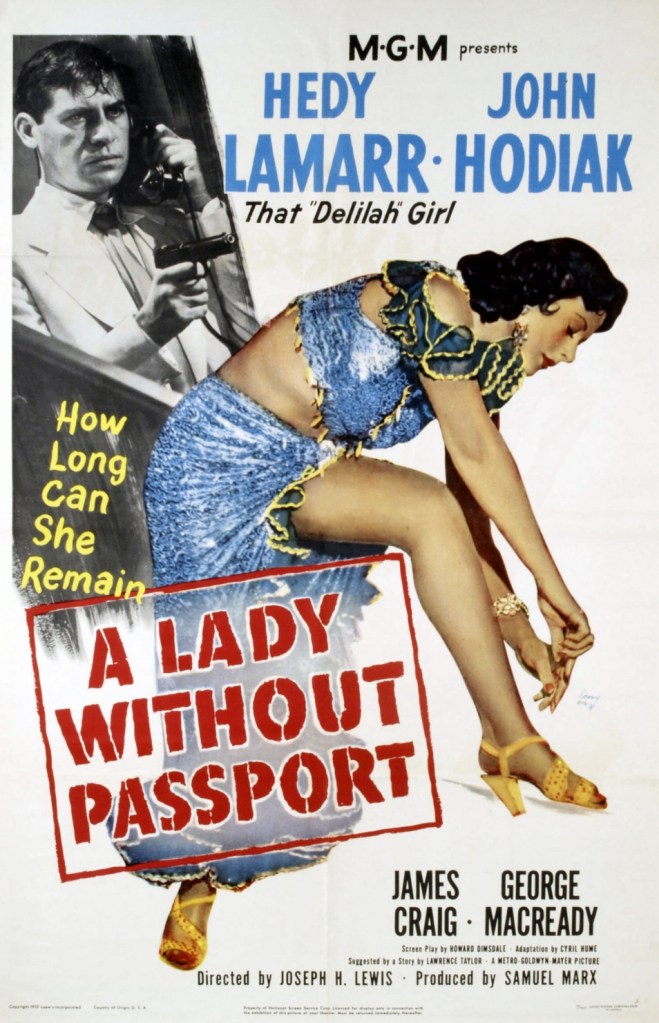
A Lady Without Passportwas the Noir Alley selection on TCM for September 14th. For those of you who are unfamiliar with Noir Alley, it is my favorite programming block on TCM (Turner Classic Movies) and it showcases films in the film noir genre. While I’ll fallen off from time to time due to work and school commitments, I’ve been a devout viewer and fan from the beginning. Eddie Muller, the host, is one of my favorite people. His encyclopedic knowledge of film noir as well as his verbose intros and outros, make him an excellent host.
I can’t exactly blame him [Lewis] for bilking the King Brothers for a chance at making a film with the bright lights, big-budget “Tiffany” studio MGM, but there’s something to be said about less money, more creative control, and the way tighter purse strings spur innovation.
One of the best things about Eddie is his straight-shooter, no-nonsense analyses. When something doesn’t quite land or is, to be frank, hot garbage with interesting window dressing, he says so. I’ve taken a few days to digest A Lady Without Passport and to be honest, it’s shocking to the system that this is the film Joseph H. Lewis made directly after Gun Crazy. I can’t exactly blame him for bilking the King Brothers for a chance at making a film with the bright lights, big-budget “Tiffany” studio MGM, but there’s something to be said about less money, more creative control, and the way tighter purse strings spur innovation.
Mostly, I’d say that I concur with what The New York Times had to say about the film*:
Romance is slightly more important than reason in this number and while the scenery, meaning Havana and Florida, is authentic and picturesque, the goings-on are as intriguing as those in any garden variety melodrama. The ring of connivers who are dedicated to smuggling aliens into this country get their come-uppance but it hardly seems worth all the effort.
I’m not disappointed I watched the movie, not least of all because John Hodiak was exceedingly handsome in the picture, but I don’t really think it bears repeat viewing either.
I’m not disappointed I watched the movie, not least of all because John Hodiak was exceedingly handsome in the picture, but I don’t really think it bears repeat viewing either. If you’re looking for a good John H. Lewis film to watch, Gun Crazyis a much better choice (and it does bear repeat viewing).
*The quote was taken froma review in The New York Times titled “Hedy Lamarr as ‘Lady Without Passport’” (linked here).
Thanks as always for being a faithful reader of The Voracious Bibliophile. If you like what you see, please like, comment, follow, and subscribe to my email list to get notified of new posts as soon as they drop. You can also email me at fred.slusher@thevoraciousbibliophile.com or catch me on Twitter, Instagram, TikTok, and Pinterest @voraciousbiblog. Keep reading the world, one page (or pixel) at a time.
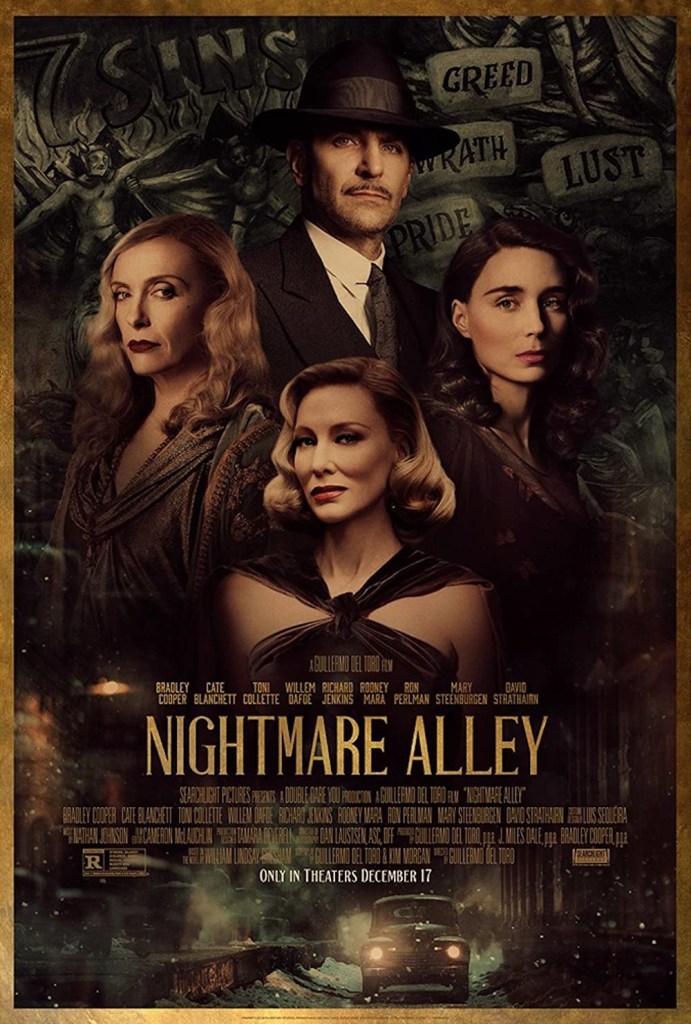
Nightmare Alley (2021); directed by Guillermo del Toro
Warning: This review contains plot spoilers. If you have not already seen Nightmare Alley and don’t like spoilers, please don’t read any further (but feel free to bookmark this page to read later).
I think it’s safe to say that 2021 was most definitely The Year of the Remake. Out of the ten films nominated for the Academy Award for Best Picture this year, four of them fall squarely into that category: CODA, Dune, Nightmare Alley, and West Side Story. Nightmare Alley was previously adapted in 1947 from the 1946 novel of the same name by William Lindsay Gresham. The original adaptation, while not a financial success upon its initial release, has since grown in estimation and is now considered a classic of the film noir genre.
For readers unfamiliar with film noir, the term generally applies to crime films made during the 1940s and 1950s. These mostly black-and-white films were usually made on shoestring budgets with short production schedules to turn a quick profit for cash-strapped studios. Most of the time, they weren’t meant to be dazzling works of art. They were created as a form of popular entertainment for the masses of working-class moviegoers who were desperate to see people who looked and lived like them on the big screen.
These mostly black-and-white films were usually made on shoestring budgets with short production schedules to turn a quick profit for cash-strapped studios.
Film noirs tell stories of men and women who, for various reasons, find themselves in dire straits. These pictures are populated by rough characters from the wrong side of the tracks, or simply good people who’ve made the wrong decisions. Sometimes, they’re just people caught in the wrong place at the wrong time clutching a smoking gun. More often than not, their stories end unhappily.
Dripping with sin and vice, these films exposed the dark underbelly of post-World War II America and the glaring hypocrisy of its storied institutions. One thing that made them so brilliant is that they exposed the lies masquerading as truth on the sunnier sides of the street. They showed that life, at least real life, was lived in the shadows. And every shadow was a man with a gun.
Dripping with sin and vice, these films exposed the dark underbelly of post-World War II America and the glaring hypocrisy of its storied institutions.
Personally, I owe most of my noir education to TCM’s programming block Noir Alley, which is hosted by Eddie Muller (aka “The Czar of Noir”) and first launched in March 2017. Through Eddie’s intros and outros, I’ve learned that any good noir has several elements: a hero (or antihero) trying to outrun something from his past or present that is trying to bring about his destruction; a pervading sense of hopelessness in the face of insurmountable odds; a femme fatale who makes the hero feel safe until she doesn’t; and an event which seals the hero’s fate for all time. Nightmare Alley (both of them) has all of these.
When Nightmare Alley first opens, we meet Stanton Carlisle (Bradley Cooper) placing a bagged body beneath the floorboards of what we can presume is his own home and then lighting the joint on fire and splitting. As far as noir openers go, you can’t really do much better than that. At this point, we already know that Stanton (hereinafter referred to simply as Stan) is a desperate man trying to outrun something sinister. Who was burned along with the house? Why did Stan kill them? Or was he even the guilty party? Is it possible that he simply discovered them and disposed of the body to avoid being implicated in a crime for which he was innocent? In noir, anything is possible and nightmares usually come true.
In noir, anything is possible and nightmares usually come true.
Stan happens upon a traveling carnival and witnesses a geek show. For those of you who aren’t familiar with geek shows, a geek show was a carnival side show both separate from and part of the main festivities. It most often consisted of a single man, the “geek”, chasing live chickens around the inside of an enclosure. The climax of the show occurred when the geek caught the chicken or chickens and bit their heads off to the shock and awe of the audience. This grotesque spectacle was often used as a warm-up act for a larger “freak show” wherein people with visible disabilities or physical abnormalities were exploited for their labor and entertainment value. Many of these people, because of discrimination and prejudice, were forced to work in carnivals because there was no other work to be had for them. In order to provide for themselves, they were forced to participate in their own denigration.
Many of these people, because of discrimination and prejudice, were forced to work in carnivals because there was no other work to be had for them. In order to provide for themselves, they were forced to participate in their own denigration.
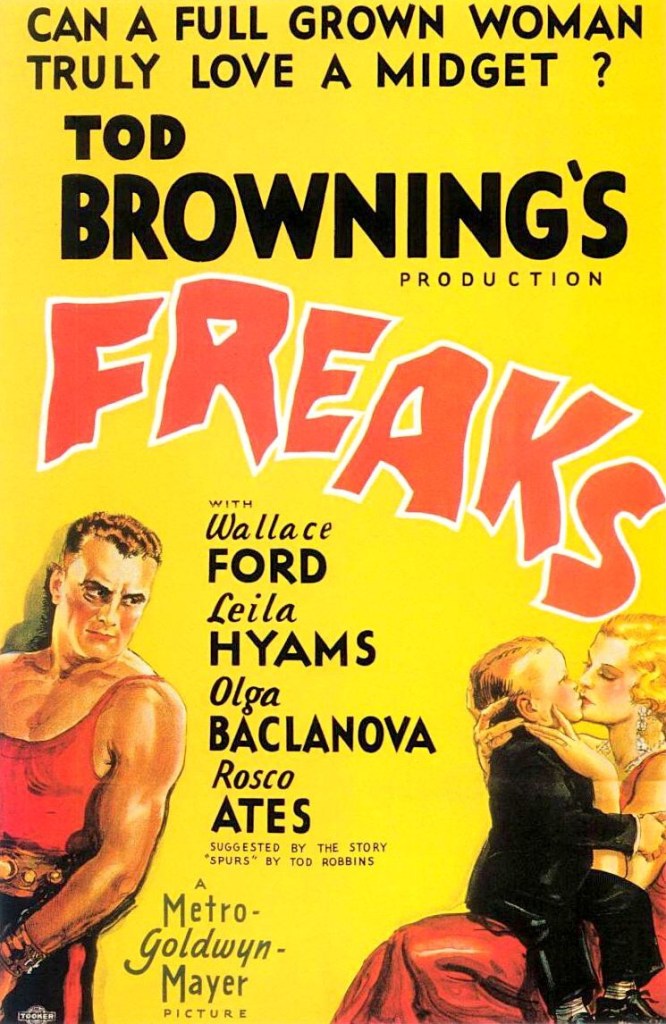
Freaks (1932); directed by Tod Browning
Side note: Tod Browning’s 1932 pre-Code horror film Freaks is perhaps the most honest and humane cultural document featuring people with disabilities who work or have worked in sideshow carnivals. While it was lambasted upon its initial release and even banned in some places for being too grotesque, it is now studied as a landmark film for its examination of carnival culture, its use of actual people with disabilities in on-screen roles, and even its Depression-era class politics. It is a cult classic and frequently appears in lists of the greatest films ever made. While its original intent is up for debate, watching it now evokes empathy rather than disgust, at least for yours truly.
Although it is evident how visibly disturbed Stan is at what he sees, he nonetheless secures a job with the carnival. It doesn’t pay much, but then again Stan doesn’t really need much. A man on the run really only needs one thing: to keep moving. The life of a carny provides him with just that. When the current geek becomes sick, Clem (Willem Dafoe) the carnival owner has Stan help him dump him in front of a clinic. It is then that Clem explains part of his racket to Stan. He finds men who have no money, no resources, no family to speak of, men who are chemically-dependent on alcohol, to be his geeks. He asks them no questions and promises them nothing but a temporary job and gives them alcohol laced with opium. He exploits their new dependence on the drug, giving it and withholding it as he sees fit, to debase and animalize them. All of this is done for the sake of the show.
A man on the run really only needs one thing: to keep moving. The life of a carny provides him with just that.
Stan befriends Madame Zeena (Toni Collette), a clairvoyant, and her husband Peter (David Strathairn), and assists with their act. He learns all he can from Peter and the gears inside his head begin turning for a show he can create of his own. He finds a partner for his future plans in the beautiful and alluring Molly (Rooney Mara), a fellow performer with whom he becomes infatuated and then falls in love. He convinces Molly to run away with him and craft a two-person act with which they can travel the world and behold all its wonders. She buys this pie-in-the-sky rhetoric much like any doe-eyed noir dame, and those of us in the audience (wherever we may be) are already shaking our heads in disapproval. We are screaming at her not to go but she doesn’t listen. They never do. The catalyst for their exit comes one night when Pete asks Stan to get him some liquor, and Stan (whether accidentally or not) gives him wood alcohol, which is poisonous and kills him. When a team of officers attempting to shut down the carnival arrive and Stan is able to cold-read one of them, convincing the man that his dead mother would want him to show mercy on them, we know that Stan and Molly are all but gone.
She buys this pie-in-the-sky rhetoric much like any doe-eyed noir dame, and those of us in the audience (wherever we may be) are already shaking our heads in disapproval. We are screaming at her not to go but she doesn’t listen. They never do.
Flash forward two years later and Stan has crafted quite the act as a mentalist, with Molly as his embittered and disillusioned assistant. The wealthy attendees of their Buffalo shows buy the lines Stan feeds them as if they’re candy. But where is the line between entertainer and charlatan? Better yet, who draws that line? If we harken back to the beginning parts of the film, we’ll remember Madame Zeena and Pete cautioning Stan against using the cold reading and coded language skills he’s acquiring to lead people on when they want to know about their dead loved ones.
But where is the line between entertainer and charlatan? Better yet, who draws that line?
It’s during one of their Buffalo performances that we meet Dr. Lilith Ritter (Cate Blanchett). She knows right away that Stan is nothing but a con, using sleights-of-hand and cheap parlor tricks to convince people he’s in touch with the beyond. She attempts to expose him for the charlatan he is, but she underestimates his skills. To punish her for lambasting him in front of his paying customers, he humiliates her by making accurate guesses about her childhood, the gun in her purse, and her utter lack of the power and agency she believes she possesses.
We find out that Dr. Ritter was under the employ of Judge Kimball (Peter MacNeill), who hired her to expose Stan. Now believing him to be a legitimate psychic, Judge Kimball offers him a large sum of money to act as a medium for him and his wife, allowing them to communicate with their deceased son. Molly is completely against it but Stan agrees anyway, and so he begins on the path of no return. Dr. Ritter invites Stan to her office (she is a psychiatrist/psychoanalyst), where she reveals to him her extensive recordings obtained during therapy sessions, all of which detail the deepest secrets of Buffalo’s elite. She tells him what he needs to know to make his session with the Kimballs successful, and all goes according to plan.
This is noir, though, so there’s always a flaw in the mechanism or a fly in the butter. Stan, not wanting Molly to discover the money he’s obtained through scamming Buffalo’s wealthy and powerful, takes it back to Dr. Ritter’s office and offers to split it with her. Dr. Ritter doesn’t want or need the money, it would seem, but agrees to keep it for him to help him avoid making Molly suspicious. No, instead she asks Stan to sit for a session with her, where she can probe the mysteries of his brain. It doesn’t take a genius (or psychic, for that matter) to guess what happens next.
Stan begins an affair with Dr. Ritter. In their analysis sessions, he spills his guts to her, admitting his guilt over Pete’s death as well as his father’s, whom he did in fact murder. We learn that his father was an alcoholic and we can deduce the level of abuse and neglect Stan suffered while growing up. At one point, Dr. Ritter offers Stan a drink of whisky, which he refuses and tells her that he never drinks. Ever.
Judge Kimball, being a satisfied customer, refers Stan to a dark and powerful man named Ezra Grindle. We learn that Grindle’s lover Dorrie died from the complications of a coerced back-alley abortion. Grindle is a tortured man forced to live with the consequences of his actions, and Dr. Ritter cautions Stan against engaging with him. Of course, Stan doesn’t listen and begins scamming Grindle. He delivers all sorts of fake missives from Dorrie, coming of course from the beyond. But Grindle isn’t satisfied with these placations. He wants Stan to conjure her physical form for him to see and talk to, ostensibly to beg for her forgiveness.
Stan’s plan is to involve Molly in the farce, having her play the part of Dorrie for Grindle’s catharsis. When she learns of the affair between Stan and Dr. Ritter, she leaves him. He begs her to stay, but she only agrees to help him one last time, in one more act. What Stan doesn’t plan for is the fact that Grindle won’t be satisfied with merely speaking to Dorrie (who is actually Molly), but will instead come ever closer to her until he embraces her. Before that, though, he unburdens himself of all his sins, revealing that he’s abused more women since Dorrie, citing his guilt as the motivator.
In a brief but telling aside, Anderson (Holt McCallany), Grindle’s faithful henchman, hears a news report on the radio telling about the gruesome murder-suicide of Judge and Mrs. Kimble. Having been told by Stan that they would all be reunited in death, Mrs. Kimble hastens the reunion with a gun.
Once Grindle embraces Dorrie, he discovers that the woman in front of him is not Dorrie at all, but someone he doesn’t know. He hits Molly viciously before he is brutally beaten to death by Stan. When Anderson attempts to come to Grindle’s rescue, Stan runs over him with their getaway car. When they get far enough away, Stan damages the car to make it appear as if it was stolen and it’s there that Molly leaves him, this time for good.
Stan makes his way to Dr. Ritter’s office to get his share of the money. A man on the run, after all, needs some cash to make his way. To his shock and dismay, Stan learns that Dr. Ritter has stolen the entirety of the money they earned together and is prepared to use the tapes of their sessions to prove he is a deranged individual. She tells him that she doesn’t need the money but that a man with his outsized ego needed to be taken down a peg. That’s not exactly how she phrases it, mind you, but you get the picture. Stan sees that all along he was merely a piece in a game he thought was his own.
Stan sees that all along he was merely a piece in a game he thought was his own.
In the climax of the film, Dr. Ritter shoots Stan in the ear, mocking him by shouting, “Am I powerful enough for you now, Stan?” bringing him back to their first meeting, where Stan told her how powerless she was in a room full of onlookers. Now, if only for herself, and if only in this small way, she reclaims her power. It’s a shame that she had to break doctor-patient privilege and violate every code of ethics to which a psychiatrist adheres to to do so, but we won’t quibble over semantics here. Dr. Ritter was the femme fatale all along, and Stan fell squarely into her clutches.
Now, if only for herself, and if only in this small way, she reclaims her power. It’s a shame that she had to break doctor-patient privilege and violate every code of ethics to which a psychiatrist adheres to to do so, but we won’t quibble over semantics here.
At this point, Dr. Ritter notifies security of an intruder. Stan attempts to strangle Dr. Ritter with a telephone cord but he’s unable to finish the job before security arrives on the scene. He manages to escape and makes his way onto a boxcar full of chickens. He becomes a vagrant, a homeless alcoholic. In the final scene, the pieces of the film come hauntingly together. We see Stan engage the proprietor of a carnival, one not unlike the one we saw him at in the beginning. He tries to sell himself as a mentalist, a clairvoyant. Perhaps he thinks he can make a living doing an act like Madame Zeena’s. The proprietor is disgusted by Stan, disgusted by his unkempt appearance and body odor, by the aura of shame and humiliation which covers him like a cloud. He nonetheless gives him a drink and offers him a job, a temporary job as a fake geek. It is at this point that Stan’s journey comes full circle. Buckling under the weight and magnitude of his piteous circumstances, he cries and laughs in a mixture of relief and hysteria, saying, “Mister, I was born for it.”
Buckling under the weight and magnitude of his piteous circumstances, he cries and laughs in a mixture of relief and hysteria, saying, “Mister, I was born for it.”
Very rarely do all the elements of a film work so effortlessly in concert together to make such an entertaining and artistic final product, but I think that can be said of Nightmare Alley. It avoids the pithy moralizations and heartfelt musings that would taint it (this, after all, is not a morality picture), and instead shows us a portrait of a soul set off on the wrong path toward a perilous and damned end. I enjoyed every minute of it.
It avoids the pithy moralizations and heartfelt musings that would taint it (this, after all, is not a morality picture), and instead shows us a portrait of a soul set off on the wrong path toward a perilous and damned end.
Nightmare Alley was released by Searchlight Pictures on December 17th, 2021 and is available to own, stream, or rent from various platforms and retailers.
Thanks as always for being a faithful reader of The Voracious Bibliophile. If you like what you see, please like, comment, follow, and subscribe to my email list to get notified of new posts as soon as they drop. You can also email me at fred.slusher@thevoraciousbibliophile.com or catch me on Twitter, Instagram, TikTok, and Pinterest @voraciousbiblog. Keep reading the world, one page (or pixel) at a time.
I feel like publishers really stack the deck (or TBR pile, if you will) with November releases. They know the season for gift-giving is just around the bend and therefore the biggest titles of the year usually release in the weeks leading up to Hanukkah and Christmas. Below are some of the titles I’m most looking forward to picking up myself this season or considering getting as gifts. Links are included. Happy reading!
A Book of the Month Clubpick as well as Jenna Bush Hager’s Read With Jenna selection for November 2021, The Familycouldn’t have been released at a better time. For one thing, The Many Saints of Newark: A Sopranos Story, a prequel film to HBO’s The Sopranos, just came out on October 1st. While its theater performance was lackluster, it was a steaming hit on HBO Max and reignited interest in the original series as well as all things mafia in general.
Now, yours truly really appreciates the font on the cover, which serves as a none-too-subtle nod to Mario Puzo’s The Godfather. After all, it’s what made me pick up the book in the first place. There are some who would say that stories centering the families of organized crime had their heyday long ago, and who am I to tell someone they’re wrong? The Voracious Bibliophile, that’s who! For God’s sake, let us have our mobsters!!!
The Familytells the story of Sofia Colicchio and Antonia Russo, two Italian-American women raised in an insular Brooklyn community where their families’ business interests force them to hold the rest of the world at bay, forging them together into a bond not easily broken. The secrets of their world threaten that bond as they grow up, though, and only time will tell if the threads of their friendship will knit back together or fray past the point of repair.
Kirkus gave The Familya lukewarm-at-best review, calling it “a little too facile” and “readable but somewhat shallow”. Kruptisky’s novel is also negatively compared to the work of Elena Ferrante, but it’s not really fair to measure anyone in comparison to Ferrante, whose Neapolitan Novels quite literally changed my life. This was one of my Book of the Month Club picks for November and my box came the other day, so I will let you know my thoughts when I’m able to dig into it.
The Adriens are a manifestation of Willa’s wildest dreams, embodying the ideal family dynamic she always wanted but never had and living out a version of upper-middle-class life she has always craved but to which she never had access.
Win Me Somethingtells the story of Willa Chen, who while working as a waitress in Brooklyn gets the opportunity to work as a nanny for the Adrien family. The Adriens are a manifestation of Willa’s wildest dreams, embodying the ideal family dynamic she always wanted but never had and living out a version of upper-middle-class life she has always craved but to which she never had access.
As the mixed-race daughter of a Chinese immigrant father and white American mother, Willa longs for an uncomplicated history, one devoid of the racism she experiences due to her biracial identity and the bifurcations that always accompany being a child of divorce shuffled between two families, neither of which fully belong to her. Once she starts working for the Adriens, she begins to learn more about herself and the life she’s led up until now, finding that even when life is imperfect it can still be good.
Don’t expect any big reveals or melodramatics characteristic of “nanny fiction”. No husband-nanny adultery or child murder. No long-held secrets bubbling to the surface. If you’re looking for something more salacious like that, check out my Nefarious Nannies Reading List.
***Note: I was lucky enough to receive a free digital review copy of this book courtesy of NetGalley and the publisher. You can read my review here.***
Publication Date: November 9th, 2021
Publisher: Harper Perennial
Page Count: 96
It’s a beacon of light as well as a sea of middle fingers raised high. Don’t miss it.
Kate Baer’s newest collection is nothing short of a reclamation. The “found poems” herein are crafted from missives sent to Baer online by detractors and fans alike. The detractors range from the annoying and intrusive to the outright abusive, and Baer takes no prisoners in transforming their vitriol into their vanquishment, their viciousness into her own sweet victory.
The detractors range from the annoying and intrusive to the outright abusive, and Baer takes no prisoners in transforming their vitriol into their vanquishment, their viciousness into her own sweet victory.
Baer’s experiences online are as old as the Internet itself. I’m sure the behaviors, if not the platforms themselves, date back much farther. The women living in the 21st century are dealing with the same crap that the women dealt with who were alive before Christopher Columbus sailed the ocean blue. The simple fact is men don’t like women who dare to be complex people in the public sphere. They prefer them to be silent and demure, to cow and coo, to be healthy but thin, outgoing yet deferential, smart yet never sassy, and above all, subservient. Well, pardon my French, but to hell with all of that!
Baer’s collection is perfect for anyone who has ever been subjected to unsolicited feedback about their words, their body, or their very existence. It’s a beacon of light as well as a sea of middle fingers raised high. Don’t miss it.
Bonus: Midtown Scholar Bookstore of Harrisburg, Pennsylvania is hosting a livestream discussion between Kate Baer and Maggie Smith about Baer’s new book. It’s free and open to the public but requires registration, so if you’re interested, I’m posting the link below:
Natashia Deón’s dazzling new novel was an early release pick for the Book of the Month Club and to be perfectly honest, the cover alone was enough for me to have it included in my box. The Perishingtells the story of Lou, an immortal Black woman who wakes up in an alley with no memory in 1930s Los Angeles. She has visions of a man’s face which she draws as she tries to make sense of who she is and where she came from. The premise immediately made me think of NBC’s Blindspot, as well any of a number of 40s films noir.
During the course of the novel, Lou also becomes the first female journalist for the LA Times, breaking stories of crime and vice during the era of Prohibition, which when you add in the fantasy elements make The Perishing a very intriguing read.
I am so giddily excited for this book and Natashia Deón in general. Is anyone else already casting the screen adaptation? Someone call Shonda Rhimes already and let’s get this going! *coughs* Janelle Monáe *coughs*
If you start singing this and the person you’re with doesn’t start singing it with you, that is a warning sign from God that you’d be remiss to ignore.
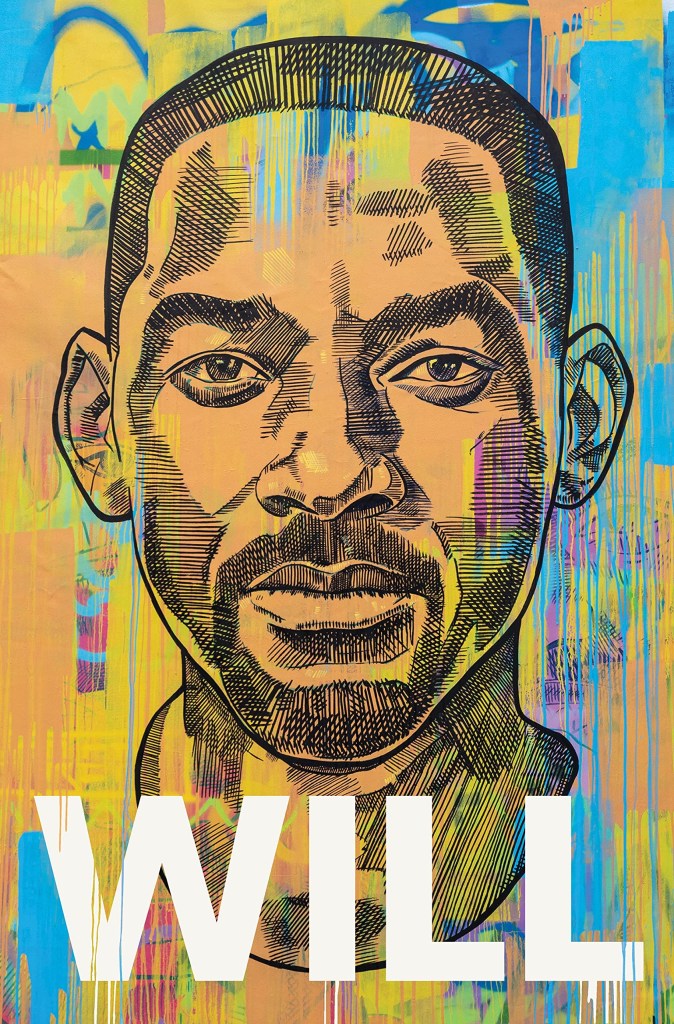
Will Smith first rose to prominence through his starring role on NBC’s The Fresh Prince of Bel-Air. The show ran for six seasons and after its conclusion, Smith was able to transition from television to blockbuster films rather seamlessly. Now, in addition to being a producer and one of Hollywood’s most bankable stars, the Grammy Award winner and Academy Award nominee can add author to his CV.
Co-written with Mark Manson, the #1 New York Times bestselling author of The Subtle Art of Not Giving a F*ck, Willis a celebrity memoir I’m very much looking forward to reading.
***Note: I was lucky enough to receive a free digital review copy of this book courtesy of NetGalley and the publisher. You can read my review here.***
Anyone familiar with Kelsea Ballerini’s music knows she’s a gifted storyteller, and her abilities shine through just as strong in her poetry as they do in her songcraft. Following a recent spate of singer-celebrity poetry collections, Ballerini’s Feel Your Way Throughis fearsome and original, baring her soul on every page. Is this collection going to win (or even be nominated) for a Pulitzer Prize? Of course not. But you don’t have to be Walt Whitman to say something worthwhile and true about the human experience. Honestly, the elitism and pedantry surrounding what qualifies as poetry, especially “good” poetry, is a crock of 🐴 💩 anyway. Herein, Ballerini tells the truth as she sees it, and that’s more than good enough for me.
She is, in my opinion, one of the greatest living American nonfiction writers.
Publisher’s Weekly calls Ann Patchett’s newest book a “moving collection not easily forgotten,” but I don’t know if I have the emotional capacity to withstand a new essay collection by Ann Patchett, especially since Red (Taylor’s Version)drops on the 14th and 30by Adele drops just five days later on the 19th. Ann Patchett’s writing always makes me feel some kind of way and judging from the snippets I’ve gleaned from These Precious Days, it will not be the exception to the rule.
Consider the first two sentences of this excerpt furnished to CBS News:
Did I tell you I loved my father, that he loved me? Contrary to popular belief, love does not need understanding to thrive.
She has such an inimitable way of pulling the reader in, pushing them back, allowing them to flail for a little while, and then pulling them back in again. She is, in my opinion, one of the greatest living American nonfiction writers. In fact, the only writer I can currently think of who surpasses her in reticent emotional resonance is Joan Didion, long may she live.
Bonus: Read my review of Truth & Beauty, which I called “an exquisitely written and heartfelt evocation of a friendship”.
Don’t judge me if I don’t pick this one up until mid-December, although you can pretty much guarantee I’ll own it before then.
Thanks as always for being a faithful reader of The Voracious Bibliophile. If you like what you see, please like, comment, follow, and subscribe to my email list to get notified of new posts as soon as they drop. You can also email me at fred.slusher@thevoraciousbibliophile.com or catch me on Twitter, Instagram, TikTok, and Pinterest @voraciousbiblog. Keep reading the world, one page (or pixel) at a time.
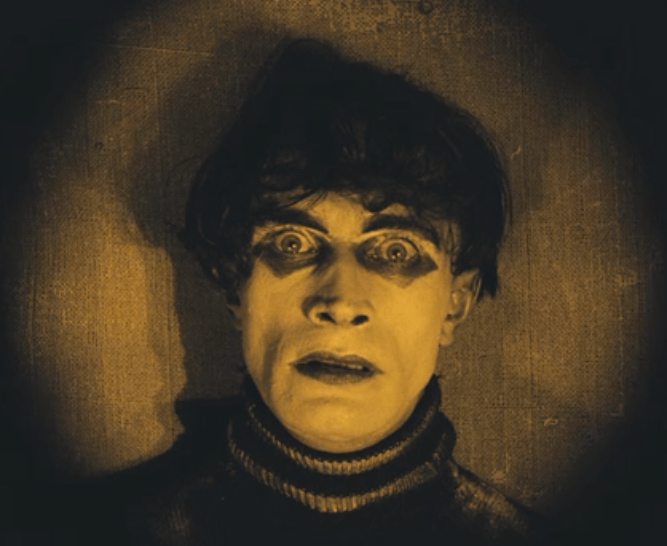
Conrad Veidt in a still from Robert Wiene’s The Cabinet of Dr. Caligari (1920)
We queens are not free to answer the calls of our hearts.
The Cabinet of Dr. Caligari (1920); directed by Robert Wiene
Revolutionary at the time were its sharp lines and angles, its use of shadows and light to heighten the viewer’s anxiety. Caligari quite literally helped to develop the language of cinema.
The Cabinet of Dr. Caligari (1920) is a masterpiece of German Expressionist filmcraft. Perhaps no other film in the history of cinema has received as much scholarly attention because it paved the way for so many films that succeeded it. Revolutionary at the time were its sharp lines and angles, its use of shadows and light to heighten the viewer’s anxiety. Caligari quite literally helped to develop the language of cinema. Without it, there would be no film noir. None of the great horror films made by Universal from the 1930s to the 1950s would exist.
It would be my contention, in fact, that you can draw a direct line that starts with Caligari and goes all the way to films like The Wolf House (2018), Us (2019), and Midsommar (2019). I could talk about it all day, but it’s really something you need to see for yourself to truly appreciate. What are you waiting for?
Thanks as always for being a faithful reader of The Voracious Bibliophile. If you like what you see, please like, comment, follow, and subscribe to my email list to get notified of new posts as soon as they drop. You can also email me at fred.slusher@thevoraciousbibliophile.com or catch me on Twitter, Instagram, TikTok, and Pinterest @voraciousbiblog. Keep reading the world, one page (or pixel) at a time.







 The Voracious Bibliophile