Listen. .
With faint dry sound,
Like steps of passing ghosts,
The leaves, frost-crisp'd, break from the trees
And fall.
Adelaide Crapsey (1878-1914) is most famous for being the inventor of the cinquain, a poetic form containing five lines. Crapsey’s short and tragic life, coupled with the macabre nature of her work, which deals heavily with death and human suffering, makes her a poet not easily read. However, for the reader brave enough to wade through the murky waters of Crapsey’s sparse oeuvre, her work is richly rewarding. You can read more about Crapsey and her work here.
Thanks as always for being a faithful reader of The Voracious Bibliophile. If you like what you see, please like, comment, follow, and subscribe to my email list to get notified of new posts as soon as they drop. You can also email me at fred.slusher@thevoraciousbibliophile.com or catch me on Twitter, Instagram, TikTok, and Pinterest @voraciousbiblog. Keep reading the world, one page (or pixel) at a time.
They were women then
My mama’s generation
Husky of voice—stout of
Step
With fists as well as
Hands
How they battered down
Doors
And ironed
Starched white
Shirts
How they led
Armies
Headragged generals
Across mined
Fields
Booby-trapped
Ditches
To discover books
Desks
A place for us
How they knew what we
Must know
Without knowing a page
Of it
Themselves.
I first read “Women” as a high school freshman, memorizing and reciting it for extra credit. Later on, it grew in significance for me when I read Their Eyes Were Watching God by Zora Neale Hurston and learned that if not for Alice Walker, Hurston’s great body of work would probably have languished in obscurity for all time. Walker’s acknowledgment of the labor of her Black women foremothers in making her own life possible is a major theme throughout her body of work, and nowhere is it clearer than in today’s poem.
Thanks as always for being a faithful reader of The Voracious Bibliophile. If you like what you see, please like, comment, follow, and subscribe to my email list to get notified of new posts as soon as they drop. You can also email me at fred.slusher@thevoraciousbibliophile.com or catch me on Twitter, Instagram, TikTok, and Pinterest @voraciousbiblog. Keep reading the world, one page (or pixel) at a time.
Snow would be the easy way out—that softening sky like a sigh of relief at finally being allowed to yield. No dice. We stack twigs for burning in glistening patches but the rain won’t give.
So we wait, breeding mood, making music of decline. We sit down in the smell of the past and rise in a light that is already leaving. We ache in secret, memorizing
a gloomy line or two of German. When spring comes we promise to act the fool. Pour, rain! Sail, wind, with your cargo of zithers!
Thanks as always for being a faithful reader of The Voracious Bibliophile. If you like what you see, please like, comment, follow, and subscribe to my email list to get notified of new posts as soon as they drop. You can also email me at fred.slusher@thevoraciousbibliophile.com or catch me on Twitter, Instagram, TikTok, and Pinterest @voraciousbiblog. Keep reading the world, one page (or pixel) at a time.
We’re having a Halloween party at school.
I’m dressed up like Dracula. Man, I look cool!
I dyed my hair black, and I cut off my bangs.
I’m wearing a cape and some fake plastic fangs.

I put on some makeup to paint my face white,
like creatures that only come out in the night.
My fingernails, too, are all pointed and red.
I look like I’m recently back from the dead.

My mom drops me off, and I run into school
and suddenly feel like the world’s biggest fool.
The other kids stare like I’m some kind of freak—
the Halloween party is not till next week.
Thanks as always for being a faithful reader of The Voracious Bibliophile. If you like what you see, please like, comment, follow, and subscribe to my email list to get notified of new posts as soon as they drop. You can also email me at fred.slusher@thevoraciousbibliophile.com or catch me on Twitter, Instagram, TikTok, and Pinterest @voraciousbiblog. Keep reading the world, one page (or pixel) at a time.
go to the movies & see a rom-com by yourself. go to your favorite restaurant & request a table for one. go to a café & order a coffee & a pastry for yourself. lie in the grass & cloudgaze without holding someone else’s hand while you do it. we need to stop seeing these things as pathetic. you are the only person you have to be with every day, so why shouldn’t you find ways to appreciate you?

—keep falling in love with yourself.
Today’s poem is from shine your icy crown by amanda lovelace. She is the author of several bestselling poetry collections, among them the titles in the “women are some kind of magic” series, the “you are your own fairy tale” trilogy, and the “things that h(a)unt” duology. shine your icy crownwas published in January 2021 by Andrews McMeel Publishing and is available to purchase wherever books are sold.
Thanks as always for being a faithful reader of The Voracious Bibliophile. If you like what you see, please like, comment, follow, and subscribe to my email list to get notified of new posts as soon as they drop. You can also email me at fred.slusher@thevoraciousbibliophile.com or catch me on Twitter, Instagram, TikTok, and Pinterest @voraciousbiblog. Keep reading the world, one page (or pixel) at a time.
when we empower ourselves, we inspire others to empower
themselves. step up & lead the way for others to follow in your
footsteps. encourage them to do better than you were able to,
because hope can never be lost as long as the future rests in
the hands of our sisters & siblings.

—be the light.
Today’s poem is from shine your icy crown by amanda lovelace. She is the author of several bestselling poetry collections, among them the titles in the “women are some kind of magic” series, the “you are your own fairy tale” trilogy, and the “things that h(a)unt” duology. shine your icy crownwas published in January 2021 by Andrews McMeel Publishing and is available to purchase wherever books are sold.
Thanks as always for being a faithful reader of The Voracious Bibliophile. If you like what you see, please like, comment, follow, and subscribe to my email list to get notified of new posts as soon as they drop. You can also email me at fred.slusher@thevoraciousbibliophile.com or catch me on Twitter, Instagram, TikTok, and Pinterest @voraciousbiblog. Keep reading the world, one page (or pixel) at a time.
sidewalks here brag windchimes and landmines
               we sent to someone else’s children
sometime halfway between home & working to death
               & the news never showed us any casualties
                              without white faces

our hearts couldn’t make less
               of a difference—
kept coming up zeroes on the scale
               when nobody bought into the system
stacked atop a thousand years of bread while the crows
laughed from behind their picket lines & an apocalypse hit—

left us so far backward our sins fell out
                                                            & we were nothing to god

someday the freight-train grows up & everybody cheers
for breakfast like they’re finally getting fed a hung jury
                              or a vomit stain on a factory-stack
                              we were supposed to clean
               as if it wasn’t already too late
to save our planet from ourselves

city lights come out dancing
                              when calamity turns up
at the family party & we knew then
we’d written enough
persona poems for other people’s grief
to place the blame on someone else
for all the murders

god-machine said none of us
were allowed to hear prayer any longer
                                                            & the saddest part is
we got caught with our hands red in a forest of sunflowers

                                             considering the circumstances
               skyscrapers look too much like dead bodies
to be comfortable with stepping out the front door

heroin built a church on our street
& everyone showed up to mass
wearing shirts that said
               keep out the liquor stores

just goes to show—being liberal never saved anybody
                                                            when the factories left

                              we stuck our heads in closets
                                                            after we mailed our principles
               to four years from now & the government
called it a write-off when they taxed the poor
out of town but we knew better
than to ask poor folks to beat us kind

               the whole block lit up like a bug-jar in june
               stapled to the back of a climate crisis
when the kids came home drunk again

               better late than dead

               better dead than prison

everyone’s uncle got parole & we came home
               when we heard our mothers calling
to say the hospital burned
                              a hole in the budget

spent our twenties buying flowers
                              for graveyards

spent our twenties in closets
               retrieving our heads
               & nobody clapped
when the war ended

you must have heard by now—
god came knocking
               & nobody answered the door
Thanks as always for being a faithful reader of The Voracious Bibliophile. If you like what you see, please like, comment, follow, and subscribe to my email list to get notified of new posts as soon as they drop. You can also email me at fred.slusher@thevoraciousbibliophile.com or catch me on Twitter, Instagram, TikTok, and Pinterest @voraciousbiblog. Keep reading the world, one page (or pixel) at a time.
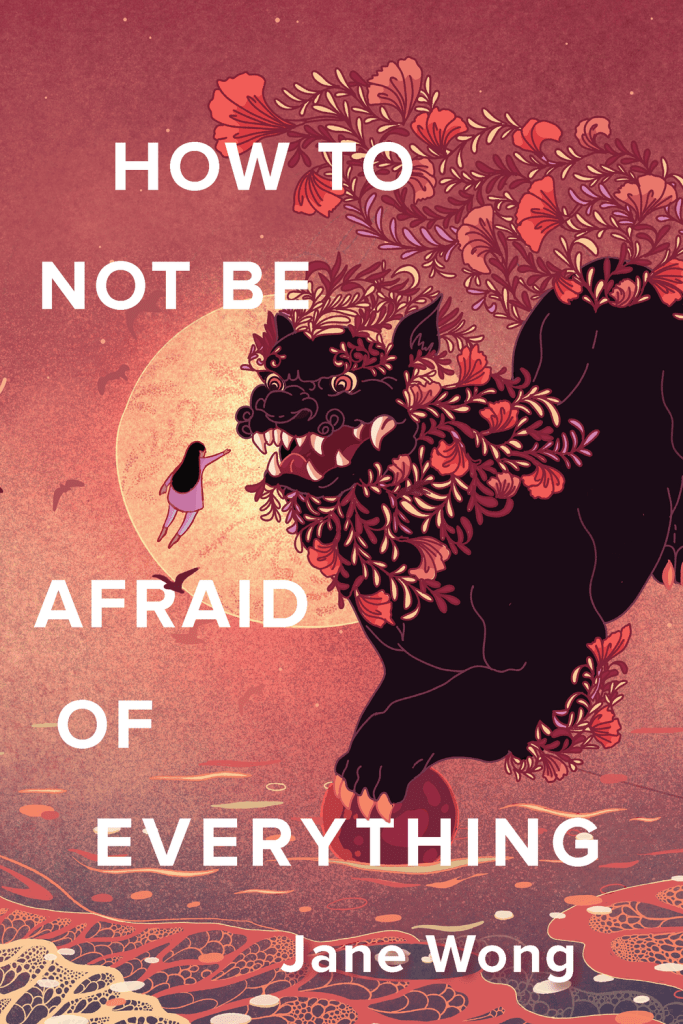
How to Not Be Afraid of Everything by Jane Wong (Alice James Books, 2021)
Tenants by Jane Wong
Above: my neighbor's feet,                         fussing from room to room,
                velvet hooves                     tendering my head. Was the fruitcake
curdling? Would the mail make it there on time? (it must
                make it there on time)? Below:                 I try to light
the stove. Little clicks of the tongue, heat and water,                     my altar.
                Underground: my grandfather breathes through a silk jacket,
a dandelion mane resting between                         his lips. Here: every living
                thing is an altar. Sweet worms kiss           his knuckles to sleep,
loose doorknobs I open:             story after story. My family:
                a spiral staircase, a fish spine                    picked clean, the snail's
miasmic song. 1982: sun gasping through splintering snow,
                a lemon slice folded                     in my mother's cup, a generous
bulb, a lighthouse across oceans she can not see. 1985: we slept in
                a split-level attic,                                    squirrels running across
the beams. 1964: my grandfather offers my mother one egg.
                Her brother looks on, fists full of ash. 1967: to make
the body dance with sticks and stones to break                 alone. Within:
                prison, rose finch feathers float through bars, what he can not
talk about. My grandfather sings to me in a ladybug-speckled coffin,
                the color of good teeth.                   Above: my grandmother keeps
heaps upon heaps of oil containers, poured                     and repurposed
                in hunched Fanta plastic. This living can be so quiet sometimes,
you can hear the lights                 humming. Moss slinks into my walls
                and is painted over, white               to mint. I touch
the wall, these porous lives, this dense    understory. Today: I cut
                a telescope                  in two to see everything inside, out:
new.
Thanks as always for being a faithful reader of The Voracious Bibliophile. If you like what you see, please like, comment, follow, and subscribe to my email list to get notified of new posts as soon as they drop. You can also email me at fred.slusher@thevoraciousbibliophile.com or catch me on Twitter, Instagram, TikTok, and Pinterest @voraciousbiblog. Keep reading the world, one page (or pixel) at a time.
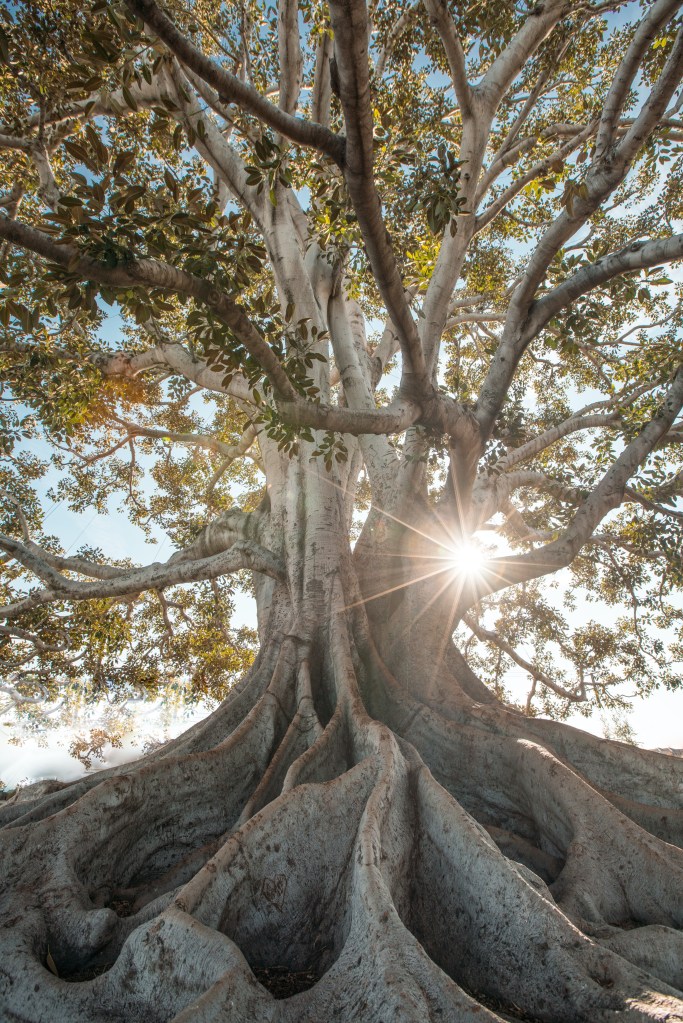
I think that I shall never see
A poem lovely as a tree.

A tree whose hungry mouth is prest
Against the earth’s sweet flowing breast;

A tree that looks at God all day,
And lifts her leafy arms to pray;

A tree that may in Summer wear
A nest of robins in her hair;

Upon whose bosom snow has lain;
Who intimately lives with rain.

Poems are made by fools like me,
But only God can make a tree.
Today’s poem first appeared in the August 1913 issue of Poetry. It was later collected in Kilmer’s 1914 collection entitled Trees and Other Poems, which is available to purchase wherever books are sold. A free public domain version of the text can be accessed and disseminated without limitations at Project Gutenberg.
Thanks as always for being a faithful reader of The Voracious Bibliophile. If you like what you see, please like, comment, follow, and subscribe to my email list to get notified of new posts as soon as they drop. You can also email me at fred.slusher@thevoraciousbibliophile.com or catch me on Twitter, Instagram, TikTok, and Pinterest @voraciousbiblog. Keep reading the world, one page (or pixel) at a time.
As Kingfishers Catch Fire by Gerard Manley Hopkins
As kingfishers catch fire, dragonflies draw flame;
As tumbled over rim in roundy wells
Stones ring; like each tucked string tells, each hung bell's
Bow swung finds tongue to fling out broad its name;
Each mortal thing does one thing and the same:
Deals out that being indoors each one dwells;
Selves — goes itself; myself it speaks and spells,
Crying Whát I dó is me: for that I came.

I say móre: the just man justices;
Keeps grace: thát keeps all his goings graces;
Acts in God's eye what in God's eye he is —
Chríst — for Christ plays in ten thousand places,
Lovely in limbs, and lovely in eyes not his
To the Father through the features of men's faces.
Today’s poem was taken from Gerard Manley Hopkins: Poems and Prose, which was published by Penguin Classics in 1985 and is available to purchase wherever books are sold.
Thanks as always for being a faithful reader of The Voracious Bibliophile. If you like what you see, please like, comment, follow, and subscribe to my email list to get notified of new posts as soon as they drop. You can also email me at fred.slusher@thevoraciousbibliophile.com or catch me on Twitter, Instagram, TikTok, and Pinterest @voraciousbiblog. Keep reading the world, one page (or pixel) at a time.






 The Voracious Bibliophile