
Poem for the Day: November 13th, 2021

The Letter by Mary Ruefle

Beloved, men in thick green coats came crunching
through the snow, the insignia on their shoulders
of uncertain origin, a country I could not be sure of,
a salute so terrifying I heard myself lying to avoid
arrest, and was arrested along with Jocko, whose tear
had snapped off, a tiny icicle he put in his mouth.
We were taken to the ice prison, a palace encrusted
with hoarfrost, its dome lit from within, Jocko admired
the wiring, he kicked the walls to test the strength
of his new boots. A television stood in a block of ice,
its blue image still moving like a liquid center.
You asked for my innermost thoughts. I wonder will I
ever see a grape again? When I think of the vineyard
where we met in October—when you dropped a cluster
custom insisted you be kissed by a stranger—how after
the harvest we plunged into a stream so icy our palms
turned pink. It seemed our future was sealed. Everyone
said so. It is quiet here. Not closing our ranks
weakens us hugely. The snowflakes fall in a featureless
bath. I am the stranger who kissed you. On sunny days
each tree is a glittering chandelier. The power of
mindless beauty! Jocko told a joke and has been dead
since May. A bullethole in his forehead the officers
call a third eye. For a month I milked a barnful of
cows. It is a lot like cleansing a chandelier. Wipe
and polish, wipe and polish, round and round you go.
I have lost my spectacles. Is the book I was reading
still open by the side of our bed? Treat it as a bookmark
saving my place in our story.

(here the letter breaks off)

© 2000 Mary Ruefle. “The Letter” first appeared as part of Ruefle’s collection Post Meridian, which was published by Carnegie Mellon University Press in 2000.

Thanks as always for being a faithful reader of The Voracious Bibliophile. If you like what you see, please like, comment, follow, and subscribe to my email list to get notified of new posts as soon as they drop. You can also email me at fred.slusher@thevoraciousbibliophile.com or catch me on Twitter, Instagram, TikTok, and Pinterest @voraciousbiblog. Keep reading the world, one page (or pixel) at a time.

Poem for the Day: November 12th, 2021

This Room and Everything in It by Li-Young Lee

Lie still now
while I prepare for my future,
certain hard days ahead,
when I’ll need what I know so clearly this moment.

I am making use
of the one thing I learned
of all the things my father tried to teach me:
the art of memory.

I am letting this room
and everything in it
stand for my ideas about love
and its difficulties.

I’ll let your love-cries,
those spacious notes
of a moment ago,
stand for distance.

Your scent,
that scent
of spice and a wound,
I’ll let stand for mystery.

Your sunken belly
is the daily cup
of milk I drank
as a boy before morning prayer.
The sun on the face
of the wall
is God, the face
I can’t see, my soul,

and so on, each thing
standing for a separate idea,
and those ideas forming the constellation
of my greater idea.
And one day, when I need
to tell myself something intelligent
about love,

I’ll close my eyes
and recall this room and everything in it:
My body is estrangement.
This desire, perfection.
Your closed eyes my extinction.
Now I’ve forgotten my
idea. The book
on the windowsill, riffled by wind . . .
the even-numbered pages are
the past, the odd-
numbered pages, the future.
The sun is
God, your body is milk . . .

useless, useless . . .
your cries are song, my body’s not me . . .
no good . . . my idea
has evaporated . . . your hair is time, your thighs are song . . .
it had something to do
with death . . . it had something
to do with love.

© 1990 Li-Young Lee. “This Room and Everything in It” first appeared in Lee’s collection The City in Which I Love You, which was published by BOA Editions Ltd. in 1990.

Thanks as always for being a faithful reader of The Voracious Bibliophile. If you like what you see, please like, comment, follow, and subscribe to my email list to get notified of new posts as soon as they drop. You can also email me at fred.slusher@thevoraciousbibliophile.com or catch me on Twitter, Instagram, TikTok, and Pinterest @voraciousbiblog. Keep reading the world, one page (or pixel) at a time.
Poem for the Day: November 11th, 2021

The End of a Beautiful Era by Joseph Brodsky

Since the stern art of poetry calls for words, I, morose,
deaf, and balding ambassador of a more or less
insignificant nation that’s stuck in this super
power, wishing to spare my old brain,
hand myself my own topcoat and head for the main
street: to purchase the evening paper.

Wind disperses the foliage. The dimness of old bulbs in these
sorry quarters, whose motto’s “The mirror will please,”
gives a sense of abundance supported by puddles.
Even thieves here steal apples by scratching the amalgam first.
Yet the feeling one gets, from one’s own sweet reflection—this feeling I’ve lost.
That’s what really puzzles.

Everything in these parts is geared for winter: long dreams,
prison walls, overcoats, bridal dresses of whiteness that seems
snowlike. Drinks. Kinds of soap matching dirt in dark corners.
Sparrow vests, second hand of the watch round your wrist,
puritanical mores, underwear. And, tucked in the violinists’
palms, old redwood hand warmers.

This whole realm is just static. Imagining the output of lead
and cast iron, and shaking your stupefied head,
you recall bayonets, Cossack whips of old power.
Yet the eagles land like good lodestones on the scraps.
Even wicker chairs here are built mostly with bolts and with nuts,
one is bound to discover.

Only fish in the sea seem to know freedom’s price.
Still, their muteness compels us to sit and devise
cashier booths of our own. And space rises like some bill of fare.
Time’s invented by death. In its search for the objects, it deals
with raw vegetables first That’s why cocks are so keen on the bells
chiming deafly somewhere.

To exist in the Era of Deeds and to stay elevated, alert
ain’t so easy, alas. Having raised a long skirt,
you will find not new wonders but what you expected.
And it’s not that they play Lobachevsky’s ideas by ear,
but the widened horizons should narrow somewhere, and here—
here’s the end of perspective.

Either old Europe’s map has been swiped by the gents in plain clothes,
or the famous five-sixths of remaining landmass has just lost
its poor infamous colleague, or a fairy casts spells over shabby
me, who knows—but I cannot escape from this place;
I pour wine for myself (service here’s a disgrace),
sip, and rub my old tabby.

Thus the brain earned a slug, as a spot where an error occurred
earns a good pointing finger. Or should I hit waterways, sort
of like Christ? Anyway, in these laudable quarters,
eyes dumbfounded by ice and by booze
will reproach you alike for whatever you choose:
traceless rails, traceless waters.

Now let’s see what they say in the papers about lawsuits.
“The condemned has been dealt with.” Having read this, a denizen puts
on his metal-rimmed glasses that help to relate it
to a man lying flat, his face down, by the wall;
though he isn’t asleep. Since dreams spurn a skull
that has been perforated.

The keen-sightedness of our era takes root in the times
which were short, in their blindness, of drawing clear lines
twixt those fallen from cradles and fallen from saddles.
Though there are plenty of saucers, there is no one to turn tables with
to subject you, poor Rurik, to a sensible quiz;
that’s what really saddens.

The keen-sightedness of our days is the sort that befits the dead end
whose concrete begs for spittle and not for a witty comment.
Wake up a dinosaur, not a prince, to recite you the moral!
Birds have feathers for penning last words, though it’s better to ask.
All the innocent head has in store for itself is an ax
plus the evergreen laurel.

[December] 1969
Leningrad

© 2000 The Estate of Joseph Brodsky. “The End of a Beautiful Era” is taken from Collected Poems in English, 1972-1999, which was published by Farrar, Straus and Giroux in 2000. Brodsky was the recipient of the 1987 Nobel Prize in Literature and was appointed the United States Poet Laureate in 1991.

Thanks as always for being a faithful reader of The Voracious Bibliophile. If you like what you see, please like, comment, follow, and subscribe to my email list to get notified of new posts as soon as they drop. You can also email me at fred.slusher@thevoraciousbibliophile.com or catch me on Twitter, Instagram, TikTok, and Pinterest @voraciousbiblog. Keep reading the world, one page (or pixel) at a time.

Poem for the Day: November 10th, 2021

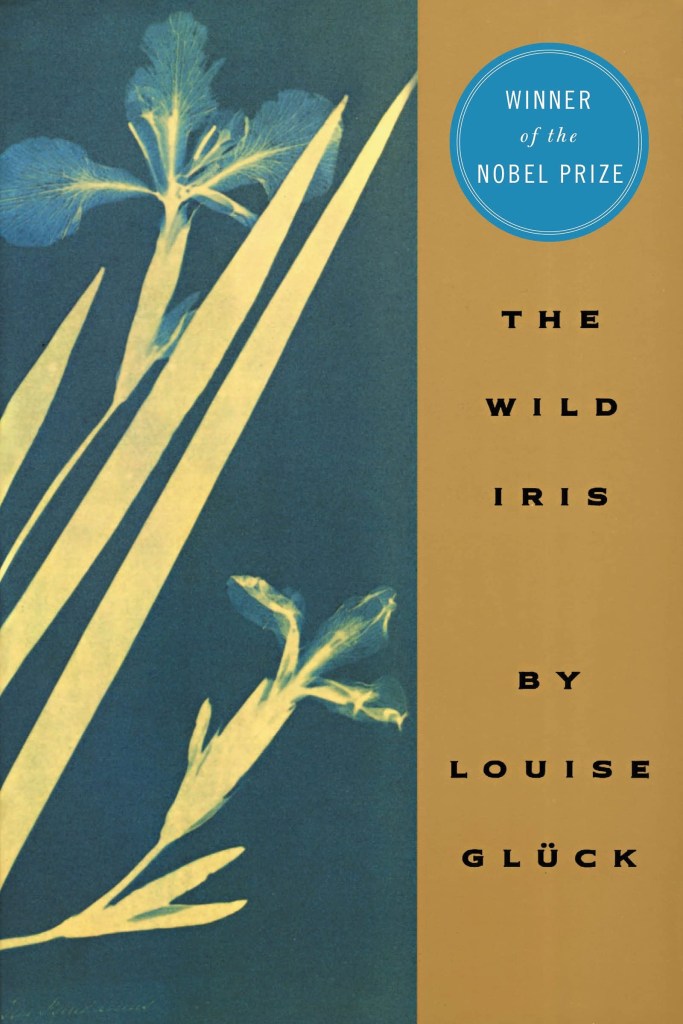
The Wild Iris by Louise Glück

End of Winter by Louise Glück

Over the still world, a bird calls
waking solitary among black boughs.

You wanted to be born; I let you be born.
When has my grief ever gotten
in the way of your pleasure?

Plunging ahead
into the dark and light at the same time
eager for sensation

as though you were some new thing, wanting
to express yourselves

all brilliance, all vivacity

never thinking
this would cost you anything,
never imagining the sound of my voice
as anything but part of you—

you won't hear it in the other world,
not clearly again,
not in birdcall or human cry,

not the clear sound, only
persistent echoing
in all sound that means good-bye, good-bye—

the one continuous line
that binds us to each other.

© 1992 Louise Glück. “End of Winter” is taken from The Wild Iris, for which she won the Pulitzer Prize for Poetry in 1993. Louise Glück is one of the most celebrated American poets of her generation. She was awarded the Nobel Prize in Literature in 2020 “for her unmistakable poetic voice that with austere beauty makes individual existence universal.”

Thanks as always for being a faithful reader of The Voracious Bibliophile. If you like what you see, please like, comment, follow, and subscribe to my email list to get notified of new posts as soon as they drop. You can also email me at fred.slusher@thevoraciousbibliophile.com or catch me on Twitter, Instagram, TikTok, and Pinterest @voraciousbiblog. Keep reading the world, one page (or pixel) at a time.
Poem for the Day: November 9th, 2021

…the way Corral repeats and inverts the imagery of thorns and honey in the first and last lines of the poem lend it a freshness and vivacity not always seen in (unrequited) love poems.

Autobiography of My Hungers by Eduardo C. Corral

His beard: an avalanche of   honey,
an avalanche
of  thorns. In a bar too close to the Pacific,
he said, “I don’t love you,
but not because I
couldn’t be attracted to you.” Liar—
even my soul
is potbellied. Thinness,
in my mind, equals the gay men
on the nightly news.
Kissed by death & public scorn.
The anchorman declaring,
“Weight loss is one
of the first symptoms.” The Portuguese
have a word for imaginary, never-
to-be-experienced love.
Whoop-de-doo.
“I don’t love you,” he said.
The words flung him back—
in his eyes, I saw it—
to another bar
where a woman sidestepped his desire.
Another hunger.
Our friendship.
In tenth grade, weeks after
my first kiss, my mother
said, “You’re looking thinner.”
That evening, I smuggled a cake
into my room.
I ate it with my hands,
licked buttercream off
my thumbs until I puked.
Desire with no future,
bitter longing—
I starve myself  by yearning
for intimacy that doesn’t
& won’t exist.
Holding hands on a ferry. Tracing,
with the tip of my tongue,
a  jawline. In a bar too close
to the Pacific, he said,
“I don’t love you, but not
because I couldn’t be attracted to you.”
His beard:
an avalanche of thorns,
an avalanche of honey.

© 2020 Eduardo C. Corral. “Autobiography of My Hungers” first appeared in the July/August 2020 issue of Poetry Magazine. You can purchase this issue here.

I love the way Corral compares unrequited love to boundless hunger in this poem. Comparing the desire for food with the desire for love or sex is far from new—one need only watch Tom Jones (1963) to see a perfect example—but the way Corral repeats and inverts the imagery of thorns and honey in the first and last lines of the poem lend it a freshness and vivacity not always seen in (unrequited) love poems.

Do you have a favorite poem comparing unrequited love with physical hunger? Let me know in the comments or shoot me an email.

Books by Eduardo C. Corral (With Purchase Links)

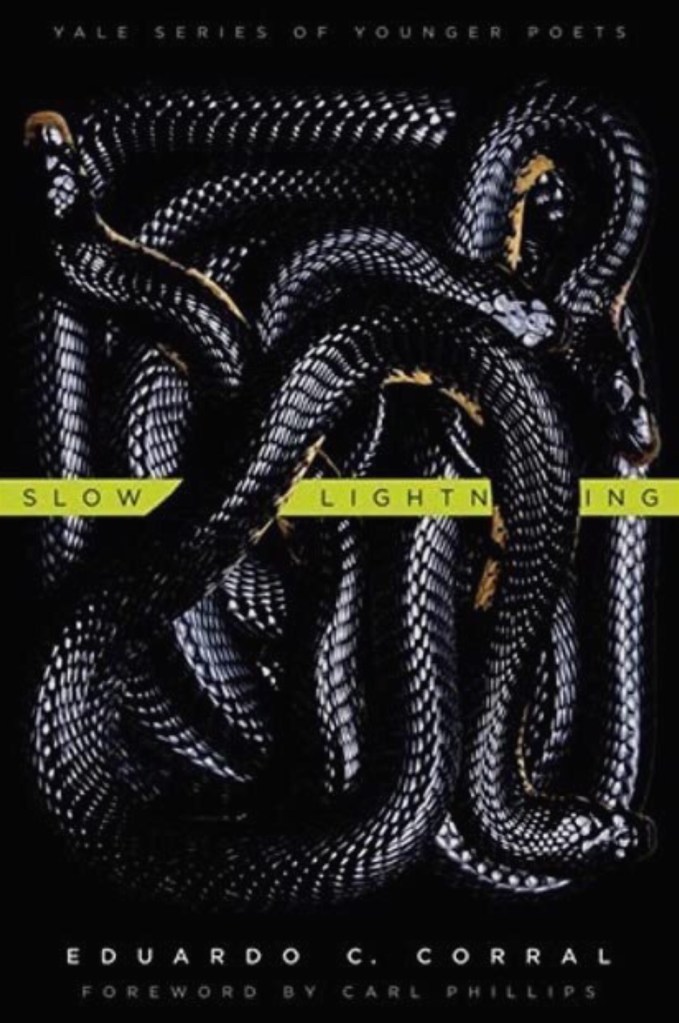
Slow Lightning (Yale Series of Younger Poets) by Eduardo C. Corral and Carl Phillips (Foreword)
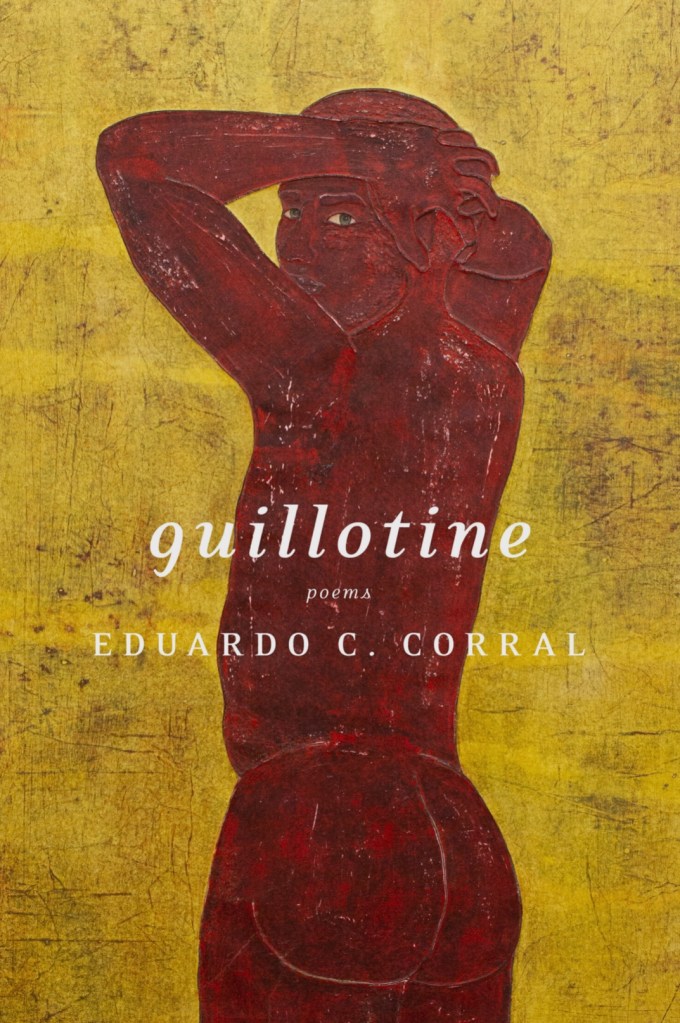
Guillotine: Poems by Eduardo C. Corral

Thanks as always for being a faithful reader of The Voracious Bibliophile. If you like what you see, please like, comment, follow, and subscribe to my email list to get notified of new posts as soon as they drop. You can also email me at fred.slusher@thevoraciousbibliophile.com or catch me on Twitter, Instagram, TikTok, and Pinterest @voraciousbiblog. Keep reading the world, one page (or pixel) at a time.
Poem for the Day: November 8th, 2021

Night Work by Ed Bok Lee

All summer, the city engine's low
roar capsizes our bodies into sleep,
groans,
evacuation—
Lost to a watery
anamnesis so warm it requires a raft
thatched from death's
flotsam to necklace its shore

I swim on, calling your name

In my dreams, something is always deserting

But tonight, no fast shadows of birds
No oceanic flowers disrobing butterflies
or bright beach of child's porridge and bones—

Instead, someone weaving

a net from fallen hair in and around our bed
to catch the breath, blood, and ritual
motions that oiled us
as one candle in a cave

In your dreams, someone is always resisting being saved

My teeth are on fire, you say I said

Don't fly for the labyrinth, once
I thought you were admonishing me to go away
I don't remember most others, a thousand seasons
phonographed in through a wounded window

Everyone can't have a cactus

Just o.k. empty all the rice from my legs

Once I awoke screaming, paws red-hot embers
You opened my mouth and poured a night-cold river in

Once you died and my heart fished all winter

Once we were eating lunch inside a kiln

Once you thought you smelled death,
but the lavender farm was too large to shave

On the fifth straight morning I'd dreamt of water
I stared at your face, its nacreous lids,
and I swear I could see a Glorious Ghost shifting
over your sun-warm waves

Water my birth sign, and one day my mother's death
that protect-fills my love with sadness

There, in words to my coworkers
it was still dripping, in my nods
over a galapagos of pages and forms

All love is immigrant, that autumn apparently
I mumbled

Your reply, after days: Turn off the steam in the trees

Somewhere right now, two lovers are conversing
without even knowing what their lives mean

One's heart gazelle-quick to survey a mountain his dead
father is always vandalizing
The other frequently misplacing her hair, ears, or self-
sabotaging a crime

One usually struggling to stay alive
The other often untethering something

Or is it my mitochondria that powder-sugars the moon?
And you calcifying a promise inside to inscribe?

There is a dominion where inverses
invert until only terror, love, and imagination cling,

heavy, on human branches—enter your vista, phylum
unsequenced, dimmer deeds

Can you hear it tonight?
Wind in iron jars buried inside the living:
Grandmothers, past spouses, cable men, priests

Now! I finally manage
as our train smokes out all the rats on their bed of leaves

All night, I dive
down to the soft structures of some blue civilization's faith

In this myth of life, I keep forgetting whose ideas and
sensations I'm supposed to be

Come morning: rain, trees, silvery
sleet
and daily, this new fresh bounty
we share, side by side
like angels coming home from work at a pearl factory

© 2011 Ed Bok Lee. “Night Work” originally appeared in Lee’s collection Whorled, which was published in 2011 by Coffee House Press and is available to purchase wherever books are sold.

Thanks as always for being a faithful reader of The Voracious Bibliophile. If you like what you see, please like, comment, follow, and subscribe to my email list to get notified of new posts as soon as they drop. You can also email me at fred.slusher@thevoraciousbibliophile.com or catch me on Twitter, Instagram, TikTok, and Pinterest @voraciousbiblog. Keep reading the world, one page (or pixel) at a time.

Poem for the Day: November 7th, 2021

The Nail by C.K. Williams

Some dictator or other had gone into exile, and now reports were coming about his regime,
the usual crimes, torture, false imprisonment, cruelty and corruption, but then a detail:
that the way his henchmen had disposed of enemies was by hammering nails into their skulls.
Horror, then, what mind does after horror, after that first feeling that you’ll never catch your breath,
mind imagines—how not be annihilated by it?—the preliminary tap, feels it in the tendons of the hand,
feels the way you do with your nail when you’re fixing something, making something, shelves, a bed;
the first light tap to set the slant, and then the slightly harder tap, to em-bed the tip a little more ...

No, no more: this should be happening in myth, in stone, or paint, not in reality, not here;
it should be an emblem of itself, not itself, something that would mean, not really have to happen,
something to go out, expand in implication from that unmoved mass of matter in the breast;
as in the image of an anguished face, in grief for us, not us as us, us as in a myth, a moral tale,
a way to tell the truth that grief is limitless, a way to tell us we must always understand
it’s we who do such things, we who set the slant, embed the tip, lift the sledge and drive the nail,
drive the nail which is the axis upon which turns the brutal human world upon the world.

© 1999 C.K. Williams. “The Nail” appeared as part of the Pulitzer Prize-winning collection Repair, which was published in 1999 by Farrar, Straus & Giroux, LLC. It is available to purchase wherever books are sold.

Thanks as always for being a faithful reader of The Voracious Bibliophile. If you like what you see, please like, comment, follow, and subscribe to my email list to get notified of new posts as soon as they drop. You can also email me at fred.slusher@thevoraciousbibliophile.com or catch me on Twitter, Instagram, TikTok, and Pinterest @voraciousbiblog. Keep reading the world, one page (or pixel) at a time.

Poem for the Day: November 6th, 2021

Autumn by Grace Paley

1

What is sometimes called a
tongue of flame
or an arm extended burning
is only the long
red and orange branch of
a green maple
in early September reaching
into the greenest field
out of the green woods at the
edge of which the birch trees
appear a little tattered tired
of sustaining delicacy
all through the hot summer re-
minding everyone (in
our family) of a Russian
song a story
by Chekhov or my father


2

What is sometimes called a
tongue of flame
or an arm extended burning
is only the long
red and orange branch of
a green maple
in early September reaching
into the greenest field
out of the green woods at the
edge of which the birch trees
appear a little tattered tired
of sustaining delicacy
all through the hot summer re-
minding everyone (in
our family) of a Russian
song a story by
Chekhov or my father on
his own lawn standing
beside his own wood in
the United States of
America saying (in Russian)
this birch is a lovely
tree but among the others
somehow superficial

© 1991 Grace Paley. “Autumn” first appeared in Long Walks and Intimate Talks by Grace Paley and Vera B. Williams, which was published in 1991 by The Feminist Press at the City University of New York. It was later included in Begin Again: The Collected Poems of Grace Paley, which was published in 1999 by The Feminist Press. You can read more about Grace Paley and her life and work here.

Thanks as always for being a faithful reader of The Voracious Bibliophile. If you like what you see, please like, comment, follow, and subscribe to my email list to get notified of new posts as soon as they drop. You can also email me at fred.slusher@thevoraciousbibliophile.com or catch me on Twitter, Instagram, TikTok, and Pinterest @voraciousbiblog. Keep reading the world, one page (or pixel) at a time.

Poem for the Day: November 5th, 2021

the sonnet-ballad by Gwendolyn Brooks

Oh mother, mother, where is happiness?
They took my lover's tallness off to war,
Left me lamenting. Now I cannot guess
What I can use an empty heart-cup for.
He won't be coming back here any more.
Some day the war will end, but, oh, I knew
When he went walking grandly out that door
That my sweet love would have to be untrue.
Would have to be untrue. Would have to court
Coquettish death, whose impudent and strange
Possessive arms and beauty (of a sort)
Can make a hard man hesitate—and change.
And he will be the one to stammer, "Yes."
Oh mother, mother, where is happiness?

Today’s poem is taken from “”Appendix to The Anniad: leaves from a loose-leaf war diary”, which first appeared in Annie Allen, published by Harper in 1949.

Gwendolyn Brooks (1917-2000) published more than twenty books of poetry during her lifetime, as well as works in other genres. She was the first Black woman named as consultant in poetry to the Library of Congress, a post now referred to as Poet Laureate. Among numerous awards and accolades, she was the recipient of a Pulitzer Prize, an American Academy of Arts and Letters Award, and a National Endowment for the Arts Award. You can read more about her life and work here.

Thanks as always for being a faithful reader of The Voracious Bibliophile. If you like what you see, please like, comment, follow, and subscribe to my email list to get notified of new posts as soon as they drop. You can also email me at fred.slusher@thevoraciousbibliophile.com or catch me on Twitter, Instagram, TikTok, and Pinterest @voraciousbiblog. Keep reading the world, one page (or pixel) at a time.

Poem for the Day: November 4th, 2021

A Thousand Vowels by Shuri Kido Translated from the Japanese by Tomoyuki Endo & Forrest Gander

A long slope.
The strong sun dipped, and finally sank.
No matter how long I walked, I stayed in "the middle of the road."
The name torn into pieces.
Just keeping on, climbing higher and higher,
I'd completely forgotten the name.
The west wind shifts the typhoon's course,
the world, for a few hours, is thrown into confusion.
You might name one thing after another,
but each loses its name in that same moment.
Into what we call "nature."
I stood in the middle of nature.
And something was missing, the natural was
draped in a thin shroud.
Vowels scattered,
the name went missing.
When once more the name "nature" was applied
to the desolate-as-ever landscape,
immediately, the name began to weather away.
What is still losing its name,
and what has already lost its name,
those two strands entwine
around the true name.
Those who have wings stay put,
howling out their condition over and over,
"How fragile we are!"
though no one hears them.
Thousands of ripples tell
a story of benthic anguish.
The ripples beach themselves
on the name of each anguish,
vowels scatter by the thousands
over the earth.

© 2021 Tomoyuki Endo and Forrest Gander. All rights reserved. “A Thousand Vowels” is part of the collection Names & Rivers: Poems by Shuri Kido, which is forthcoming from Copper Canyon Press.

Thanks as always for being a faithful reader of The Voracious Bibliophile. If you like what you see, please like, comment, follow, and subscribe to my email list to get notified of new posts as soon as they drop. You can also email me at fred.slusher@thevoraciousbibliophile.com or catch me on Twitter, Instagram, TikTok, and Pinterest @voraciousbiblog. Keep reading the world, one page (or pixel) at a time.