
Poem for the Day: October 14th, 2021

On Confinement by torrin a. greathouse

I sit across the table from my partner
in the atrium of the psychiatric holding facility

our hands churched into our laps. We are not allowed
to touch. The air between us thick as Perspex.

They tell me all the ways this place resembles a prison.


Everything a sterile white
so clean it could almost disinfect
a memory.


In 1787,
Jeremy Bentham conceived of what would become
the most common prison design:

the panopticon.

Intended to control prisoners through the illusion
that they are always under surveillance.


My partner tells their therapist
they are afraid of taking
their own life,

that they balanced on a building’s edge,
& three officers escort them from the room.


The first cop who ever handcuffed me
[was my father]
left me bound
till my fingers blued.

On the days when I can’t remember
his face,
he becomes the scent of
vodka & zip ties
the sound of
cuffs & a bottle
petaling into blades.


At the booking office they remove my glasses
& the guards blur into a procession
of fathers.


I bring my partner clothes & pads
when the hospital decides to hold them longer,

shove each shirt that could mark them
as queer back inside the closet & shut it [like a mouth].


The word faggot scrawls across
the jail guard’s lips like graffiti.


When I visit my partner
they insist on staying inside

the sky above
the patio cordoned
off  with chicken wire.


I plead my sentence down
in exchange for: my face, my prints, my DNA
& ten years probation.

When I see a cop, I fear
even my breath
criminal

& when my therapist asks me
if  I’m suicidal
I lie.


Perhaps
both are a kind
of  surveillance.


Tear gas floods the street,
sharpens water to a blade
hidden in the orbit of my eye.

& just like this, a squad car
remakes my sadness a weapon.

If my partner snaps cuffs
around my wrists

[& I asked for this]

have they also weaponized
my desire?


A woman in the facility
tells my partner:
I know what you are.
Says:
Sinner.
Says:
Anti-christ.

My partner goads her on,
babbles in false
tongues & is confined
to their room for safety.


Once, a cop dragged me
into an alley &
beat me like he knew
exactly what I was.

What does it say if sometimes
when I ask my partner to hit me

I expect his fist
tightened in their throat, his voice
bruising their tongue?


I am arrested & placed
[in the men’s jail]
in solitary confinement.

They tell me this is protective
custody. That they couldn’t afford
the lawsuit if  I were killed. In this way,
they tell me I am a woman

only when I am no longer
breathing.


The origin of the word prison
is the Latin prehendere — to take.

It follows, then,
that to take your life is to prison
the body beneath dirt.


[Historically,
suicide is a criminal act].


Balanced on a building’s edge, I imagine
some permutation of  this moment

where to fail at death
would be a breach

of my probation.


We both weep for the first time

upon release

when we see the sky.

Pale blue

sliced through

with a single helix

of razor wire & bordered

in sterile white.

© 2018 torrin a. greathouse. Today’s poem first appeared in the November 2018 issue of Poetry.

torrin a. greathouse (she/they) is one of the most innovative and startlingly luminous poets we have writing today. I remember reading “On Confinement” the month it first appeared in Poetry and being arrested by the following lines:

The origin of the word prison

is the Latin prehendere— to take.

It follows, then,

that to take your life is to prison

the body beneath dirt.

Everything in their poem suggests a limitation, a box the world would build around the speaker. Whether the prison is literal (the men’s holding cell in solitary confinement) or metaphorical (the actions and assumptions of people with the authority to categorize and strip away the dignity of the speaker), the effect is the same, which is to police and draw lines of demarcation around the ways in which marginalized people, especially in this case people who are queer and disabled, are allowed to express their humanity and exercise agency.

“On Confinement” also brings into stark relief the Othering Trans* people undergo when they try to access basic social services. Any facility serving members of the general public ought to be devoid of the homo- and transphobia greathouse talks about. Historically, the Trans body is often a site of both state-sanctioned and private violence, and for all our high-handed talk of equality and progressiveness, this is still largely true today. Anyone able to bear witness to these acts of dehumanization and look away from them places their seal of approval on the acts themselves. And shame on them. Shame on a world that makes someone live in constant fear of violence because of who they are and calls it justice. Shame on all of us.

*Trans is an umbrella term for anyone whose gender identity and/or expression in any way deviates from what was assigned to them at birth. Trans people may identify as transgender, gender fluid, gender-expansive, bigender, agender, gender non-conforming, nonbinary, etc. These are just a few of the identifying words Trans people may or may not use to express their identity(ies), but regardless of terminology all humans deserve to be treated with dignity and respect. It is NEVER okay to deliberately misgender someone or use their dead name.

Thanks as always for being a faithful reader of The Voracious Bibliophile. If you like what you see, please like, comment, follow, and subscribe to my email list to get notified of new posts as soon as they drop. You can also email me at fred.slusher@thevoraciousbibliophile.com or catch me on Twitter, Instagram, TikTok, and Pinterest @voraciousbiblog. Keep reading the world, one page (or pixel) at a time.

Quote for the Day: October 12th, 2021

Lie With Me: A Novel by Philippe Besson and Molly Ringwald (Translator)

Later I will write about this longing, the intolerable deprivation of the other. I will write about the sadness that eats away at you, making you crazy. It will become the template for my books, in spite of myself. I wonder sometimes if I have ever written of anything else. It’s as if I never recovered from it: the inaccessible other, occupying all my thoughts.

Philippe Besson and Molly Ringwald (Translator), Lie With Me: A Novel

There’s nothing in the entire world more painful than unrequited love, or love given then taken inexplicably away. It’s maddening, truly. You never forget it, and for the rest of your life the hundred thousand scenarios called forth from the interrogative haunt you like a bad dream you see every time you think of the one you lost.

The only real cure for this kind of heartache is love, and it needn’t necessarily come from a romantic relationship. It turns out you can give yourself the love you deserve. You just have to be willing to put it in the work.

Thanks as always for being a faithful reader of The Voracious Bibliophile. If you like what you see, please like, comment, follow, and subscribe to my email list to get notified of new posts as soon as they drop. You can also email me at fred.slusher@thevoraciousbibliophile.com or catch me on Twitter, Instagram, TikTok, and Pinterest @voraciousbiblog. Keep reading the world, one page (or pixel) at a time.

Quote for the Day: October 11th, 2021

Lie With Me: A Novel by Philippe Besson and Molly Ringwald (Translator)

I discover that absence has a consistency, like the dark water of a river, like oil, some kind of sticky dirty liquid that you can struggle and perhaps drown in. It has a thickness like night, an indefinite space with no landmarks, nothing to bang against, where you search for a light, some small glimmer, something to hang on to and guide you. But absence is, first and foremost, silence. A vast, enveloping silence that weighs you down and puts you in a state where any unforeseeable, unidentifiable sounds can make you jump.

Philippe Besson and Molly Ringwald (Translator), Lie With Me: A Novel

Lie With Me was one of the best books I read in 2019. It first came to my attention months before it was released in English, lauded as the next Call Me by Your Name. Side note: Can we stop doing this? By this, I mean using one work of LGBT art as the reference for its successors ad nauseam until something else captures the attention of the mainstream crowd. Okay? Thank you! Anyway, I was immediately attracted to the gorgeous black-and-white cover and when I saw that it was translated from the French by Molly Ringwald (yes, that one!), I knew I had to get my hands on it.

Even in 2021, even in progressive areas of the world, the simple fact of existing as an LGBT person can invite stigma, ostracism, and violence.

Luckily, it did not disappoint. No spoilers, but Besson’s novel is not an easy read. Because of the world LGBT people are forced to inhabit, so much of our lives are lived under a veil of secrecy, which engenders both shame and repression, neither of which are healthy. If not for love, we would all perish. Even in 2021, even in progressive areas of the world, the simple fact of existing as an LGBT person can invite stigma, ostracism, and violence. My hope is that one day everyone will wake up and realize that love is valid and should be celebrated in whatever configuration it expresses itself.

Thanks as always for being a faithful reader of The Voracious Bibliophile. If you like what you see, please like, comment, follow, and subscribe to my email list to get notified of new posts as soon as they drop. You can also email me at fred.slusher@thevoraciousbibliophile.com or catch me on Twitter, Instagram, TikTok, and Pinterest @voraciousbiblog. Keep reading the world, one page (or pixel) at a time.

Quote for the Day: October 10th, 2021

Call Me by Your Name: A Novel by André Aciman

We rip out so much of ourselves to be cured of things faster than we should that we go bankrupt by the age of thirty and have less to offer each time we start with someone new. But to feel nothing so as not to feel anything – what a waste!

André Aciman, Call Me by Your Name: A Novel

I know that if I allowed myself the space and energy to honor all of my feelings, I’d never get anything else done.

Arguably the most powerful moment in either the novel or its film adaptation, this exchange between Elio and his father provides CMBYN with its emotional and philosophical core. It also begs the question: is it possible to live authentically without eventually becoming jaded? How do we honor our feelings without suppressing them and still carry on with the daily grind of life? I know that if I allowed myself the space and energy to honor all of my feelings, I’d never get anything else done.

Life, after all, is not just one singular experience or expression of selfhood. It is so many different things, sometimes all at once.

These are naturally questions without easy answers. Perhaps there is no answer. Life, after all, is not just one singular experience or expression of selfhood. It is so many different things, sometimes all at once. The truth, it seems, must lie somewhere in the middle. What do you think?

Further Reading

The Arrival of Timothée Chalamet by Daniel Riley, in GQ March 2018 (cover below)

GQ March 2018

Super Bonus: Timmy Edit Because I Feel Like It

God, what a stylish man….anyway, see you next time!

Thanks as always for being a faithful reader of The Voracious Bibliophile. If you like what you see, please like, comment, follow, and subscribe to my email list to get notified of new posts as soon as they drop. You can also email me at fred.slusher@thevoraciousbibliophile.com or catch me on Twitter, Instagram, TikTok, and Pinterest @voraciousbiblog. Keep reading the world, one page (or pixel) at a time.
Poem for the Day: October 9th, 2021

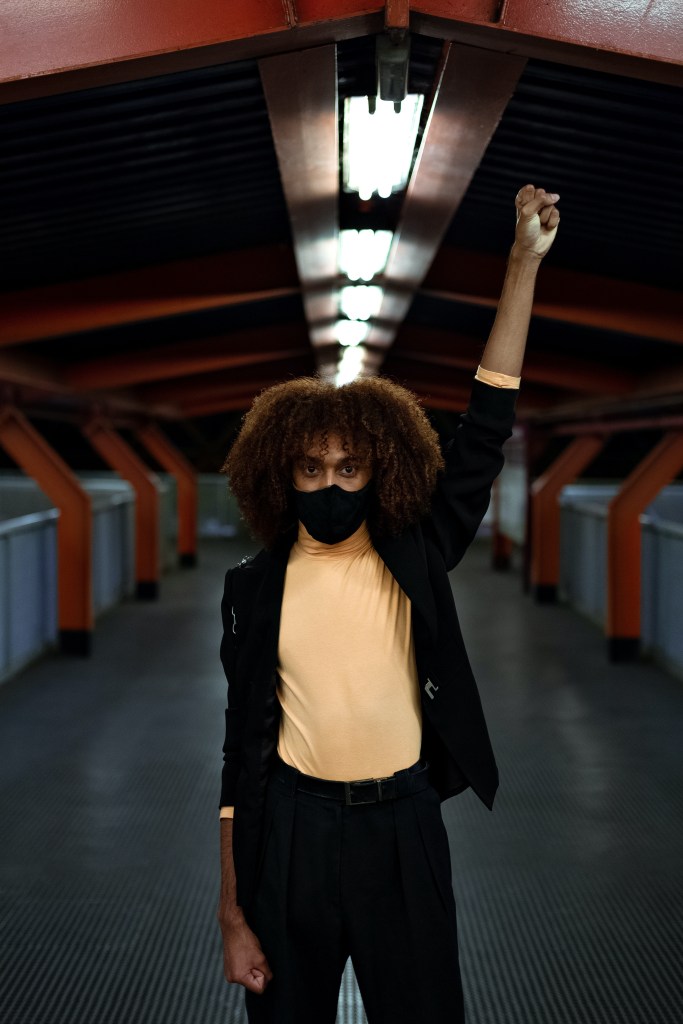
Still I Rise by Maya Angelou

You may write me down in history
With your bitter, twisted lies,
You may trod me in the very dirt
But still, like dust, I'll rise.

Does my sassiness upset you?
Why are you beset with gloom?
’Cause I walk like I've got oil wells
Pumping in my living room.

Just like moons and like suns,
With the certainty of tides,
Just like hopes springing high,
Still I'll rise.

Did you want to see me broken?
Bowed head and lowered eyes?
Shoulders falling down like teardrops,
Weakened by my soulful cries?

Does my haughtiness offend you?
Don't you take it awful hard
’Cause I laugh like I've got gold mines
Diggin’ in my own backyard.

You may shoot me with your words,
You may cut me with your eyes,
You may kill me with your hatefulness,
But still, like air, I’ll rise.

Does my sexiness upset you?
Does it come as a surprise
That I dance like I've got diamonds
At the meeting of my thighs?

Out of the huts of history’s shame
I rise
Up from a past that’s rooted in pain
I rise
I'm a black ocean, leaping and wide,
Welling and swelling I bear in the tide.

Leaving behind nights of terror and fear
I rise
Into a daybreak that’s wondrously clear
I rise
Bringing the gifts that my ancestors gave,
I am the dream and the hope of the slave.
I rise
I rise
I rise.

© 1978 Maya Angelou. “Still I Rise” first appeared in Dr. Angelou’s collection And Still I Rise: A Book of Poems, which was published in 1978 by Random House.

Her singular sonorous voice echoes with the shared promise and potential of humanity, especially those who are downtrodden, maligned, and marginalized.

I love the imagery in this poem. It gives me chills every time I read it, and I can hear Maya Angelou’s voice in my head when I do. Her singular sonorous voice echoes with the shared promise and potential of humanity, especially those who are downtrodden, maligned, and marginalized. Inside also is a reclamation, a refusal to be shaped or cowed by the words and deeds of others. After reading “Still I Rise”, the only appropriate response is amen. Amen amen amen.

Maya Angelou Reciting “Still I Rise”

Thanks as always for being a faithful reader of The Voracious Bibliophile. If you like what you see, please like, comment, follow, and subscribe to my email list to get notified of new posts as soon as they drop. You can also email me at fred.slusher@thevoraciousbibliophile.com or catch me on Twitter, Instagram, TikTok, and Pinterest @voraciousbiblog. Keep reading the world, one page (or pixel) at a time.

Quote for the Day: October 9th, 2021

Call Me by Your Name: A Novel by André Aciman

Is it better to speak or die?

Call Me by Your Name: A Novel by André Aciman

Note: Even though I took today’s quote from Aciman’s novel, most of my commentary references the film adaptation of the same name. But you know how things go here at The Voracious Bibliophile—we start off on one path together and end up taking another road entirely. Enjoy!

This is, in my opinion, one of the best quotes from CMBYN. I can’t remember exactly how the scene plays out in the novel (time for a re-read), but in the film, Elio (Timothée Chalamet) is being counseled and comforted by his parents, Samuel and Annella (Michael Stuhlbarg and Amira Casar, respectively), about his love troubles. Now, Elio never really comes out and says exactly what (who) is troubling him, but they are not fools. That aside, anyone living in the same house with Elio and Oliver (Armie Hammer), their gorgeous summer house guest, would have to be completely oblivious not to notice the mutual sexual attraction that practically crackles every time they’re in the same room together.

I mean, is there any delicate way to tell your parents not only that you like boys but that you’re both enjoying and being tortured by a once-in-a-lifetime summer love affair with their houseguest?

This scene in particular is as heartwarming as it is awkward. I mean, is there any delicate way to tell your parents not only that you like boys but that you’re both enjoying and being tortured by a once-in-a-lifetime summer love affair with their houseguest? Now, don’t misread me. The Perlmans are highly-educated and cosmopolitan. They have same-sex couple friends and wouldn’t think twice about their son becoming involved with another man. No, their concern stems from that basic parental instinct that kicks in when you know your child is in pain. Annella caresses her son’s hair while he lies in his father’s lap, and she reads from the book containing the line which provides us with today’s quote.

In that moment, you become part of the scene, and a feeling of exposure, of becoming emotionally naked, surrounds you and fills you up. Returning to reality feels not unlike leaving Eden, filled with a beautiful and terrible knowledge.

Anyone who can watch this scene and not ache with longing must have their soul stripped of all feeling. The world around you disappears and the wall that separates the performers from the spectators crumbles. In that moment, you become part of the scene, and a feeling of exposure, of becoming emotionally naked, surrounds you and fills you up. Returning to reality feels not unlike leaving Eden, filled with a beautiful and terrible knowledge.

Bonus: I found a YouTube clip of the scene where this line is spoken, and it’s just as powerful after repeat viewings.

Double Bonus: The entire soundtrack to CMBYN is sublime, but Sufjan Stevens’s “Mystery of Love” is on another plane entirely. It was nominated for the Academy Award for Best Original Song as well as the Grammy Award for Best Song Written for Visual Media.

Thanks as always for being a faithful reader of The Voracious Bibliophile. If you like what you see, please like, comment, follow, and subscribe to my email list to get notified of new posts as soon as they drop. You can also email me at fred.slusher@thevoraciousbibliophile.com or catch me on Twitter, Instagram, TikTok, and Pinterest @voraciousbiblog. Keep reading the world, one page (or pixel) at a time.
Poem for the Day: October 8th, 2021

First Thought by Lorna Dee Cervantes

best thought, you had taught
me — a river runs through it,
the foot of the soul standing
stubbornly in the freeze, all
the shards of ice crumpling up
the banks, what survives
in the ignorance. Play it away.
Be ceremony. Be a lit candle
to what blows you. Outside,
the sun gives a favorite present,
mountain nests in ironic meadows,
otter takes off her shoes, the small
hands of her feet reaching, reaching; still,
far away people are dying. Crisp
one dollar bills fold another life.
You taught me to care in the moment,
carve day into light, or something,
moving in the west that doesn't destroy
us. Look again, in the coming summer,
the cruelest month alive still eats up
the hours. Regret is an uneven hand,
a rough palm at the cheek — tender
and calloused. I drink another glass
of water, turn on the tap
for what grows, for you,
for what lasts, for the last
and the first found thought of you.

© 2013 Lorna Dee Cervantes. Today’s poem was taken from Cervantes’ collection Sueño, which was published in 2013 by Wings Press and is available to purchase wherever books are sold.

Thanks as always for being a faithful reader of The Voracious Bibliophile. If you like what you see, please like, comment, follow, and subscribe to my email list to get notified of new posts as soon as they drop. You can also email me at fred.slusher@thevoraciousbibliophile.com or catch me on Twitter, Instagram, TikTok, and Pinterest @voraciousbiblog. Keep reading the world, one page (or pixel) at a time.

Quote for the Day: October 8th, 2021

Call Me by Your Name: A Novel by André Aciman

We had the stars, you and I. And this is given once only.

André Aciman, Call Me by Your Name: A Novel

Call me basic if you want to, but I love CMBYN (both the book and the film adaptation). It is full of passion, angst, remembrance, and regret—all the hallmarks of a devastating love story. You can’t really pigeonhole Aciman’s novel, though; it is just as much a philosophical treatise as it is a story of love and heartache.

Forewarning: I’m cheating because for the next several days I’ll have multiple quotes from the same book/work. Quotes are like potato chips—it’s hard to just pick one.

Thanks as always for being a faithful reader of The Voracious Bibliophile. If you like what you see, please like, comment, follow, and subscribe to my email list to get notified of new posts as soon as they drop. You can also email me at fred.slusher@thevoraciousbibliophile.com or catch me on Twitter, Instagram, TikTok, and Pinterest @voraciousbiblog. Keep reading the world, one page (or pixel) at a time.
Poem for the Day: October 7th, 2021

Wild nights – Wild nights! (269) by Emily Dickinson

Wild nights - Wild nights!
Were I with thee
Wild nights should be
Our luxury!

Futile - the winds -
To a Heart in port -
Done with the Compass -
Done with the Chart!

Rowing in Eden -
Ah - the Sea!
Might I but moor - tonight -
In thee!

© 1988 President and Fellows of Harvard College. © 1951, 1955, 1979, 1983 President and Fellows of Harvard College. Today’s poem is taken from The Poems of Emily Dickinson Edited by R. W. Franklin, which was released in 1999 by Harvard University Press.

Thanks as always for being a faithful reader of The Voracious Bibliophile. If you like what you see, please like, comment, follow, and subscribe to my email list to get notified of new posts as soon as they drop. You can also email me at fred.slusher@thevoraciousbibliophile.com or catch me on Twitter, Instagram, TikTok, and Pinterest @voraciousbiblog. Keep reading the world, one page (or pixel) at a time.

Poem for the Day: October 6th, 2021

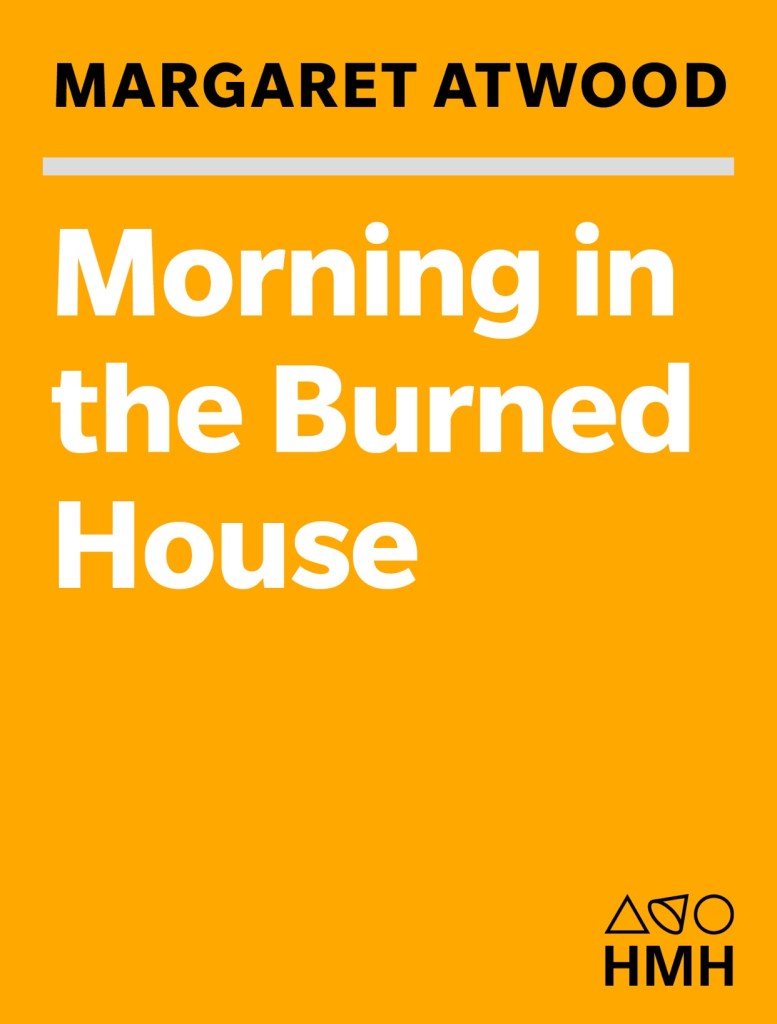
Morning in the Burned House by Margaret Atwood

In the Secular Night by Margaret Atwood

In the secular night you wander around
alone in your house. It’s two-thirty.
Everyone has deserted you,
or this is your story;
you remember it from being sixteen,
when the others were out somewhere, having a good time,
or so you suspected,
and you had to baby-sit.
You took a large scoop of vanilla ice-cream
and filled up the glass with grapejuice
and ginger ale, and put on Glenn Miller
with his big-band sound,
and lit a cigarette and blew the smoke up the chimney,
and cried for a while because you were not dancing,
and then danced, by yourself, your mouth circled with purple.

Now, forty years later, things have changed,
and it’s baby lima beans.
It’s necessary to reserve a secret vice.
This is what comes from forgetting to eat
at the stated mealtimes. You simmer them carefully,
drain, add cream and pepper,
and amble up and down the stairs,
scooping them up with your fingers right out of the bowl,
talking to yourself out loud.
You’d be surprised if you got an answer,
but that part will come later.

There is so much silence between the words,
you say. You say, The sensed absence
of God and the sensed presence
amount to much the same thing,
only in reverse.
You say, I have too much white clothing.
You start to hum.
Several hundred years ago
this could have been mysticism
or heresy. It isn’t now.
Outside there are sirens.
Someone’s been run over.
The century grinds on.

© 1995 Margaret Atwood. “In the Secular Night” first appeared in Atwood’s collection Morning in the Burned House, which was published in 1995 by Houghton Mifflin Company. It is available to buy wherever books are sold.

There is also this exactitude, this precision, bound up in elegance and wit, which seems impossible to replicate. At the very least, I have never seen it outside of her work.

First and foremost, let me state here unequivocally that it is a travesty Margaret Atwood has yet to win the Nobel Prize in Literature. That’s first. Next, I’d like to say that very few writers can scare me like Atwood can. She imbues every work of hers, be it novel, poem, or otherwise, with an otherworldly terror which is simply too close to reality for comfort. There is also this exactitude, this precision, bound up in elegance and wit, which seems impossible to replicate. At the very least, I have never seen it outside of her work.

Though her oeuvre is substantial, history will remember her primarily for her dystopian novel, The Handmaid’s Tale. Published in 1985, it tells the story of Offred, a Handmaid in the Republic of Gilead, which has succeeded the United States’ government via violent overthrow and which treats women with viable uteruses like cattle, meant to be silent, acquiescent, and obedient in discharging their only purpose in life, which is to bare children for their Commanders. They are deprived of all agency and ruled over with an iron fist.

With a conservative-majority SCOTUS waiting like a salivating bloodhound to overturn Roe v. Wade and states like Texas rolling back reproductive rights and severely limiting abortion access, we are just a stone’s throw away from the world Atwood envisioned.

One could say Gilead is patriarchy on steroids, and they’d be right. Gilead looks too much like America in 2021 for my liking. With a conservative-majority SCOTUS waiting like a salivating bloodhound to overturn Roe v. Wade and states like Texas rolling back reproductive rights and severely limiting abortion access, we are just a stone’s throw away from the world Atwood envisioned. Let’s hope there are enough of us left in the world who stand for a woman’s right to choose.

Wow, I started off with a poem and ended up talking about The Handmaid’s Tale. You can certainly see my ADHD at work here, but what the heck? This is my blog and I’ll go off on whatever tangent I darn well please. Mazel tov, my friends.

To learn about how you can help support reproductive justice advocacy work, go to https://www.plannedparenthood.org.

Thanks as always for being a faithful reader of The Voracious Bibliophile. If you like what you see, please like, comment, follow, and subscribe to my email list to get notified of new posts as soon as they drop. You can also email me at fred.slusher@thevoraciousbibliophile.com or catch me on Twitter, Instagram, TikTok, and Pinterest @voraciousbiblog. Keep reading the world, one page (or pixel) at a time.