COVID Isn’t Over

How have you adapted to the changes brought on by the Covid-19 pandemic?

For most of the world, COVID is a distant memory. A bad one, with recollections of mobile morgues on wheels, lockdowns, and mask mandates in all public places.

This is an interesting prompt, to be sure. For most of the world, COVID is a distant memory. A bad one, with recollections of mobile morgues on wheels, lockdowns, and mask mandates in all public places. The urge to “return to normal”, spurred on by the restless cog in the machine of capitalism, was too strong for most to resist. Governments, local, state, and federal (I’m speaking in the context of the United States, which is the only context I feel comfortable speaking in), at the urging of powerful business interests, were quick to drop even the most rudimentary of precautions.
The normalcy bias spread faster than even COVID-19 itself, for people don’t like to confront or accept changes to the established design, especially not for extended periods of time.

The normalcy bias spread faster than even COVID-19 itself, for people don’t like to confront or accept changes to the established design, especially not for extended periods of time. But here’s the harsh truth: Nothing will ever be the same. Most people have not made the connection between the return (resurgence?) of illnesses like tuberculosis and measles and the immune dysregulation that can result from just one COVID infection, let alone multiple infections. Almost everyone I know is sick now multiple times a year, often multiple times a month. And this constant illness has been normalized. People think it’s totally normal now for their kids to have COVID, RSV, flu, and colds right back-to-back. Someone I know in my own family has three elementary school age children who had all four of the above mentioned in January and February of this year alone.

Almost everyone I know is sick now multiple times a year, often multiple times a month. And this constant illness has been normalized.

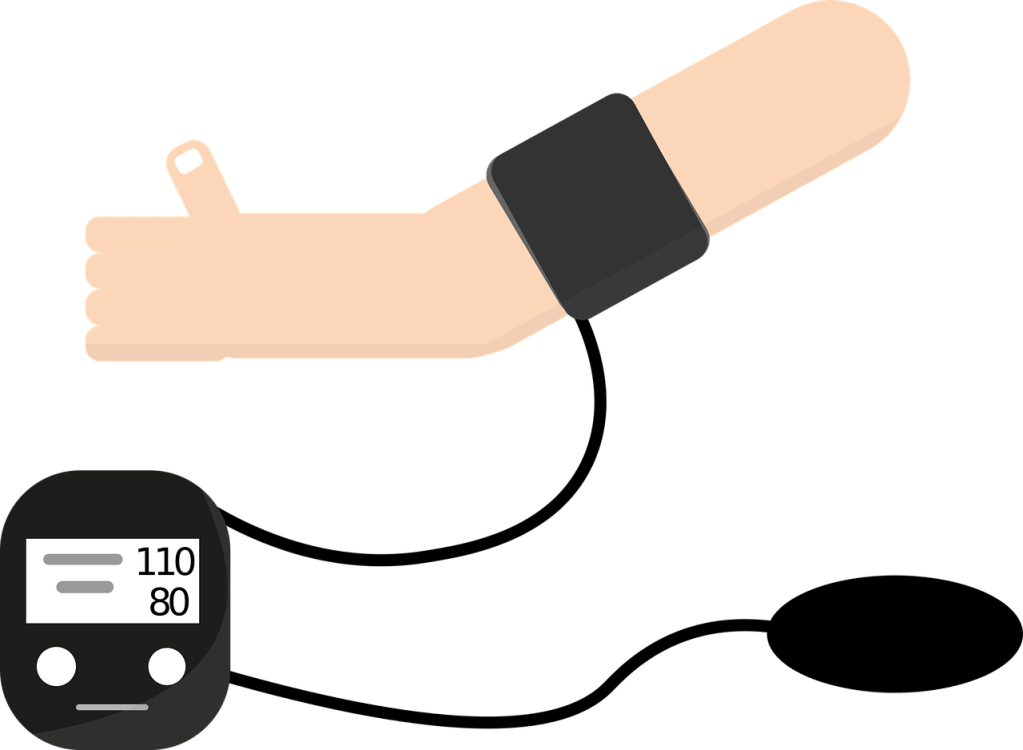
I personally have only been sick one time with a communicable disease caused by airborne pathogens since 2020. In 2022, I became sick with COVID and proceeded to have an onslaught of new medical conditions in the aftermath of the initial infection. Asthma, which I never had before. High blood pressure, which I had never had before. In fact, prior to my COVID infection, my blood pressure always stayed within 5 points of normal. After COVID, my blood pressure got so high that I was in danger of having a stroke. A lot of people, in fact I would venture to guess that the majority of people, don’t know that COVID is a vascular disease. It’s also oncogenic, meaning that it can cause people who get it to develop various cancers later down the road. It’s not just a cold. It’s a BSL (Biosafety Level) 3 pathogen, which means that it is classified, along with tuberculosis, Yellow fever virus, and others, as a microorganism capable of causing serious and potentially lethal disease in human beings.

After COVID, my blood pressure got so high that I was in danger of having a stroke.
So what have I done to avoid becoming sick? Masking. N95 masks don’t fit the shape of my face well, so even though those are among the best particulate respirators, I wear KN95 masks whenever I’m in public settings. I work in the public, and as a bookseller, not in the medical field, so this means I am masked almost all of the time. I also use antiviral nose sprays and CPC mouthwashes.

Now, I’m not perfect. For almost four years, I went largely without dining indoors or socializing any at all. I did it to keep myself and my family safe, to keep from becoming further disabled by another infection. I can’t tell you the mental toll it takes or that it took being the only person willing to do something as simple as covering my face for that long, and I’m still doing it most of the time. I occasionally eat out with friends now, in lower risk situations where it’s not as busy and I’m fairly certain they’ve not been exposed to any airborne illnesses.

Some people might judge me for that, and that’s okay. I know that with the world we live in now, every time I go unmasked in a public place is a risk I’m taking. I hate that I have to frame it that way. I hate that to people who gave up any and all precautions years ago, I’m seen as hysterical and a hypochondriac. I hate that to people who haven’t taken any risks at all, who have remained completely steadfast in their anti-infection controls, I am seen as a hypocrite and a coward for making the decision to occasionally go unmasked now. As a pathological people pleaser, there’s no way for me to win. And that’s okay.

For my part, I’m going to continue to mask 99% of the time, but I’m going to try not to judge myself for that 1% when I don’t. I’m going to continue using antiviral nose sprays and CPC mouthwashes when I do have possible exposures. When at all possible, I’m going to avoid large indoor gatherings even when I am masked because one-way masking, while it has been effective for me, is not completely foolproof if there’s a high enough viral load in the air.

The life we had prior to 2020 isn’t coming back, and if some people would mask at least some of the time, at the very least in healthcare settings and in grocery stores, I believe we would see far fewer people being constantly sick. What I guess I’m saying is we need more participation from the general public, because the number of people who are still taking COVID seriously are fewer and fewer as time goes on. It would also help if businesses and governments would commit resources to cleaner indoor air, with next-generation filtration and ventilation systems that would reduce the amount of respiratory droplets and pathogens in the air.

Your health is a precious thing, and so much more fragile than people realize.

Everything we do or don’t do has consequences, and I can only hope that my efforts have made a difference. I know they have in my own life, because no one in my household has had a viral infection of any kind, at least to my knowledge, in more than three years. Your health is a precious thing, and so much more fragile than people realize. Take care of yourselves. You only get one life.

Thanks as always for being a faithful reader of The Voracious Bibliophile. If you like what you see, please like, comment, follow, and subscribe to my email list to get notified of new posts as soon as they drop. You can also email me at fred.slusher@thevoraciousbibliophile.com or catch me on Twitter, Instagram, TikTok, and Pinterest @voraciousbiblog. Keep reading the world, one page (or pixel) at a time.

Book Review: The Littlest Turtle by Lysa Mullady (Author) and Erica Salcedo (Illustrator)

The Littlest Turtle by Lysa Mullady (Author) and Erica Salcedo (Illustrator)

***Note: I received a free digital review copy of this book from NetGalley and Magination Press, the children’s book imprint of the American Psychological Association, in exchange for an honest review. I have not received compensation for the inclusion of any links for purchase found in this review or on any other page of The Voracious Bibliophile which mentions The Littlest Turtle, its author(s), or its publisher.***

Rating: ⭐️⭐️⭐️⭐️⭐️

Review

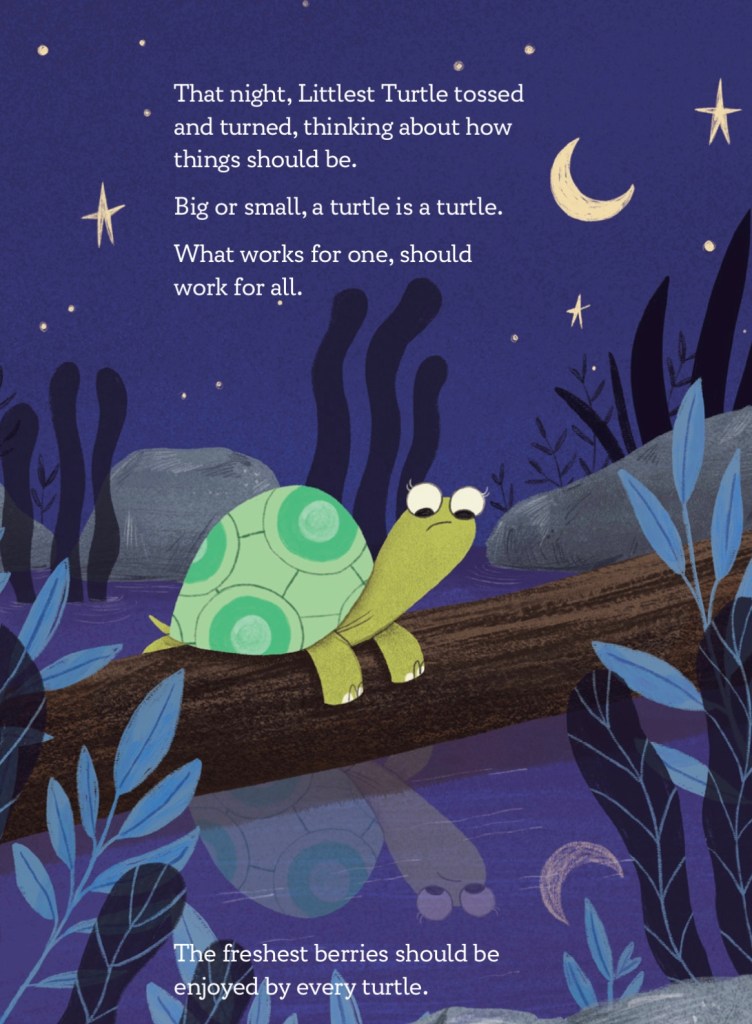
What a delightful little book! The Littlest Turtle tells the story of a community of turtles of various statures and sizes who live and work together. There’s a division of labor in which the smaller turtles climb on the backs of the larger turtles to pick the ripest and most delicious fruits from the trees. What the smaller turtles are largely unaware of is that while they are getting to eat the best and most delicious fruits from the trees, the larger turtles have to make do with the fruit that falls on the ground and is often rotten or otherwise spoiled.

One day, Littlest Turtle hears the larger turtles grumbling among themselves about how unfair the whole situation is. Without the value of their labor (i.e. literally allowing the smaller turtles to climb on their backs to reach the fruit), the smaller turtles would not be able to eat. However, they always have to eat food that’s not as good. This gets Littlest Turtle to thinking.

Copyright © 2023 by Lysa Mullady. Illustrations copyright © 2023 by Erica Salcedo.

Littlest Turtle consults one of his fellow smaller turtles and asks why the larger turtles don’t get to share in eating the best fruits that are picked. Littlest Turtle immediately gets shut down by his peer who claims that that’s just the way things have always been and there’s no sensible reason to change anything. Littlest Turtle mulls over the unfairness of the whole system and starts to concoct a plan to change things for the better. Feeling emboldened by a newfound sense of justice, Littlest Turtle sleeps in preparation for putting his plan in motion.

Littlest Turtle mulls over the unfairness of the whole system and starts to concoct a plan to change things for the better.

The next day, Littlest Turtle approaches Biggest Turtle and tells them that the whole system is unfair, that they want to help rectify the inequality and ensure all turtles have access to the best and freshest fruits. Biggest Turtle says that the larger turtles have been talking amongst themselves about a plan to enact change. Littlest Turtle volunteers to help, and so off they go.

Marching to the brambles, the larger turtles (along with their comrade-in-arms Littlest Turtle) stop in their tracks while the smaller turtles make their way to the fruit. They stop, and see that the larger turtles have not joined them to allow them to climb on top of their backs to pick the fruit. Biggest Turtle announces their stance, stating that they want to eat the freshest berries too. Littlest Turtle chimes in to say that they won’t be moving until a change is made. Who doesn’t love solidarity among turtles and peaceful sit-ins?

Who doesn’t love solidarity among turtles and peaceful sit-ins?

The turtles start having conversations together and exploring how the old system was wholly unfair. The smaller turtles have to face the fact that they’ve unfairly benefitted from a system that’s exploited the labor of the larger turtles while not providing for their needs. They all work together to create a new system that ensures every turtle among them has access to the freshest fruits.

I think The Littlest Turtle is the perfect book for introducing children to ideas of fairness, equality, division of labor, and access. Children develop empathy by having conversations about what’s fair and by ensuring everyone in a given community’s needs are provided for. I can’t recommend it highly enough.

The Littlest Turtle was released on August 15th, 2023 by Magination Press, the children’s book imprint of the American Psychological Association. It is available to purchase or order at your local bookstore.

Thanks as always for being a faithful reader of The Voracious Bibliophile. If you like what you see, please like, comment, follow, and subscribe to my email list to get notified of new posts as soon as they drop. You can also email me at fred.slusher@thevoraciousbibliophile.com or catch me on Twitter, Instagram, TikTok, and Pinterest @voraciousbiblog. Keep reading the world, one page (or pixel) at a time.
All Aboard the ARC: HBR Guide to Crafting Your Purpose by John Coleman

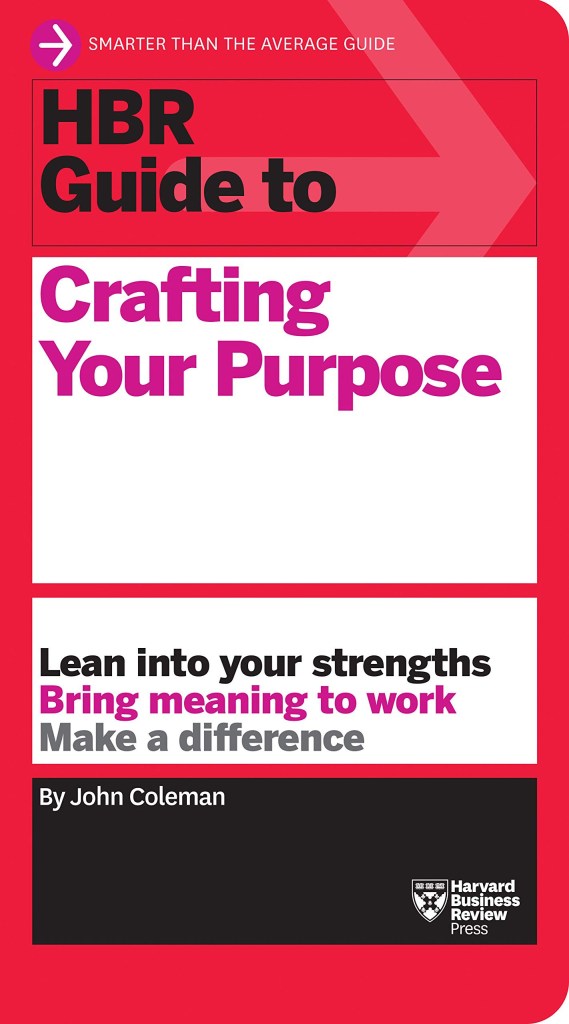
HBR Guide to Crafting Your Purpose by John Coleman

***Note: I received a free digital review copy of this book from NetGalley and Harvard Business Review Press in exchange for an honest review. I have not received compensation for the inclusion of any links for purchase found in this review or on any other page of The Voracious Bibliophile which mentions the HRB Guide to Crafting Your Purpose, its author, or its publisher.***

If I’m being honest, I approach most self-help and/or personal growth books with a healthy dose of skepticism. It’s not that I’m a Negative Ned or a Pessimistic Paul, per se. It’s just that the market is so saturated with hundreds (probably thousands) of these titles that contain basically identical content that I can’t help but roll my eyes whenever I see a new one hit the shelves. Even the anti-self-help, cool, trendy, swear word-laden titles have started to reach critical mass. At first it was cool to read these because you could be like, “Look at me! I’m bettering myself but in a cool hipster way. F$&$ yeah!”

Even the anti-self-help, cool, trendy, swear word-laden titles have started to reach critical mass.

Even worse than the typical fare one finds in the Personal Growth section of bookstores are the ones that purport to help you find your true purpose in life. Purpose. Such a heavy word. Just listen to anyone who’s achieved a modicum of success in any given field and they’ll tell you all about how they found their true purpose in life. For the rest of us, these people serve as shining examples of our own glaring mediocrity. If only we could find our purpose, maybe we too could enjoy the level of personal and professional fulfillment that these people have.

Just listen to anyone who’s achieved a modicum of success in any given field and they’ll tell you all about how they found their true purpose in life.

The truth, however, is a little more complex than that. I recently got the opportunity to read and review the HBR Guide to Crafting Your Purpose by John Coleman, published by Harvard Business Review Press. In it, he managed to dismantle some of the skepticism I’ve accumulated over the years through the careful analysis of his own research, plenty of evidence from other reputable sources to back it up, and more than a few real-life examples to provide illustrations for the concepts he lays out in his book. All in all, I was impressed.

Coleman begins his book by discussing the “crisis of meaning” modern society is currently experiencing. Many (if not most) people go to work simply to earn a paycheck. They find no meaning in the work they perform and their days are filled with drudgery and the overwhelming sense that nothing they do matters or provides value. Because of the proliferation of information technologies which allows them to be accessible at all times, they also have no work-life balance. When life is all work and no play, misery quickly ensues.

When life is all work and no play, misery quickly ensues.

One of Coleman’s main assertions throughout his book is that purpose is not something inherent or static. It is fluid and malleable. More than anything, it is something that can be crafted by each individual to provide meaning and happiness in each area of one’s life. It is not always something that one finds, but rather something that can be designed to fit the needs and desires of each individual based on their backgrounds and values.

More than anything, it [purpose] is something that can be crafted by each individual to provide meaning and happiness in each area of one’s life.

Another thing I liked about Coleman’s book are the numerous exercises he included to allow the reader the chance and space to put to work the concepts which he discusses. Whether someone is fresh out of high school or college or already somewhat (or even mostly) established in their chosen career field, I can’t think of anyone that wouldn’t benefit from Coleman’s wisdom.

Whether someone is fresh out of high school or college or already somewhat (or even mostly) established in their chosen career field, I can’t think of anyone that wouldn’t benefit from Coleman’s wisdom.

The HBR Guide to Crafting Your Purpose was released by Harvard Business Review Press on January 11th, 2022 and is available to purchase wherever books are sold.

Thanks as always for being a faithful reader of The Voracious Bibliophile. If you like what you see, please like, comment, follow, and subscribe to my email list to get notified of new posts as soon as they drop. You can also email me at fred.slusher@thevoraciousbibliophile.com or catch me on Twitter, Instagram, TikTok, and Pinterest @voraciousbiblog. Keep reading the world, one page (or pixel) at a time.
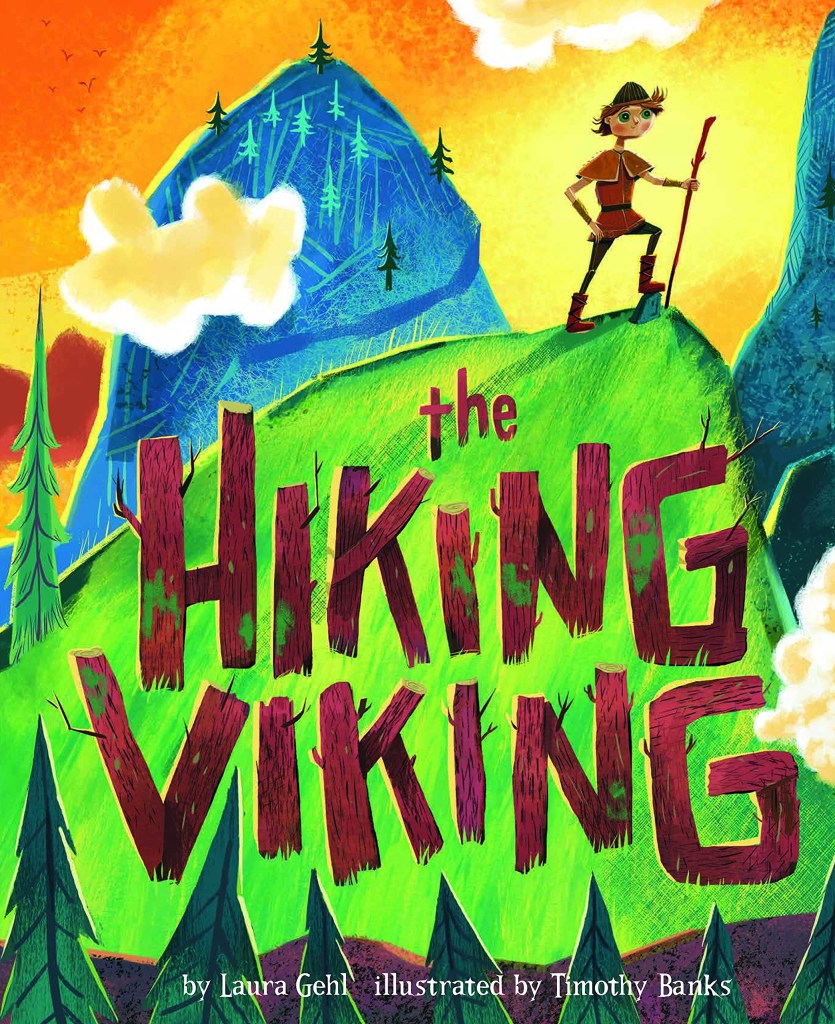
All Aboard the ARC: The Hiking Viking by Laura Gehl (Words) and Timothy Banks (Pictures)

The Hiking Viking by Laura Gehl (Words) and Timothy Banks (Pictures)

***Note: I received a free digital review copy of this book from NetGalley and Capstone Editions in exchange for an honest review.***

Leif isn’t like other Vikings. He doesn’t like to battle or brawl, holler or howl, wrestle, or throw spears. No, Leif’s idea of a good time is hiking to the top of the fjord and beholding the majesty of the natural world.

No one in Leif’s family can understand why he is the way he is. They’re always pressuring him to join them in the activities they enjoy, which naturally leaves Leif feeling like an inferior outcast in his own clan. When it comes time for the Viking Games, Leif’s family’s honor is at stake and he can’t let them down. What Leif learns and is able to teach his family and the other members of his village is that the best contribution you can give to your community is being yourself.

What Leif learns and is able to teach his family and the other members of his village is that the best contribution you can give to your community is being yourself.

Laura Gehl and Timothy Banks have crafted an instant classic with The Hiking Viking. With gorgeous illustrations and positive messages about the benefits of honoring your own authenticity, The Hiking Viking will appeal to young readers of all genders.

The Hiking Viking is due to be released on February 1st, 2022 by Capstone Editions and is now available to preorder wherever books are sold.

Thanks as always for being a faithful reader of The Voracious Bibliophile. If you like what you see, please like, comment, follow, and subscribe to my email list to get notified of new posts as soon as they drop. You can also email me at fred.slusher@thevoraciousbibliophile.com or catch me on Twitter, Instagram, TikTok, and Pinterest @voraciousbiblog. Keep reading the world, one page (or pixel) at a time.
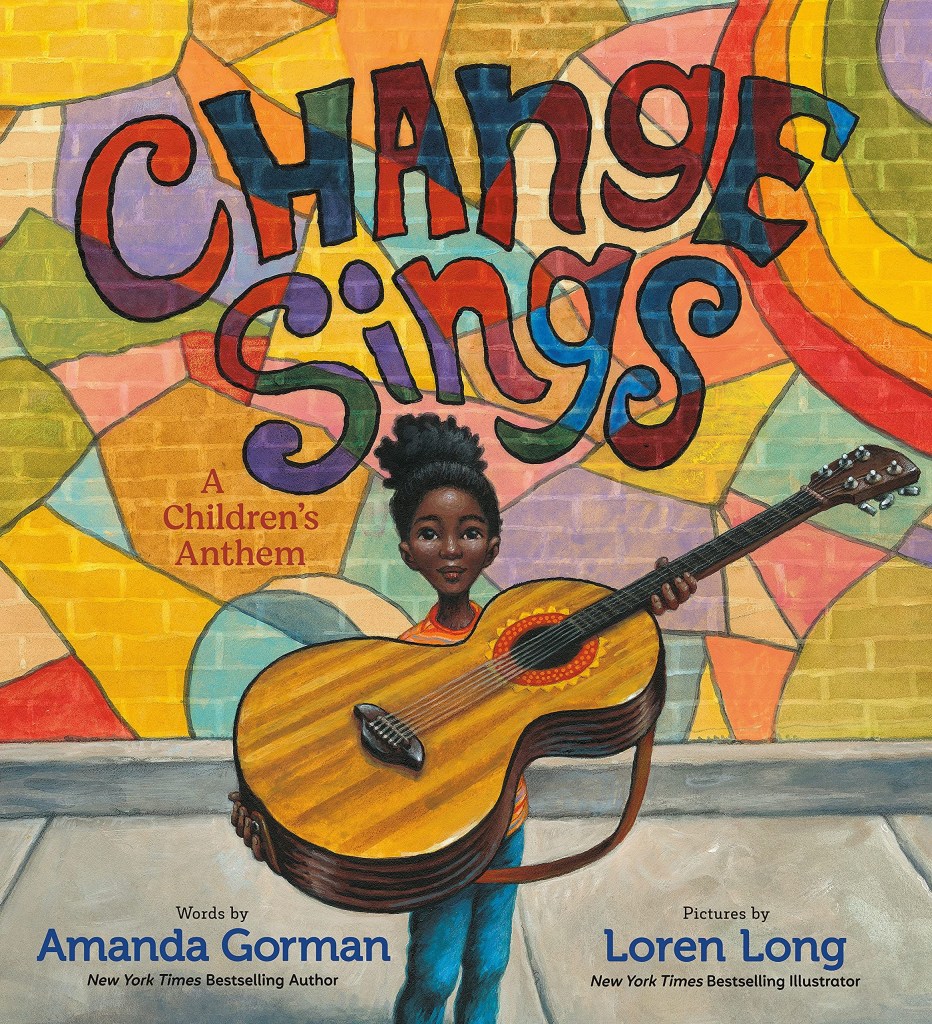
Book Review: Change Sings: A Children’s Anthem by Amanda Gorman (Author) and Loren Long (Illustrator)

Change Sings: A Children’s Anthem by Amanda Gorman (Author) and Loren Long (Illustrator)

Amanda Gorman is, quite simply, a revelation.

Amanda Gorman is, quite simply, a revelation. In Change Sings: A Children’s Anthem, Gorman’s mellifluous and uplifting text is paired with Loren Long’s gorgeously-rendered illustrations to show readers of all ages that everyone has a voice and everyone can (and should) be an agent for positive change. I think it’s fair to say that 2021 is the year of Amanda Gorman. She catapulted into the spotlight after she was chosen to recite her poem, “The Hill We Climb”, at the inauguration of President Joe Biden. She is the youngest person to ever be chosen for that honor. She was photographed by Annie Liebowitz for the May cover of Vogue, becoming the first poet who can make that claim.

…if you ask her, she stands on the shoulders of giants – the Black ancestors whose DNA she shares and whose lives she honors with her work to create a more just and equitable America.

It would seem that Gorman is racking up “firsts” like nobody’s business, but if you ask her, she stands on the shoulders of giants – the Black ancestors whose DNA she shares and whose lives she honors with her work to create a more just and equitable America. In addition to Change Sings, which was released by Viking Books for Young Readers on September 21st, she is also the author of three additional books: The One for Whom Food Is Not Enough, which she self-published in 2015; The Hill We Climb: An Inaugural Poem for the Country, which was released earlier this year; and Call Us What We Carry: Poems, which is due to be released on December 7th by Penguin Young Readers and is now available to preorder wherever books are sold.

Thanks as always for being a faithful reader of The Voracious Bibliophile. If you like what you see, please like, comment, follow, and subscribe to my email list to get notified of new posts as soon as they drop. You can also email me at fred.slusher@thevoraciousbibliophile.com or catch me on Twitter, Instagram, TikTok, and Pinterest @voraciousbiblog. Keep reading the world, one page (or pixel) at a time.