Thanks as always for being a faithful reader of The Voracious Bibliophile. If you like what you see, please like, comment, follow, and subscribe to my email list to get notified of new posts as soon as they drop. You can also email me at fred.slusher@thevoraciousbibliophile.com or catch me on Twitter, Instagram, TikTok, and Pinterest @voraciousbiblog. Keep reading the world, one page (or pixel) at a time.
Thanks as always for being a faithful reader of The Voracious Bibliophile. If you like what you see, please like, comment, follow, and subscribe to my email list to get notified of new posts as soon as they drop. You can also email me at fred.slusher@thevoraciousbibliophile.com or catch me on Twitter, Instagram, TikTok, and Pinterest @voraciousbiblog. Keep reading the world, one page (or pixel) at a time.
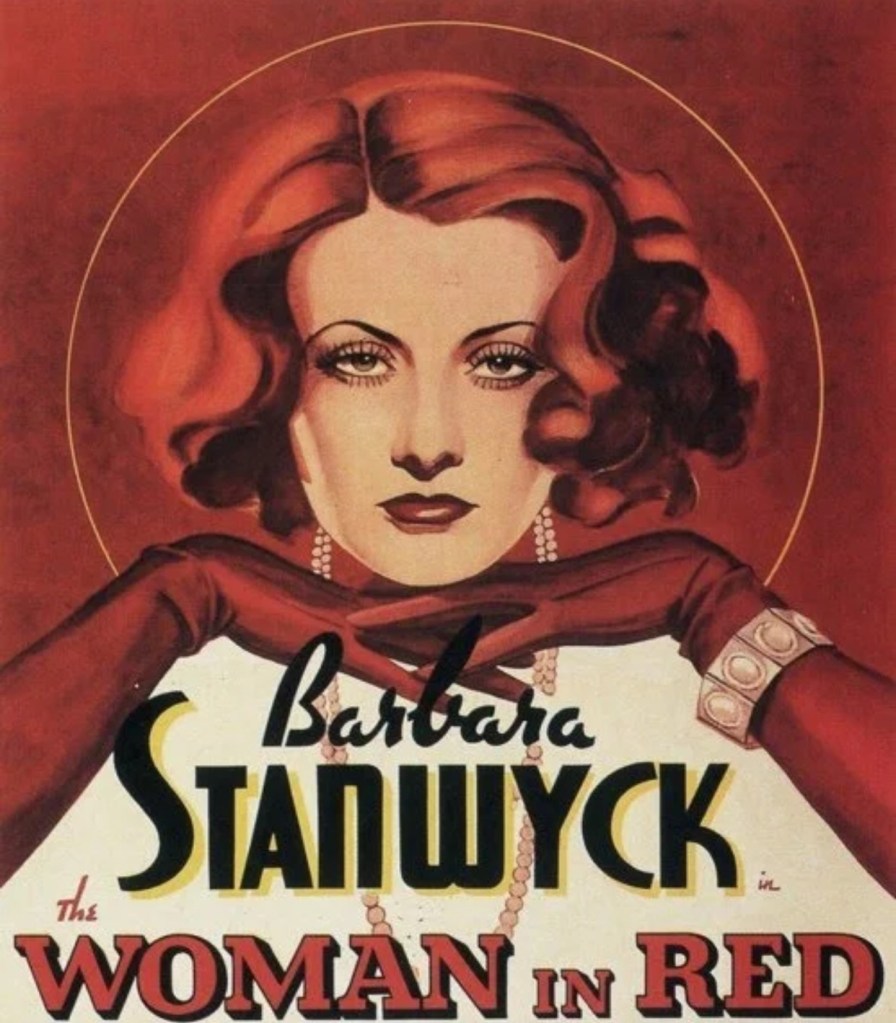
I think it’s safe to say that Barbara Stanwyck had some of the sauciest lines in cinematic history and while The Woman in Redis lesser-known among the films she starred in during her long career, it is a gem well worth watching. If you haven’t seen it yet and choose to, do yourself a favor and keep a pen and notebook nearby to save some of the barbs to use the next time someone pisses you off.
Thanks as always for being a faithful reader of The Voracious Bibliophile. If you like what you see, please like, comment, follow, and subscribe to my email list to get notified of new posts as soon as they drop. You can also email me at fred.slusher@thevoraciousbibliophile.com or catch me on Twitter, Instagram, TikTok, and Pinterest @voraciousbiblog. Keep reading the world, one page (or pixel) at a time.
Conrad Veidt in a still from Robert Wiene’s The Cabinet of Dr. Caligari (1920)
We queens are not free to answer the calls of our hearts.
The Cabinet of Dr. Caligari (1920); directed by Robert Wiene
Revolutionary at the time were its sharp lines and angles, its use of shadows and light to heighten the viewer’s anxiety. Caligari quite literally helped to develop the language of cinema.
The Cabinet of Dr. Caligari (1920) is a masterpiece of German Expressionist filmcraft. Perhaps no other film in the history of cinema has received as much scholarly attention because it paved the way for so many films that succeeded it. Revolutionary at the time were its sharp lines and angles, its use of shadows and light to heighten the viewer’s anxiety. Caligari quite literally helped to develop the language of cinema. Without it, there would be no film noir. None of the great horror films made by Universal from the 1930s to the 1950s would exist.
It would be my contention, in fact, that you can draw a direct line that starts with Caligari and goes all the way to films like The Wolf House (2018), Us (2019), and Midsommar (2019). I could talk about it all day, but it’s really something you need to see for yourself to truly appreciate. What are you waiting for?
Thanks as always for being a faithful reader of The Voracious Bibliophile. If you like what you see, please like, comment, follow, and subscribe to my email list to get notified of new posts as soon as they drop. You can also email me at fred.slusher@thevoraciousbibliophile.com or catch me on Twitter, Instagram, TikTok, and Pinterest @voraciousbiblog. Keep reading the world, one page (or pixel) at a time.
We bother with the ‘old stuff’ because it’s really what’s important to you as a human being, what’s important for your soul. The real value is the art, and it gives us sustenance. It’s something we have to cherish, and we have to make sure it survives.
Forgive me this brief exposition, but one of the world’s greatest tragedies was Crash “beating” out Brokeback Mountain for the Academy Award for Best Picture. A tender portrait of the lifelong love between two cowboys, Brokeback Mountain was groundbreaking when it first hit theaters in 2005. Far from being just “that gay cowboy movie”, it really brought queer cinema into the mainstream. Whether they were praising it or bashing it (often without having watched it), *everyone* was talking about it.
The performances in this film are some of the best and most evocative in the history of cinema. Heath Ledger, Jake Gyllenhaal, Michelle Williams, and Anne Hathaway all did excellent work, and it is because of their efforts, along with those of Annie Proulx for her source material, Ang Lee for his directorial acumen, and Larry McMurtry and Diana Ossana for their faithfully adapted screenplay that the film will be remembered, discussed, and appreciated for as long as moving pictures are considered an art form.
Annie Proulx’s original story (of the same name) on which the film is based was originally published in The New Yorker on October 13th, 1997. It alone is proof that short stories can pack just as much of an emotional wallop as can novels or other works of narrative fiction. A slightly-altered version of the short story was published in the collection pictured above, which was itself a finalist for the Pulitzer Prize for Fiction in 2000. It is from the version published in Close Range: Wyoming Stories that today’s quote is taken.
There was some open space between what he knew and what he believed and nothing could be done about it. And if you can’t fix it, you’ve got to stand it.
Thanks as always for being a faithful reader of The Voracious Bibliophile. If you like what you see, please follow, like, comment, and subscribe to my email list to get notified of new posts as soon as they drop. You can also email me at thevoraciousbibliophile@yahoo.com or catch me on Twitter @voraciousbiblog. Keep reading the world, one page (or pixel) at a time.
I survived because I was tougher than anybody else.
Bette Davis
Bette Davis was and remains one of the greatest actresses to ever grace the silver screen. In every performance she gave, she crackled with electricity, eliciting laughter as well as fury, and beauty as well as pain. Her career spanned more than fifty years and during that time, she took home two Academy Awards for Best Actress and racked up credits in more than one hundred films.
In every performance she gave, she crackled with electricity, eliciting laughter as well as fury, and beauty as well as pain.
Her work ethic was unparalleled and her wit unmatched. She was one of those rare beings on earth who are aware of their power and own it, wielding it to their advantage. It is my hope for my own life that I can live with the same level of courage, tenacity, and fearlessness that Bette Davis did. I feel like that would be a good start.
Thanks as always for being a faithful reader of The Voracious Bibliophile. If you like what you see, please follow, like, comment, and subscribe to my email list to get notified of new posts as soon as they drop. You can also email me at thevoraciousbibliophile@yahoo.com or catch me on Twitter @voraciousbiblog. Keep reading the world, one page (or pixel) at a time.








 The Voracious Bibliophile