Sinners Sinks Its Teeth Into the Oscars With a Record-Breaking 16 Nominations

Film poster for Sinners (2025); directed by Ryan Coogler.

Well, it’s official: Sinners now holds the record for having the most Oscar nominations for a single film in the Academy’s history with 16 nominations. Ryan Coogler’s (put some RESPECT on his name) film beats the previous record of 14 nominations held by three films: All About Eve (1950), Titanic (1997), and La La Land (2016). Out of those three films, only one of them (La La Land) didn’t win Best Picture. I know everyone is going wild over Paul Thomas Anderson’s One Battle After Another right now and it’s the favorite to win Best Picture, but I’m rooting for Sinners.

Here are the categories in which Sinners is nominated:

Best Picture (Zinzi Coogler, Sev Ohanian and Ryan Coogler)

Directing (Ryan Coogler)

Actor in a Leading Role (Michael B. Jordan)

Cinematography (Autumn Durald Arkapaw)

Visual Effects (Michael Ralla, Espen Nordahl, Guido Wolter and Donnie Dean)

Sound (Chris Welcker, Benjamin A. Burtt, Felipe Pacheco, Brandon Proctor and Steve Boeddeker

Film Editing (Michael P. Shawver)

Production Design (Production Design: Hannah Beachler; Set Decoration: Monique Champagne)

Original Song (“I Lied to You”, Music and Lyric by Raphael Saadiq and Ludwig Goransson)

Costume Design (Ruth E. Carter)

Casting (Francine Maisler)

Actor in a Supporting Role (Delroy Lindo)

Original Screenplay (Ryan Coogler)

Original Score (Ludwig Goransson)

Makeup and Hairstyling (Ken Diaz, Mike Fontaine and Shunika Terry)

Actress in a Supporting Role (Wunmi Mosaku)

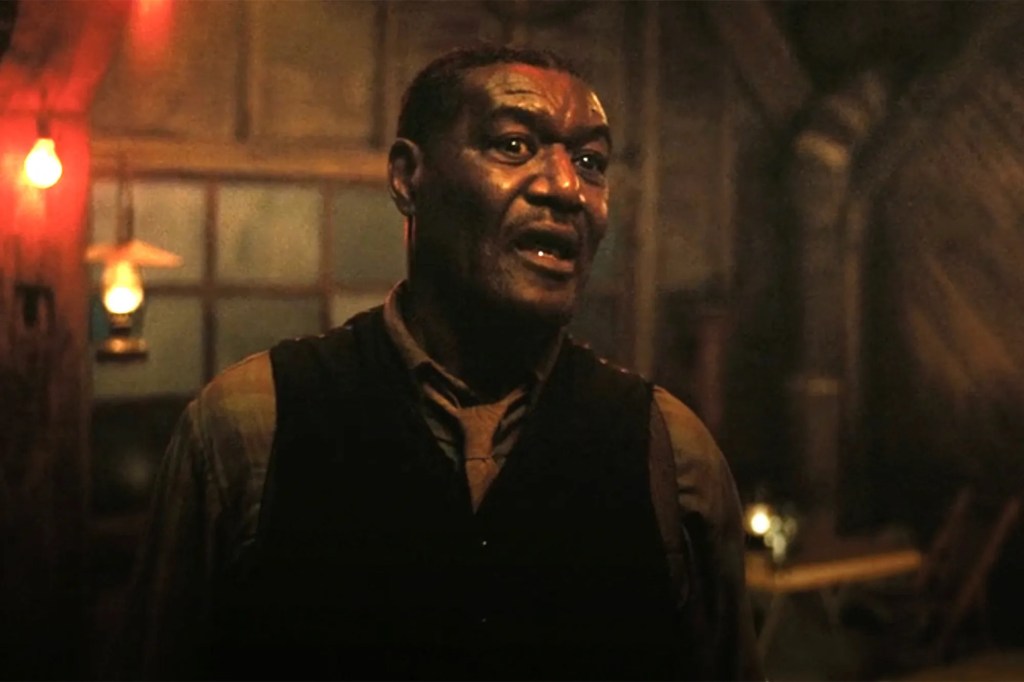
Sinners was my favorite film of 2025 from the moment I first saw it. I’ve watched it at least seven times now, and it only gets better with each viewing. I was worried that Delroy Lindo and Wunmi Mosaku might get shut out of their respective categories, but I’m happy to see that the Academy got it right. Mr. Lindo is 73 years old and this is his first Oscar nomination. That in itself is a travesty. That man has been turning in excellent performances for decades, and it is way past time for him to receive the accolades due him.

Sinners is now streaming on HBO Max and is available to own on DVD, Blu-ray, and 4K UHD.

Delroy Lindo as Delta Slim in Sinners. Credit: Warner Bros.

All I know is he’s got my vote. #TeamLindo

Thanks as always for being a faithful reader of The Voracious Cinephile. If you like what you see, please like, comment, follow, and subscribe to my email list to get notified of new posts as soon as they drop. Keep watching the world, one frame at a time.


The Voracious Cinephile Film Review: Nora Prentiss (1947); Directed by Vincent Sherman

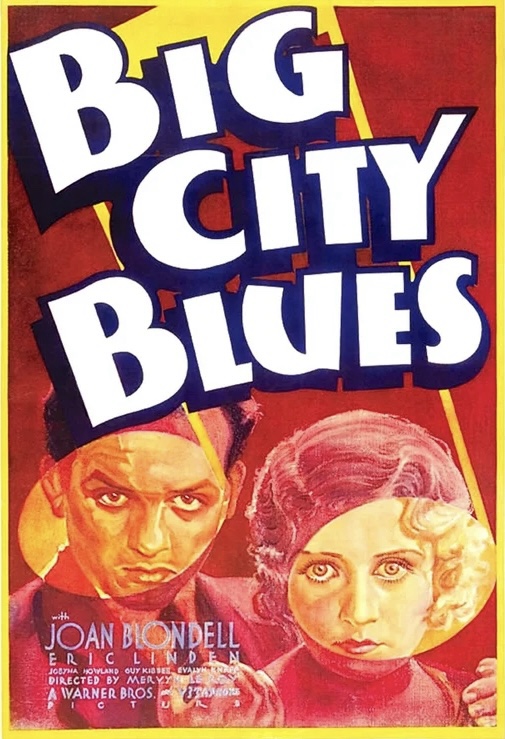
Film poster for Nora Prentiss (1947); directed by Vincent Sherman.

Rarely am I gobsmacked by a film, but Nora Prentiss fully smacked my gob. The premise, if not executed as well as it was, reads a trifle ridiculous. A man convicted of his own murder — preposterous, right? Not if all the stars in the universe align at precisely the same time to screw you. 

This film wouldn’t have worked if the femme fatale had been a slinky seductress, or the male lead an irredeemable womanizer. No, this is simply a tale of the wrong people falling hopelessly in love with one another when circumstances prevent them from being able to honor that love in a way that doesn’t hurt them both, with other people’s lives as collateral damage. 

James Wong Howe’s cinematography and Franz Waxman’s score are both perfect complements to this dark tale of what happens when good people give in to their worst impulses and get in too deep too quickly to escape the pull of oblivion. 

Nora Prentiss is now streaming on Watch TCM.

Thanks as always for being a faithful reader of The Voracious Cinephile. If you like what you see, please like, comment, follow, and subscribe to my email list to get notified of new posts as soon as they drop. Keep watching the world, one frame at a time.

The Voracious Cinephile Film Review: The Hitch-Hiker (1953); Directed by Ida Lupino

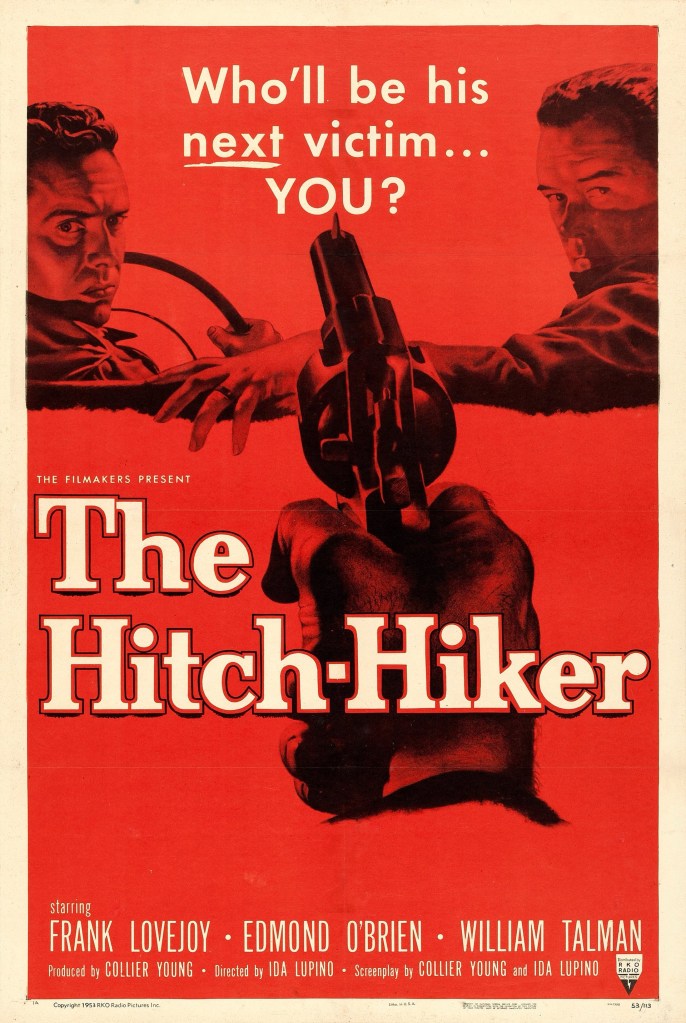
Film poster for The Hitch-Hiker (1953); directed by Ida Lupino.

In his intro or outro to this film (I can’t remember which now) on Noir Alley, Eddie Muller made the comment that it’s been said that only a woman could make a film like this at the time. I think that’s true because I think that women, despite being on the outside of the male psyche, are still the main recipient of the consequences of the decisions made by men. 

Only a woman could capture the fragility behind the brand of toxic masculinity displayed by men like Emmett Myers (William Talman). It’s a masculinity that is by its very nature deeply insecure, pathologically violent, and needing constant reaffirmation of its potency. That’s why men like Myers feel the need to dominate women and (lesser, beta) men, to bring them under subjugation. It’s why rape culture exists. It’s why they ascribe characteristics of femininity to men who they read as queer or who they perceive aren’t as strong or masculine as they are. It’s a masculinity that cannot be opposed without the threat of violence, because it does not recognize consent, autonomy, or personal sovereignty, only brute force. 

I would argue that this kind of masculinity is an epidemic, as serious and as deadly as any communicable disease or illness. When men like this are imbued with power of any kind, that power is abused to assuage their egos, to confirm to them their superior status. Give a man like that the nuclear codes and access to an arsenal of weapons the likes of which the world has never seen and the world holds it breath. 

Based on the real-life case of Billy Cook, a hitchhiking serial killer who murdered six people, including a vacationing family of five between 1950-1951, The Hitch-Hiker follows two friends, Roy Collins (Edmond O’Brien) and Gilbert Bowen (Frank Lovejoy), who pick up a hitchhiker named Emmett Myers (William Talman) who’s recently escaped from prison. What started for them as a nice fishing trip becomes a nightmare experience that you think will never happen to you until it does. 

Myers (Talman) wastes no time in pulling his gun on them and calling the shots. They drive him through the Baja California desert to Santa Rosalía, Baja California Sur, where his aim is to evade law enforcement by ferrying across the Gulf of California to Guaymas. He plays sick and sadistic mind games with them, one time making one of them shoot a tin can out of the other’s hand for sport. He takes every opportunity that presents itself to emasculate them and establish his own dominance. 

This film had a profound effect on me. Props to Ida Lupino for being able to identify and articulate something that politicians and policymakers still struggle with. Edmond O’Brien, Frank Lovejoy, and William Talman all give career-defining performances here. The cinematography by Nicholas Musuraca is especially good, also among his best. The desert scenes were the best in the film. I thought I recognized the location, and Eddie Muller mentioned that it was used in other films, including High Sierra with Humphrey Bogart and Ida Lupino (cool, huh?). 

The Hitch-Hiker was selected for preservation in 1998 by the United States National Film Registry. It has only grown in estimation since its release and remains an exemplar of film noir. Ida Lupino blew open the door for women filmmakers and gave them a blueprint to follow in a profession that is still (in 2026) gate-kept and dominated by men.  

The Hitch-Hiker is now streaming on Watch TCM.

Thanks as always for being a faithful reader of The Voracious Cinephile. If you like what you see, please like, comment, follow, and subscribe to my email list to get notified of new posts as soon as they drop. Keep watching the world, one frame at a time.

The Voracious Cinephile Film Review: Savage Sam (1963); Directed by Norman Tokar

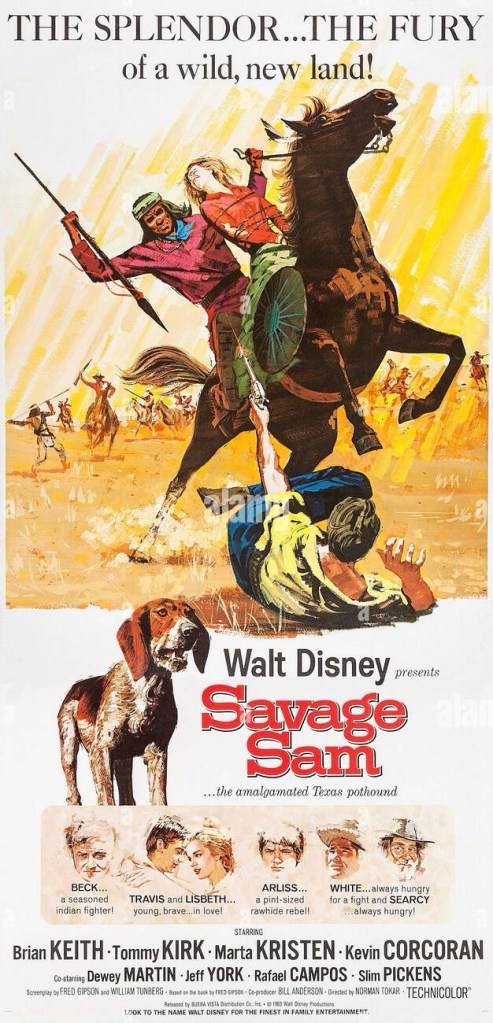
Film poster for Savage Sam (1963); directed by Norman Tokar.

Disclaimer: There’s some pretty serious anti-Indigenous racism on display here, and I’m not excusing that. The land we live on (if you’re reading this in the United States, but it also applies elsewhere) was taken from Indigenous peoples who were here long before white Europeans “settled” it. 

That said, the film is both a product and summation of the time period in which it was made and set in, and therefore the attitudes and mores of the prevailing (read: ruling) majority are found therein.

Savage Sam picks up a few years after the events of Old Yeller. Jim and Katie Coates (Fess Parker and Dorothy McGuire, respectively) are away from the family homestead visiting a sick grandmother while 18-year old Travis (Tommy Kirk) is in charge of watching his rambunctious 12-year old brother Arliss (Kevin Corcoran). Their dynamic is the same as it was in Old Yeller, but without the calming influence of their mother Katie to quell the fire between them. 

Instead, their Uncle Beck Coates (Brian Keith, who received top billing) acts as the adult mediator between them. Most of the plot revolves around Travis, Arliss, and Lisbeth Searcy (Marta Kristen, who replaced Beverly Washburn in the role from Old Yeller) getting captured by a group of Apaches led by a Comanche. 

I’m not going to say that this follow-up comes even close to matching the heart of the first film, but it certainly was entertaining to watch. It’s made me want to watch the other films where Tommy Kirk and Kevin Corcoran play brothers, because I love their chemistry. 

Bud Searcy (Jeff York, who also reprised his role from Old Yeller) also provides a lot of comic relief as Lisbeth’s insufferable, lazy, and perpetually hungry father. 

As far as cinematic brilliance, you won’t find much here. But if you’re looking for a nostalgic romp with characters you remember from your childhood, then Savage Sam is a good pick.

Savage Sam is available to rent or own on several streaming platforms or on DVD.

Thanks as always for being a faithful reader of The Voracious Cinephile. If you like what you see, please like, comment, follow, and subscribe to my email list to get notified of new posts as soon as they drop. Keep watching the world, one frame at a time.

The Voracious Cinephile Film Review: Wicked: For Good (2025); Directed by Jon M. Chu

Film poster for Wicked: For Good (2025); directed by Jon M. Chu.

Don’t believe any of the negative reviews you read about Wicked: For Good. Self-referential and absolutely thrillifying, each part in this sequel sings in harmony. Even being intimately familiar with all of the major plot points that play out didn’t dull the sensation of seeing everything unfold on the big screen. 

Self-referential and absolutely thrillifying, each part in this sequel sings in harmony.

Cynthia Erivo as Elphaba Thropp and Jonathan Bailey as Fiyero Tigelaar.

If Wicked saw Elphaba shine, Wicked: For Good sees Glinda shine just as bright. Ariana Grande is a master at playing equal parts comical and tragic, often in the same scene. Make no mistake, what she accomplishes here is far from easy, although she makes it appear to be. Like so many of us are so much of the time, Glinda finds herself trapped between doing what is good versus doing what is convenient; the choices she makes are sometimes sacrificial and sometimes self-aggrandizing. And they have far-reaching ramifications not only for her relationship with Elphaba, but for the future of Oz itself. 

Like so many of us are so much of the time, Glinda finds herself trapped between doing what is good versus doing what is convenient

Ariana Grande as Glinda Upland.

Some of the questions asked by this sequel are more important than the answers. What does it mean to be good, or wicked? And at what point do we cross that line? How much of ourselves must we give away to maintain our identity, our innate sense of self? How do we hold space for nuance in the face of evil — and more importantly, should we? 

What does it mean to be good, or wicked? And at what point do we cross that line?

Marissa Bode as Nessarose Thropp.

I also thought a lot during this film about what Hannah Arendt called the “banality of evil”, and how truly horrific acts are committed by people who believe they are just upholding order and the status quo. They make their own morality a question of bureaucratic efficiency. That is, if the cost of doing good exceeds the price they’re willing to pay, no atrocity is too great to be complicit therewith. The lesson, if one could call it that, is this: Some people need to be seen as wicked so that other people can be seen as good. All of us probably land somewhere in the middle. 

That is, if the cost of doing good exceeds the price they’re willing to pay, no atrocity is too great to be complicit therewith.

Wicked: For Good is now playing in theaters on a screen near you.

Thanks as always for being a faithful reader of The Voracious Cinephile. If you like what you see, please like, comment, follow, and subscribe to my email list to get notified of new posts as soon as they drop. Keep watching the world, one frame at a time.

The Voracious Cinephile Film Review: Frankenstein (2025); Directed by Guillermo del Toro

Film poster for Frankenstein (2025); directed by Guillermo del Toro.

In an age when studio heads are looking to slash costs and shorten production schedules by investing in generative AI, Guillermo del Toro’s commitment to traditional film craft cannot be a bigger breath of fresh air. Everything about this film is grounded, gorgeous, and most importantly, genuine. A work of art of this caliber could not be created by an artificially intelligent supercomputer. Computers do not have souls, the wellsprings from which all art is brought forth. Because of this, I would be remiss not to acknowledge what a labor of love Frankenstein obviously was for everyone involved. From the principal cast, to Guillermo del Toro (who wrote, directed, and produced the film), and the incredible cinematographer (Dan Laustsen), costume designer (Kate Hawley), and composer (Alexandre Desplat), everyone who worked on this film did this work like it was the most important of their lives. And perhaps it was. 

Everything about this film is grounded, gorgeous, and most importantly, genuine.

Curiously enough, Frankenstein is a timely and apt canvas upon which to analyze the moral dilemmas and questions of both Victor Frankenstein and the culture of our present day. Guillermo del Toro’s filmmaking ethos (the Oscar-winning director recently said he’d “rather die” than use AI in his films) is a scathing indictment of people like Victor Frankenstein (Oscar Isaac). The Creature (Jacob Elordi) is assembled and brought to life by Frankenstein from disparate, stolen parts. Frankenstein can, however, no more claim authorship or ownership of The Creature than the people who “create” AI content from stolen books, films, and other works of art. In The Creature as well as in the works “created” by AI, the theft is so profligate and egregious that one cannot begin to cipher what was taken from whom. Artifice becomes the only truth, and everything else is plunder. 

Artifice becomes the only truth, and everything else is plunder. 

Frankenstein is the film del Toro has wanted to make since he was 7 years old and first saw the James Whale Frankenstein films, and his vision of the classic story was made for this moment. If it had come any sooner or later than right now, it would be deprived of its enormity and heft. Thank God it languished in production hell for years because the stars aligned when they were supposed to and not a second before. The implications it elucidates for the discerning viewer should fill anyone with not just fear, but mortal terror. Whether it be usurping God or playing with (stolen) fire (Prometheus, anyone?), the end result is the same: destruction. 

The implications it [Frankenstein] elucidates for the discerning viewer should fill anyone with not just fear, but mortal terror.

I want to talk for a second about Jacob Elordi’s performance in this film. It moved me to tears. He brought to full power the unrealized humanity behind Karloff’s Frankenstein’s monster, and that is not a negative comment on Karloff’s portrayal. The world was not perhaps ready for a Creature both human and not, both living and not. It may still not be, but Elordi infuses his Creature with as much soul as has ever been seen on celluloid. The sheer physicality the role required would be too much for most actors, but Elordi brought a dedication to the performance that’s nothing short of mind-boggling. It took as much as eleven hours each day just to transform him into The Creature, so he often worked twenty-hour days during filming. His boundless energy and startling gravitas transform a role that easily could have veered into parody or caricature into one of sublime transcendence and beauty. Give him all of his flowers. 

His [Elordi’s] boundless energy and startling gravitas transform a role that easily could have veered into parody or caricature into one of sublime transcendence and beauty.

Kate Hawley’s costumes for this film are also beyond breathtaking, especially the ones she designed for Mia Goth. The TikTok video I’m linking to below goes into the costume design in more depth:

Courtesy of @Sarahpop on TikTok. Images from the film are the property of Netflix.

https://www.tiktok.com/t/ZTMwgeU9B/

Frankenstein is now available to stream exclusively on Netflix, but you bet your sweet behind my fingers are crossed for a physical release of some kind, preferably from the Criterion Collection.

Thanks as always for being a faithful reader of The Voracious Cinephile. If you like what you see, please like, comment, follow, and subscribe to my email list to get notified of new posts as soon as they drop. Keep watching the world, one frame at a time.

Happy 100th Anniversary to The Phantom of the Opera (1925); Directed by Rupert Julian

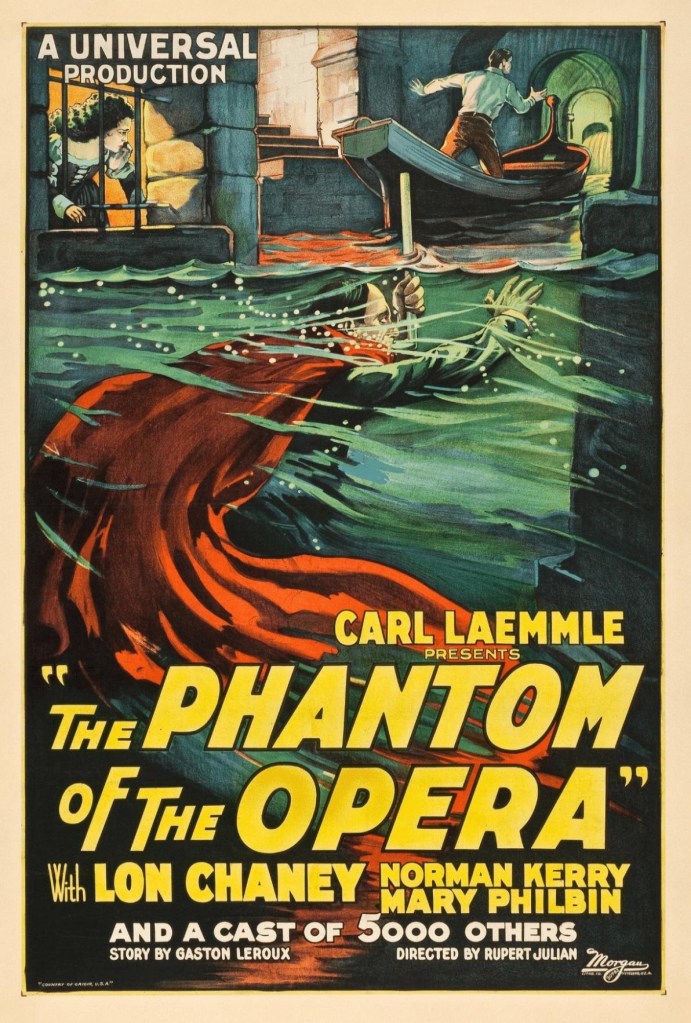
Film poster for The Phantom of the Opera (1925); directed by Rupert Julian.

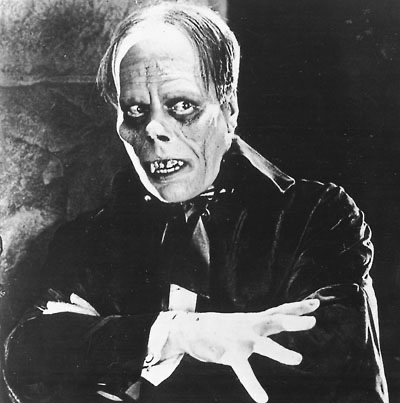
100 years ago today, Rupert Julian’s The Phantom of the Opera premiered in U.S. theaters. It is a silent horror classic starring Lon Chaney as The Phantom. Even today, Lon Chaney’s legacy as one of the first scream kings (even before such distinctions were bestowed) resonates across cinema and the wider culture. Produced by Carl Laemmle, who was the cofounder of Universal Pictures and made hundreds of films between 1909 and 1934, The Phantom of the Opera would help set the standard for horror films for generations to come.

Because the copyright for the film was not renewed in the 28th year after its publication, it entered the public domain in 1953. It is available to view on multiple steaming platforms as well as DVD and Blu-ray.

Thanks as always for being a faithful reader of The Voracious Cinephile. If you like what you see, please like, comment, follow, and subscribe to my email list to get notified of new posts as soon as they drop. Keep watching the world, one frame at a time.

The Voracious Cinephile Film Review: Jeanne Dielman, 23, quai du Commerce, 1080 Bruxelles (1975); Directed by Chantal Akerman

Criterion Collection edition of Jeanne Dielman, 23, quai du Commerce, 1080 Bruxelles (1975); directed by Chantal Akerman.

A less astute viewer might get ten minutes into Jeanne Dielman and decide that it’s too boring to make the effort. Personally, I have no patience for this kind of viewer. People with an over-reliance on plot and dialogue have no imagination. They fail to see beyond the noise. 

One of the most brilliant aspects of this film is the fact that the viewer isn’t just invited, but coerced, into participating in Jeanne’s slow unraveling. Everything Jeanne does, every single day, is performed with precision and militaristic attention to detail. She is meticulous, structured. Even the johns who patronize her arrive on a schedule, telling her when they’ll return. 

Each frame is a painting, a still life unto itself. Her routinized existence becomes your only reality while watching, and you are therefore highly aware of the deviations that begin to appear: a missed button on a housecoat; potatoes cooked too long; the staccato bursts of forgetfulness, wherein Jeanne goes to perform one of her perfunctory tasks and loses herself in what she was doing. These things would mean nothing in a film with more noise, with a character we didn’t know as well. By the time these disruptions begin and the cracks in the facade become apparent, we know Jeanne very well. Perhaps better than she knows herself, if we may be so bold. And so comes the unraveling. 

Each frame is a painting, a still life unto itself.

It’s deeply unsettling, and an actress with less talent wouldn’t be able to pull off what Seyrig does here. There are probably fewer than five pages of dialogue in the entire three-plus hour runtime, so her entire performance is one of intense interiority, an almost unfathomable becoming. 

If you’ve tried to watch this film in the past and not been able to make it through it, I implore you to give it another shot. Wake up really early in the morning with nothing else on your schedule, no tasks or chores to distract you. Ensure your notifications are turned off, better yet put your phone on silent in another room. Immerse yourself in this intense exercise of concentrated empathy, and I dare you to remain unchanged.

There are probably fewer than five pages of dialogue in the entire three-plus hour runtime, so her entire performance is one of intense interiority, an almost unfathomable becoming. 

Jeanne Dielman, 23, quai du Commerce, 1080 Bruxelles is available to buy from the Criterion Collection wherever their films are available. It is also available to stream on The Criterion Channel here.

Thanks as always for being a faithful reader of The Voracious Cinephile. If you like what you see, please like, comment, follow, and subscribe to my email list to get notified of new posts as soon as they drop. Keep watching the world, one frame at a time.

The Voracious Cinephile Film Review: Black Tuesday (1954); Directed by Hugo Fregonese

Film poster for Black Tuesday (1954); directed by Hugo Fregonese.

Black Tuesday was Eddie Muller’s Noir Alley pick for October 18th, and I just got around to watching it. Edward G. Robinson is one of my favorite actors of all time. His ability to so completely inhabit the characters he plays while also remaining so indistinguishably himself is one of the reasons I love him so much. 

Another reason is that in a career with such an expansive filmography, there’s more than a few hidden gems to be discovered. I would argue that it’s the performances of his that are less talked about that are among his best. I’m talking of course about the little-seen Two Seconds, a pre-Code crime drama from 1932 directed by Mervyn LeRoy, and The Red House, Delmer Daves’s exercise in abject terror from 1947. In both of these, we see Robinson embodying characters who, throughout the course of the film, unravel to reveal their baser selves. It is within this space of raw emotion and a naked psyche that Robinson really shines, and that can certainly be said for Black Tuesday

Directed by Hugo Fregonese and released in 1954, Black Tuesday tells the story of Vincent Canelli (Robinson), a death-row inmate who escapes prison on the night of his execution. Note that he also played a death-row inmate in Two Seconds. As far as prison breaks go, Canelli masterminds the operation with no small amount of ingenuity. For the sake of not spoiling this aspect of the film, I’ll not say anything, but suffice it to say that I was impressed. If you’re going to be a crook, be a successful one. 

Robinson’s Canelli is ruthless, cold-blooded, and misanthropic. His only vestige of humanity is seen in his love for his girlfriend, Hatti (Jean Parker), who helps him execute the details of the break. He has little regard for the feelings of others, and the end always justifies the means. He is violent for the sheer joy of it, and perhaps joy doesn’t even compute into the equation. He is violent simply because he can be, because he’s so full of hate that he can’t help but unleash it on whoever is unlucky enough to get in his way. 

The supporting performances in this film really help bring it over the top, especially those of the aforementioned Jean Parker and Milburn Stone of Gunsmoke fame, who plays Father Slocum, a Catholic priest. 

Black Tuesday can be watched on YouTube here

Thanks as always for being a faithful reader of The Voracious Cinephile. If you like what you see, please like, comment, follow, and subscribe to my email list to get notified of new posts as soon as they drop. Keep watching the world, one frame at a time.

Film Review: Cool Hand Luke (1967); Directed by Stuart Rosenberg

Film poster for Cool Hand Luke (1967); directed by Stuart Rosenberg.

“What we’ve got here is failure to communicate.”

Captain (Strother Martin)

It might just be me, but this saga of a man named Luke (Paul Newman), crushed but not deterred under the weight of a system designed to deprive him of his body, mind, and soul, is the perfect metaphor for late-stage capitalism and rising fascism in 2025. The circumstances are somewhat different, but still startlingly relevant as it concerns the prison industrial complex, police brutality, and slavery. Some people might call that last one a stretch, but what are prisons if not legal warehouses of forced labor and deprivation of liberty? If your labor creates economic value for someone who isn’t you or your family and you aren’t allowed to leave, are you not a slave? 

I mean, let’s be serious for a moment. Luke was a nonviolent offender sentenced to two years of extremely hard labor in deplorable conditions for destroying some parking meters and stealing the change out of them. And the captain and guards are given free rein to treat the incarcerated men however they see fit, up to and including executing them for trying to escape said conditions. They can even manufacture circumstances ex post facto to justify actions they take in the moment. There are no oversight or accountability mechanisms in place to discourage their violent conduct. One wonders if the wrong people are deprived of their freedom. 

The captain and guards are soldiers in the war of the death of these men’s souls. These violent men (the guards, not the inmates) derive pleasure from and revel in the control they wield over every move the inmates make. It’s sickening and morally reprehensible, but very realistic and apt, even and especially in 2025. 

The captain and guards are soldiers in the war of the death of these men’s souls.

There’s one particularly striking moment in the film where Luke’s mother (Jo Van Fleet) passes away and news of her passing reaches Luke. Rather than let him go and pay his respects to her, they lock him in a wooden shed called The Box, sentencing him to solitary confinement for no reason other than to deter his escape. Let it be noted that up until this point he had given no indication of a desire to escape.

This hot, enclosed shed is dark, dank, and reeking of shit and piss. Right before one of the guards (or bosses, as the inmates refer to them) locks him up in The Box, he says, “Sorry, Luke. I’m just doing my job. You gotta appreciate that.” And Luke responds, “Nah – calling it your job don’t make it right, boss.” 

“Nah – calling it your job don’t make it right, boss.”

Luke (Newman)

That moment hit me like lightning. So many horrific acts of cruelty have been committed by people “just doing their jobs”. Slave catchers were just doing their jobs. The cops who arrested Rosa Parks were just doing their jobs. The SS were just doing their jobs. The same for ICE agents and Republican lawmakers who craft the law in favor of the rich and powerful and punish the poor for the sin of being poor. They’re all just doing their jobs. 

One must have a moral compass, a sense of duty and responsibility to common humanity that transcends legality, convention, and organized religion. I included that last one because so many people use religion (mostly Christianity, in the context of the United States) as a pretext for depriving others of their rights and freedoms. Their moral superiority obfuscates the actual dictates of their prescribed beliefs and therefore gives them a license to ignore those dictates in favor of advancing an agenda of their own creation. They worship power, and reap desolation. 

One must have a moral compass, a sense of duty and responsibility to common humanity that transcends legality, convention, and organized religion.

Paul Newman as Luke.

They worship power, and reap desolation.

Strother Martin as Captain.

The only way to beat the system, to stick it to The Man, is to keep a part of yourself that can’t be touched or corrupted by evil men. They can take your body, but they can’t touch your soul. Just like Luke. 

Thanks as always for being a faithful reader of The Voracious Bibliophile. If you like what you see, please like, comment, follow, and subscribe to my email list to get notified of new posts as soon as they drop. You can also email me at fred.slusher@thevoraciousbibliophile.com or catch me on Twitter, Instagram, TikTok, and Pinterest @voraciousbiblog. Keep reading the world, one page (or pixel) at a time.