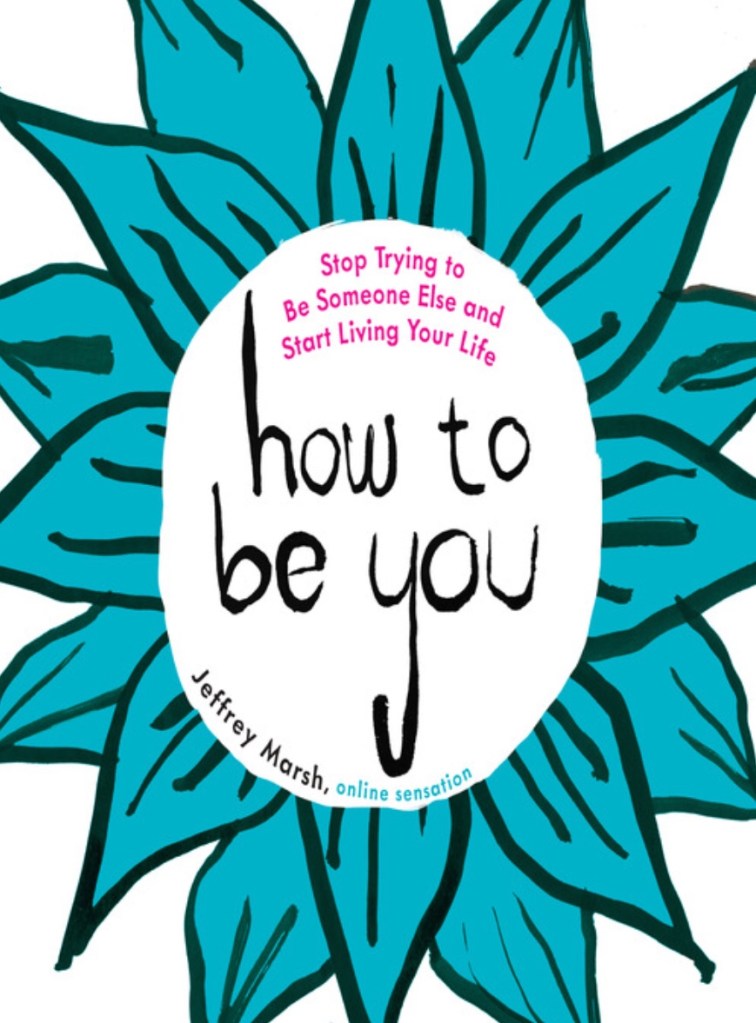
How to Be You: Stop Trying to Be Someone Else and Start Living Your Life by Jeffrey Marsh
I have followed Jeffrey Marsh on Twitter for years. Before I found a therapist, before I got on medication for my anxiety and depression, their videos helped me to be able to take a breath and center myself so I could get through the day. I’m sure I’m not the only person whose life has been impacted by them in this way, but I will forever be grateful for their calm voice affirming my place in the world over and over again until I started to believe it for myself.
How to Be You is the self-love manifesto that everyone in the world needs to read, but it is especially essential for those of us in the LGBTQ+ community. We live in a world that is often hostile to us, a world that bullies, beats, threatens, harasses, disenfranchises, and belittles us to the point of fracture, to the point where our very existence is seen as a threat to the standing order. Jeffrey’s assertion throughout their book is that it is our choice whether or not we are going to capitulate to the people who would make us smaller. We can be expansive or we can shrink. We can grow and learn and change and accept ourselves in all of our glorious complexity or we can draw lines of demarcation around ourselves and always exist as less than our true selves.
We can be expansive or we can shrink. We can grow and learn and change and accept ourselves in all of our glorious complexity or we can draw lines of demarcation around ourselves and always exist as less than our true selves.
I’m not going to lie, a lot of the self-help material circulating in the world today is worthless pablum at best and an avaricious money-grabbing scheme at worst, but Jeffrey Marsh is the real deal. Their work comes from a deep place of understanding what it feels like to be marginalized and maligned for being queer, and I am so grateful for their existence. I am grateful for this book’s existence. Thank you, Jeffrey. A thousand times, thank you.
Favorite Quotes from How to Be You
Confidence comes naturally if trust is present.
Aren’t you lucky that you get this life, this chance, to learn to set aside the yuck and muck of other people’s sometimes nasty words and do your best to live your life as fully as you know how?
Even if it seems like the whole world is against you, you’ve got to trust yourself. Even if no one else will honor you, you must honor what your truth is in any given moment.
Beginning to see yourself as worthy and trustworthy is the start of something beautiful. Why? Because you can finally let go. You don’t need to spend all your time trying not to be too much. You can relax. You can feel safe. You deserve that. Everyone deserves that.
Trusting yourself is the way to claim the life you’ve always been waiting for.
Trust your own self-examination more than you automatically believe someone else’s pronouncement.
Worry and hate are habits, and so are love and forgiveness.
Whatever your imagined crimes were in the past, they are not worth ruining your today for. You deserve to feel free. You deserve to be let off the hook.
Thanks as always for being a faithful reader of The Voracious Bibliophile. If you like what you see, please like, comment, follow, and subscribe to my email list to get notified of new posts as soon as they drop. You can also email me at fred.slusher@thevoraciousbibliophile.com or catch me on Twitter and Instagram @voraciousbiblog. Keep reading the world, one page (or pixel) at a time.
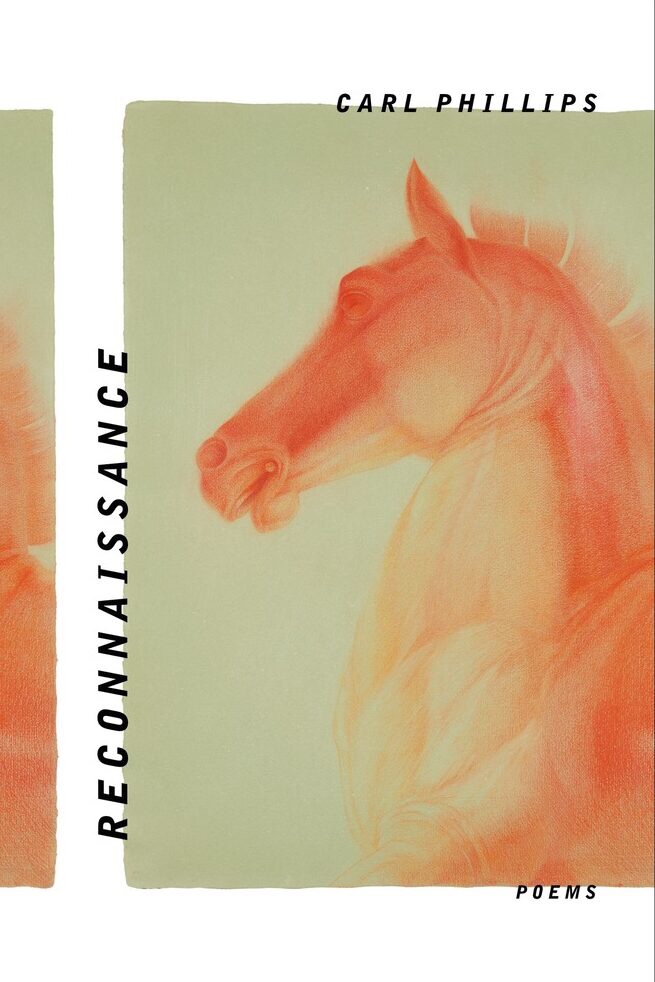
Most mornings here, mist is the first thing to go —first
the mist, then the fog, though hardly anyone seems to
     know
the difference, or even care, the way for some a dead buck
is a dead buck: the road, the body, a little light, the usual
dark, light’s
          unshakeable escort...You can love a man
more than he’ll ever love back or be able to, you can
     confuse
your understanding of that
                                            with a thing like acceptance or,
worse, all you’ve ever deserved. I’ve driven hard into
the gorgeousness of spring before; it fell hard behind me:
the turning away, I mean, the finding of clothes,
the maneuvering
                                awkwardly back into them...why not drive
forever? Respect or shame, it’s pretty much your
own choice, is how it once got explained to me. I’ve already
said—I’m not sorry. Magnolia. Wild pear. So what if one
wish begets a next one,
                                   only to be conquered by it, if the blooms
break open nevertheless like hope?
Bonus Graphic
So, some of you probably remember those batches of graphics I dropped on here a few weeks ago. Most of the ones I made at the time were lyrics from Taylor Swift’s folklore, but I also made some using snippets from my favorite poems, and it just so happens that I found one containing lines from today’s poem. I hope you like it. Disclaimer: I am not nor do I claim to be a professional graphic designer.
Thanks as always for being a faithful reader of The Voracious Bibliophile. If you like what you see, please like, comment, follow, and subscribe to my email list to get notified of new posts as soon as they drop. You can also email me at fred.slusher@thevoraciousbibliophile.com or catch me on Twitter and Instagram @voraciousbiblog. Keep reading the world, one page (or pixel) at a time.
This place could be beautiful, right? You could make this place beautiful.
Life is short, though I keep this from my children.
Life is short, and I’ve shortened mine
in a thousand delicious, ill-advised ways,
a thousand deliciously ill-advised ways
I’ll keep from my children. The world is at least
fifty percent terrible, and that’s a conservative
estimate, though I keep this from my children.
For every bird there is a stone thrown at a bird.
For every loved child, a child broken, bagged,
sunk in a lake. Life is short and the world
is at least half terrible, and for every kind
stranger, there is one who would break you,
though I keep this from my children. I am trying
to sell them the world. Any decent realtor,
walking you through a real shithole, chirps on
about good bones: This place could be beautiful,
right? You could make this place beautiful.
You only have to let the soft animal of your body love what it loves.
You do not have to be good.
You do not have to walk on your knees
For a hundred miles through the desert repenting.
You only have to let the soft animal of your body
love what it loves.
Tell me about despair, yours, and I will tell you mine.
Meanwhile the world goes on.
Meanwhile the sun and the clear pebbles of the rain
are moving across the landscapes,
over the prairies and the deep trees,
the mountains and the rivers.
Meanwhile, the wild geese, high in the clean blue air,
are heading home again.
Whoever you are, no matter how lonely,
the world offers itself to your imagination,
calls to you like the wild geese, harsh and exciting—
over and over announcing your place
in the family of things.
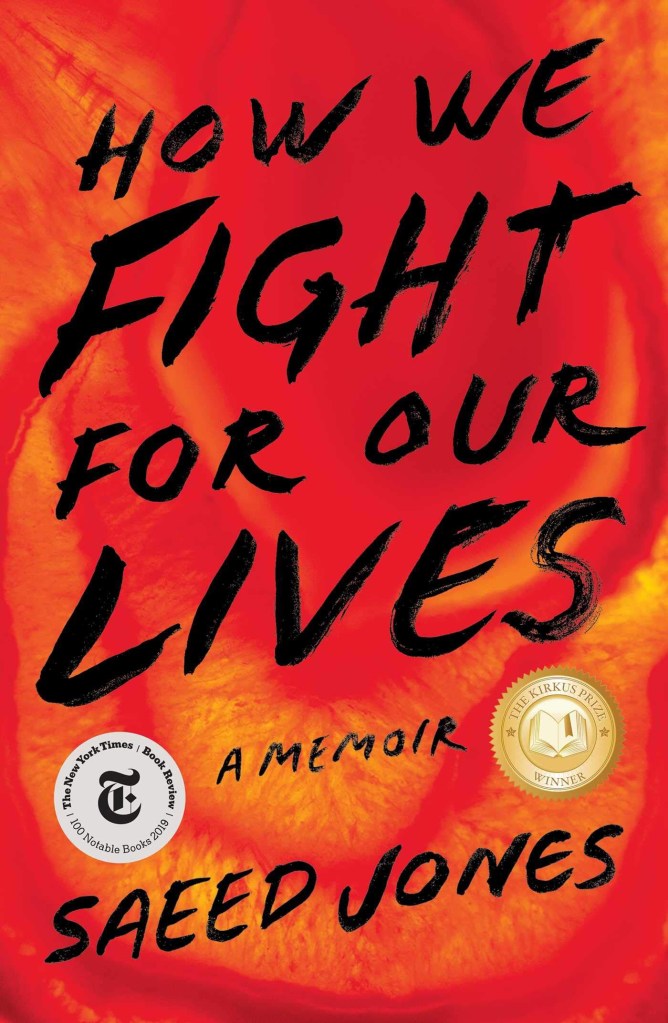
How We Fight For Our Lives: A Memoir by Saeed Jones
Book Review: How We Fight For Our Lives: A Memoir by Saeed Jones
***Note: This review was originally posted to my Goodreads account in October of 2019.***
Everyone has a lie we’re quietly waiting to believe.
With startling economy of language, Saeed Jones tells his story with such precision that after turning the last page you feel as if you’ve been borrowing his skin.
If you read one book this year, let this be it. Please.
Thanks as always for being a faithful reader of The Voracious Bibliophile. If you like what you see, please like, comment, follow, and subscribe to my email list to get notified of new posts as soon as they drop. You can also email me at fred.slusher@thevoraciousbibliophile.com or catch me on Twitter and Instagram @voraciousbiblog. Keep reading the world, one page (or pixel) at a time.
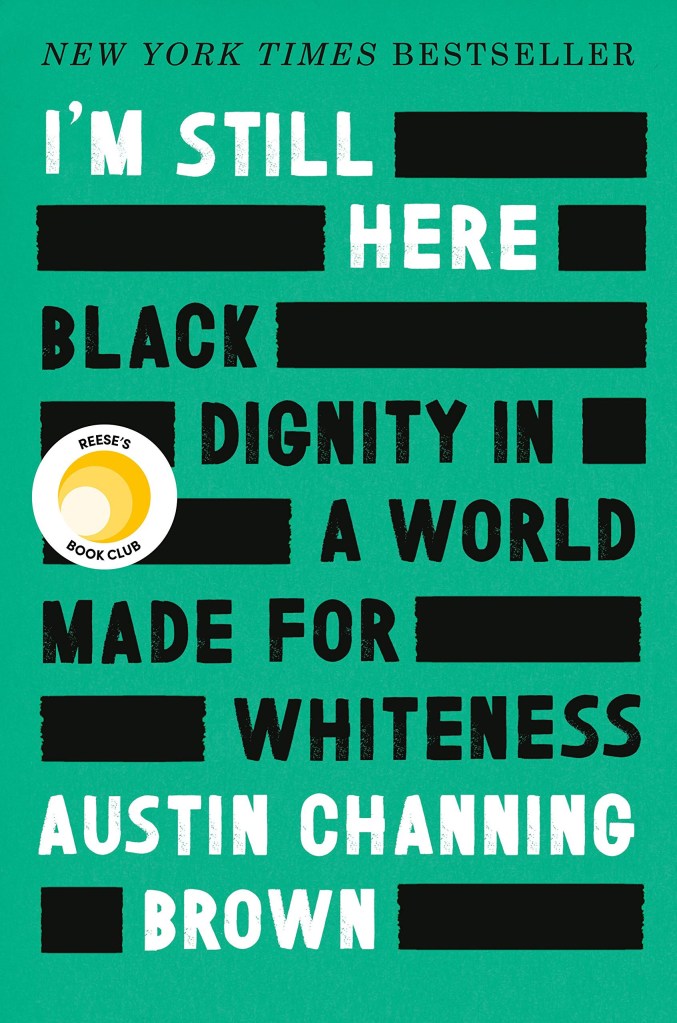
I’m Still Here: Black Dignity in a World Made for Whiteness by Austin Channing Brown
***Note: I originally read this book in June of 2020. The review posted here may be slightly altered from its original version and was first posted on my Goodreads account.***
Review
Austin Channing Brown does a superb job of deconstructing the myth of American progress toward racial equality, tracing the evolution of white supremacy from chattel slavery to Jim Crow and further on down the line to our current world characterized by police violence against Black people and their communities, and the prison industrial complex that warehouses Black people with outsized sentences for non-violent offenses in a modern-day proxy to slavery.
I loved her examples of dealing with—on an everyday basis—well-meaning white people whose ingrained racism and belief in their own goodness prevent them from taking responsibility for their racist microagressive behavior. Brown shows us that racism isn’t a problem that exists only at Klan rallies—it is perpetuated by millions of white people who have deluded themselves into thinking they live in a post-racial society where they get all the clout tokens for “having Black friends” while doing none of the work involved in anti-racist activism.
Brown shows us that racism isn’t a problem that exists only at Klan rallies—it is perpetuated by millions of white people who have deluded themselves into thinking they live in a post-racial society where they get all the clout tokens for “having Black friends” while doing none of the work involved in anti-racist activism.
The work of delegitimizing and dissolving white supremacy is a job that can’t happen unless white people (all white people) acknowledge their complicity in reinforcing racist norms and do their part to effect real change. This is a book every white person needs to read.
Favorite Quotes with Commentary
Rather than dwell on individuals, I speak about the system. About white boardrooms and white leadership teams. About white culture and the organization’s habit of hiring people who perpetuate that culture rather than diversify it. But the white consensus doesn’t want me to point out these things.
So many white people in positions of power like to play the numbers game when it comes to propagating their organization’s own racial diversity. “We can’t be racist because we are *exceeding* EEOC guidelines in hiring racial minorities.” “We hire Black people to work in every department within our organization, so therefore we are committed to equality.” Why is it that white people want a pat on the back for every modicum of human decency they performatively display? Why do we still allow this pablum to be volleyed hither and yon as a marker of a nonexistent racial equity?
Why is it that white people want a pat on the back for every modicum of human decency they performatively display? Why do we still allow this pablum to be volleyed hither and yon as a marker of a nonexistent racial equity?
White supremacy is a tradition that must be named and a religion that must be renounced. When this work has not been done, those who live in whiteness become oppressive, whether intentional or not.
I love that here Brown names white supremacy as a religion, because that’s exactly what it is—a faith tradition grounded in the inferiority of BIPOC and the deification of white skin as morally pure and upright. What makes it so insidious and corrosive is that white supremacists attempt to legitimize their racism by purporting to have faith in a form of Christianity completely excised of the primary teaching of Christ—to love one’s neighbor as oneself.
What makes it [white supremacy] so insidious and corrosive is that white supremacists attempt to legitimize their racism by purporting to have faith in a form of Christianity completely excised of the primary teaching of Christ—to love one’s neighbor as oneself.
Far from an imposing beast, I found that white supremacy is more like a poison. It seeps into your mind, drip by drip, until it makes you wonder if your perception of reality is true.
One thing Brown brings up throughout her book, mentioned in the quote above, is the gaslighting element accompanying subtle racism. As if the accumulation of daily micro-aggressions were not enough, Nice White People love to assuage their own guilt by minimizing the impact their own actions (intentional or not) have on the lived experiences of the Black people they interact with. This is not acceptable. If we are going to create the more perfect union touted by American nationalists of every star and stripe, we have to start, as white people, by first acknowledging our complicity in the structures and systems that we benefit from at the expense of our Black siblings and neighbors.
If we are going to create the more perfect union touted by American nationalists of every star and stripe, we have to start, as white people, by first acknowledging our complicity in the structures and systems that we benefit from at the expense of our Black siblings and neighbors.
The role of a bridge builder sounds appealing until it becomes clear how often that bridge is your broken back.
Why is it that we expect Black people in our circles to be the first ones to initiate change, the first ones to make a step toward understanding? Whenever we talk about EDI (equity, diversity, and inclusion), why do we place the brunt of the labor of coalition-building (emotional and otherwise) on our Black colleagues? We should not expect a person to speak for a whole people. Any efforts we make toward increasing inclusivity in our offices, in our boardrooms, and at every level of our organizations should come from a place of shared goals-setting, not simply (as so often happens) expecting our Black colleagues to hold our hands and erase our own culpability.
We should not expect a person to speak for a whole people.
Whiteness constantly polices the expressions of Blackness allowed within its walls, attempting to accrue no more than what’s necessary to affirm itself. It wants us to sing the celebratory “We Shall Overcome” during MLK Day but doesn’t want to hear the indicting lyrics of “Strange Fruit.”
This is something that really bothers me every February—Black History Month—which purports to celebrate the achievements of Black Americans (which was the original intention) but instead has developed to depoliticize the struggles of liberation through a lens of corporatized sanitization. The lovely ads showing Black and white hands so gloriously intertwined and shots of MLK featuring his most well-known and palatable quotes deliberately ignore a bloody history of enslavement, disenfranchisement, segregation, and incarceration which continues today in modalities not very different from their iterations of the past few centuries.
The lovely ads showing Black and white hands so gloriously intertwined and shots of MLK featuring his most well-known and palatable quotes deliberately ignore a bloody history of enslavement, disenfranchisement, segregation, and incarceration which continues today in modalities not very different from their iterations of the past few centuries.
These actions are vomit-inducing because they celebrate the end of a war that is still being fought and they still place a limit on the level(s) of Blackness which is palatable. They say, “You can be Black, but only on our (white folks’) terms, only in modes and frequencies that we find acceptable.” They say, “It’s fine for you to be Black, as long as your Blackness is coded to uphold my whiteness.” It’s not okay.
This is partly what makes the fragility of whiteness so damn dangerous. It ignores the personhood of people of color and instead makes the feelings of whiteness the most important thing.
One thing we white people need to do better is listen. When the Black people in our circles call out something as racist, we need to stop centering our feelings in the conversation. When our knee-jerk reactions to identifications of racism are focused on the way we feel about them, we are minimizing the actual harm caused to the people who have experienced racism, and adding unneeded emotional labor to our Black friends who have to subsume their own pain to coddle our fragile white feelings. We’ve got to do better, and that starts by listening to and acknowledging the veracity of the acts of racism our Black friends tell us about.
When our knee-jerk reactions to identifications of racism are focused on the way we feel about them, we are minimizing the actual harm caused to the people who have experienced racism, and adding unneeded emotional labor to our Black friends who have to subsume their own pain to coddle our fragile white feelings.
White people desperately want to believe that only the lonely, isolated “whites only” club members are racist. This is why the word racist offends “nice white people” so deeply. It challenges their self-identification as good people. Sadly, most white people are more worried about being called racist than about whether or not their actions are in fact racist or harmful.
If we’re going to be radically honest, racism perpetuates not because of Klan members or Proud Boys or neo-Nazis, but because of morally-upright white blowhards who cluck and clutch their pearls and flinch at the very insinuation they could be racist because they voted for Obama twice and how dare you? 🙄
Because I am a Black person, my anger is considered dangerous, explosive, and unwarranted. Because I am a woman, my anger supposedly reveals an emotional problem or gets dismissed as a temporary state that will go away once I choose to be rational. Because I am a Christian, my anger is dismissed as a character flaw, showing just how far I have turned from Jesus.
How convenient it is for people to selectively remember Jesus the Redeemer and Jesus the Healer, and forget Jesus in his other iterations. My Jesus, and here I believe Brown would agree with me, is Jesus the Wine-Drinker, Jesus the Friend of Sinners, Jesus the Caller-Out of Hypocrites, and Jesus the Table-Flipper. Table-flipping Jesus is by far my favorite.
Thanks as always for being a faithful reader of The Voracious Bibliophile. If you like what you see, please follow, like, comment, and subscribe to my email list to get notified of new posts as soon as they drop. You can also email me at thevoraciousbibliophile@yahoo.com or catch me on Twitter @voraciousbiblog. Keep reading the world, one page (or pixel) at a time.








 The Voracious Bibliophile