The next white male candidate that angry white men rally behind may not be Trump or Sanders and the next female candidate they turn against is unlikely to be Hillary Clinton but as long as we refuse to address the ways in which white men cling to political power even to their own detriment, there will always be a white male politician to take advantage of this white male anxiety over the rise of women and people of color.
Thanks as always for being a faithful reader of The Voracious Bibliophile. If you like what you see, please like, comment, follow, and subscribe to my email list to get notified of new posts as soon as they drop. You can also email me at fred.slusher@thevoraciousbibliophile.com or catch me on Twitter, Instagram, TikTok, and Pinterest @voraciousbiblog. Keep reading the world, one page (or pixel) at a time.
For Shang yang Fang
I give myself  to the end of  this poem to decide.
I empty myself, have emptied myself 10,000 times,
like a lung. I guess that’s a terrible estimate. We breathe a fuckton—
even when air has skunk taste and texture, as opposed
to its usual quiescence. Never thought I’d get to use
that word, quiescence, or specious, or obeisance, even though
I think a lot, which seems like a straight shot to writing,
yet side by side body and mind struggle to work in tandem,
but one at a time you feel the other melt into instinct,
yanking your hands out of the hearth or daydreaming about Kyoto
while a stranger who thinks you’re staring at him makes a face
your eyes can’t see, having flipped the iris inward
like a standing mirror before a bed a couple shamefully shares.
What makes us so deserving of space in other people’s minds?
When the car window breaks open and you seal your blind spot
with a black garbage bag, as you’re trying to change lanes,
do you remember how much we’ve complained about
ourselves, throwing meaning into our mischief  like salt into a pool?
Beware! The sidewalk scorpions are prowling about the kitchen,
claws scraping through grout. Meanwhile we turn and turn,
first to some garden, briefly, next to a scatterbrained table,
before finally the shapeshifter’s trench coat unhooks itself
from the shower rod. We take turns putting it on, choosing
the Invisibility setting, which we intuit as addictive
before retreating to our personas to deal with withdrawal.
Yet having developed a taste for breath we find we cannot stop
losing it. It’s elusive as the glimmer of oil on asphalt, a blackbird’s
coat bending to sunbeams. This is what we have decided to pursue,
bent on one leg, two ballerinas of imbalance. We are chasing it
up the parking garage, ignoring the various fonts
in which slurs are sharpied on stairwells before, on the roof,
we lose the color we sought in the light in a violent sunset,
yet go on staring into it, trying to read the negative language
the sun scribbles inside our eyelids. Yours says,
“Do not damage with your eye all that already shines.”
Here’s mine: “What are you staring at the sun for?
Some of its darkness it gets from us.”
Thanks as always for being a faithful reader of The Voracious Bibliophile. If you like what you see, please like, comment, follow, and subscribe to my email list to get notified of new posts as soon as they drop. You can also email me at fred.slusher@thevoraciousbibliophile.com or catch me on Twitter, Instagram, TikTok, and Pinterest @voraciousbiblog. Keep reading the world, one page (or pixel) at a time.
Like many other progressive white men, I was initially enamored with Bernie Sanders when he catapulted onto the scene ahead of the 2016 Democratic primaries. Unlike many other progressive white men, my infatuation did not last long. He had big ideas, yes, which he championed vociferously at every turn. I agreed with the majority of his policy platforms. But every time another candidate challenged him or asked him to explain how he would enact his grandiose visions for a newer and greater America, he simply shouted over them.
I wanted someone with a plan, a real plan with achievable goals and clearly delineated steps toward completion. I didn’t like the screaming and the fist-pumping. While that’s all well and good if you’re at a WWE wrestling match or cheering on the Minnesota Vikings, that kind of rabble-rousing has no place (or at least it shouldn’t) at a venue where the American people are deciding who they want to represent them as the leader of the free world in the nation’s highest office.
White dudes love a red-faced screamer.
White dudes love a red-faced screamer. Irrespective of content, if you can get someone to shout it out over loudspeakers to the rest of the world, it has to be pretty great, right? The Bernie Bros wanted an iconoclast, a progressive populist. I wanted the whip-smart tactician who could face down the bullies and remain calm the entire time.
I wanted the whip-smart tactician who could face down the bullies and remain calm the entire time.
Another major problem with the Bernie Bros was that they were so in love with Bernie that they ignored the concerns of more marginalized Democratic contingents, especially Black women and other BIPOC. No candidate is or should be considered beyond scrutiny or reproach, and if you’re looking for that sort of Christ figure, you needn’t look in politics.
No candidate is or should be considered beyond scrutiny or reproach, and if you’re looking for that sort of Christ figure, you needn’t look in politics.
Before I start fielding comments, I want to say that I’m not saying every single white man who supported Bernie Sanders was a Bernie Bro or of their ilk. But there was a major race problem within that contingent of voters, and there will be when the next Bernie makes his move.
Thanks as always for being a faithful reader of The Voracious Bibliophile. If you like what you see, please like, comment, follow, and subscribe to my email list to get notified of new posts as soon as they drop. You can also email me at fred.slusher@thevoraciousbibliophile.com or catch me on Twitter, Instagram, TikTok, and Pinterest @voraciousbiblog. Keep reading the world, one page (or pixel) at a time.
For My Daughter on Her Twenty-First Birthdayby Ellen Bass
When they laid you in the crook
of my arms like a bouquet and I looked
into your eyes, dark bits of evening sky,
I thought, of course this is you,
like a person who has never seen the sea
can recognize it instantly.

They pulled you from me like a cork
and all the love flowed out. I adored you
with the squandering passion of spring
that shoots green from every pore.

You dug me out like a well. You lit
the deadwood of my heart. You pinned me
to the earth with the points of stars.

I was sure that kind of love would be
enough. I thought I was your mother.
How could I have known that over and over
you would crack the sky like lightning,
illuminating all my fears, my weaknesses, my sins.

Massive the burden this flesh
must learn to bear, like mules of love.
Thanks as always for being a faithful reader of The Voracious Bibliophile. If you like what you see, please like, comment, follow, and subscribe to my email list to get notified of new posts as soon as they drop. You can also email me at fred.slusher@thevoraciousbibliophile.com or catch me on Twitter, Instagram, TikTok, and Pinterest @voraciousbiblog. Keep reading the world, one page (or pixel) at a time.
We find racism in our systems when we look at what the system produces. When we find systems with outputs that negatively affect people of color in a way or to a degree that they do not affect white people, we have a racist impact that can be tied to a racist cause.
For the next several or more days, I’ll be posting quotes from Mediocre. I love this book so very much and I cannot fathom the level of trauma experienced by Ijeoma Oluo, its author, in bringing it to fruition. She talks about the complexities of systemic racism, white supremacy, and settler colonialism in a way that even someone who has no prior knowledge can understand them.
Racist systems produce racist outcomes and the beneficence of a few good white people can never negate that fact.
Many (I might even say most) white people don’t understand that racism is not simply about bad people committing horrendous acts, but about systems that were designed to create negative outcomes for BIPOC and provide white people, especially white men, with cumulative advantages over successive generations. Racist systems produce racist outcomes and the beneficence of a few good white people can never negate that fact. As long as these systems remain in place, Black people will always be at a significant disadvantage socially, economically, and politically.
…racism is not simply about bad people committing horrendous acts, but about systems that were designed to create negative outcomes for BIPOC and provide white people, especially white men, with cumulative advantages over successive generations.
I look forward to sharing more quotes from this book with all of you in the coming days. Have you been reading anything good lately? Let me know!
Thanks as always for being a faithful reader of The Voracious Bibliophile. If you like what you see, please like, comment, follow, and subscribe to my email list to get notified of new posts as soon as they drop. You can also email me at fred.slusher@thevoraciousbibliophile.com or catch me on Twitter, Instagram, TikTok, and Pinterest @voraciousbiblog. Keep reading the world, one page (or pixel) at a time.
Why didst thou promise such a beauteous day,
And make me travel forth without my cloak,
To let base clouds o'ertake me in my way,
Hiding thy bravery in their rotten smoke?
'Tis not enough that through the cloud thou break,
To dry the rain on my storm-beaten face,
For no man well of such a salve can speak
That heals the wound and cures not the disgrace:
Nor can thy shame give physic to my grief;
Though thou repent, yet I have still the loss:
The offender's sorrow lends but weak relief
To him that bears the strong offence's cross.
Ah! but those tears are pearl which thy love sheds,
And they are rich and ransom all ill deeds.
Thanks as always for being a faithful reader of The Voracious Bibliophile. If you like what you see, please like, comment, follow, and subscribe to my email list to get notified of new posts as soon as they drop. You can also email me at fred.slusher@thevoraciousbibliophile.com or catch me on Twitter, Instagram, TikTok, and Pinterest @voraciousbiblog. Keep reading the world, one page (or pixel) at a time.
Thanks as always for being a faithful reader of The Voracious Bibliophile. If you like what you see, please like, comment, follow, and subscribe to my email list to get notified of new posts as soon as they drop. You can also email me at fred.slusher@thevoraciousbibliophile.com or catch me on Twitter, Instagram, TikTok, and Pinterest @voraciousbiblog. Keep reading the world, one page (or pixel) at a time.
I know what my heart is like
      Since your love died:
It is like a hollow ledge
Holding a little pool
      Left there by the tide,
      A little tepid pool,
Drying inward from the edge.
Thanks as always for being a faithful reader of The Voracious Bibliophile. If you like what you see, please like, comment, follow, and subscribe to my email list to get notified of new posts as soon as they drop. You can also email me at fred.slusher@thevoraciousbibliophile.com or catch me on Twitter, Instagram, TikTok, and Pinterest @voraciousbiblog. Keep reading the world, one page (or pixel) at a time.
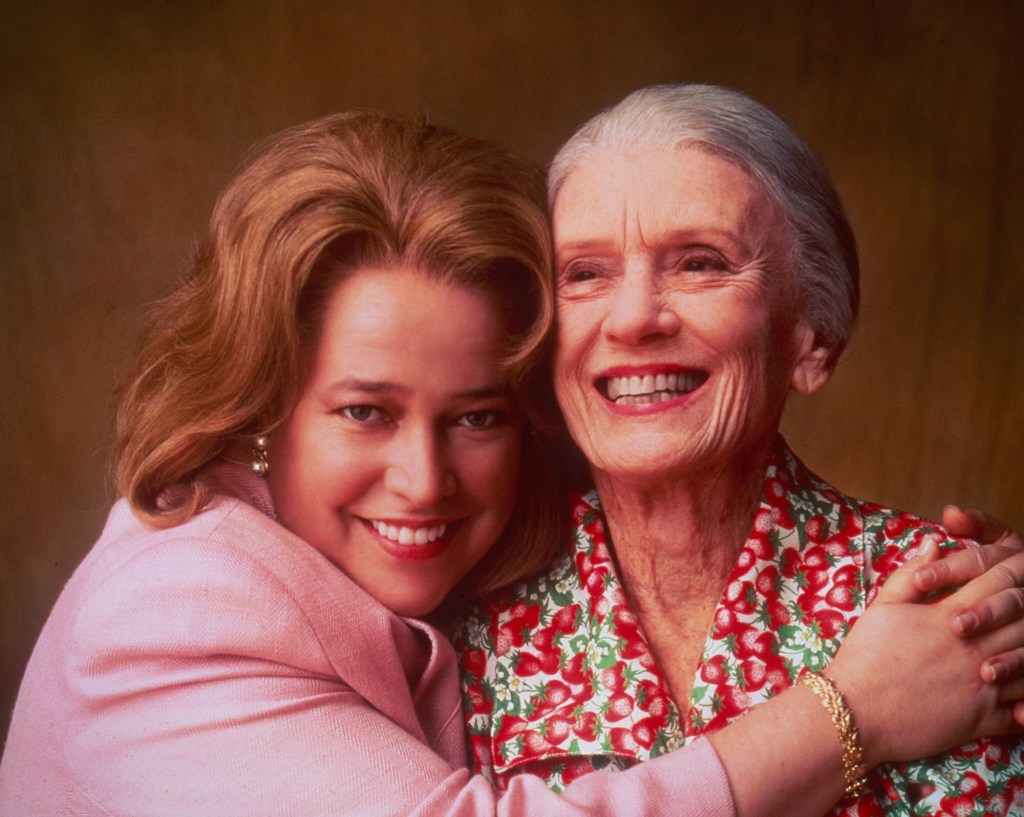
Fried Green Tomatoesis one of my favorite movies of all time. As far as films go its got a little bit of something for everybody: adventure, romance, melodrama, and even a murder mystery! The secret’s in the sauce, or at least that’s what I’ve heard. It was made for a paltry sum of just $11 million, and while that’s quite a loot haul for the likes of Joe Schmoe on Main Street, for Hollywood that’s chump change. It grossed more than ten times that amount and proved once again that American audiences love a well-told Southern yarn, especially when the acting is as stellar as it is in Fried Green Tomatoes. I mean, talk about an embarrassment of riches, to have Kathy Bates, Jessica Tandy, and Mary-Louise Parker all in the same film—and as leads, no less!
And Ruth said, Intreat me not to leave thee, or to return from following after thee: for whither thou goest, I will go; and where thou lodgest, I will lodge: thy people shall be my people, and thy God my God:
Ruth 1:16 (KJV)
One thing that was never discussed among my family members when we watched the film together is the lesbian love story at the heart of the film. Now mind you, the onscreen depiction is chaste, but anyone with eyes can clearly see the sparks that fly and the deep love that grows and endures between Idgie Threadgoode (Mary Stuart Masterson) and Ruth Jamison (Mary-Louise Parker). There are even none-too-subtle nods to a queer couple from the Bible itself: Naomi and Ruth. Now, I’m not interested in getting into a historical-theological debate with anyone regarding the canonically gay biblical couple, but perhaps any naysayers reading this would like to check out this excerpt from The Children Are Free: Reexamining the Biblical Evidence on Same-sex Relationships.
…anyone with eyes can clearly see the sparks that fly and the deep love that grows and endures between Idgie Threadgoode (Mary Stuart Masterson) and Ruth Jamison (Mary-Louise Parker).
The same-sex love story at the heart of the larger narrative is frequently straight-washed and written off as simply a superlative example of a great friendship, and it is a story of a great friendship, but it’s also the story of a marriage, one that never received the validation it deserved and was never allowed the public expression it warranted simply because the married people were both women. You can call it what you want but I will call it what it is: love. No one can rightfully condemn it.
You can call it what you want but I will call it what it is: love. No one can rightfully condemn it.
The film won a GLAAD Media Award for Outstanding Film — Wide Release, as well as Oscar noms for Tandy and the adapted screenplay written by Fannie Flagg (who wrote the novel on which the film is based) and Carol Sobieski. There’s so much inside of it (both the film and its source material) to unpack for anyone willing to search it.
I know that I frequently use these “quotes posts” as jumping-off points for whatever tangent I feel like exploring that day, and I really appreciate those of you who are always willing to follow the bread crumbs with me. You have my love and sincerest thanks forever.
Thanks as always for being a faithful reader of The Voracious Bibliophile. If you like what you see, please like, comment, follow, and subscribe to my email list to get notified of new posts as soon as they drop. You can also email me at fred.slusher@thevoraciousbibliophile.com or catch me on Twitter, Instagram, TikTok, and Pinterest @voraciousbiblog. Keep reading the world, one page (or pixel) at a time.
Sylvia Plath as an Old Story Title for Learning to Fight Depression Where the Semiotics Simply Suggest That a Garden Illustrates Peace as a Foreshadow Rather Than as a Vivid Depiction of an Ancestral Society of Sad Mothers & Helpless Fathers by Nome Emeka Patrick
Tell it this way: depression is the 30cm nail driving into the walls.

If  you ever read about Plath, ever kept a lantern from dying,

ever tended a garden it grew so wild to swallow god, ever kept

dressing the fire in your bones, then you must know about grief,

possibly how to end it. Maami once stood in this garden. Now,

I stand in her shadow like a sphinx in a crusade of an inferno.

In Lagos, another news says a student of microbiology, 400L, took

a nook’s way to the sky, death could not stop for him—anymore.

Let’s agree: failure is the arm swinging the pendulum across the face

of every dream. These gardens grow wild & the birds unfurl their

wings into an offering of flight. My cousin knelt in this garden once.

I kowtow into his absence, my knees—eyes dressed in dust & dearth.

In my mouth, every name glistens with a beak. I owe every wall

a shadow, every bed a midnight of creaks & crimson, every heart

an arrhythmia twice the speed of a destrier. In the library, my finger

Canterburies through The Selected Poems of Sylvia Plath, for once in

my whole life, I recite “Lady Lazarus” & remember I have a father

growing in the garden. Do I terrify?—what fear sweeps this little life?

Tainted black & bruised, a chorus lifts itself onto my mouth’s blade:

dy—dying is an art, so just like everything else I do it exceptionally well, yelz

yet even with honey disguised in holocaust, who, tell me, wants to die this young?
Thanks as always for being a faithful reader of The Voracious Bibliophile. If you like what you see, please like, comment, follow, and subscribe to my email list to get notified of new posts as soon as they drop. You can also email me at fred.slusher@thevoraciousbibliophile.com or catch me on Twitter, Instagram, TikTok, and Pinterest @voraciousbiblog. Keep reading the world, one page (or pixel) at a time.









 The Voracious Bibliophile