***Note: I received a free digital review copy of this book from NetGalley in exchange for an honest review.***
Sometimes a picture really is worth a thousand words. Anthony and the Gargoyle tells the story of Anthony, a little boy who lives with his parents in a house full of photographs. These pictures tell the story of his life and his parents’ lives before him. In the background of some of them, you can see Parisian landmarks beside the smiling happy couple.
In one of the photographs, Anthony can be seen holding a pet rock. One day, this rock breaks open and from it springs a gargoyle that teaches Anthony an important lesson: sometimes loving something means being willing to let it go. He also learns along the way that love doesn’t end at separation—it can break any boundary and traverse any distance.
Perfect for fans of Aaron Becker’s Journey trilogy and Molly Idle’s Flora and Her Feathered Friends series, Anthony and the Gargoyle is sure to delight readers of all ages. It is due to be released on October 5th, 2021, and is now available to preorder wherever books are sold.
Thanks as always for being a faithful reader of The Voracious Bibliophile. If you like what you see, please follow, like, comment, and subscribe to my email list to get notified of new posts as soon as they drop. You can also email me at thevoraciousbibliophile@yahoo.com or catch me on Twitter @voraciousbiblog. Keep reading the world, one page (or pixel) at a time.
***Note: I received a free digital review copy of this book from NetGalley in exchange for an honest review.***
Garlic and the Vampire is in my opinion one of the best graphic novels written for younger readers to come out in the past decade. It tells the story of Garlic, who lives in a community of anthropomorphic vegetables created and cared for by Witch Agnes, a benevolent sorceress who teaches her vegetables the value of hard work and giving back to one’s community.
When we first meet Garlic, she is shy, passive, and timid. When a vampire is discovered to be living in the castle near their community, Garlic is decided to be the only one who can safely determine whether or not he is a threat to the humans who live in the village. She reluctantly decides to go despite her fears, knowing it’s the right thing to do.
Along the way she becomes braver, learning to rely on her own inner strength. When she finally confronts the count she learns that just because someone is different doesn’t always mean they’re to be feared, and that the best way to find out about someone else is to talk to them.
Garlic and the Vampire is due to be released on September 28th of this year and is now available to preorder wherever books are sold.
Thanks as always for being a faithful reader of The Voracious Bibliophile. If you like what you see, please follow, like, comment, and subscribe to my email list to get notified of new posts as soon as they drop. You can also email me at thevoraciousbibliophile@yahoo.com or catch me on Twitter @voraciousbiblog. Keep reading the world, one page (or pixel) at a time.
***Note: I received a free digital review copy of this book from NetGalley in exchange for an honest review.***
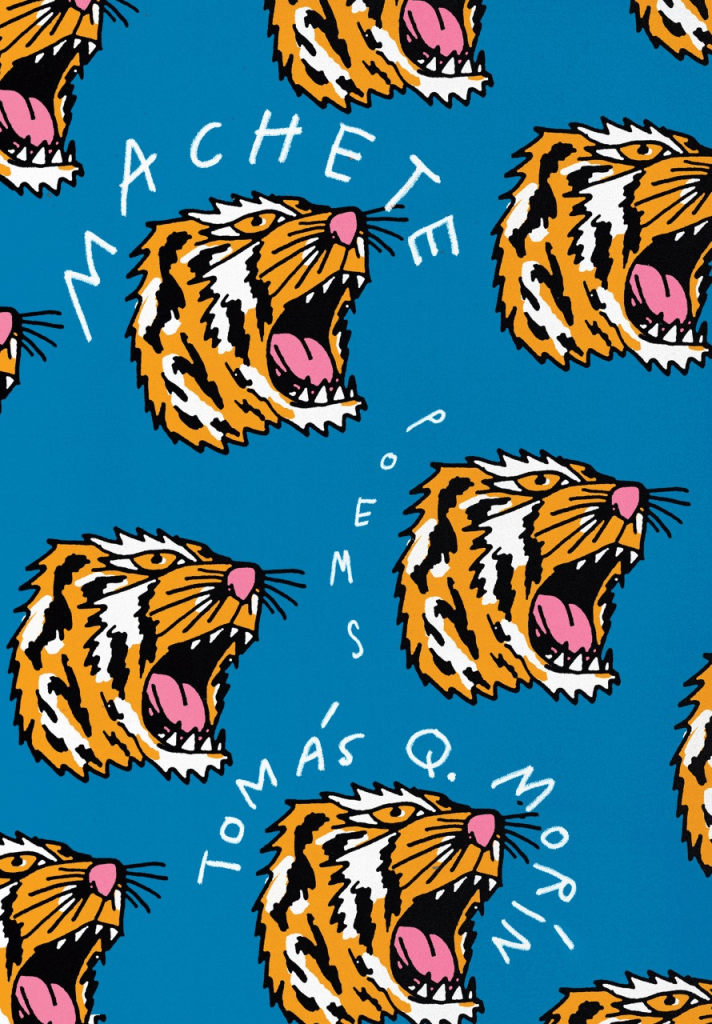
I’m going to be honest with you. When I first started reading Morín’s forthcoming collection Machete, I didn’t think I was going to like it—and then it snuck up on me. Pretty soon, I couldn’t stop drinking in words, even when they were sharper than a mouth full of knives. Machete is one of those collections poised to become era-defining, and I think if we somehow make it past climate change and the threat of nuclear proliferation we’ll remember it as one of the essential works of the pandemic. With its tonal shifts, manic ebullience, and hyper focus on finding the sublime in the quotidian, it is the perfect read for a world that has been forced to stand still even while it’s on fire. I can’t wait to put it in people’s hands.
Machete: Poems is due to be released on October 12th of this year and is now available to preorder wherever books are sold.
Thanks as always for being a faithful reader of The Voracious Bibliophile. If you like what you see, please follow, like, comment, and subscribe to my email list to get notified of new posts as soon as they drop. You can also email me at thevoraciousbibliophile@yahoo.com or catch me on Twitter @voraciousbiblog. Keep reading the world, one page (or pixel) at a time.
I just wanted to take a second here and thank everyone who has given my blog a chance. Thanks to all of you, my blog is almost at 800 views! That might not seem like a lot to some people but for me it’s incredibly validating. I’ve always loved sharing my opinions on books, movies, and more, and having a platform to do that brings me so much joy.
Thanks as always for being a faithful reader of The Voracious Bibliophile. If you like what you see, please follow, like, comment, and subscribe to my email list to get notified of new posts as soon as they drop. You can also email me at thevoraciousbibliophile@yahoo.com or catch me on Twitter @voraciousbiblog. Keep reading the world, one page (or pixel) at a time.
***Note: I received a free digital review copy of this book from NetGalley in exchange for an honest review.***
If you’ve not yet read any of Elie Wiesel’s work, you’re doing yourself a great disservice. The Holocaust survivor and Nobel laureate was a self-appointed chronicler of memory who made it his life’s work to never let the world forget the crimes of the Nazi regime and their supporters.
The Tale of a Niggun is based on factual events and tells the story of a rabbi who is given a dire ultimatum: either choose ten Jews from his community to be hanged on Purim to avenge the sons of Haman or else they will all perish. How does one begin to make such a decision? How does one retain their humanity in the face of such unspeakable violence?
The rabbi spends the night searching for guidance, for answers, and for clarity. In the end, he realizes he cannot condemn to death any of his people. Knowing their fate, everyone in the community begins singing a niggun—a song—that remains unbroken, that continues for all eternity, as long as human beings inhabit the earth. What the Nazis (the “enemy” in the book is unnamed but we can surmise that the amorphous “enemy” is meant to represent the Nazis) failed to realize is that you can take people’s lives, but you can’t take their spirit; you can extinguish their breath, but you can’t extinguish their memory.
Thanks as always for being a faithful reader of The Voracious Bibliophile. If you like what you see, please follow, like, comment, and subscribe to my email list to get notified of new posts as soon as they drop. You can also email me at thevoraciousbibliophile@yahoo.com or catch me on Twitter @voraciousbiblog. Keep reading the world, one page (or pixel) at a time.
Books have a unique way of stopping time in a particular moment and saying: Let’s not forget this.
Dave Eggers
One of my favorite things in the world is the feeling you get when you’re totally unguarded, immersed in a book, and you read a line or a passage that arrests you completely. In that moment, there are only two entities in the entire world: you and the author. Something clicks. It’s a spiritual connection made between two minds that validate each other through that silent acknowledgment, that yes, I feel that too.
In that moment, there are only two entities in the entire world: you and the author. Something clicks.
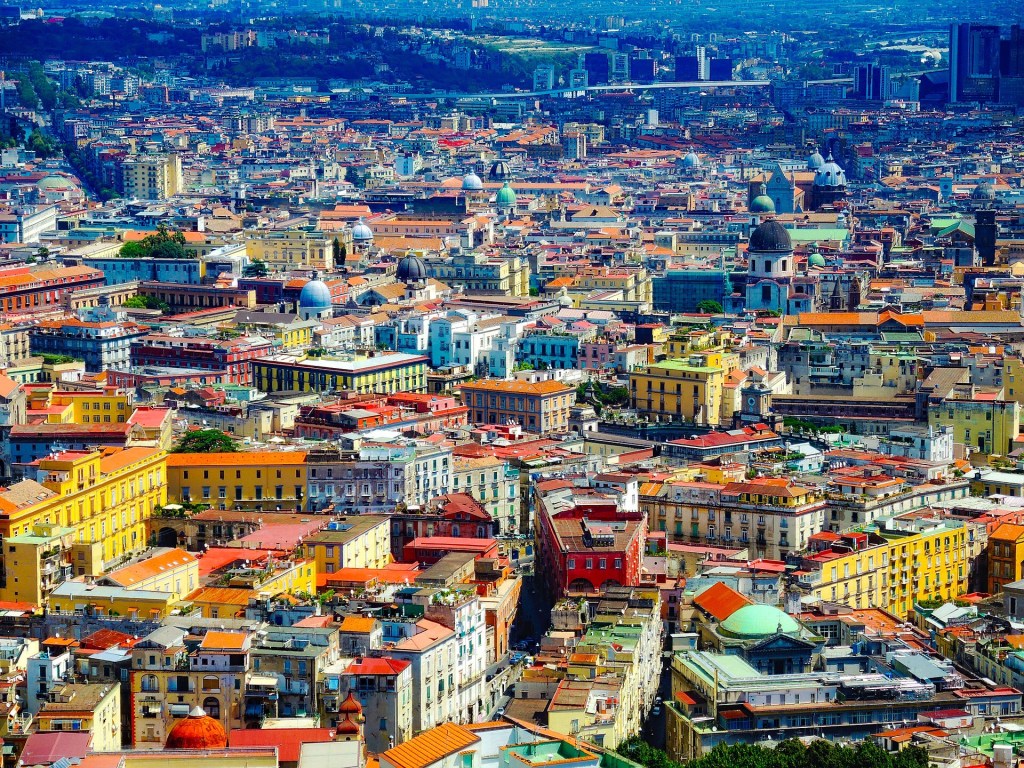
The last time that happened to me was while I was reading Elena Ferrante’s Neapolitan Quartet. Those books destroyed me completely. Starting with My Brilliant Friend, Ferrante follows two women, Elena and Lila, living in an impoverished neighborhood in Naples, Italy. Their friendship is really the story at the heart of the novels, and Ferrante follows them from around the time they’re eight years old in primary school to the time they’re in their fifties. The transformation of their friendship mirrors the transformation of Naples and Italy itself, with all the concomitant volatility, upheaval, violence, grace, and love.
The transformation of their friendship mirrors the transformation of Naples and Italy itself, with all the concomitant volatility, upheaval, violence, grace, and love.
Modern-day Naples, Italy.
There were times when I was reading I would actually forget Elena and Lila were fictional characters, and I would cry, and I would tense up from the sheer electricity of Ferrante’s prose. Their sorrows were my sorrows, their pain my pain, their love my love. If all prose writers were like Elena Ferrante, I don’t think my heart could handle it. For me, that’s the purpose of literature—to both transcend your personal understanding of the world at the same time your own experience is validated.
For me, that’s the purpose of literature—to both transcend your personal understanding of the world at the same time your own experience is validated.
Thanks as always for being a faithful reader of The Voracious Bibliophile. If you like what you see, please follow, like, comment, and subscribe to my email list to get notified of new posts as soon as they drop. You can also email me at thevoraciousbibliophile@yahoo.com or catch me on Twitter @voraciousbiblog. Keep reading the world, one page (or pixel) at a time.
***Note: I received a free digital review copy from NetGalley in exchange for an honest review.***
Expected Release Date: August 1st, 2021
Publisher: Michigan State University Press
Review
Losing someone you love is hard. Losing a child is arguably the worst thing that can happen to a person during their lifetime. Losing a child to suicide is nearly unimaginable, at least until it happens to you.
In A Fine Yellow Dust, Laura Apol has given us a chronicle in verse of her first grief-year, filled with staccato bursts of anguish, confusion, longing, and finally, a tacit acceptance. She shows us that grief is not a process that ever really reaches completion, but instead is something that you learn to carry with you, and how writing through your pain can be both a deliberate act of remembering as well as a testament to what you’ve lost. Reading Apol’s collection brought to my mind people I’ve lost over the years, and in remembering them through her words, I became a little lighter, a little freer, myself. Please read this.
She [Apol] shows us that grief is not a process that ever really reaches completion, but instead is something that you learn to carry with you, and how writing through your pain can be both a deliberate act of remembering as well as a testament to what you’ve lost.
Thanks as always for being a faithful reader of The Voracious Bibliophile. If you like what you see, please follow, like, comment, and subscribe to my email list to get notified of new posts as soon as they drop. You can also email me at thevoraciousbibliophile@yahoo.com or catch me on Twitter @voraciousbiblog. Keep reading the world, one page (or pixel) at a time.
I don’t want the people who love me to avoid the reality of my body. I don’t want them to feel uncomfortable with its size and shape, to tacitly endorse the idea that fat is shameful, to pretend that I’m something I’m not out of deference to a system that hates me. I don’t want to be gentled like I’m something wild and alarming. If I’m gonna be wild and alarming, I’ll do it on my terms.
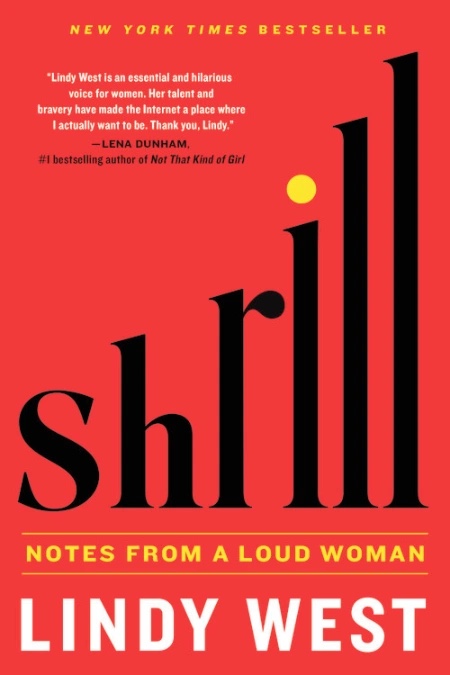
Reading Lindy West’s Shrill made me reckon with the decades of internalized fatphobia I still needed to vomit up. Now, I am unashamed of being fat. One of my best friends and I were having a conversation the other day about how fat people (we’re both fat) cannot make a single self-deprecating comment about our weight without having it psychoanalyzed or misinterpreted by skinny people.
I cannot tell you how many times that I’ve had a conversation that goes something like this:
Me: God, I’m feeling so fat today.
Skinny Rando: Oh, stop it! You’re beautiful!!!
Me: Bitch, did I say I was ugly?
Bitch, did I say I was ugly?
People really enjoy telling on themselves. You see, for the first thousand times I had that interaction, I didn’t really think much of it. But eventually, I looked deeper. When I say that I’m fat, and someone counters with something asinine like No, you’re beautiful, they’re (consciously or not) letting me know that fat can never = beautiful in their estimation.
When I say that I’m fat, and someone counters with something asinine…they’re (consciously or not) letting me know that fat can never = beautiful in their estimation.
As fat people, we confuse people when we exist in the world without the specter of shame hanging over us like a cloud. To live in a fat body, and to have the audacity to not cower, to deliberately take up space, to not cover every square inch of ourselves with fugly industrial fabric, is still considered radical. People want me to explain to them why I’m so confident in my skin. Sweetheart, have you seen me? How could I not be confident? I am so gorgeous and radiant I should come with a UV warning.
To live in a fat body, and to have the audacity to not cower, to deliberately take up space, to not cover every square inch of ourselves with fugly industrial fabric, is still considered radical.
I earned every single stretch mark that traverses my skin like so many highways all leading me home. They tell the story of how I survived, and how I keep on surviving, despite every cacophonous magpie screaming at me and asking if I’ve tried the SOUTH BEACH JENNY CRAIG KETO CARROT JUICE WONDERLAND DIET? Hell no, and you can keep it—I’ll stay fat and happy.🖕🏻
Thanks as always for being a faithful reader of The Voracious Bibliophile. If you like what you see, please follow, like, comment, and subscribe to my email list to get notified of new posts as soon as they drop. You can also email me at thevoraciousbibliophile@yahoo.com or catch me on Twitter @voraciousbiblog. Keep reading the world, one page (or pixel) at a time.
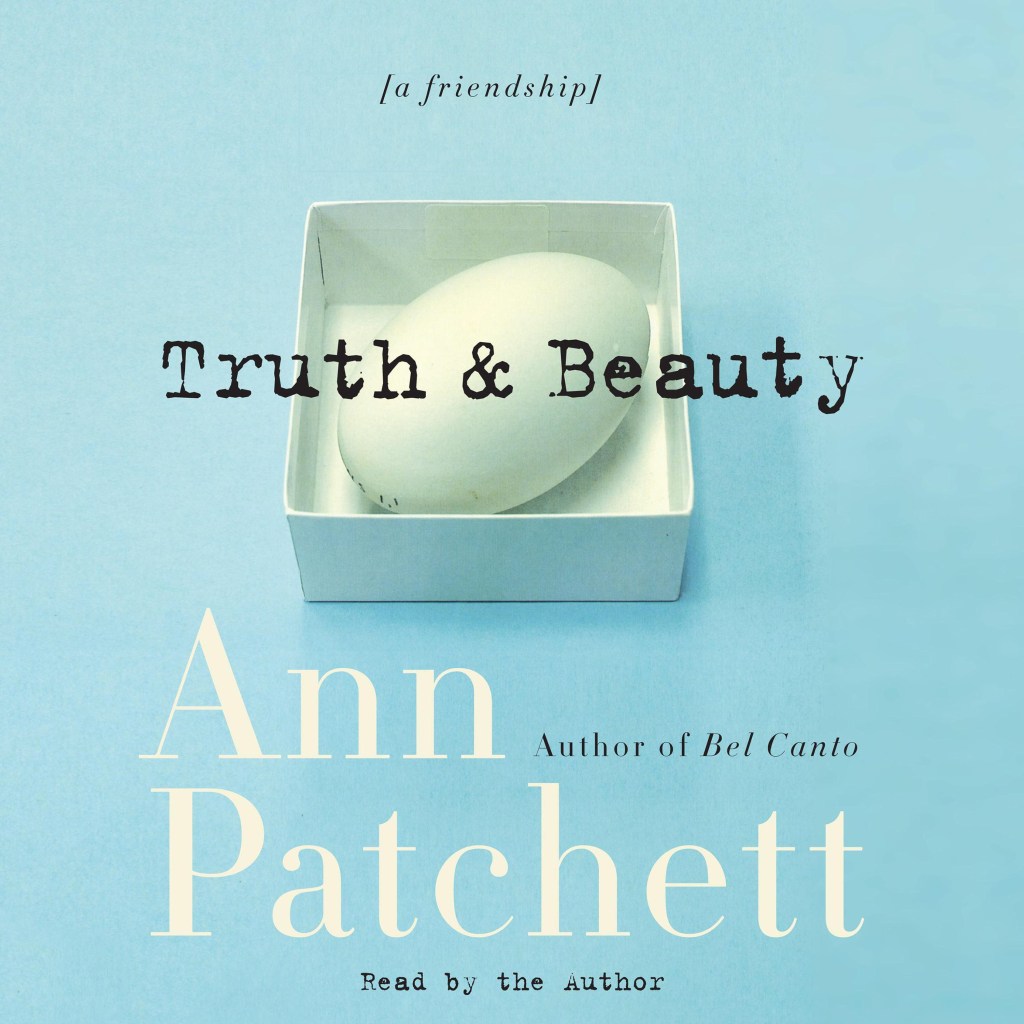
Truth & Beauty is an exquisitely written and heartfelt evocation of a friendship. Reading it reminded me that most of the time we are incapable of saving anyone other than ourselves. We love, and that love may indeed be reciprocated, but we cannot pull someone back from the cliff of their own self-destruction by sheer force of will. Love is not a panacea. Losing someone we love is torture in its most essential form, distilled and pure. In the absence of someone we’ve loved more than our own lives, how do we reckon with what comes next in the aftermath? I don’t know that there’s an answer for this. Perhaps memory is the only thing that saves us. By committing to memory and the page everything that we hold dearest, we stave off our own oblivion, if only for the briefest of moments.
Perhaps memory is the only thing that saves us. By committing to memory and the page everything that we hold dearest, we stave off our own oblivion, if only for the briefest of moments.
I think that’s why Ann Patchett wrote Truth & Beauty. By writing about the love and friendship she shared with Lucy, everyone who reads it will know that there were once two friends named Ann and Lucy who loved each other with everything they had, and that death could not quell that love or erase its impact.
Favorite Quotes from the Book
We had invented time and could not kill it fast enough.
For the first time in my life I’ve found myself praying for actual things. Before I only prayed for stuff like wisdom and love and states of mind. These past few months, though, I’ve been much more materialistic. I want definite action on God’s part. Is this wrong? I worry that I’ll get punished somehow. I need to get out of this mess but I just don’t know how so I ask for his help.
From one of Lucy’s letters to Ann
She [Lucy] loved Christ for his suffering, for what they had in common. With all his strength, even Christ had asked if this burden could be lifted from him. The idea that pain was not a random thing, but a punishment of the evil upon the good, the powerful upon the weak, gave her something to rage against. After all, what is the point of being angry at nature when nature could care less? If you cried against barbarism, then at least you were standing up to a consciousness that could hypothetically be shaped. When Lucy believed that there were actually things in the world that were worse than what had happened to her, she could pull herself up on this knowledge like a rope. When she lost sight of it, she sank.
I used to think that once you really knew a thing, its truth would shine on forever. Now it’s pretty obvious to me that more often than not, the batteries fade, and sometimes what you knew even goes out with a bang when you try to call on it just like a light bulb cracking off when you throw the switch.
From one of Lucy’s letters to Ann
History is strangely incomprehensible when you’re standing in the middle of it.
Thanks as always for being a faithful reader of The Voracious Bibliophile. If you like what you see, please follow, like, comment, and subscribe to my email list to get notified of new posts as soon as they drop. You can also email me at thevoraciousbibliophile@yahoo.com or catch me on Twitter @voraciousbiblog. Keep reading the world, one page (or pixel) at a time.
***Note: I received a free digital review copy from NetGalley in exchange for an honest review.***
Expected publication date: August 10th, 2021 by LOVE x LOVE
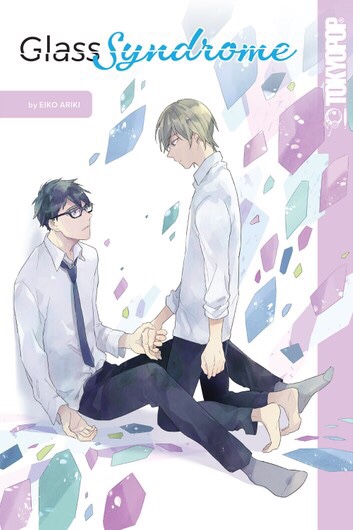
Review: Nijou is a Type A guy. He’s smart, popular, and athletic. As with a lot of Type A people, though, Nijou is a people-pleaser. He can’t say no in any context, especially when saying yes provides him with the kind of social capital he craves.
Toomi is the stereotypical boy from the wrong side of the tracks. He’s been missing a lot of school. His father has left him completely alone in the world, ostensibly due to some heavy gambling debts he’d rather avoid paying. To make ends meet, Toomi engages in survival sex work via his computer. He conceals his identity by presenting as female to paying clients.
A teacher concerned about Toomi’s welfare asks Nijou to check in on Toomi. Nijou does so because as we already know, he is incapable of saying no. We find out, however, that Nijou needs Toomi as much as Toomi needs him.
I won’t spoil the ending, but BL manga fans are sure to love Glass Syndrome. Even though the narrative was a bit muddled at times, overall it was an enjoyable read, and one I would recommend to my customers.
Thanks as always for being a faithful reader of The Voracious Bibliophile. If you like what you see, please follow, like, comment, and subscribe to my email list to get notified of new posts as soon as they drop. You can also email me at thevoraciousbibliophile@yahoo.com or catch me on Twitter @voraciousbiblog. Keep reading the world, one page (or pixel) at a time.






 The Voracious Bibliophile