We rip out so much of ourselves to be cured of things faster than we should that we go bankrupt by the age of thirty and have less to offer each time we start with someone new. But to feel nothing so as not to feel anything – what a waste!
André Aciman, Call Me by Your Name: A Novel
I know that if I allowed myself the space and energy to honor all of my feelings, I’d never get anything else done.
Arguably the most powerful moment in either the novel or its film adaptation, this exchange between Elio and his father provides CMBYN with its emotional and philosophical core. It also begs the question: is it possible to live authentically without eventually becoming jaded? How do we honor our feelings without suppressing them and still carry on with the daily grind of life? I know that if I allowed myself the space and energy to honor all of my feelings, I’d never get anything else done.
Life, after all, is not just one singular experience or expression of selfhood. It is so many different things, sometimes all at once.
These are naturally questions without easy answers. Perhaps there is no answer. Life, after all, is not just one singular experience or expression of selfhood. It is so many different things, sometimes all at once. The truth, it seems, must lie somewhere in the middle. What do you think?
God, what a stylish man….anyway, see you next time!
Thanks as always for being a faithful reader of The Voracious Bibliophile. If you like what you see, please like, comment, follow, and subscribe to my email list to get notified of new posts as soon as they drop. You can also email me at fred.slusher@thevoraciousbibliophile.com or catch me on Twitter, Instagram, TikTok, and Pinterest @voraciousbiblog. Keep reading the world, one page (or pixel) at a time.
In the secular night you wander around
alone in your house. It’s two-thirty.
Everyone has deserted you,
or this is your story;
you remember it from being sixteen,
when the others were out somewhere, having a good time,
or so you suspected,
and you had to baby-sit.
You took a large scoop of vanilla ice-cream
and filled up the glass with grapejuice
and ginger ale, and put on Glenn Miller
with his big-band sound,
and lit a cigarette and blew the smoke up the chimney,
and cried for a while because you were not dancing,
and then danced, by yourself, your mouth circled with purple.

Now, forty years later, things have changed,
and it’s baby lima beans.
It’s necessary to reserve a secret vice.
This is what comes from forgetting to eat
at the stated mealtimes. You simmer them carefully,
drain, add cream and pepper,
and amble up and down the stairs,
scooping them up with your fingers right out of the bowl,
talking to yourself out loud.
You’d be surprised if you got an answer,
but that part will come later.

There is so much silence between the words,
you say. You say, The sensed absence
of God and the sensed presence
amount to much the same thing,
only in reverse.
You say, I have too much white clothing.
You start to hum.
Several hundred years ago
this could have been mysticism
or heresy. It isn’t now.
Outside there are sirens.
Someone’s been run over.
The century grinds on.
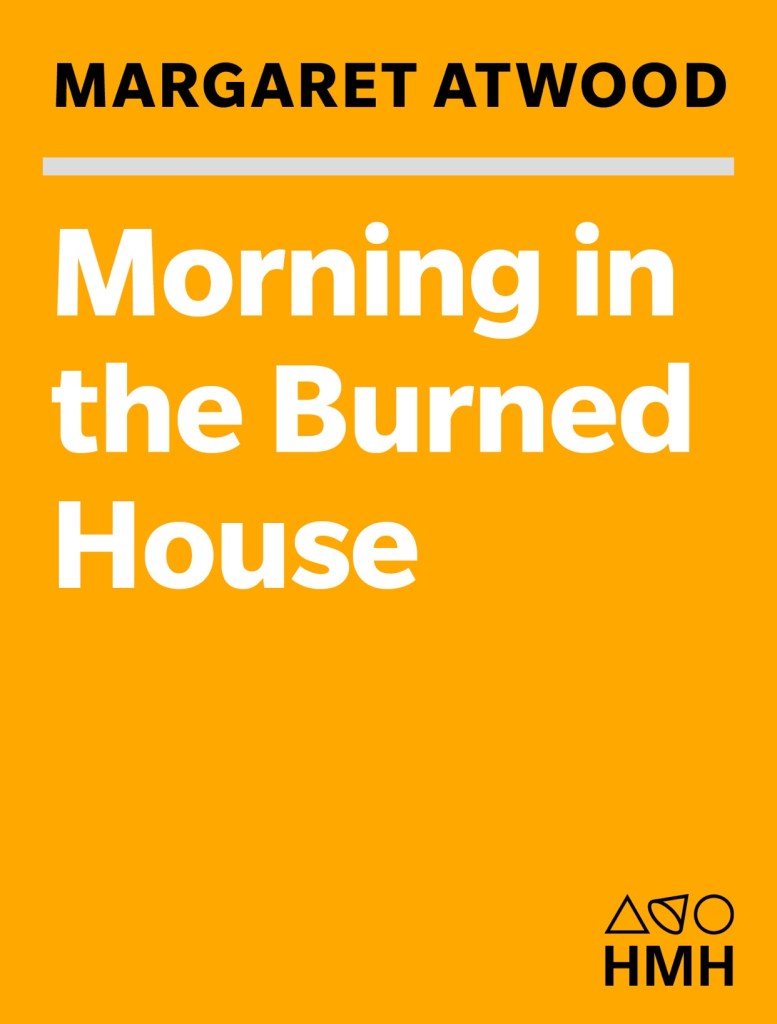
There is also this exactitude, this precision, bound up in elegance and wit, which seems impossible to replicate. At the very least, I have never seen it outside of her work.
First and foremost, let me state here unequivocally that it is a travesty Margaret Atwood has yet to win the Nobel Prize in Literature. That’s first. Next, I’d like to say that very few writers can scare me like Atwood can. She imbues every work of hers, be it novel, poem, or otherwise, with an otherworldly terror which is simply too close to reality for comfort. There is also this exactitude, this precision, bound up in elegance and wit, which seems impossible to replicate. At the very least, I have never seen it outside of her work.
Though her oeuvre is substantial, history will remember her primarily for her dystopian novel, The Handmaid’s Tale. Published in 1985, it tells the story of Offred, a Handmaid in the Republic of Gilead, which has succeeded the United States’ government via violent overthrow and which treats women with viable uteruses like cattle, meant to be silent, acquiescent, and obedient in discharging their only purpose in life, which is to bare children for their Commanders. They are deprived of all agency and ruled over with an iron fist.
With a conservative-majority SCOTUS waiting like a salivating bloodhound to overturn Roe v. Wade and states like Texas rolling back reproductive rights and severely limiting abortion access, we are just a stone’s throw away from the world Atwood envisioned.
One could say Gilead is patriarchy on steroids, and they’d be right. Gilead looks too much like America in 2021 for my liking. With a conservative-majority SCOTUS waiting like a salivating bloodhound to overturn Roe v. Wade and states like Texas rolling back reproductive rights and severely limiting abortion access, we are just a stone’s throw away from the world Atwood envisioned. Let’s hope there are enough of us left in the world who stand for a woman’s right to choose.
Wow, I started off with a poem and ended up talking about The Handmaid’s Tale. You can certainly see my ADHD at work here, but what the heck? This is my blog and I’ll go off on whatever tangent I darn well please. Mazel tov, my friends.
Thanks as always for being a faithful reader of The Voracious Bibliophile. If you like what you see, please like, comment, follow, and subscribe to my email list to get notified of new posts as soon as they drop. You can also email me at fred.slusher@thevoraciousbibliophile.com or catch me on Twitter, Instagram, TikTok, and Pinterest @voraciousbiblog. Keep reading the world, one page (or pixel) at a time.
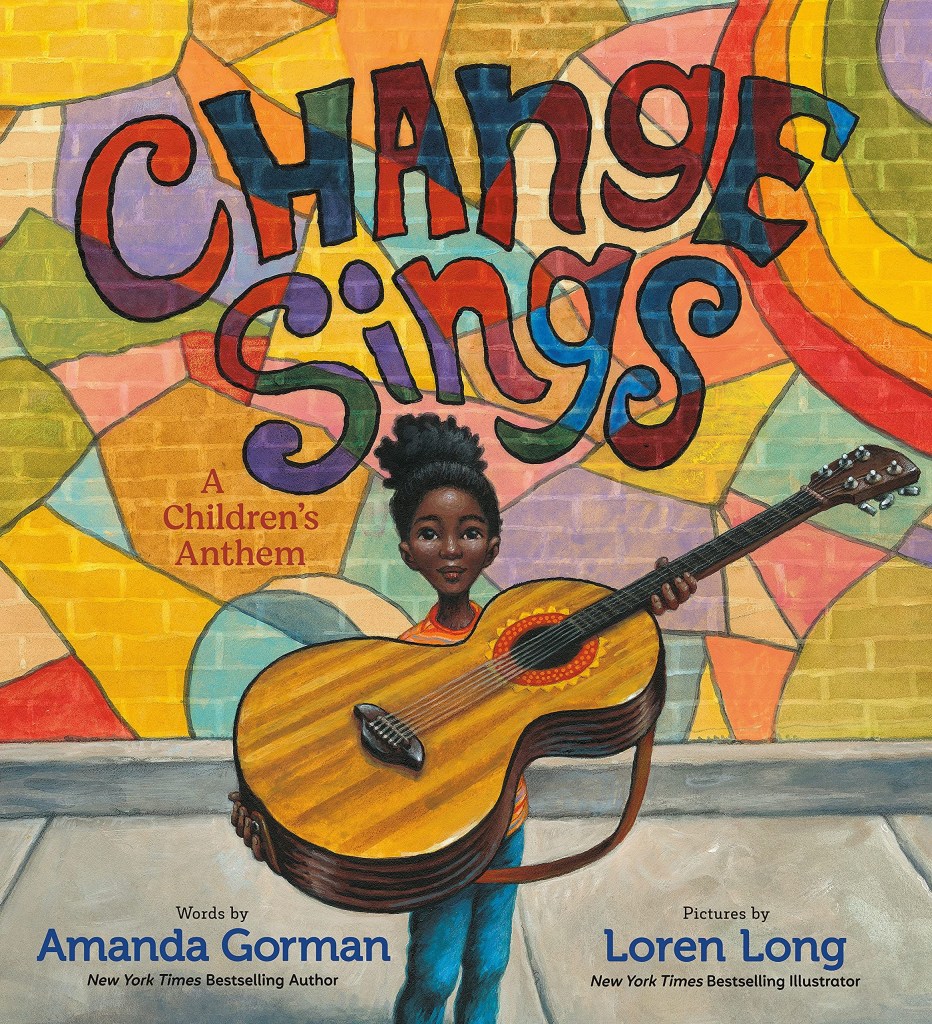
Change Sings: A Children’s Anthem by Amanda Gorman (Author) and Loren Long (Illustrator)
Amanda Gorman is, quite simply, a revelation.
Amanda Gorman is, quite simply, a revelation. In Change Sings: A Children’s Anthem, Gorman’s mellifluous and uplifting text is paired with Loren Long’s gorgeously-rendered illustrations to show readers of all ages that everyone has a voice and everyone can (and should) be an agent for positive change. I think it’s fair to say that 2021 is the year of Amanda Gorman. She catapulted into the spotlight after she was chosen to recite her poem, “The Hill We Climb”, at the inauguration of President Joe Biden. She is the youngest person to ever be chosen for that honor. She was photographed by Annie Liebowitz for the May cover of Vogue, becoming the first poet who can make that claim.
…if you ask her, she stands on the shoulders of giants – the Black ancestors whose DNA she shares and whose lives she honors with her work to create a more just and equitable America.
It would seem that Gorman is racking up “firsts” like nobody’s business, but if you ask her, she stands on the shoulders of giants – the Black ancestors whose DNA she shares and whose lives she honors with her work to create a more just and equitable America. In addition to Change Sings, which was released by Viking Books for Young Readers on September 21st, she is also the author of three additional books: The One for Whom Food Is Not Enough, which she self-published in 2015; The Hill We Climb: An Inaugural Poem for the Country, which was released earlier this year; and Call Us What We Carry: Poems, which is due to be released on December 7th by Penguin Young Readers and is now available to preorder wherever books are sold.
Thanks as always for being a faithful reader of The Voracious Bibliophile. If you like what you see, please like, comment, follow, and subscribe to my email list to get notified of new posts as soon as they drop. You can also email me at fred.slusher@thevoraciousbibliophile.com or catch me on Twitter, Instagram, TikTok, and Pinterest @voraciousbiblog. Keep reading the world, one page (or pixel) at a time.
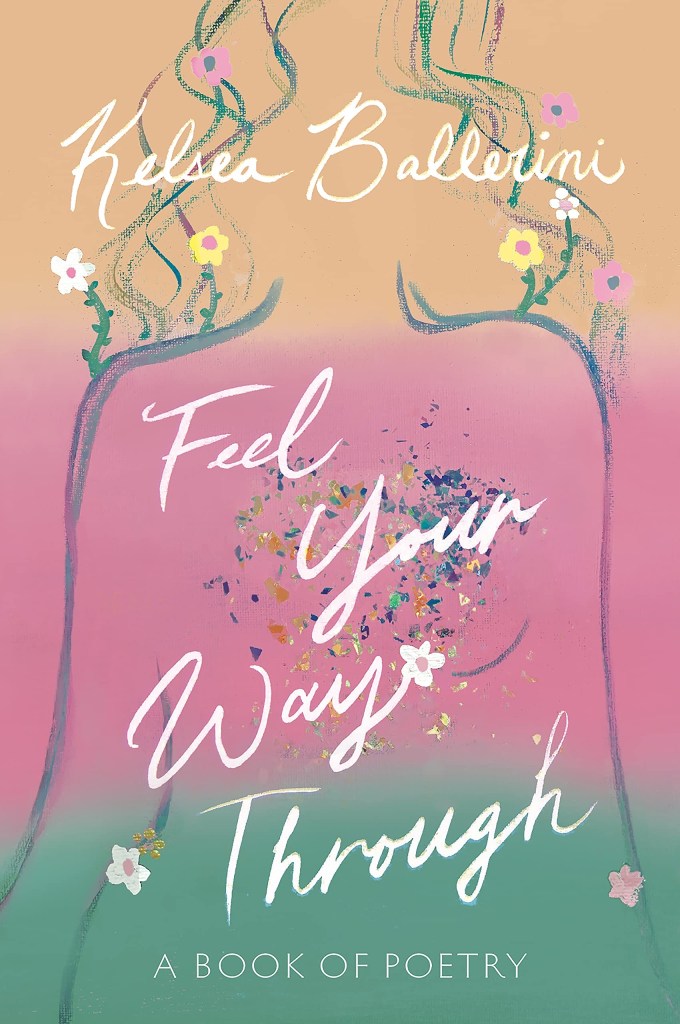
Feel Your Way Through: A Book of Poetry by Kelsea Ballerini
***Note: I received a free digital review copy of this book from NetGalley in exchange for an honest review.***
Kelsea Ballerini is the third singer-celebrity in recent memory to release a poetry collection. Following Lana Del Rey’s Violet Bent Backwards over the Grass and Halsey’s I Would Leave Me If I Could, Ballerini’s Feel Your Way Through is as much a memoir as it is a collection of poetry. It is also delightfully unpretentious and genuine in a way one wouldn’t necessarily expect from an artist who has achieved such success at such a young age.
Poignant, haunting, and yet never overly melancholy, Feel Your Way Through leads the reader on a journey with Ballerini chronicling her life up until now, with all of its fierce loves, heartbreaks, hard knocks, and triumphs. The title itself is revealing and may carry multiple meanings for both readers and Ballerini herself. Feeling one’s way through could refer to moving along a path which you can’t see clearly, so you have to rely on your gut and your instincts to keep from stumbling. It also could be taken more literally, urging readers to lead with their hearts even when it hurts.
Written with a seasoned songwriter’s ear for rhythm, this deeply heartfelt and startlingly intimate collection is sure to delight long-time Ballerini fans as well as people who haven’t listened to her music.
Written with a seasoned songwriter’s ear for rhythm, this deeply heartfelt and startlingly intimate collection is sure to delight long-time Ballerini fans as well as people who haven’t listened to her music. I can confidently say that this is a book I’ll be eagerly putting in the hands of my customers.
Feel Your Way Through: A Book of Poetry is due to be released on November 16th, 2021 by Ballantine Books and is now available to preorder wherever books are sold.
Thanks as always for being a faithful reader of The Voracious Bibliophile. If you like what you see, please like, comment, follow, and subscribe to my email list to get notified of new posts as soon as they drop. You can also email me at fred.slusher@thevoraciousbibliophile.com or catch me on Twitter, Instagram, TikTok, and Pinterest @voraciousbiblog. Keep reading the world, one page (or pixel) at a time.
#2: Read what you want, when you want, in the format you want.
#3: One genre is not better than another.
#4: You don’t have to read the classics. Unless you want to, of course. The “canon” is mostly Eurocentric and a tool of white supremacy.
#5: Re-reading is valid.
#6: Reading fan-fiction is valid.
#7: It doesn’t matter whether you read fast or slow or somewhere in the middle.
#8: Book snobs are fascists. And most likely colonizers.
Thanks as always for being a faithful reader of The Voracious Bibliophile. If you like what you see, please like, comment, follow, and subscribe to my email list to get notified of new posts as soon as they drop. You can also email me at fred.slusher@thevoraciousbibliophile.com or catch me on Twitter, Instagram, TikTok, and Pinterest @voraciousbiblog. Keep reading the world, one page (or pixel) at a time.
Beneath the Trees: The Autumn of Mr. Grumpf by DAV
***Note: I received a free digital review copy of this book from NetGalley in exchange for an honest review.***
Mr. Grumpf is a lovable curmudgeon. When we first meet him, Mr. Grumpf is busy trying to sweep away the last of the leaves from his doorstep in preparation for the fast-approaching winter. He is a badger that doesn’t want to be bothered. His neighbors, however, must have missed the memo because he is constantly being interrupted.
Despite his ill-tempered disposition, Mr. Grumpf always helps his neighbors when they ask and sometimes even when they don’t. Whether it’s helping a mouse retrieve his kite that’s stuck in a tree (and then repairing it when it turns out to be broken) or delivering nuts to a beleaguered father squirrel who has fallen behind in gathering nuts for winter, Mr. Grumpf is always of service to his neighbors…though never with a smile.
When Mr. Grumpf finally makes it home, he finds all the neighbors he’s helped helping him with his pre-winter chores. The smallest of smiles breaks through his grumpy veneer when the same mouse whose kite he saved presents him with his once-broken broom—repaired and ready to go.
I loved the illustrations in this book. The author uses a minimal of dialogue and narration to tell the story. It is image-driven, so children must interpret what’s happening most often by following the sequence of images on the page and reading the characters’ facial expressions.
All in all, I loved Beneath the Trees and I’m looking forward to the next books in the series.
Beneath the Trees: The Autumn of Mr. Grumpf is due to be released on October 12th, 2021 by Magnetic Press and is now available to preorder wherever books are sold.
Thanks as always for being a faithful reader of The Voracious Bibliophile. If you like what you see, please like, comment, follow, and subscribe to my email list to get notified of new posts as soon as they drop. You can also email me at fred.slusher@thevoraciousbibliophile.com or catch me on Twitter and Instagram @voraciousbiblog. Keep reading the world, one page (or pixel) at a time.
Basho’s Haiku Journeys by Freeman Ng (Author) and Cassandra Rockwood Ghanem (Illustrator)
***Note: I received a free digital review copy of this book from NetGalley in exchange for an honest review.***
I must admit, before reading Basho’s Haiku Journeys I knew next to nothing about Matsuo Basho, the Japanese poet who lived in the seventeenth century and is credited with inventing the haiku. For those of you unfamiliar with the form, a haiku is a short-form poem most often containing seventeen syllables in three lines, with five in the first line, seven in the second line, and five in the third and last line. Most haiku are about nature and haiku purists insist that only haiku about nature can be considered true haiku, but the form has evolved to include other topics.
For most of his life, Basho lived a comfortable and cosmopolitan life in Edo, which was then the capital city of Japan. He made his living teaching and writing, but there was an unfulfilled longing inside him—to see more, to experience the vibrancy of life more fully. He lived in a hut outside Edo that his students had built for him, and one night it caught fire and burned to the ground.
Most people would feel devastated at the loss of all their earthly possessions, but Basho felt liberated. He wandered into the woods, basking in the elation he felt at his change in fortune. It was then he decided to adopt an itinerant lifestyle, beginning the first of what would become five long journeys. From 1684-1689, Basho would traverse the length of his country and write about the beauty of the natural world in books that would later become classics of Japanese literature.
This book is a must-purchase for children’s librarians, language arts teachers, and parents and guardians who want their children to be curious and creative citizens of the world.
Ng honors Basho by telling his story in haiku form and the result is nothing short of breathtaking. One of the hallmarks of a good book is that it leaves you wanting more and in that regard Ng has more than succeeded. Cassandra Rockwood Ghanem’s gorgeous hand-painted illustrations add depth and clarity to Basho’s story. This book is a must-purchase for children’s librarians, language arts teachers, and parents and guardians who want their children to be curious and creative citizens of the world.
Portrait of Matsuo Basho (18th-19th century) by Hokusai. Public domain.
Basho’s Haiku Journeys is due to be released on October 19th, 2021 by Stone Bridge Press and is now available to preorder wherever books are sold.
Thanks as always for being a faithful reader of The Voracious Bibliophile. If you like what you see, please like, comment, follow, and subscribe to my email list to get notified of new posts as soon as they drop. You can also email me at fred.slusher@thevoraciousbibliophile.com or catch me on Twitter and Instagram @voraciousbiblog. Keep reading the world, one page (or pixel) at a time.
***Note: I received a free digital review copy of this book from NetGalley in exchange for an honest review.***
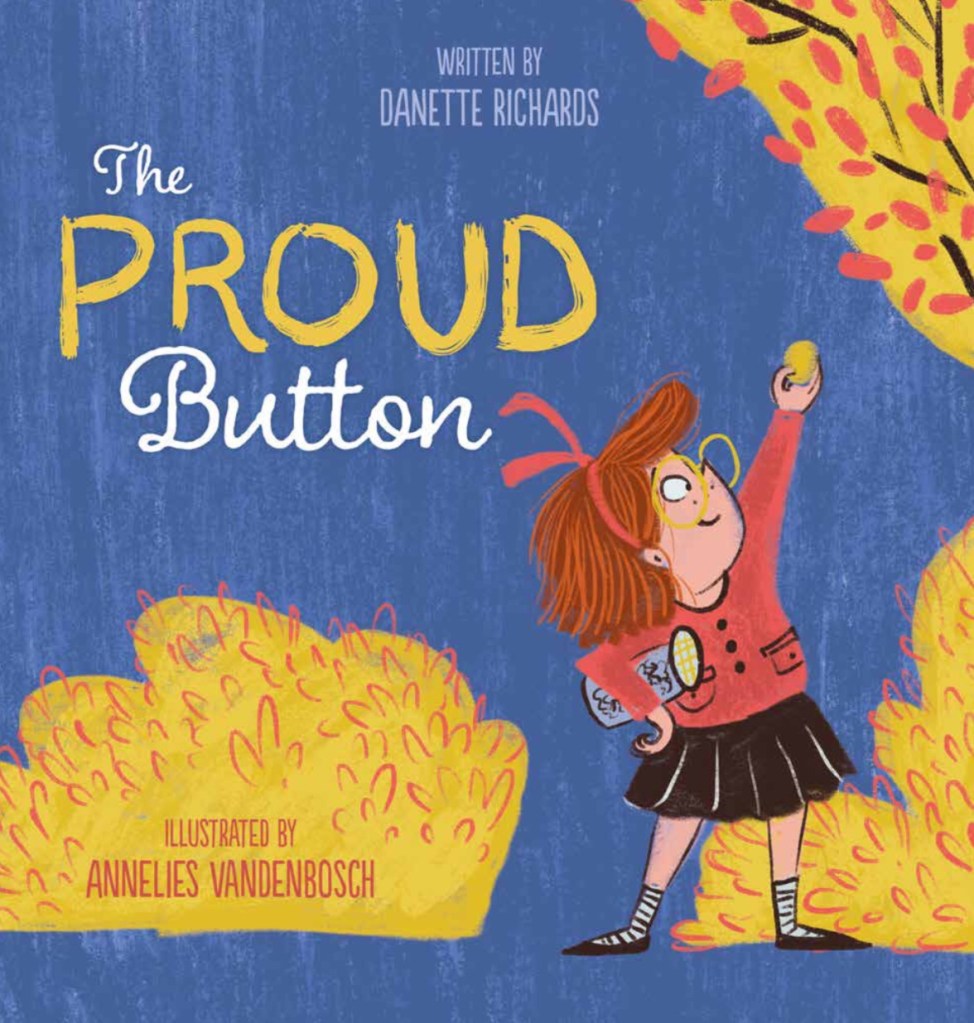
Isabelle is a bright and curious little girl who keeps a jar full of special treasures which she protects as if it were a pot of gold. She lives a happy life for the most part but she is sad because she has a lot of trouble connecting with other kids her age and making friends. Sometimes it’s easier for her to work alone in class or stay in her bedroom admiring the treasures in her treasure jar than it would be for her to work with others or to venture out and play with other children.
One day when Isabelle arrives home from school, she has a letter and a present from her Aunt Nancy waiting for her. The present is a yellow porcelain button her aunt found in a field near an abandoned button factory in France—and it is christened Isabel’s Proud Button—proud because she takes such pride in caring for her treasures.
Perhaps, she thinks, she can treat herself and the people around her the same way she treats her treasures. And maybe, just maybe, this will help her make friends who will value her back.
The notion of taking pride in things you care for strikes a chord in Isabelle. Perhaps, she thinks, she can treat herself and the people around her the same way she treats her treasures. And maybe, just maybe, this will help her make friends who will value her back.
Isabelle’s Proud Button gives her the courage to do just that, and soon she is connecting with others and learning the joys of friendship.
It [The Proud Button] teaches (or reminds) us that there’s nothing wrong with taking pride in the things you own but that it’s much more important to care for the people in your life because your stuff can’t love you back.
The Proud Button is a wonderful story that can be enjoyed by children and adults alike. It teaches (or reminds) us that there’s nothing wrong with taking pride in the things you own but that it’s much more important to care for the people in your life because your stuff can’t love you back.
The Proud Button is due to be released on September 14th, 2021 by Clavis and is now available to preorder wherever books are sold.
Thanks as always for being a faithful reader of The Voracious Bibliophile. If you like what you see, please like, comment, follow, and subscribe to my email list to get notified of new posts as soon as they drop. You can also email me at fred.slusher@thevoraciousbibliophile.com or catch me on Twitter and Instagram @voraciousbiblog. Keep reading the world, one page (or pixel) at a time.
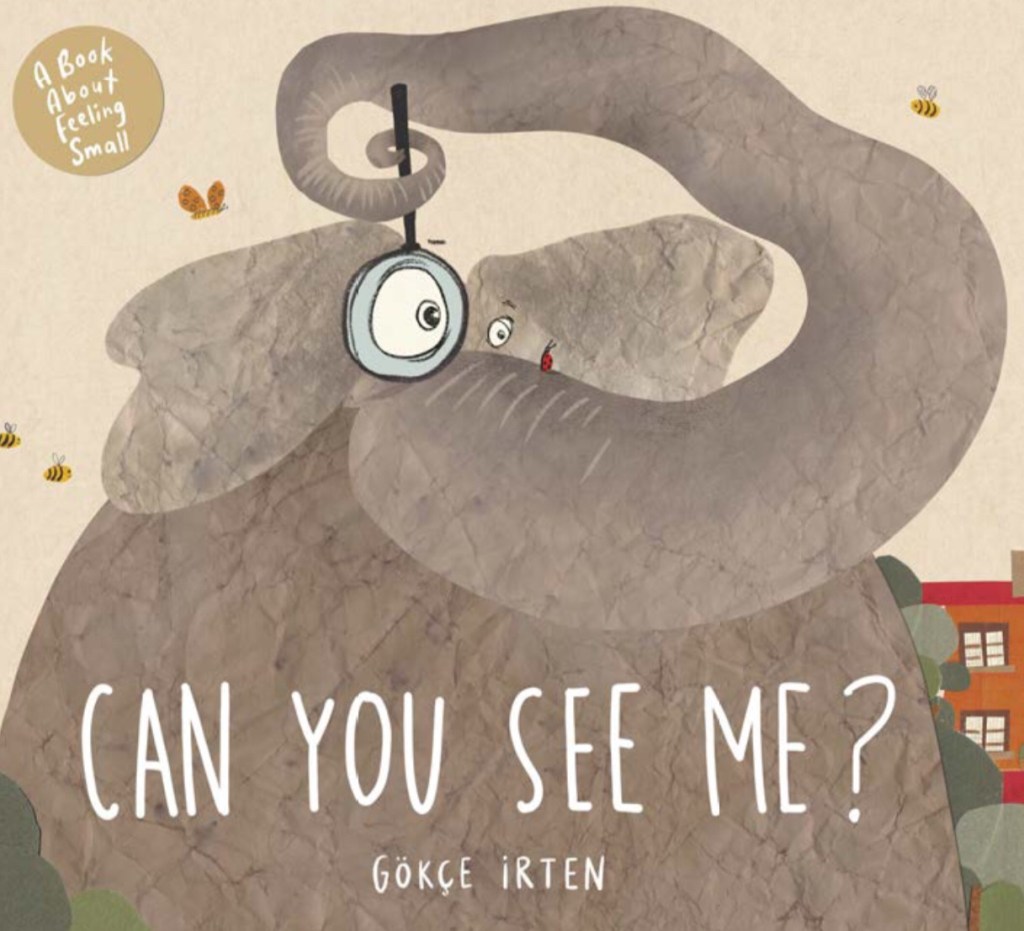
Can You See Me?: A Book About Feeling Small by Gökçe İrten
***Note: I received a free digital review copy of this book from NetGalley in exchange for an honest review.***
The world is a big and wonderful place but it can also be quite confusing. Why are elephants so big while ants are so tiny? Why do humans have two legs while spiders have eight legs and snakes have no legs? Gökçe İrten does a fantastic job of showing preschool-age children that our world is filled with a diverse array of creatures both big and small and that everything and everyone serves their own unique and special purpose. Can You See Me? is perfect for introducing young audiences to empathy- and perspective-building, and Gökçe İrten’s gorgeously rendered illustrations are sure to delight them as well. Can You See Me? is a book I’ll be eagerly recommending to parents, caregivers, and the children accompanying them.
Can You SeeMe?: A Book About Feeling Small by Gökçe İrten is due to be released on September 7th, 2021 by Kids Can Press and is now available to preorder wherever books are sold.
Thanks as always for being a faithful reader of The Voracious Bibliophile. If you like what you see, please like, comment, follow, and subscribe to my email list to get notified of new posts as soon as they drop. You can also email me at fred.slusher@thevoraciousbibliophile.com or catch me on Twitter and Instagram @voraciousbiblog. Keep reading the world, one page (or pixel) at a time.
***Note: I received a free digital review copy of this book from NetGalley in exchange for an honest review.***
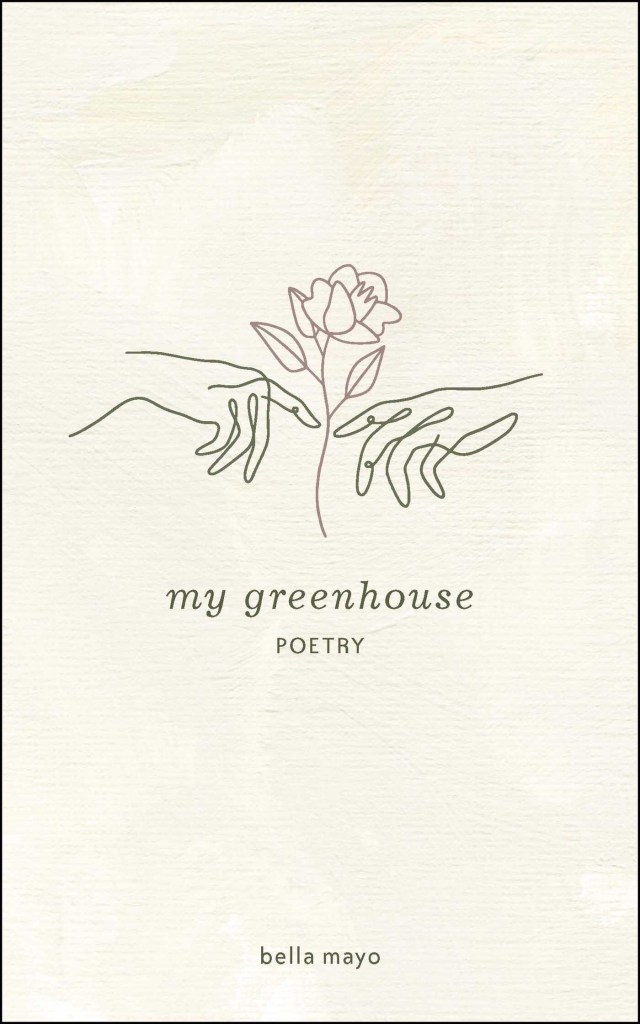
Is there anything that burns as bright in embryo or scars as deep in the aftermath as first love?
Is there anything that burns as bright in embryo or scars as deep in the aftermath as first love? I think Bella Mayo, the author of My Greenhouse, would be inclined to answer no. And I would be inclined to agree with her.
As we grow up we become jaded, conveniently forgetting the potency and primacy of the feelings we had when we were young and in love. I don’t believe there’s ever a time a person is more alive than when everything is blossoming for the first time—the first time you feel someone else’s lips on yours as well as the first time someone takes your heart and shreds it like so much dirty confetti.
My Greenhouse leaves no stone unturned and no leaf unfurled, showing that healing after heartbreak is indeed possible—even if you have to dig everything up and plant it somewhere else.
Mayo catalogs all of these feelings and presents them as a blueprint for moving on when the one you thought would never leave decides they can’t stay. My Greenhouse leaves no stone unturned and no leaf unfurled, showing that healing after heartbreak is indeed possible—even if you have to dig everything up and plant it somewhere else.
My Greenhouse: Poetry is due to be released on September 21st by Andrews McMeel Publishing and is now available to preorder wherever books are sold.
Thanks as always for being a faithful reader of The Voracious Bibliophile. If you like what you see, please like, comment, follow, and subscribe to my email list to get notified of new posts as soon as they drop. You can also email me at fred.slusher@thevoraciousbibliophile.com or catch me on Twitter and Instagram @voraciousbiblog. Keep reading the world, one page (or pixel) at a time.






 The Voracious Bibliophile