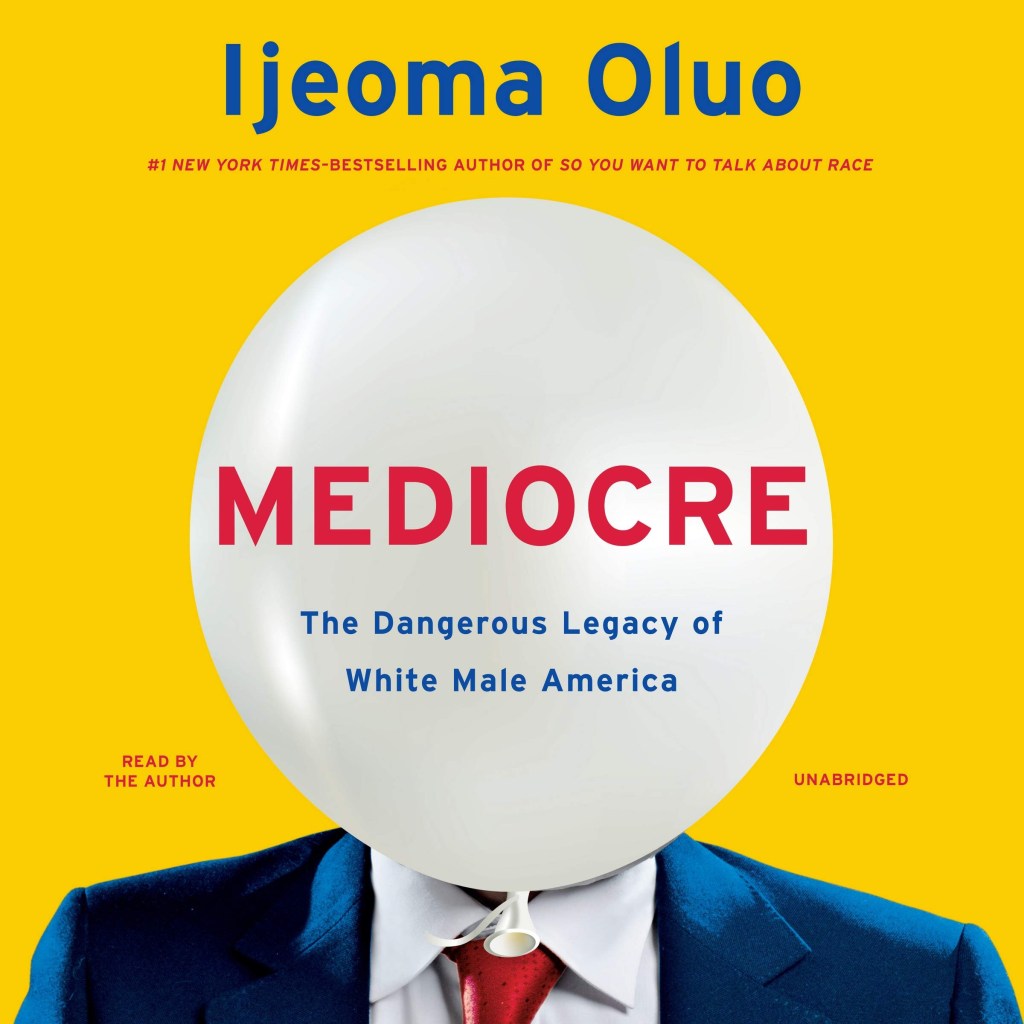
The next white male candidate that angry white men rally behind may not be Trump or Sanders and the next female candidate they turn against is unlikely to be Hillary Clinton but as long as we refuse to address the ways in which white men cling to political power even to their own detriment, there will always be a white male politician to take advantage of this white male anxiety over the rise of women and people of color.
Thanks as always for being a faithful reader of The Voracious Bibliophile. If you like what you see, please like, comment, follow, and subscribe to my email list to get notified of new posts as soon as they drop. You can also email me at fred.slusher@thevoraciousbibliophile.com or catch me on Twitter, Instagram, TikTok, and Pinterest @voraciousbiblog. Keep reading the world, one page (or pixel) at a time.
Like many other progressive white men, I was initially enamored with Bernie Sanders when he catapulted onto the scene ahead of the 2016 Democratic primaries. Unlike many other progressive white men, my infatuation did not last long. He had big ideas, yes, which he championed vociferously at every turn. I agreed with the majority of his policy platforms. But every time another candidate challenged him or asked him to explain how he would enact his grandiose visions for a newer and greater America, he simply shouted over them.
I wanted someone with a plan, a real plan with achievable goals and clearly delineated steps toward completion. I didn’t like the screaming and the fist-pumping. While that’s all well and good if you’re at a WWE wrestling match or cheering on the Minnesota Vikings, that kind of rabble-rousing has no place (or at least it shouldn’t) at a venue where the American people are deciding who they want to represent them as the leader of the free world in the nation’s highest office.
White dudes love a red-faced screamer.
White dudes love a red-faced screamer. Irrespective of content, if you can get someone to shout it out over loudspeakers to the rest of the world, it has to be pretty great, right? The Bernie Bros wanted an iconoclast, a progressive populist. I wanted the whip-smart tactician who could face down the bullies and remain calm the entire time.
I wanted the whip-smart tactician who could face down the bullies and remain calm the entire time.
Another major problem with the Bernie Bros was that they were so in love with Bernie that they ignored the concerns of more marginalized Democratic contingents, especially Black women and other BIPOC. No candidate is or should be considered beyond scrutiny or reproach, and if you’re looking for that sort of Christ figure, you needn’t look in politics.
No candidate is or should be considered beyond scrutiny or reproach, and if you’re looking for that sort of Christ figure, you needn’t look in politics.
Before I start fielding comments, I want to say that I’m not saying every single white man who supported Bernie Sanders was a Bernie Bro or of their ilk. But there was a major race problem within that contingent of voters, and there will be when the next Bernie makes his move.
Thanks as always for being a faithful reader of The Voracious Bibliophile. If you like what you see, please like, comment, follow, and subscribe to my email list to get notified of new posts as soon as they drop. You can also email me at fred.slusher@thevoraciousbibliophile.com or catch me on Twitter, Instagram, TikTok, and Pinterest @voraciousbiblog. Keep reading the world, one page (or pixel) at a time.
I feel like publishers really stack the deck (or TBR pile, if you will) with November releases. They know the season for gift-giving is just around the bend and therefore the biggest titles of the year usually release in the weeks leading up to Hanukkah and Christmas. Below are some of the titles I’m most looking forward to picking up myself this season or considering getting as gifts. Links are included. Happy reading!
A Book of the Month Clubpick as well as Jenna Bush Hager’s Read With Jenna selection for November 2021, The Familycouldn’t have been released at a better time. For one thing, The Many Saints of Newark: A Sopranos Story, a prequel film to HBO’s The Sopranos, just came out on October 1st. While its theater performance was lackluster, it was a steaming hit on HBO Max and reignited interest in the original series as well as all things mafia in general.
Now, yours truly really appreciates the font on the cover, which serves as a none-too-subtle nod to Mario Puzo’s The Godfather. After all, it’s what made me pick up the book in the first place. There are some who would say that stories centering the families of organized crime had their heyday long ago, and who am I to tell someone they’re wrong? The Voracious Bibliophile, that’s who! For God’s sake, let us have our mobsters!!!
The Familytells the story of Sofia Colicchio and Antonia Russo, two Italian-American women raised in an insular Brooklyn community where their families’ business interests force them to hold the rest of the world at bay, forging them together into a bond not easily broken. The secrets of their world threaten that bond as they grow up, though, and only time will tell if the threads of their friendship will knit back together or fray past the point of repair.
Kirkus gave The Familya lukewarm-at-best review, calling it “a little too facile” and “readable but somewhat shallow”. Kruptisky’s novel is also negatively compared to the work of Elena Ferrante, but it’s not really fair to measure anyone in comparison to Ferrante, whose Neapolitan Novels quite literally changed my life. This was one of my Book of the Month Club picks for November and my box came the other day, so I will let you know my thoughts when I’m able to dig into it.
The Adriens are a manifestation of Willa’s wildest dreams, embodying the ideal family dynamic she always wanted but never had and living out a version of upper-middle-class life she has always craved but to which she never had access.
Win Me Somethingtells the story of Willa Chen, who while working as a waitress in Brooklyn gets the opportunity to work as a nanny for the Adrien family. The Adriens are a manifestation of Willa’s wildest dreams, embodying the ideal family dynamic she always wanted but never had and living out a version of upper-middle-class life she has always craved but to which she never had access.
As the mixed-race daughter of a Chinese immigrant father and white American mother, Willa longs for an uncomplicated history, one devoid of the racism she experiences due to her biracial identity and the bifurcations that always accompany being a child of divorce shuffled between two families, neither of which fully belong to her. Once she starts working for the Adriens, she begins to learn more about herself and the life she’s led up until now, finding that even when life is imperfect it can still be good.
Don’t expect any big reveals or melodramatics characteristic of “nanny fiction”. No husband-nanny adultery or child murder. No long-held secrets bubbling to the surface. If you’re looking for something more salacious like that, check out my Nefarious Nannies Reading List.
***Note: I was lucky enough to receive a free digital review copy of this book courtesy of NetGalley and the publisher. You can read my review here.***
Publication Date: November 9th, 2021
Publisher: Harper Perennial
Page Count: 96
It’s a beacon of light as well as a sea of middle fingers raised high. Don’t miss it.
Kate Baer’s newest collection is nothing short of a reclamation. The “found poems” herein are crafted from missives sent to Baer online by detractors and fans alike. The detractors range from the annoying and intrusive to the outright abusive, and Baer takes no prisoners in transforming their vitriol into their vanquishment, their viciousness into her own sweet victory.
The detractors range from the annoying and intrusive to the outright abusive, and Baer takes no prisoners in transforming their vitriol into their vanquishment, their viciousness into her own sweet victory.
Baer’s experiences online are as old as the Internet itself. I’m sure the behaviors, if not the platforms themselves, date back much farther. The women living in the 21st century are dealing with the same crap that the women dealt with who were alive before Christopher Columbus sailed the ocean blue. The simple fact is men don’t like women who dare to be complex people in the public sphere. They prefer them to be silent and demure, to cow and coo, to be healthy but thin, outgoing yet deferential, smart yet never sassy, and above all, subservient. Well, pardon my French, but to hell with all of that!
Baer’s collection is perfect for anyone who has ever been subjected to unsolicited feedback about their words, their body, or their very existence. It’s a beacon of light as well as a sea of middle fingers raised high. Don’t miss it.
Bonus: Midtown Scholar Bookstore of Harrisburg, Pennsylvania is hosting a livestream discussion between Kate Baer and Maggie Smith about Baer’s new book. It’s free and open to the public but requires registration, so if you’re interested, I’m posting the link below:
Natashia Deón’s dazzling new novel was an early release pick for the Book of the Month Club and to be perfectly honest, the cover alone was enough for me to have it included in my box. The Perishingtells the story of Lou, an immortal Black woman who wakes up in an alley with no memory in 1930s Los Angeles. She has visions of a man’s face which she draws as she tries to make sense of who she is and where she came from. The premise immediately made me think of NBC’s Blindspot, as well any of a number of 40s films noir.
During the course of the novel, Lou also becomes the first female journalist for the LA Times, breaking stories of crime and vice during the era of Prohibition, which when you add in the fantasy elements make The Perishing a very intriguing read.
I am so giddily excited for this book and Natashia Deón in general. Is anyone else already casting the screen adaptation? Someone call Shonda Rhimes already and let’s get this going! *coughs* Janelle Monáe *coughs*
If you start singing this and the person you’re with doesn’t start singing it with you, that is a warning sign from God that you’d be remiss to ignore.
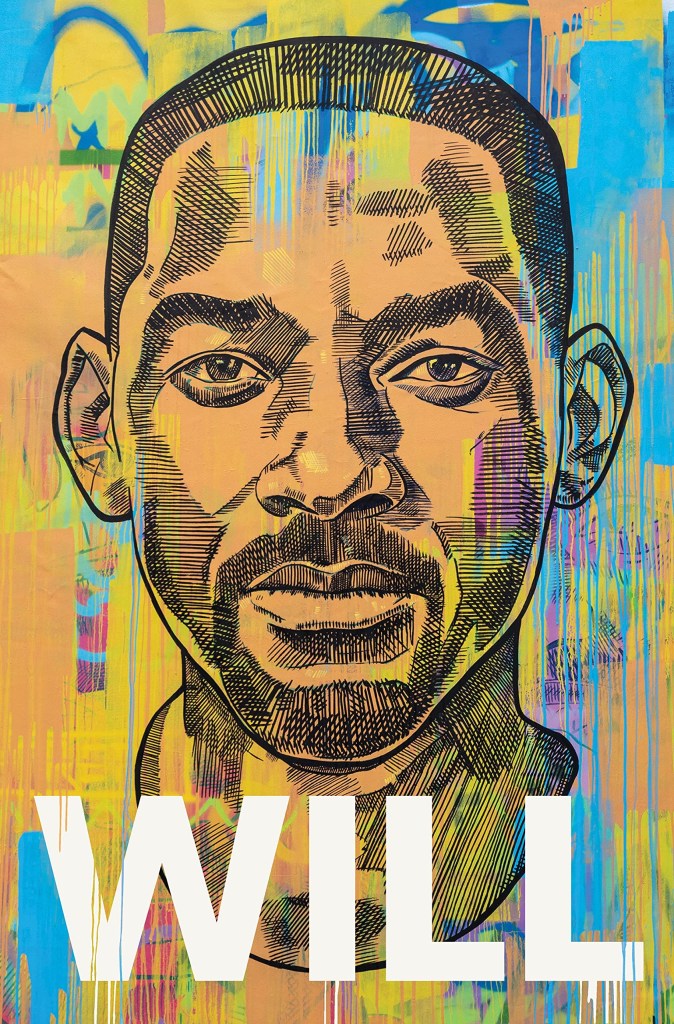
Will Smith first rose to prominence through his starring role on NBC’s The Fresh Prince of Bel-Air. The show ran for six seasons and after its conclusion, Smith was able to transition from television to blockbuster films rather seamlessly. Now, in addition to being a producer and one of Hollywood’s most bankable stars, the Grammy Award winner and Academy Award nominee can add author to his CV.
Co-written with Mark Manson, the #1 New York Times bestselling author of The Subtle Art of Not Giving a F*ck, Willis a celebrity memoir I’m very much looking forward to reading.
***Note: I was lucky enough to receive a free digital review copy of this book courtesy of NetGalley and the publisher. You can read my review here.***
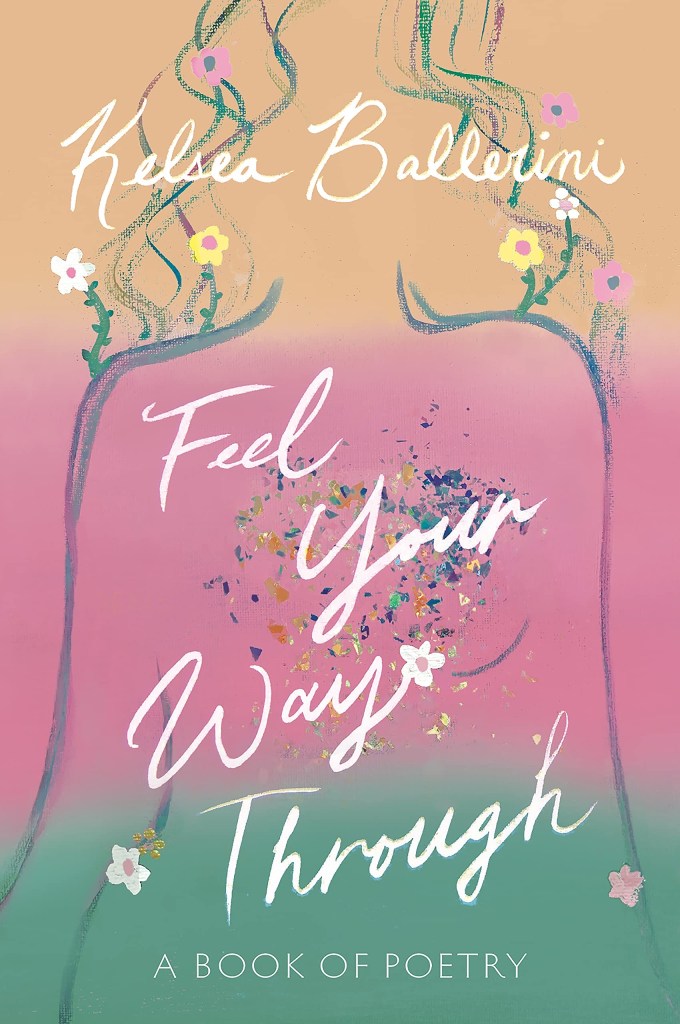
Anyone familiar with Kelsea Ballerini’s music knows she’s a gifted storyteller, and her abilities shine through just as strong in her poetry as they do in her songcraft. Following a recent spate of singer-celebrity poetry collections, Ballerini’s Feel Your Way Throughis fearsome and original, baring her soul on every page. Is this collection going to win (or even be nominated) for a Pulitzer Prize? Of course not. But you don’t have to be Walt Whitman to say something worthwhile and true about the human experience. Honestly, the elitism and pedantry surrounding what qualifies as poetry, especially “good” poetry, is a crock of 🐴 💩 anyway. Herein, Ballerini tells the truth as she sees it, and that’s more than good enough for me.
She is, in my opinion, one of the greatest living American nonfiction writers.
Publisher’s Weekly calls Ann Patchett’s newest book a “moving collection not easily forgotten,” but I don’t know if I have the emotional capacity to withstand a new essay collection by Ann Patchett, especially since Red (Taylor’s Version)drops on the 14th and 30by Adele drops just five days later on the 19th. Ann Patchett’s writing always makes me feel some kind of way and judging from the snippets I’ve gleaned from These Precious Days, it will not be the exception to the rule.
Consider the first two sentences of this excerpt furnished to CBS News:
Did I tell you I loved my father, that he loved me? Contrary to popular belief, love does not need understanding to thrive.
She has such an inimitable way of pulling the reader in, pushing them back, allowing them to flail for a little while, and then pulling them back in again. She is, in my opinion, one of the greatest living American nonfiction writers. In fact, the only writer I can currently think of who surpasses her in reticent emotional resonance is Joan Didion, long may she live.
Bonus: Read my review of Truth & Beauty, which I called “an exquisitely written and heartfelt evocation of a friendship”.
Don’t judge me if I don’t pick this one up until mid-December, although you can pretty much guarantee I’ll own it before then.
Thanks as always for being a faithful reader of The Voracious Bibliophile. If you like what you see, please like, comment, follow, and subscribe to my email list to get notified of new posts as soon as they drop. You can also email me at fred.slusher@thevoraciousbibliophile.com or catch me on Twitter, Instagram, TikTok, and Pinterest @voraciousbiblog. Keep reading the world, one page (or pixel) at a time.
Oh mother, mother, where is happiness?
They took my lover's tallness off to war,
Left me lamenting. Now I cannot guess
What I can use an empty heart-cup for.
He won't be coming back here any more.
Some day the war will end, but, oh, I knew
When he went walking grandly out that door
That my sweet love would have to be untrue.
Would have to be untrue. Would have to court
Coquettish death, whose impudent and strange
Possessive arms and beauty (of a sort)
Can make a hard man hesitate—and change.
And he will be the one to stammer, "Yes."
Oh mother, mother, where is happiness?
Today’s poem is taken from “”Appendix to The Anniad: leaves from a loose-leaf war diary”, which first appeared in Annie Allen, published by Harper in 1949.
Gwendolyn Brooks (1917-2000) published more than twenty books of poetry during her lifetime, as well as works in other genres. She was the first Black woman named as consultant in poetry to the Library of Congress, a post now referred to as Poet Laureate. Among numerous awards and accolades, she was the recipient of a Pulitzer Prize, an American Academy of Arts and Letters Award, and a National Endowment for the Arts Award. You can read more about her life and work here.
Thanks as always for being a faithful reader of The Voracious Bibliophile. If you like what you see, please like, comment, follow, and subscribe to my email list to get notified of new posts as soon as they drop. You can also email me at fred.slusher@thevoraciousbibliophile.com or catch me on Twitter, Instagram, TikTok, and Pinterest @voraciousbiblog. Keep reading the world, one page (or pixel) at a time.
They were women then
My mama’s generation
Husky of voice—stout of
Step
With fists as well as
Hands
How they battered down
Doors
And ironed
Starched white
Shirts
How they led
Armies
Headragged generals
Across mined
Fields
Booby-trapped
Ditches
To discover books
Desks
A place for us
How they knew what we
Must know
Without knowing a page
Of it
Themselves.
I first read “Women” as a high school freshman, memorizing and reciting it for extra credit. Later on, it grew in significance for me when I read Their Eyes Were Watching God by Zora Neale Hurston and learned that if not for Alice Walker, Hurston’s great body of work would probably have languished in obscurity for all time. Walker’s acknowledgment of the labor of her Black women foremothers in making her own life possible is a major theme throughout her body of work, and nowhere is it clearer than in today’s poem.
Thanks as always for being a faithful reader of The Voracious Bibliophile. If you like what you see, please like, comment, follow, and subscribe to my email list to get notified of new posts as soon as they drop. You can also email me at fred.slusher@thevoraciousbibliophile.com or catch me on Twitter, Instagram, TikTok, and Pinterest @voraciousbiblog. Keep reading the world, one page (or pixel) at a time.
Snow would be the easy way out—that softening sky like a sigh of relief at finally being allowed to yield. No dice. We stack twigs for burning in glistening patches but the rain won’t give.
So we wait, breeding mood, making music of decline. We sit down in the smell of the past and rise in a light that is already leaving. We ache in secret, memorizing
a gloomy line or two of German. When spring comes we promise to act the fool. Pour, rain! Sail, wind, with your cargo of zithers!
Thanks as always for being a faithful reader of The Voracious Bibliophile. If you like what you see, please like, comment, follow, and subscribe to my email list to get notified of new posts as soon as they drop. You can also email me at fred.slusher@thevoraciousbibliophile.com or catch me on Twitter, Instagram, TikTok, and Pinterest @voraciousbiblog. Keep reading the world, one page (or pixel) at a time.
You may write me down in history
With your bitter, twisted lies,
You may trod me in the very dirt
But still, like dust, I'll rise.

Does my sassiness upset you?
Why are you beset with gloom?
’Cause I walk like I've got oil wells
Pumping in my living room.

Just like moons and like suns,
With the certainty of tides,
Just like hopes springing high,
Still I'll rise.

Did you want to see me broken?
Bowed head and lowered eyes?
Shoulders falling down like teardrops,
Weakened by my soulful cries?

Does my haughtiness offend you?
Don't you take it awful hard
’Cause I laugh like I've got gold mines
Diggin’ in my own backyard.

You may shoot me with your words,
You may cut me with your eyes,
You may kill me with your hatefulness,
But still, like air, I’ll rise.

Does my sexiness upset you?
Does it come as a surprise
That I dance like I've got diamonds
At the meeting of my thighs?

Out of the huts of history’s shame
I rise
Up from a past that’s rooted in pain
I rise
I'm a black ocean, leaping and wide,
Welling and swelling I bear in the tide.

Leaving behind nights of terror and fear
I rise
Into a daybreak that’s wondrously clear
I rise
Bringing the gifts that my ancestors gave,
I am the dream and the hope of the slave.
I rise
I rise
I rise.
Her singular sonorous voice echoes with the shared promise and potential of humanity, especially those who are downtrodden, maligned, and marginalized.
I love the imagery in this poem. It gives me chills every time I read it, and I can hear Maya Angelou’s voice in my head when I do. Her singular sonorous voice echoes with the shared promise and potential of humanity, especially those who are downtrodden, maligned, and marginalized. Inside also is a reclamation, a refusal to be shaped or cowed by the words and deeds of others. After reading “Still I Rise”, the only appropriate response is amen. Amen amen amen.
Maya Angelou Reciting “Still I Rise”
Thanks as always for being a faithful reader of The Voracious Bibliophile. If you like what you see, please like, comment, follow, and subscribe to my email list to get notified of new posts as soon as they drop. You can also email me at fred.slusher@thevoraciousbibliophile.com or catch me on Twitter, Instagram, TikTok, and Pinterest @voraciousbiblog. Keep reading the world, one page (or pixel) at a time.
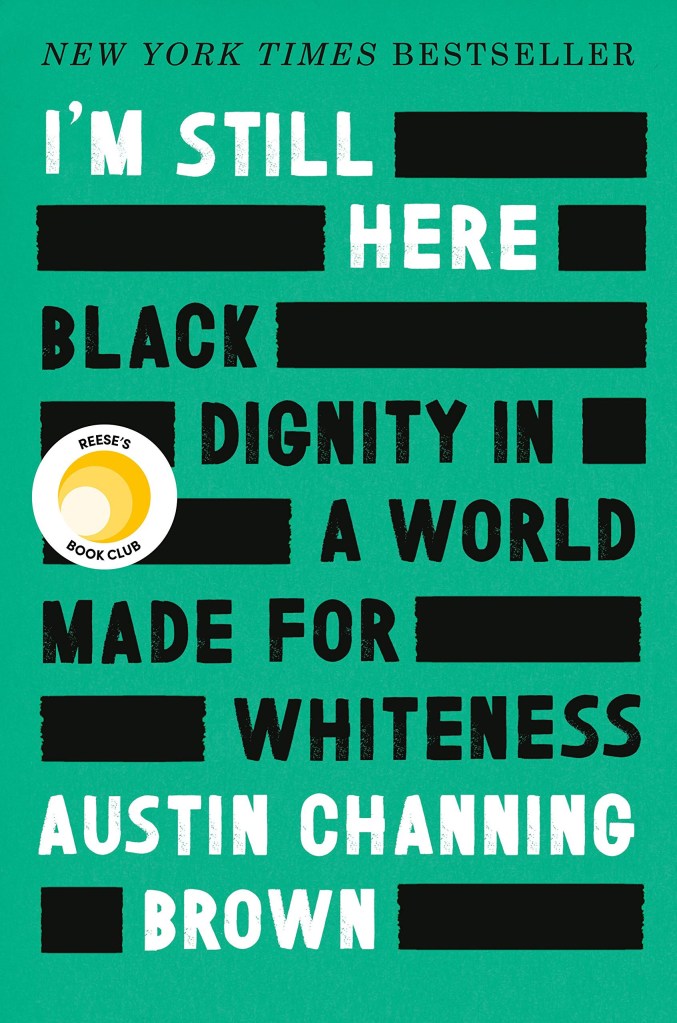
I’m Still Here: Black Dignity in a World Made for Whiteness by Austin Channing Brown
***Note: I originally read this book in June of 2020. The review posted here may be slightly altered from its original version and was first posted on my Goodreads account.***
Review
Austin Channing Brown does a superb job of deconstructing the myth of American progress toward racial equality, tracing the evolution of white supremacy from chattel slavery to Jim Crow and further on down the line to our current world characterized by police violence against Black people and their communities, and the prison industrial complex that warehouses Black people with outsized sentences for non-violent offenses in a modern-day proxy to slavery.
I loved her examples of dealing with—on an everyday basis—well-meaning white people whose ingrained racism and belief in their own goodness prevent them from taking responsibility for their racist microagressive behavior. Brown shows us that racism isn’t a problem that exists only at Klan rallies—it is perpetuated by millions of white people who have deluded themselves into thinking they live in a post-racial society where they get all the clout tokens for “having Black friends” while doing none of the work involved in anti-racist activism.
Brown shows us that racism isn’t a problem that exists only at Klan rallies—it is perpetuated by millions of white people who have deluded themselves into thinking they live in a post-racial society where they get all the clout tokens for “having Black friends” while doing none of the work involved in anti-racist activism.
The work of delegitimizing and dissolving white supremacy is a job that can’t happen unless white people (all white people) acknowledge their complicity in reinforcing racist norms and do their part to effect real change. This is a book every white person needs to read.
Favorite Quotes with Commentary
Rather than dwell on individuals, I speak about the system. About white boardrooms and white leadership teams. About white culture and the organization’s habit of hiring people who perpetuate that culture rather than diversify it. But the white consensus doesn’t want me to point out these things.
So many white people in positions of power like to play the numbers game when it comes to propagating their organization’s own racial diversity. “We can’t be racist because we are *exceeding* EEOC guidelines in hiring racial minorities.” “We hire Black people to work in every department within our organization, so therefore we are committed to equality.” Why is it that white people want a pat on the back for every modicum of human decency they performatively display? Why do we still allow this pablum to be volleyed hither and yon as a marker of a nonexistent racial equity?
Why is it that white people want a pat on the back for every modicum of human decency they performatively display? Why do we still allow this pablum to be volleyed hither and yon as a marker of a nonexistent racial equity?
White supremacy is a tradition that must be named and a religion that must be renounced. When this work has not been done, those who live in whiteness become oppressive, whether intentional or not.
I love that here Brown names white supremacy as a religion, because that’s exactly what it is—a faith tradition grounded in the inferiority of BIPOC and the deification of white skin as morally pure and upright. What makes it so insidious and corrosive is that white supremacists attempt to legitimize their racism by purporting to have faith in a form of Christianity completely excised of the primary teaching of Christ—to love one’s neighbor as oneself.
What makes it [white supremacy] so insidious and corrosive is that white supremacists attempt to legitimize their racism by purporting to have faith in a form of Christianity completely excised of the primary teaching of Christ—to love one’s neighbor as oneself.
Far from an imposing beast, I found that white supremacy is more like a poison. It seeps into your mind, drip by drip, until it makes you wonder if your perception of reality is true.
One thing Brown brings up throughout her book, mentioned in the quote above, is the gaslighting element accompanying subtle racism. As if the accumulation of daily micro-aggressions were not enough, Nice White People love to assuage their own guilt by minimizing the impact their own actions (intentional or not) have on the lived experiences of the Black people they interact with. This is not acceptable. If we are going to create the more perfect union touted by American nationalists of every star and stripe, we have to start, as white people, by first acknowledging our complicity in the structures and systems that we benefit from at the expense of our Black siblings and neighbors.
If we are going to create the more perfect union touted by American nationalists of every star and stripe, we have to start, as white people, by first acknowledging our complicity in the structures and systems that we benefit from at the expense of our Black siblings and neighbors.
The role of a bridge builder sounds appealing until it becomes clear how often that bridge is your broken back.
Why is it that we expect Black people in our circles to be the first ones to initiate change, the first ones to make a step toward understanding? Whenever we talk about EDI (equity, diversity, and inclusion), why do we place the brunt of the labor of coalition-building (emotional and otherwise) on our Black colleagues? We should not expect a person to speak for a whole people. Any efforts we make toward increasing inclusivity in our offices, in our boardrooms, and at every level of our organizations should come from a place of shared goals-setting, not simply (as so often happens) expecting our Black colleagues to hold our hands and erase our own culpability.
We should not expect a person to speak for a whole people.
Whiteness constantly polices the expressions of Blackness allowed within its walls, attempting to accrue no more than what’s necessary to affirm itself. It wants us to sing the celebratory “We Shall Overcome” during MLK Day but doesn’t want to hear the indicting lyrics of “Strange Fruit.”
This is something that really bothers me every February—Black History Month—which purports to celebrate the achievements of Black Americans (which was the original intention) but instead has developed to depoliticize the struggles of liberation through a lens of corporatized sanitization. The lovely ads showing Black and white hands so gloriously intertwined and shots of MLK featuring his most well-known and palatable quotes deliberately ignore a bloody history of enslavement, disenfranchisement, segregation, and incarceration which continues today in modalities not very different from their iterations of the past few centuries.
The lovely ads showing Black and white hands so gloriously intertwined and shots of MLK featuring his most well-known and palatable quotes deliberately ignore a bloody history of enslavement, disenfranchisement, segregation, and incarceration which continues today in modalities not very different from their iterations of the past few centuries.
These actions are vomit-inducing because they celebrate the end of a war that is still being fought and they still place a limit on the level(s) of Blackness which is palatable. They say, “You can be Black, but only on our (white folks’) terms, only in modes and frequencies that we find acceptable.” They say, “It’s fine for you to be Black, as long as your Blackness is coded to uphold my whiteness.” It’s not okay.
This is partly what makes the fragility of whiteness so damn dangerous. It ignores the personhood of people of color and instead makes the feelings of whiteness the most important thing.
One thing we white people need to do better is listen. When the Black people in our circles call out something as racist, we need to stop centering our feelings in the conversation. When our knee-jerk reactions to identifications of racism are focused on the way we feel about them, we are minimizing the actual harm caused to the people who have experienced racism, and adding unneeded emotional labor to our Black friends who have to subsume their own pain to coddle our fragile white feelings. We’ve got to do better, and that starts by listening to and acknowledging the veracity of the acts of racism our Black friends tell us about.
When our knee-jerk reactions to identifications of racism are focused on the way we feel about them, we are minimizing the actual harm caused to the people who have experienced racism, and adding unneeded emotional labor to our Black friends who have to subsume their own pain to coddle our fragile white feelings.
White people desperately want to believe that only the lonely, isolated “whites only” club members are racist. This is why the word racist offends “nice white people” so deeply. It challenges their self-identification as good people. Sadly, most white people are more worried about being called racist than about whether or not their actions are in fact racist or harmful.
If we’re going to be radically honest, racism perpetuates not because of Klan members or Proud Boys or neo-Nazis, but because of morally-upright white blowhards who cluck and clutch their pearls and flinch at the very insinuation they could be racist because they voted for Obama twice and how dare you? 🙄
Because I am a Black person, my anger is considered dangerous, explosive, and unwarranted. Because I am a woman, my anger supposedly reveals an emotional problem or gets dismissed as a temporary state that will go away once I choose to be rational. Because I am a Christian, my anger is dismissed as a character flaw, showing just how far I have turned from Jesus.
How convenient it is for people to selectively remember Jesus the Redeemer and Jesus the Healer, and forget Jesus in his other iterations. My Jesus, and here I believe Brown would agree with me, is Jesus the Wine-Drinker, Jesus the Friend of Sinners, Jesus the Caller-Out of Hypocrites, and Jesus the Table-Flipper. Table-flipping Jesus is by far my favorite.
Thanks as always for being a faithful reader of The Voracious Bibliophile. If you like what you see, please follow, like, comment, and subscribe to my email list to get notified of new posts as soon as they drop. You can also email me at thevoraciousbibliophile@yahoo.com or catch me on Twitter @voraciousbiblog. Keep reading the world, one page (or pixel) at a time.
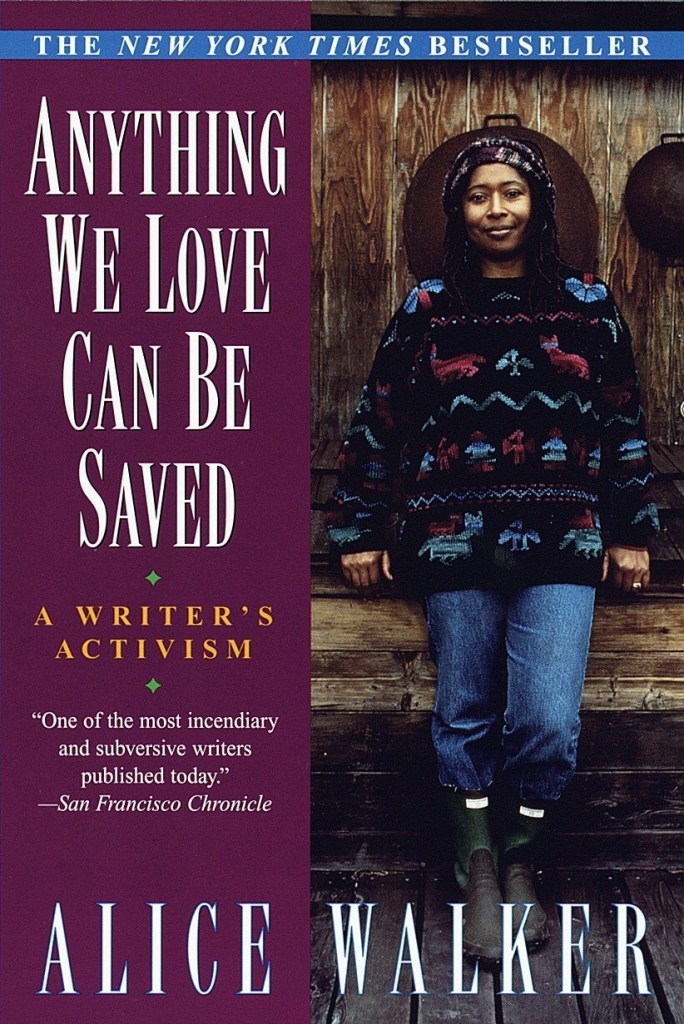
Anything We Love Can Be Saved: A Writer’s Activism by Alice Walker
We are all substantially flawed, wounded, angry, hurt, here on Earth. But this human condition, so painful to us, and in some ways shameful – because we feel we are weak when the reality of ourselves is exposed – is made much more bearable when it is shared, face-to-face, in words that have expressive human eyes behind them.






 The Voracious Bibliophile