Poem for the Day: December 1st, 2021

To the Reader by James Merrill

Each day, hot off the press from Moon & Son,
“Knowing of your continued interest,”
Here’s a new book — well, actually the updated
Edition of their one all-time best-seller —
To find last night’s place in, and forge ahead.
If certain scenes and situations (“work,”
As the jacket has it, “of a blazingly
Original voice”) make you look up from your page
— But this is life, is truth, is me! — too many
Smack of self-plagiarism. Terror and tryst,
Vow and verbena, done before, to death,
In earlier chapters, under different names …
And what about those characters? No true
Creator would just let them fade from view
Or be snuffed out, like people. Yet is there room
(In the pinch of pages under your right thumb)
To bring them back so late into their own? —
Granted their own can tell itself from yours.
You’d like to think a structure will emerge,
If only a kind of Joycean squirrel run
Returning us all neatly to page 1,
But the inconsistencies of plot and style
Lead you to fear that, for this author, fiction
Aims at the cheap effect, “stranger than fiction,”
As people once thought life — no, truth, was. Strange …
Anyhow, your final thought tonight,
Before you kiss my picture and turn the light out,
Is of a more exemplary life begun
Tomorrow, truer, harder to get right.

© 1990 James Merrill. “To the Reader” was originally published in the November 1990 – Spring 1990 issue of The Yale Review. James Merrill (1926-1995) was one of the most celebrated poets of his generation. During his lifetime, he published eleven collections of poetry as well as plays, novels, a memoir, and the trilogy The Changing Light at Sandover.

One of the things I love most about James Merrill, other than the fact that he was a wholly original and inimitable poet, was that he was openly gay in most of his circles. For someone born in 1926 to live so openly and so unashamedly despite the stigma and prejudice he no doubt dealt with on a daily basis is incredible to me. It’s truly a shame that he is not discussed more outside of the queer literati because he changed the landscape of American poetry for everyone that came after him, queer or not.

Do you have a favorite poem of James Merrill’s or even a favorite collection? Before reading today’s post, had you heard of him? Let me know in the comments.

Thanks as always for being a faithful reader of The Voracious Bibliophile. If you like what you see, please like, comment, follow, and subscribe to my email list to get notified of new posts as soon as they drop. You can also email me at fred.slusher@thevoraciousbibliophile.com or catch me on Twitter, Instagram, TikTok, and Pinterest @voraciousbiblog. Keep reading the world, one page (or pixel) at a time.

Poem for the Day: November 26th, 2021

Diving into the Wreck: Poems 1971-1972 by Adrienne Rich

Diving into the Wreck by Adrienne Rich

First having read the book of myths,
and loaded the camera,
and checked the edge of the knife-blade,
I put on
the body-armor of black rubber
the absurd flippers
the grave and awkward mask.
I am having to do this
not like Cousteau with his
assiduous team
aboard the sun-flooded schooner
but here alone.

There is a ladder.
The ladder is always there
hanging innocently
close to the side of the schooner.
We know what it is for,
we who have used it.
Otherwise
it is a piece of maritime floss
some sundry equipment.

I go down.
Rung after rung and still
the oxygen immerses me
the blue light
the clear atoms
of our human air.
I go down.
My flippers cripple me,
I crawl like an insect down the ladder
and there is no one
to tell me when the ocean
will begin.

First the air is blue and then
it is bluer and then green and then
black I am blacking out and yet
my mask is powerful
it pumps my blood with power
the sea is another story
the sea is not a question of power
I have to learn alone
to turn my body without force
in the deep element.

And now: it is easy to forget
what I came for
among so many who have always
lived here
swaying their crenellated fans
between the reefs
and besides
you breathe differently down here.

I came to explore the wreck.
The words are purposes.
The words are maps.
I came to see the damage that was done
and the treasures that prevail.
I stroke the beam of my lamp
slowly along the flank
of something more permanent
than fish or weed

the thing I came for:
the wreck and not the story of the wreck
the thing itself and not the myth
the drowned face always staring
toward the sun
the evidence of damage
worn by salt and sway into this threadbare beauty
the ribs of the disaster
curving their assertion
among the tentative haunters.

This is the place.
And I am here, the mermaid whose dark hair
streams black, the merman in his armored body.
We circle silently
about the wreck
we dive into the hold.
I am she: I am he

whose drowned face sleeps with open eyes
whose breasts still bear the stress
whose silver, copper, vermeil cargo lies
obscurely inside barrels
half-wedged and left to rot
we are the half-destroyed instruments
that once held to a course
the water-eaten log
the fouled compass

We are, I am, you are
by cowardice or courage
the one who find our way
back to this scene
carrying a knife, a camera
a book of myths
in which
our names do not appear.

© 1973 Adrienne Rich and W.W. Norton & Company, Inc. “Diving into the Wreck” originally appeared as part of Rich’s collection Diving into the Wreck: Poems 1971-1972, which was published in 1973 by W.W. Norton & Company, Inc. Rich was awarded the National Book Award for Poetry in 1974 for this collection.

Thanks as always for being a faithful reader of The Voracious Bibliophile. If you like what you see, please like, comment, follow, and subscribe to my email list to get notified of new posts as soon as they drop. You can also email me at fred.slusher@thevoraciousbibliophile.com or catch me on Twitter, Instagram, TikTok, and Pinterest @voraciousbiblog. Keep reading the world, one page (or pixel) at a time.
Poem for the Day: November 17th, 2021

A Coney Island of the Mind: Poems by Lawrence Ferlinghetti

In Golden Gate Park That Day… by Lawrence Ferlinghetti

In Golden Gate Park that day
a man and his wife were coming along
thru the enormous meadow
which was the meadow of the world
He was wearing green suspenders
and carrying an old beat-up flute
in one hand
while his wife had a bunch of grapes
which she kept handing out
individually
to various squirrels
as if each
were a little joke

And then the two of them came on
thru the enormous meadow
which was the meadow of the world
and then
at a very still spot where the trees dreamed
and seemed to have been waiting thru all time
for them
they sat down together on the grass
without looking at each other
and ate oranges
without looking at each other
and put the peels
in a basket which they seemed
to have brought for that purpose
without looking at each other

And then
he took his shirt and undershirt off
but kept his hat on
sideways
and without saying anything
fell asleep under it
And his wife just sat there looking
at the birds which flew about
calling to each other
in the stilly air
as if they were questioning existence
or trying to recall something forgotten

But then finally
she too lay down flat
and just lay there looking up
at nothing
yet fingering the old flute
which nobody played
and finally looking over
at him
without any particular expression
except a certain awful look
of terrible depression

© 1958 Lawrence Ferlinghetti. “In Golden Gate Park That Day…” first appeared in Ferlinghetti’s collection A Coney Island of the Mind: Poems, which was published in 1958 by New Directions Publishing Corporation.

Thanks as always for being a faithful reader of The Voracious Bibliophile. If you like what you see, please like, comment, follow, and subscribe to my email list to get notified of new posts as soon as they drop. You can also email me at fred.slusher@thevoraciousbibliophile.com or catch me on Twitter, Instagram, TikTok, and Pinterest @voraciousbiblog. Keep reading the world, one page (or pixel) at a time.

Poem for the Day: November 10th, 2021

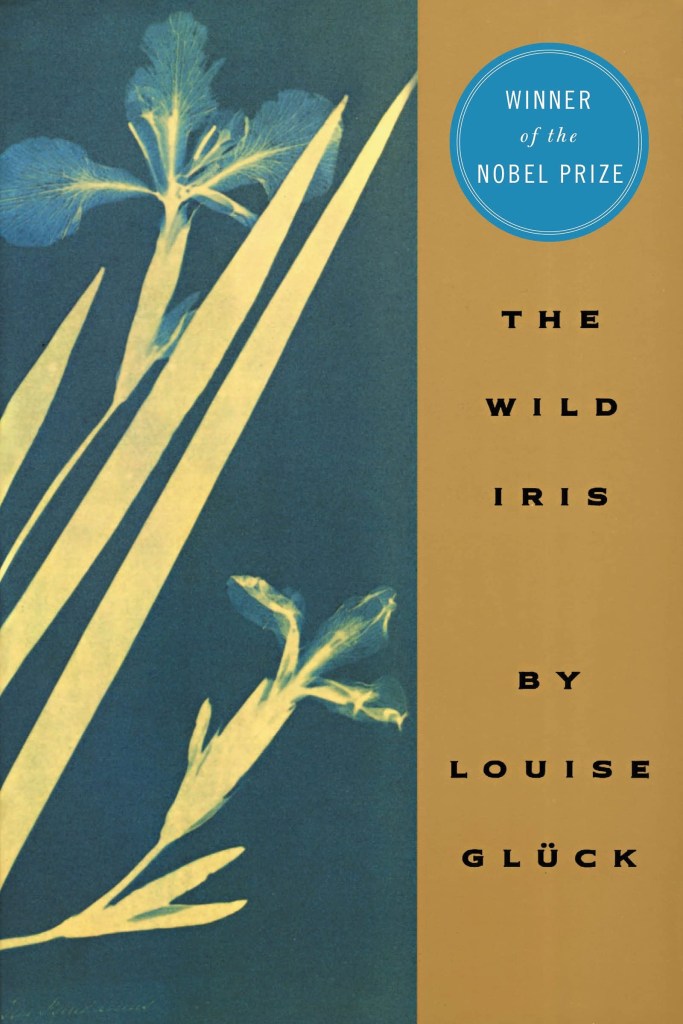
The Wild Iris by Louise Glück

End of Winter by Louise Glück

Over the still world, a bird calls
waking solitary among black boughs.

You wanted to be born; I let you be born.
When has my grief ever gotten
in the way of your pleasure?

Plunging ahead
into the dark and light at the same time
eager for sensation

as though you were some new thing, wanting
to express yourselves

all brilliance, all vivacity

never thinking
this would cost you anything,
never imagining the sound of my voice
as anything but part of you—

you won't hear it in the other world,
not clearly again,
not in birdcall or human cry,

not the clear sound, only
persistent echoing
in all sound that means good-bye, good-bye—

the one continuous line
that binds us to each other.

© 1992 Louise Glück. “End of Winter” is taken from The Wild Iris, for which she won the Pulitzer Prize for Poetry in 1993. Louise Glück is one of the most celebrated American poets of her generation. She was awarded the Nobel Prize in Literature in 2020 “for her unmistakable poetic voice that with austere beauty makes individual existence universal.”

Thanks as always for being a faithful reader of The Voracious Bibliophile. If you like what you see, please like, comment, follow, and subscribe to my email list to get notified of new posts as soon as they drop. You can also email me at fred.slusher@thevoraciousbibliophile.com or catch me on Twitter, Instagram, TikTok, and Pinterest @voraciousbiblog. Keep reading the world, one page (or pixel) at a time.

Poem for the Day: November 6th, 2021

Autumn by Grace Paley

1

What is sometimes called a
tongue of flame
or an arm extended burning
is only the long
red and orange branch of
a green maple
in early September reaching
into the greenest field
out of the green woods at the
edge of which the birch trees
appear a little tattered tired
of sustaining delicacy
all through the hot summer re-
minding everyone (in
our family) of a Russian
song a story
by Chekhov or my father


2

What is sometimes called a
tongue of flame
or an arm extended burning
is only the long
red and orange branch of
a green maple
in early September reaching
into the greenest field
out of the green woods at the
edge of which the birch trees
appear a little tattered tired
of sustaining delicacy
all through the hot summer re-
minding everyone (in
our family) of a Russian
song a story by
Chekhov or my father on
his own lawn standing
beside his own wood in
the United States of
America saying (in Russian)
this birch is a lovely
tree but among the others
somehow superficial

© 1991 Grace Paley. “Autumn” first appeared in Long Walks and Intimate Talks by Grace Paley and Vera B. Williams, which was published in 1991 by The Feminist Press at the City University of New York. It was later included in Begin Again: The Collected Poems of Grace Paley, which was published in 1999 by The Feminist Press. You can read more about Grace Paley and her life and work here.

Thanks as always for being a faithful reader of The Voracious Bibliophile. If you like what you see, please like, comment, follow, and subscribe to my email list to get notified of new posts as soon as they drop. You can also email me at fred.slusher@thevoraciousbibliophile.com or catch me on Twitter, Instagram, TikTok, and Pinterest @voraciousbiblog. Keep reading the world, one page (or pixel) at a time.
Poem for the Day: August 21st, 2021

Portland, 1968 by Louise Glück

You stand as rocks stand 
to which the sea reaches
in transparent waves of longing;
they are marred, finally;
everything fixed is marred.
And the sea triumphs,
like all that is false,
all that is fluent and womanly.
From behind, a lens
opens for your body. Why
should you turn? It doesn’t matter
who the witness is,
for whom you are suffering,
for whom you are standing still.
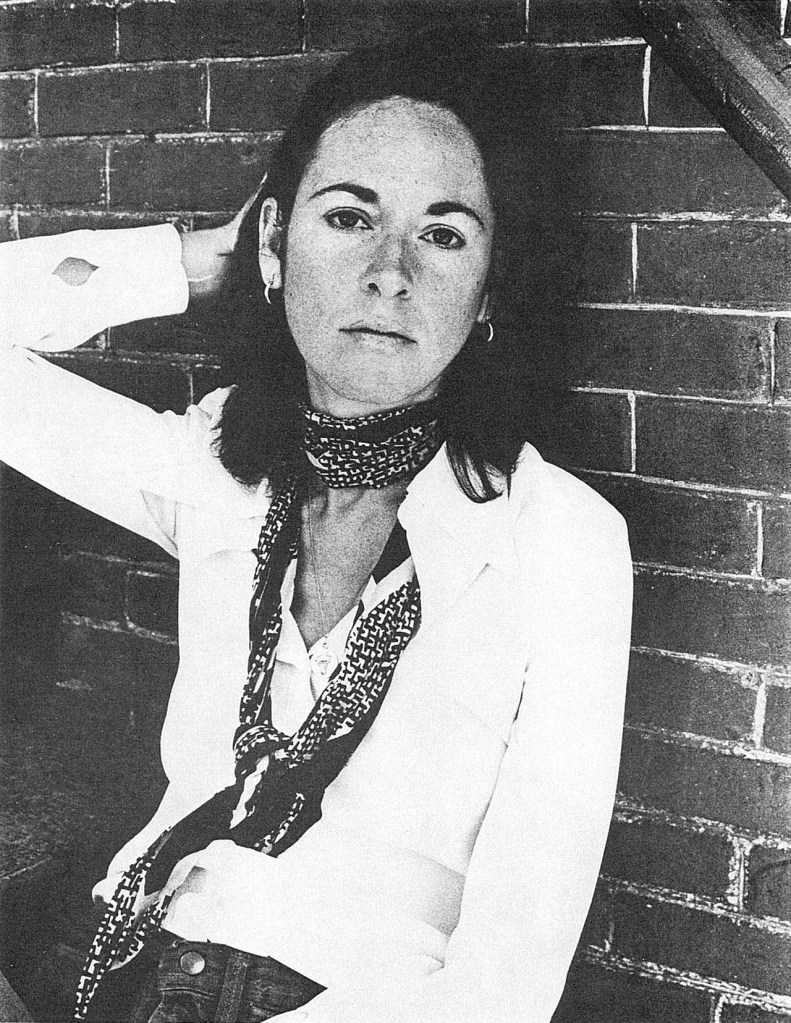
Louise Glück. Unknown Author. Public Domain.

Note: Louise Glück was the recipient of the 2020 Nobel Prize in Literature. Her collection of poetry, The Wild Iris (1993), won the Pulitzer Prize for Poetry.

Thanks as always for being a faithful reader of The Voracious Bibliophile. If you like what you see, please follow, like, comment, and subscribe to my email list to get notified of new posts as soon as they drop. You can also email me at thevoraciousbibliophile@yahoo.com or catch me on Twitter @voraciousbiblog. Keep reading the world, one page (or pixel) at a time.