Thanks as always for being a faithful reader of The Voracious Bibliophile. If you like what you see, please like, comment, follow, and subscribe to my email list to get notified of new posts as soon as they drop. You can also email me at fred.slusher@thevoraciousbibliophile.com or catch me on Twitter, Instagram, TikTok, and Pinterest @voraciousbiblog. Keep reading the world, one page (or pixel) at a time.
There is a segment of the white American population that has always viewed Black dissent as a threat to white safety and security. Since the election of Obama and the increase in protests around the country over the killing of unarmed Black people by police, white anxiety over Black empowerment had increased to a level that many of us had not seen in our lifetimes. Trump gave his angry crowds a prime target against which to vent their fury and anxiety by painting Black Americans as simply ungrateful for the opportunities they had been granted.
Thanks as always for being a faithful reader of The Voracious Bibliophile. If you like what you see, please like, comment, follow, and subscribe to my email list to get notified of new posts as soon as they drop. You can also email me at fred.slusher@thevoraciousbibliophile.com or catch me on Twitter, Instagram, TikTok, and Pinterest @voraciousbiblog. Keep reading the world, one page (or pixel) at a time.
***Note: I received a free digital review copy of this book from NetGalley in exchange for an honest review.***
A poet’s heart is a populous grave. Bodies turned stories turned / guilt turned into a mouth. I am trying to be lonely again.
Noor Unnahar, [A Poet’s Heart]
In New Names for Lost Things, Noor Unnahar’s newest collection of poetry and visual art, she speaks in her own inimitable voice about the achingly familiar: love, loss, grief, death, memory, and forgetting. She writes with emotional clarity in an economy of language that doesn’t waste words. This collection is exactly what it needs to be, nothing more and nothing less, and that is the highest compliment one can pay a poet.
…she [Unnahar] speaks…about the achingly familiar: love, loss, grief, death, memory, and forgetting.
Major themes recurring throughout New Names for Lost Things include family memory, the opportunity cost of our chosen versus our lost or unchosen futures, and the way(s) in which what we choose to keep, both material and immaterial, come to define us not only to ourselves but to the rest of the world. While Unnahar’s first collection, yesterday i was the moon, was luminous in its own right, New Names for Lost Things is in a category entirely its own. Put simply, if yesterday i was the moonwere a single star, New Names for Lost Things is its own galaxy. This is one of the best collections I’ve read this year and I want everyone I know to read it.
New Names for Lost Things was published by Andrews McMeel Publishing on October 19th, 2021 and is available to purchase wherever books are sold.
Thanks as always for being a faithful reader of The Voracious Bibliophile. If you like what you see, please like, comment, follow, and subscribe to my email list to get notified of new posts as soon as they drop. You can also email me at fred.slusher@thevoraciousbibliophile.com or catch me on Twitter, Instagram, TikTok, and Pinterest @voraciousbiblog. Keep reading the world, one page (or pixel) at a time.
The very big creature had never been out at this hour before. Everything looked different. The sky was full of color, and the sun—as round as an orange—was disappearing into the water. He knew this wasn’t where he was supposed to be right now. But as the world turned from pink to orange to purple all around him, he wondered if maybe it actually was.
Thanks as always for being a faithful reader of The Voracious Bibliophile. If you like what you see, please like, comment, follow, and subscribe to my email list to get notified of new posts as soon as they drop. You can also email me at fred.slusher@thevoraciousbibliophile.com or catch me on Twitter, Instagram, TikTok, and Pinterest @voraciousbiblog. Keep reading the world, one page (or pixel) at a time.
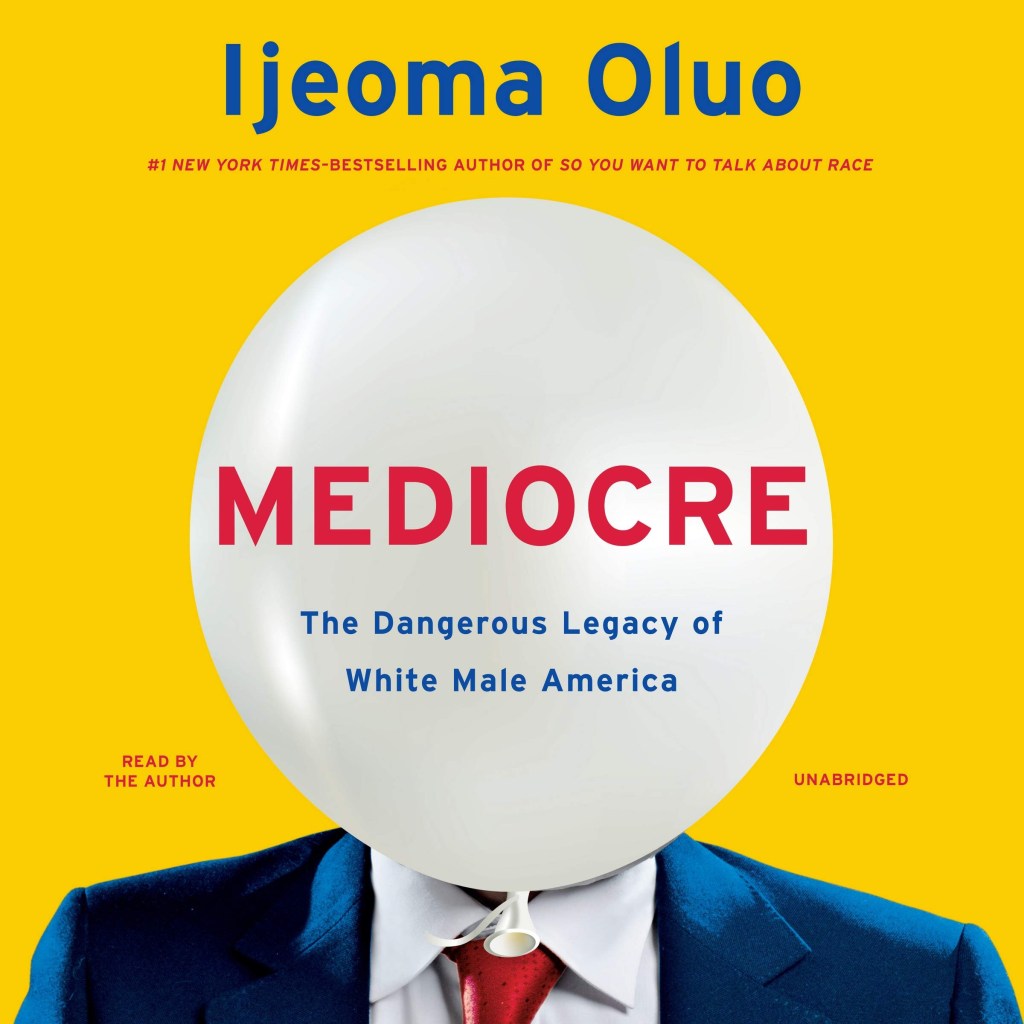
I especially love this chapter in Ijeoma Oluo’s book because she talks about one of American history’s oft-neglected public servants, Shirley Chisholm (1924-2005). She was the first Black woman elected to the United States House of Representatives, serving New York’s 12th congressional district from 1969 to 1983. She was also the first Black American to run for President of the United States. She sought the Democratic Party’s nomination for the 1972 presidential election and while she did not get the nomination, she changed the landscape of American politics forever.
Hers was a grassroots activism centering the interests and issues of all Americans, especially those occupying marginalized identities and living in communities disenfranchised by the white male elite. She was able to bring together a broad coalition of people to fight toward a more just and perfect Union, the one idealized by the Founders who failed to see people who looked like Chisholm as fully-human.
Hers [Chisholm’s] was a grassroots activism centering the interests and issues of all Americans, especially those occupying marginalized identities and living in communities disenfranchised by the white male elite.
The legacy of Shirley Chisholm reverberates throughout American politics. She paved the way for other BIPOC women who wanted to run for public office by providing them with a framework showing it was possible. Yvonne Brathwaite. Barbara Jordan. Maxine Waters. Alexandria Ocasio-Cortez. Ayanna Pressley. Kamala Harris. Shirley Chisholm paved the way for all of them.
Thanks as always for being a faithful reader of The Voracious Bibliophile. If you like what you see, please like, comment, follow, and subscribe to my email list to get notified of new posts as soon as they drop. You can also email me at fred.slusher@thevoraciousbibliophile.com or catch me on Twitter, Instagram, TikTok, and Pinterest @voraciousbiblog. Keep reading the world, one page (or pixel) at a time.
It is not simply that many white Americans do not care, it is that many white Americans are so invested in the political exclusion of people who are not white men that they will actively work against any political change that would meaningfully enfranchise women, people of color, LGBTQ+ people, and disabled people, even when they are aware of the potential cost to their own well-being. Many have decided that the psychological benefit of looking at government and seeing a roomful of white men is worth the very real cost to their financial and physical welfare. Somehow, even though history has shown that it is not the case, many white Americans are still able to convince themselves that listening to the same people they’ve always listened to will pay off for them in the end.
Thanks as always for being a faithful reader of The Voracious Bibliophile. If you like what you see, please like, comment, follow, and subscribe to my email list to get notified of new posts as soon as they drop. You can also email me at fred.slusher@thevoraciousbibliophile.com or catch me on Twitter, Instagram, TikTok, and Pinterest @voraciousbiblog. Keep reading the world, one page (or pixel) at a time.
It is psychologically damaging to never see yourself reflected in positions of leadership in your own country. It limits our feeling of citizenship and it limits the possibilities we see for ourselves and our children. It creates a feeling of unsafety.
Thanks as always for being a faithful reader of The Voracious Bibliophile. If you like what you see, please like, comment, follow, and subscribe to my email list to get notified of new posts as soon as they drop. You can also email me at fred.slusher@thevoraciousbibliophile.com or catch me on Twitter, Instagram, TikTok, and Pinterest @voraciousbiblog. Keep reading the world, one page (or pixel) at a time.
Even if we can’t guarantee that every woman promoted to CEO will outperform her male counterpart in company growth or profitability, the important benefits for workplaces and the broader society of elevating women to positions of power will always be worth the risk.
Thanks as always for being a faithful reader of The Voracious Bibliophile. If you like what you see, please like, comment, follow, and subscribe to my email list to get notified of new posts as soon as they drop. You can also email me at fred.slusher@thevoraciousbibliophile.com or catch me on Twitter, Instagram, TikTok, and Pinterest @voraciousbiblog. Keep reading the world, one page (or pixel) at a time.
Workplaces that devalue traits and skills like empathy, communication, and cooperation, which women are more likely to be socialized to have, almost always overvalue traits like hyper-competitiveness, aggression, and impulsiveness, which men are more likely to be socialized to have, even when those characteristics harm a work environment.
Thanks as always for being a faithful reader of The Voracious Bibliophile. If you like what you see, please like, comment, follow, and subscribe to my email list to get notified of new posts as soon as they drop. You can also email me at fred.slusher@thevoraciousbibliophile.com or catch me on Twitter, Instagram, TikTok, and Pinterest @voraciousbiblog. Keep reading the world, one page (or pixel) at a time.
Sadly, the home of so much white cishet male anger is the bodies of the marginalized. When the powerful feel threatened, when the powerful are angry, they act as aggressors toward people and groups who have less power than they do so they can reaffirm their status as masters of the universe, if only in their own eyes.
That’s why Donald Trump was the answer to Barack Obama. That’s why Jim Crow was the answer to emancipation. That’s why for every inch gained in equality by a marginalized group, the privileged group forced to give up a modicum of their social superiority attempts to reclaim back a mile. Their anger, their vitriol, makes Black, brown, and queer bodies the sites of violence of an unspeakable magnitude. But this should not stop us from fighting for justice. If anything, it should galvanize us to press harder, to stand in the gap of our siblings’ oppressions.
We are all of us complicit in systems which oppress, malign, and disenfranchise our fellow citizens, and it is high time we surrendered our comfort for accountability and our silence for truth and justice.
I once read somewhere on Twitter that the place at which your privilege intersects with another person’s oppression is the part of the system you have the power to destroy. The work of dismantling white supremacy and toxic patriarchy is work that belongs to all of us, but especially to those of us who hold the most privilege. We are all of us complicit in systems which oppress, malign, and disenfranchise our fellow citizens, and it is high time we surrendered our comfort for accountability and our silence for truth and justice.
Thanks as always for being a faithful reader of The Voracious Bibliophile. If you like what you see, please like, comment, follow, and subscribe to my email list to get notified of new posts as soon as they drop. You can also email me at fred.slusher@thevoraciousbibliophile.com or catch me on Twitter, Instagram, TikTok, and Pinterest @voraciousbiblog. Keep reading the world, one page (or pixel) at a time.




 The Voracious Bibliophile