Thanks as always for being a faithful reader of The Voracious Bibliophile. If you like what you see, please like, comment, follow, and subscribe to my email list to get notified of new posts as soon as they drop. You can also email me at fred.slusher@thevoraciousbibliophile.com or catch me on Twitter, Instagram, TikTok, and Pinterest @voraciousbiblog. Keep reading the world, one page (or pixel) at a time.
Forgiveness condones nothing, but it does cast off the chains of anger, judgment, resentment, denial, and pain that choke growth. In this way, it allows for life, for freedom.
Thanks as always for being a faithful reader of The Voracious Bibliophile. If you like what you see, please like, comment, follow, and subscribe to my email list to get notified of new posts as soon as they drop. You can also email me at fred.slusher@thevoraciousbibliophile.com or catch me on Twitter, Instagram, TikTok, and Pinterest @voraciousbiblog. Keep reading the world, one page (or pixel) at a time.
Thanks as always for being a faithful reader of The Voracious Bibliophile. If you like what you see, please like, comment, follow, and subscribe to my email list to get notified of new posts as soon as they drop. You can also email me at fred.slusher@thevoraciousbibliophile.com or catch me on Twitter, Instagram, TikTok, and Pinterest @voraciousbiblog. Keep reading the world, one page (or pixel) at a time.
Thanks as always for being a faithful reader of The Voracious Bibliophile. If you like what you see, please like, comment, follow, and subscribe to my email list to get notified of new posts as soon as they drop. You can also email me at fred.slusher@thevoraciousbibliophile.com or catch me on Twitter, Instagram, TikTok, and Pinterest @voraciousbiblog. Keep reading the world, one page (or pixel) at a time.
Thanks as always for being a faithful reader of The Voracious Bibliophile. If you like what you see, please like, comment, follow, and subscribe to my email list to get notified of new posts as soon as they drop. You can also email me at fred.slusher@thevoraciousbibliophile.com or catch me on Twitter, Instagram, TikTok, and Pinterest @voraciousbiblog. Keep reading the world, one page (or pixel) at a time.
Thanks as always for being a faithful reader of The Voracious Bibliophile. If you like what you see, please like, comment, follow, and subscribe to my email list to get notified of new posts as soon as they drop. You can also email me at fred.slusher@thevoraciousbibliophile.com or catch me on Twitter, Instagram, TikTok, and Pinterest @voraciousbiblog. Keep reading the world, one page (or pixel) at a time.
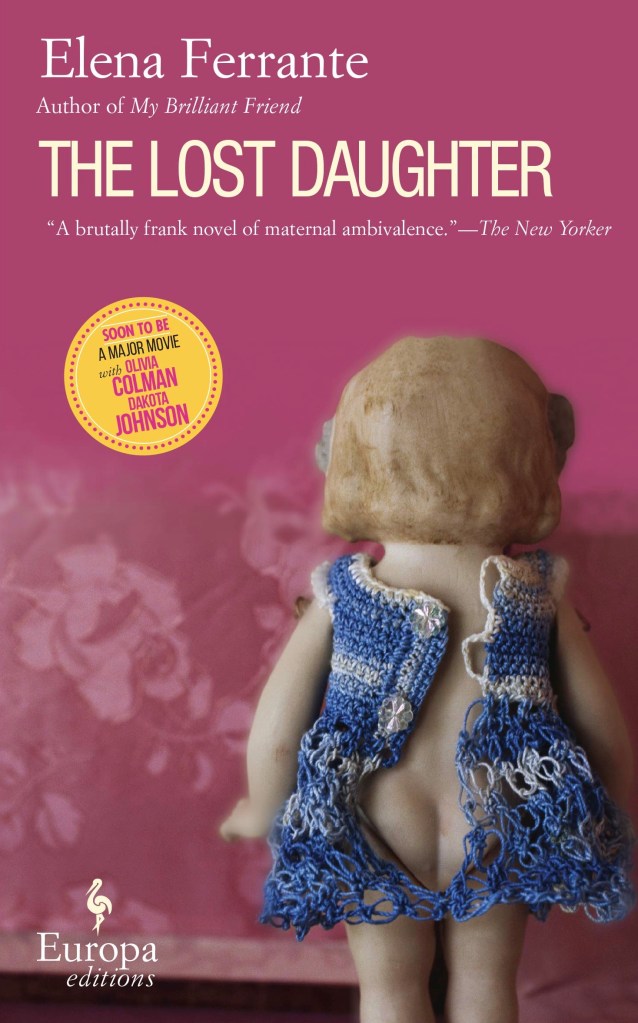
Elena Ferrante is one of my favorite writers, so you can imagine how nervous I was when I first heard that The Lost Daughter (2008) was being adapted as a feature film. To give you some context, I have yet to watch a single episode of HBO’s My Brilliant Friend, which is based off Ferrante’s Neapolitan Novels. The series, which includesMy Brilliant Friend (2012), The Story of a New Name(2013), Those WhoLeave and Those Who Stay(2014), and The Story of the Lost Child (2015), follows two friends, Elena and Lila, from the time they are little girls to when they are elderly women, through love, marriage, heartbreak, and not least of all the changing sociopolitical landscape of their neighborhood in Naples, Italy.
I tried to watch an episode when it first came out, but those books mean too much to me to have them sullied by a less-than-sensational adaptation. There’s a chance it’s decent, yes, but I am not that much of a gambler.
There is no better marriage than that between literature and film, but only when it’s done right.
Then I found out that Maggie Gyllenhaal would be helming the ship as both director and screenwriter of The Lost Daughter, and quelle intrigue, I was starting to feel a little hopeful. There is no better marriage than that between literature and film, but only when it’s done right. Finally, I heard that Olivia Colman was starring as the lead and that sold me. Colman, who won an Oscar for her portrayal of Queen Anne in Yorgos Lanthimos’s 2018 film The Favourite, is a fierce, intelligent, and inimitable talent. She’s nearly unmatched.
Colman, who won an Oscar for her portrayal of Queen Anne in Yorgos Lanthimos’s 2018 film The Favourite, is a fierce, intelligent, and inimitable talent. She’s nearly unmatched.
I mean, how many actors do you know who can hold their own (much less shine, as she did) when paired with someone like Sir Anthony Hopkins? The answer is not many, of course.
The idyllic scene is almost too idyllic, as if something dark and primordial is lurking just beneath the surface, waiting for the veil of darkness to ensnare whom it may.
In The Lost Daughter, Colman plays Leda Caruso, a professor and scholar of comparative Italian literature on holiday in Greece. The idyllic scene is almost too idyllic, as if something dark and primordial is lurking just beneath the surface, waiting for the veil of darkness to ensnare whom it may. The bowl of fruit in Leda’s rented apartment, at first sight so inviting, conceals rot. The gentle breezes blowing through her bedroom carry an insect to her pillow which startles her awake and stains her pillow with its blood.
The shifting tectonics of the fractured idyll create an atmosphere of unease which pervades the entire island.
The shifting tectonics of the fractured idyll create an atmosphere of unease which pervades the entire island. One day, a boisterous family interrupts Leda on the beach and asks her to move her lounge chair so they can all sit close together, unbroken. Owing them nothing and caught off-guard by their crassness, Leda (at first politely) tells them no. She is not interested in moving. Some viewers might watch this scene and think, Why doesn’t she just move? It’s not that big a deal, right? But it’s not really that simple, either. Some people’s lived experiences socialize them to be protective of any space they’re able to carve out for themselves. Naturally, they become fiercely protective of that space and those boundaries. As they should. As we all should.
Some people’s lived experiences socialize them to be protective of any space they’re able to carve out for themselves. Naturally, they become fiercely protective of that space and those boundaries. As they should. As we all should.
After her initial run-in with some of the members of the family, Leda makes a connection with Nina (Dakota Johnson) after Leda finds Nina’s daughter Elena when she goes missing on the beach. Then Leda does something that at the time seems strange—she steals Elena’s doll. Nina and the rest of her family search high and low for the doll, even going so far as to offer a reward for its safe return. Nina is worn threadbare. Elena is fractious and inconsolable. All the while, Leda is surreptitiously caring for the doll—cleaning it, buying it clothes, and caressing it much like one would an infant.
Nina is worn threadbare. Elena is fractious and inconsolable. All the while, Leda is surreptitiously caring for the doll—cleaning it, buying it clothes, and caressing it much like one would an infant.
Intermittent flashbacks show Leda as a young mother interacting with her daughters, Bianca and Martha. Anyone can see that she loves her daughters fiercely but lacks the mothering instinct often idolized in the popular culture. She feels smothered, bombarded. Every plea and poke strips her of something she’d much rather keep exclusively for herself. She’s like a beachcomber dodging scores of dive-bombing pelicans, a trapeze artist balancing on an ever-thinning wire. She cycles through irritation, rage, and agony like they’re outfits picked for different days of the week. When she begins getting recognized for her scholarship, she feels the pull toward escape like an iron filing to a magnet. Once a successful and handsome colleague (Peter Sarsgaard) gives her the professional validation she seeks as well as the sensual adulation she craves, the frayed apron strings are all but severed entirely.
She feels smothered, bombarded. Every plea and poke strips her of something she’d much rather keep exclusively for herself. She’s like a beachcomber dodging scores of dive-bombing pelicans, a trapeze artist balancing on an ever-thinning wire.
I won’t spoil the ending, mostly because I want everyone who reads this blog and everyone I know in real life to watch this film. Maggie Gyllenhaal and Olivia Colman have gifted us with one of the most honest depictions of motherhood ever seen in any medium. Many scholars have waxed poetic about the divided feminine for years, as anyone who’s had to listen to a lecture on the Madonna-whore complex can tell you. But, Gyllenhaal moves the dial beyond this simplistic dichotomy to encompass all the parts of womanhood seldom spoken about in tandem with motherhood. And she does so, with the help of Colman and Johnson, of course, without placing a value judgment on any of these planes of existence. These women are simply allowed to be, in all of their glorious complexity. That in itself is a tremendous achievement.
The Lost Daughterreceived a limited theatrical release beginning on December 17th, 2021 and began streaming on Netflix on December 31st, 2021.
Thanks as always for being a faithful reader of The Voracious Bibliophile. If you like what you see, please like, comment, follow, and subscribe to my email list to get notified of new posts as soon as they drop. You can also email me at fred.slusher@thevoraciousbibliophile.com or catch me on Twitter, Instagram, TikTok, and Pinterest @voraciousbiblog. Keep reading the world, one page (or pixel) at a time.
Thanks as always for being a faithful reader of The Voracious Bibliophile. If you like what you see, please like, comment, follow, and subscribe to my email list to get notified of new posts as soon as they drop. You can also email me at fred.slusher@thevoraciousbibliophile.com or catch me on Twitter, Instagram, TikTok, and Pinterest @voraciousbiblog. Keep reading the world, one page (or pixel) at a time.
Thanks as always for being a faithful reader of The Voracious Bibliophile. If you like what you see, please like, comment, follow, and subscribe to my email list to get notified of new posts as soon as they drop. You can also email me at fred.slusher@thevoraciousbibliophile.com or catch me on Twitter, Instagram, TikTok, and Pinterest @voraciousbiblog. Keep reading the world, one page (or pixel) at a time.
Thanks as always for being a faithful reader of The Voracious Bibliophile. If you like what you see, please like, comment, follow, and subscribe to my email list to get notified of new posts as soon as they drop. You can also email me at fred.slusher@thevoraciousbibliophile.com or catch me on Twitter, Instagram, TikTok, and Pinterest @voraciousbiblog. Keep reading the world, one page (or pixel) at a time.






 The Voracious Bibliophile