Before I started The Voracious Bibliophile, I had always looked at blogging as something that other people could be successful at, never as something that I was capable of doing myself. I love proving myself (as well as the negative voices in my head) wrong. Because of you beautiful people, my blog is almost at 400 views! I know to some people that may not seem like a lot, but to me it’s incredibly validating. I hope you’ll all keep following me on this incredible journey.
Thanks as always for being a faithful reader of The Voracious Bibliophile. If you like what you see, please follow, like, comment, and subscribe to my email list to get notified of new posts as soon as they drop. You can also email me at thevoraciousbibliophile@yahoo.com or catch me on Twitter @voraciousbiblog. Keep reading the world, one page (or pixel) at a time.
This will not be a long post. I just wanted to add my two cents into the conversation surrounding Independence Day in the United States, or simply “the 4th” if you live in my neck of the woods.
I hate everything about this holiday. I hate that it falls in the “Satan’s hind parts” part of the summer. I hate the particular brand of redneck culture bolstered by its celebration. I hate the flies buzzing around the hastily prepared and flavorless provisions. I hate the swell of bodies glistening in the summer sun, reeking of bug spray, sweat, and barbecue sauce.
I hate its racist overtones. I hate that we live in a country where the ruling class is obsessed with the idea of freedom but wholly opposed to the Others taking part in it. Hypocrites, every last one of them.
But do you want to know which part of this holiday I hate the most? Just guess. Fireworks. I hate the unexpected booms that ricochet through the night. I hate the hissing and the popping and the whooshing sound they make when ascending.
I hate the trucks emblazoned with dollar store Americana. I hate the wife-beaters wearing wife-beaters and their yee-haw swagger. I hate that the idea of America is better than the reality of America. I hate the way the sky looks after being graffitied with our revisionist bluster. I hate that all that pomp and circumstance isn’t backed up by anything of substance.
I hate that the idea of America is better than the reality of America. I hate the way the sky looks after being graffitied with our revisionist bluster. I hate that all that pomp and circumstance isn’t backed up by anything of substance.
How does it make sense to fly the Stars and Stripes with pride at the same time we plunder the land out of greed and deny our fellow citizens their equal rights?
I’m not opposed to celebration. I just want everyone invited to the table.
Thanks as always for being a faithful reader of The Voracious Bibliophile. If you like what you see, please follow, like, comment, and subscribe to my email list to get notified of new posts as soon as they drop. You can also email me at thevoraciousbibliophile@yahoo.com or catch me on Twitter @voraciousbiblog. Keep reading the world, one page (or pixel) at a time.
Allow me to first offer my sincere apology to all of you, my devoted readers, for making you wait so long for Part 2. This part is going to be a lot different from the first one because I’ll be sharing and discussing my favorite passages from Nadia’s book. Are you ready for it? Let’s go.
God planted so many of us in the corners, yet the center-pivot irrigation of the church’s teachings about sex and sexuality tends to exclude us.
This is so life-affirming. For all #exvangelicals out there and for people who still have ties to the church, the feelings of exclusion that we experience in relation to our religious upbringings are so strong that they almost manifest in corporeal form whenever we’re exposed to the teachings inculcated in us from when we were congregants.
We were taught that the body is a site of shame. We were taught that we were tainted by Adam’s original sin, that our flesh is something we must overcome in order to become one with God. We were taught that sharing our bodies with others outside the confines of monogamous, heterosexual marriage separates us from the holy.
We were taught that sharing our bodies with others outside the confines of monogamous, heterosexual marriage separates us from the holy.
We were even condemned for finding pleasure(s) on our own. Masturbating was something we all discovered by accident, performed in secret, and never talked about. It was the secret sin that tainted our relationship with God, with our families, with ourselves. The rose is not branded an apostate when it blooms, so why then should we be branded? This is not even mentioning the shame accompanying your masturbatory fantasies if you were anything other than 100% straight.
The rose is not branded an apostate when it blooms, so why then should we be branded?
But our sexual and gender expressions are as integral to who we are as our religious upbringings are. To separate these aspects of ourselves—to separate life as a sexual being from a life with God—is to bifurcate our psyche, like a musical progression that never comes to resolution.
I love the imagery Bolz-Weber (I think from here on out I’m just going to refer to her as Pastor Nadia) uses here. So many of us who were raised in the church had to develop a dichotomy between our spiritual and corporeal identities, thus the bifurcation she’s talking about here. We were all musical progressions never coming to a resolution. If you ask me, we were robbed. That forced separation caused us to become less of ourselves, meaning that in the end we had less to offer God and less to give to others.
That forced separation caused us to become less of ourselves, meaning that in the end we had less to offer God and less to give to others.
What would we be like if this bifurcation had not caused us to tear ourselves asunder? What if instead we read the Scriptures with new eyes?
Do you not know that your body is a temple of the Holy Spirit who is within you, whom you have [received as a gift] from God, and that you are not your own [property]? You were bought with a price [you were actually purchased with the precious blood of Jesus and made His own]. So then, honor and glorify God with your body.
1 Corinthians 6:19-20 (AMP)
At what point did the church carnalize our bodies? When we are taken in totality, no bifurcation is necessary, and if we are to believe the Scriptures, our bodies house (contain) the Holy Spirit. Now, I am by no stretch of the imagination a Bible scholar or theologian, but there’s nothing wrong with my reading comprehension.
When we are taken in totality, no bifurcation is necessary, and if we are to believe the Scriptures, our bodies house (contain) the Holy Spirit.
When the woman saw that the fruit of the tree was good for food and pleasing to the eye, and also desirable for gaining wisdom, she took some and ate it. She also gave some to her husband, who was with her, and he ate it. Then the eyes of both of them were opened, and they realized they were naked; so they sewed fig leaves together and made coverings for themselves. Then the man and his wife heard the sound of the LORD God as he was walking in the garden in the cool of the day, and they hid from the LORD God among the trees of the garden. But the LORD God called to the man, ‘Where are you?’ He answered, ‘I heard you in the garden, and I was afraid because I was naked; so I hid.’ And he said, ‘Who told you that you were naked? Have you eaten from the tree that I commanded you not to eat from?’
Genesis 3:6-11 (NIV)
Here we see that shame was a consequence of the first sin—before sin, the first humans were naked, without shame, and free.
So what are the implications for us? Because man fell [from grace or right standing with God], we all have an awareness of our nakedness, of our bodies as a site of inherent shame, and this inherent shame is a direct consequence of the serpent’s temptation. So every time a little effeminate boy is called a faggot and beat up by his classmates, or a transgender Black woman is murdered for having the audacity to exist in public, the serpent wins, and the anti-LGBT people of faith rejoice with him. Is that saying a whole hell of a lot? You bet it is. I said what I said.
So every time a little effeminate boy is called a faggot by his classmates, or a transgender Black woman is murdered for having the audacity to exist in public, the serpent wins, and the anti-LGBT people of faith rejoice with him.
I refuse to accept or participate in a faith tradition that excludes some while exalting others, that prizes some bodies above others, or draws lines of demarcation between who can and who cannot be joint-heirs with Christ. He didn’t just die for them. I don’t know which version of the Bible they’re reading, but in every one of the baker’s dozen I own, Jesus welcomed everyone to his table, and there are no garbage tables in God’s Kingdom.
Thanks as always for being a faithful reader of The Voracious Bibliophile. If you like what you see, please follow, like, comment, and subscribe to my email list to get notified of new posts as soon as they drop. You can also email me at thevoraciousbibliophile@yahoo.com or catch me on Twitter @voraciousbiblog. Keep reading the world, one page (or pixel) at a time.
Anyone who knows me or has read my About Me page on the blog knows that I am a bookseller. Well, for the past three years, I’ve been the Assistant General Manager at a chain bookstore.
A couple of months ago, my then-General Manager got an opportunity outside our company that offered more money and also had a tuition assistance program, so naturally she took it. My record as a manager is impeccable. My sales numbers are good, I finish projects ahead of schedule, and (not to brag but) I’m a whiz at analyzing sales reports and identifying trends. My customer service skills are so next-level that some people become irate if I’m not available to help them. I’m the bossest of Boss Monsters. Also, my degree is in marketing so I feel like I have a pretty in-depth understanding of how to sell things.
My customer service skills are so next level that some people become irate if I’m not available to help them. I’m the bossest of Boss Monsters.
I made my pitch for the job immediately. I updated my resume, emailed higher-ups, made a play for the position, etc. Then I waited. And I waited some more. And then I had to wait even longer. And then I had to work 50+ hour weeks doing a quarterly overstock scan. And then I had to prep for a store inventory as the person in charge of it (for the first time). And then I waited some more.
This past Monday, June 28th, was our scheduled inventory day. I arrived at my store at 4:30 AM and made sure everything was ready. For those of you unfamiliar with the retail scene, periodically (usually once per fiscal year) the company you work for will schedule an inventory. On the day of your inventory, a group of people (the number will depend upon the size of your store) will come and scan through each individual item in your store. Some stores that are small enough may have their inventory(ies) performed by in-house associates.
The details of what happens during this process and after this process (auditing counts, preparing post-inventory paperwork, etc.) is irrelevant to my story here, so I’ll move on. By this point I have spoken to my direct supervisor more than six times about the promotion I was gunning for. I was ready to be the General Manager. I knew what I was doing and I was doing great at it. I was like Liam Neeson in Taken kicking loads of Albanian sex-trafficker butt without breaking a sweat.
I was like Liam Neeson in Taken kicking loads of Albanian sex-trafficker butt without breaking a sweat.
So, around hour twelve on the 28th, I finally get to sit down with Lola*. Lola and I talk about how things have been going, how I’ve been able to keep operations running (relatively) smoothly considering the volatility of the labor and sales markets. I tell her I’m ready. And she tells me the job is mine. I am now officially a General Manager. Plus, I got a nice pay raise as well. I am so thrilled that all of my hard work has been validated. Power tastes really sweet.
Anyway, that’s the news I’ve been waiting to share.
Thanks as always for being a faithful reader of The Voracious Bibliophile. If you like what you see, please follow, like, comment, and subscribe to my email list to get notified of new posts as soon as they drop. You can also email me at thevoraciousbibliophile@yahoo.com or catch me on Twitter @voraciousbiblog. Keep reading the world, one page (or pixel) at a time.
Xavier Dolan is, in my opinion, one of the greatest practitioners of film craft of our time. At only 32 years of age, the Québécois auteur has already directed eight feature films, all the while snatching up awards and garnering critical acclaim. While he has been branded an enfant terrible by some, I would not hesitate to call him an iconoclast. It takes a lot of chutzpah to rip out your heart on screen and offer it to your audience, still beating.
It takes a lot of chutzpah to rip out your heart on screen and offer it to your audience, still beating.
In I Killed My Mother, Dolan has provided us with a semi-autobiographical, near-perfect evocation of the vagaries of queer adolescence. It’s all there: angst, rage, confusion, and the tentative eroticism that always accompanies waking up to yourself for the first time.
It’s all there: angst, rage, confusion, and the tentative eroticism that always accompanies waking up to yourself for the first time.
Dolan’s Hubert and Anne Dorval’s Chantale (Hubert’s mother) are at war. Hubert is figuring out who he is (and wants to be) at the same time that Chantale has settled, confused by the man her son is becoming and nostalgic for the easy relationship they once shared.
In one of the several interspersed black-and-white confessionals appearing throughout the film, Hubert laments the state of his relationship with his mother, saying, “We should be able to kill ourselves. In our heads. And then be reborn. To be able to talk, look at each other, be together. As if we never met before.” For him, it’s impossible to move forward, to begin anew, with all the bad blood that exists between him and his mother. To him, she’s gauche, tawdry, and overbearing—more a magpie than a mother. To her, he’s selfish, immature, and pugnacious—an unruly child screaming in the night.
We should be able to kill ourselves. In our heads. And then be reborn. To be able to talk, look at each other, be together. As if we never met before.
Hubert
We find out that Hubert has been in a relationship with Antonin, a friend of his from school, for a couple of months. Antonin’s mother is aware of their relationship and has no qualms about it, making Antonin’s home a place of refuge for Hubert and further alienating him from his mother.
It is not insignificant to any observant viewer that in Antonin’s bedroom hangs a poster of James Dean, from the iconic Torn Sweater series photographed by Roy Schatt for LIFE magazine; in Hubert’s bedroom hangs a poster of River Phoenix, whom every gay male teenager has been in love with since they first watched Stand by Me and (later, of course) My Own Private Idaho. It’s the perfect mise en scène: disaffected queer youth playing out their own dramas onscreen while the (gone too soon) queer youth of years past look on.
It’s the perfect mise en scène: disaffected queer youth playing out their own dramas onscreen while the (gone too soon) queer youth of years past look on.
It’s frenetic and tender all at once: a supernova. There comes a point in the film where you fear Hubert may actually kill his mother, the vitriol between them is so strong. When Chantale goes to a tanning salon with a friend partway through the film, she runs into Antonin’s mother there. Antonin’s mother, either not knowing Hubert’s closeted or not understanding the need for a “closet” in the first place, casually mentions that Antonin and Hubert are celebrating two months together. That word, together, shatters whatever illusions Chantale may have still been harboring.
While Chantale is obviously not virulently homophobic, she is still altogether unequipped to provide the kind of support Hubert needs at this point in his life. One hopes that this revelation will cause Chantale to change course, be the first one to offer the olive branch, beginning the catharsis that will ultimately lead to healing and reunification. Instead, she digs in. She involves Hubert’s heretofore absent father in plotting to send him to boarding school.
Hubert becomes completely unhinged after learning of his parents’ plot to shuffle him away to boarding school. When Chantale drops him off at the bus that will take him there, he asks his mother, “What would you do if I died today?” He’s already walking away when she replies, “I’d die tomorrow”. Anne Dorval utters this line barely above a whisper, but it is arguably the most emotionally resonant moment in the entire film.
Dolan’s artistic thumbprint is the ache that accompanies everything we can’t unsay, even though we become more of ourselves in the saying. “The only thing to kill in this lifetime is the enemy within, the hard core double. Dominating him is an art. How good an artist are we?” How good indeed.
Rating: ⭐️⭐️⭐️⭐️
Thanks as always for being a faithful reader of The Voracious Bibliophile. If you like what you see, please follow, like, comment, and subscribe to my email list to get notified of new posts as soon as they drop. You can also email me at thevoraciousbibliophile@yahoo.com or catch me on Twitter @voraciousbiblog. Keep reading the world, one page (or pixel) at a time.
I didn’t know I needed a film starring both Michelle Pfeiffer and Lucas Hedges. That pairing alone was worth quadruple the amount I paid to watch it. I’ve loved Michelle Pfeiffer ever since I first saw her as Selina Kyle / Catwoman in Tim Burton’s Batman Returns (1992) and I’ve been *in love* with Lucas Hedges since his breakthrough performance in Kenneth Lonergan’s Manchester by the Sea (2016). That love was further cemented by seeing him in films like Lady Bird (2017), Three Billboards Outside Ebbing, Missouri (2017), and Boy Erased (2018). In this house, we love boys who can pull off pathos.
In this house, we love boys who can pull off pathos.
French Exit (2020) is based on the novel of the same name written by Patrick deWitt and published in 2018. Let me just say that for everything this film lacks in narrative clarity and overall believability, it more than makes up for with its impeccable acting, effervescent cinematography, and stylistic panache.
Let me just say that for everything this film lacks in narrative clarity and overall believability, it more than makes up for with its impeccable acting, effervescent cinematography, and stylistic panache.
Michelle Pfeiffer stars as Frances Price, a Manhattan socialite who learns that her well of money has run dry. When asked by her financial advisor what she had planned to do once the money ran out (we learn that this had been coming for quite some time), she replies, “My plan was to die before the money ran out.”
A childhood friend of Frances’s offers her and her adult son Malcolm (Lucas Hedges) the use of her unoccupied Paris apartment for however long they may need it, ostensibly with no strings attached. Ah, to be a member of the haute bourgeoisie, where even in the midst of financial ruin one can scrounge up a chic Paris apartment to exile in.
Ah, to be a member of the haute bourgeoisie, where even in the midst of financial ruin one can scrounge up a chic Paris apartment to exile in.
Watching this film, one gets the feeling that Malcolm thinks he’s his mother’s antithesis, but they are alike in so many ways. For one, they are both codependent to an almost Hitchcockian degree and totally inept at navigating life outside their relationship with each other. Malcolm is adrift in a way only an over-educated trust fund kid can be. Commitment-shy and solipsistic, he frustrates his girlfriend, who unlike him has had to live in the real world while he spent his formative years glancing down on commoners from the ivory tower he shared with his mother. When he informs her that he is moving to Paris, most likely indefinitely, she breaks things off and their relationship ends (here, at least) on a sour note.
For one, they are both codependent to an almost Hitchcockian degree and totally inept at navigating life outside their relationship with each other.
Frances illegally sells what she can of her possessions “under the table”, creating a small nest egg that can sustain them until such time as they gain their bearings. Michelle Pfeiffer was made for this role. She carries herself in a way only someone accustomed to both money and high-class behavior can.
Their time on the boat to Paris and in the City of Love itself is spent collecting a coterie of companions just as neurotic and maladjusted as themselves, which muddles the narrative just as much as it imbues it with charm.
My overall take? I loved it. It’s not going to win any Oscars, not by a long shot, but for indie-loving arthouse-blowhards like yours truly, it hits the spot.
P.S. The family cat is also Malcolm’s dad. 😮👻🐱
Thanks as always for being a faithful reader of The Voracious Bibliophile. If you like what you see, please follow, like, comment, and subscribe to my email list to get notified of new posts as soon as they drop. You can also email me at thevoraciousbibliophile@yahoo.com or catch me on Twitter @voraciousbiblog. Keep reading the world, one page (or pixel) at a time.
I have a lot of these, but this will probably be the last batch I’ll share for a while. I have a lot of reading to catch up on because my day job has been incredibly time-consuming recently. Let me know what you think!
Thanks as always for being a faithful reader of The Voracious Bibliophile. If you like what you see, please follow, like, comment, and subscribe to my email list to get notified of new posts as soon as they drop. You can also email me at thevoraciousbibliophile@yahoo.com or catch me on Twitter @voraciousbiblog. Keep reading the world, one page (or pixel) at a time.
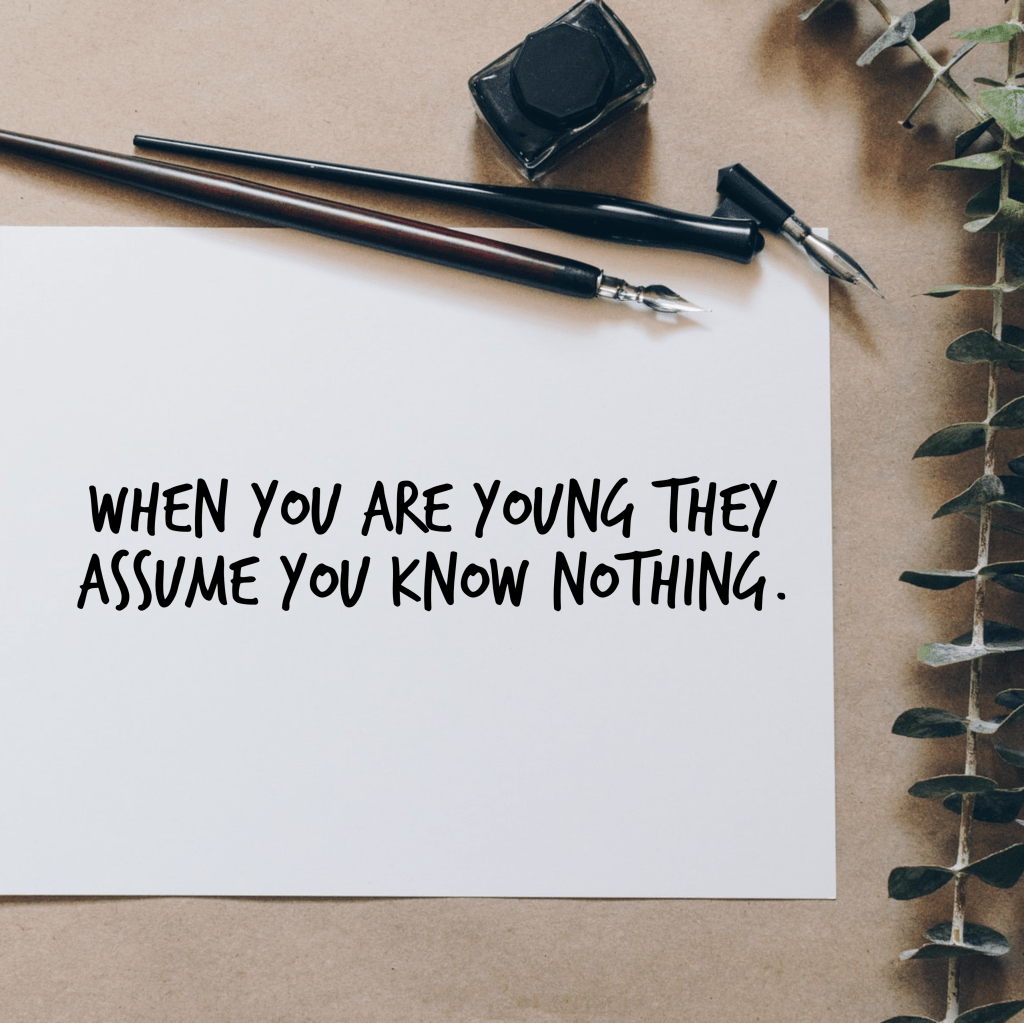
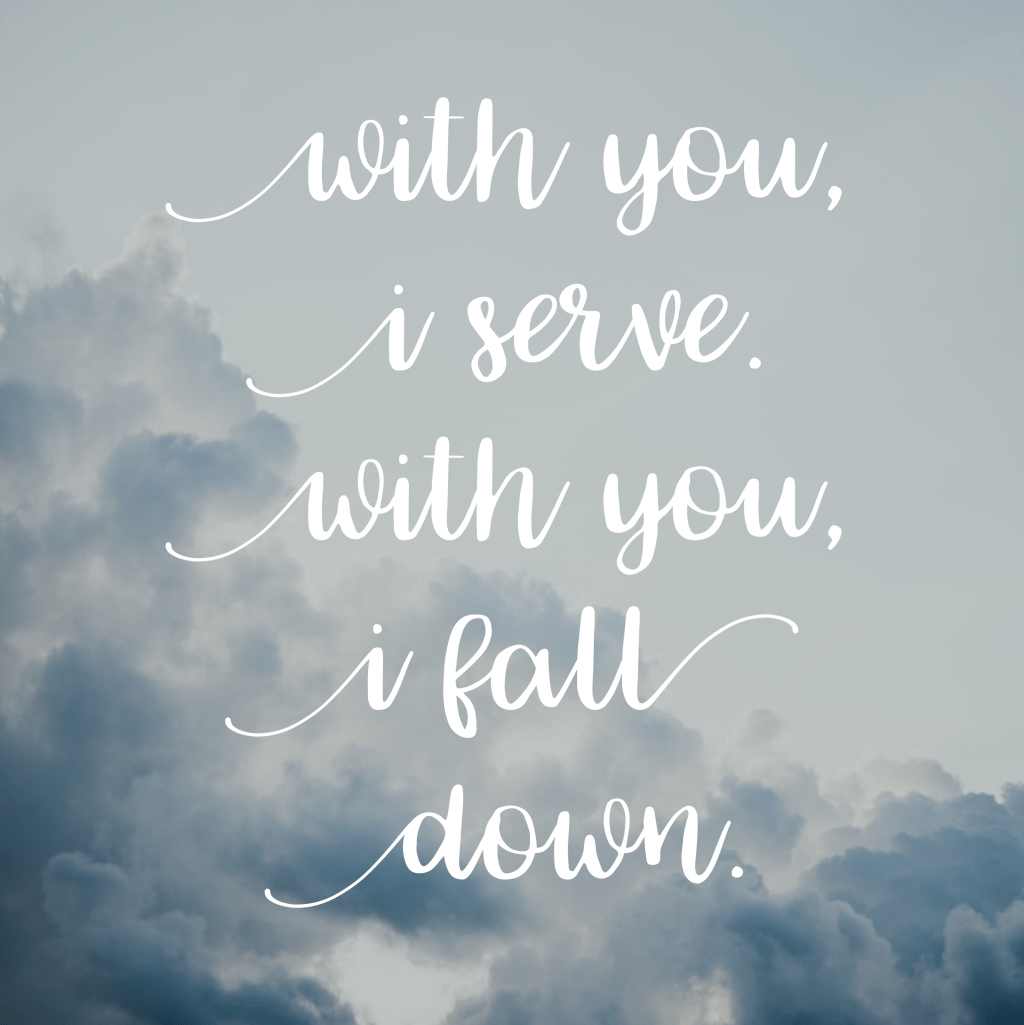
As promised, here are more of the quotes graphics I made last year.
Listen, I know I’m not going to win any awards for graphic designing but these were so much to make. Stay tuned for part three!
Thanks as always for being a faithful reader of The Voracious Bibliophile. If you like what you see, please follow, like, comment, and subscribe to my email list to get notified of new posts as soon as they drop. You can also email me at thevoraciousbibliophile@yahoo.com or catch me on Twitter @voraciousbiblog. Keep reading the world, one page (or pixel) at a time.
There was a time last year when I became obsessed with making quotes graphics like a bored suburban Pinterest Princess.
I’m not going to lie, I’m probably going to do it again sometime in the future. It was a good way for me to have a creative outlet that wasn’t writing and that didn’t require me to practice delayed gratification, which is not something people with ADHD are good at.
This time in my life also coincided with Taylor Swift’s surprise release of folklore, and let’s just say I was *really* in my feelings. As we all probably were.
This time in my life also coincided with Taylor Swift’s surprise release of folklore, and let’s just say I was *really* in my feelings. As we all probably were.
This is probably going to be a three-part series because I have a lot of graphics to share. I hope you enjoy them!
Thanks as always for being a faithful reader of The Voracious Bibliophile. If you like what you see, please follow, like, comment, and subscribe to my email list to get notified of new posts as soon as they drop. You can also email me at thevoraciousbibliophile@yahoo.com or catch me on Twitter @voraciousbiblog. Keep reading the world, one page (or pixel) at a time.
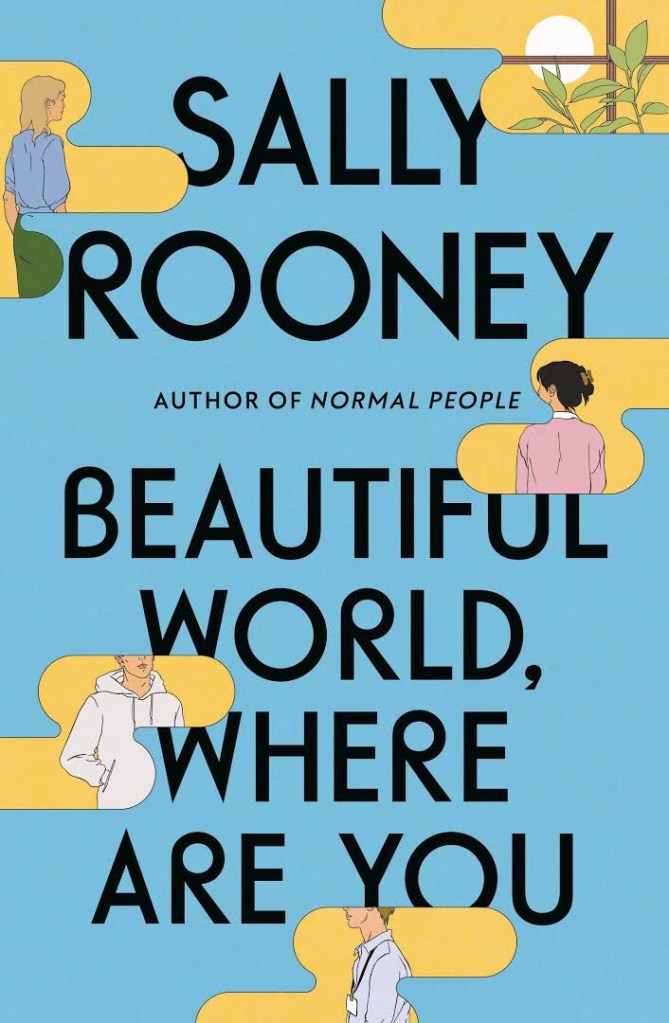
My backlog of books I want to read immediately keeps growing, and you can bet your bottom dollar I’ll be acquiring this little gem the day it comes out.
For me, Sally Rooney is to literary fiction as Greta Gerwig is to cinema. Lots of pining and complex emotions, with the occasional outburst that’s inserted as much for the plot as for the audience’s (be they biblio- or cinephiles) much-needed catharsis.
For me, Sally Rooney is to literary fiction as Greta Gerwig is to cinema.
I guess I can tell you right now that Normal People did me some kind of way. So much so, in fact, that I immediately bought Conversations with Friends and then proceeded to (A) not pick it up and (B) lose track of its placement. It looks like I’m going to have to find it now because I’ll need the pre-game training to be able to withstand the main event.
All of Sally Rooney’s books are now available wherever books are sold.
Thanks as always for being a faithful reader of The Voracious Bibliophile. If you like what you see, please follow, like, comment, and subscribe to my email list to get notified of new posts as soon as they drop. You can also email me at thevoraciousbibliophile@yahoo.com or catch me on Twitter @voraciousbiblog. Keep reading the world, one page (or pixel) at a time.

































 The Voracious Bibliophile