


The cure for anything is salt water: sweat, tears or the sea.
Isak Dinesen
The cure for anything is salt water: sweat, tears or the sea.
Isak Dinesen

It’s there on the roof
Personification of
Your wildest dreams, dear
Thanks as always for being a faithful reader of The Voracious Bibliophile. If you like what you see, please like, comment, follow, and subscribe to my email list to get notified of new posts as soon as they drop. You can also email me at fred.slusher@thevoraciousbibliophile.com or catch me on Twitter and Instagram @voraciousbiblog. Keep reading the world, one page (or pixel) at a time.
© 2021 Fred Slusher. All rights reserved.

***Note: I received a free digital review copy of this book from NetGalley in exchange for an honest review.***
I must admit, before reading Basho’s Haiku Journeys I knew next to nothing about Matsuo Basho, the Japanese poet who lived in the seventeenth century and is credited with inventing the haiku. For those of you unfamiliar with the form, a haiku is a short-form poem most often containing seventeen syllables in three lines, with five in the first line, seven in the second line, and five in the third and last line. Most haiku are about nature and haiku purists insist that only haiku about nature can be considered true haiku, but the form has evolved to include other topics.
For most of his life, Basho lived a comfortable and cosmopolitan life in Edo, which was then the capital city of Japan. He made his living teaching and writing, but there was an unfulfilled longing inside him—to see more, to experience the vibrancy of life more fully. He lived in a hut outside Edo that his students had built for him, and one night it caught fire and burned to the ground.
Most people would feel devastated at the loss of all their earthly possessions, but Basho felt liberated. He wandered into the woods, basking in the elation he felt at his change in fortune. It was then he decided to adopt an itinerant lifestyle, beginning the first of what would become five long journeys. From 1684-1689, Basho would traverse the length of his country and write about the beauty of the natural world in books that would later become classics of Japanese literature.
This book is a must-purchase for children’s librarians, language arts teachers, and parents and guardians who want their children to be curious and creative citizens of the world.
Ng honors Basho by telling his story in haiku form and the result is nothing short of breathtaking. One of the hallmarks of a good book is that it leaves you wanting more and in that regard Ng has more than succeeded. Cassandra Rockwood Ghanem’s gorgeous hand-painted illustrations add depth and clarity to Basho’s story. This book is a must-purchase for children’s librarians, language arts teachers, and parents and guardians who want their children to be curious and creative citizens of the world.

Basho’s Haiku Journeys is due to be released on October 19th, 2021 by Stone Bridge Press and is now available to preorder wherever books are sold.
Thanks as always for being a faithful reader of The Voracious Bibliophile. If you like what you see, please like, comment, follow, and subscribe to my email list to get notified of new posts as soon as they drop. You can also email me at fred.slusher@thevoraciousbibliophile.com or catch me on Twitter and Instagram @voraciousbiblog. Keep reading the world, one page (or pixel) at a time.

Long nights, short years. Forgiving
silence


When morning comes, and pain—


no one is a stranger, this whole world is your home.

What lies behind us and what lies before us are tiny matters compared to what lies within us.
Ralph Waldo Emerson

How long is the night?
Ain’t no preacher knows the way.
Water make me clean.
Thanks as always for being a faithful reader of The Voracious Bibliophile. If you like what you see, please like, comment, follow, and subscribe to my email list to get notified of new posts as soon as they drop. You can also email me at fred.slusher@thevoraciousbibliophile.com or catch me on Twitter and Instagram @voraciousbiblog. Keep reading the world, one page (or pixel) at a time.
© 2021 Fred Slusher. All rights reserved.

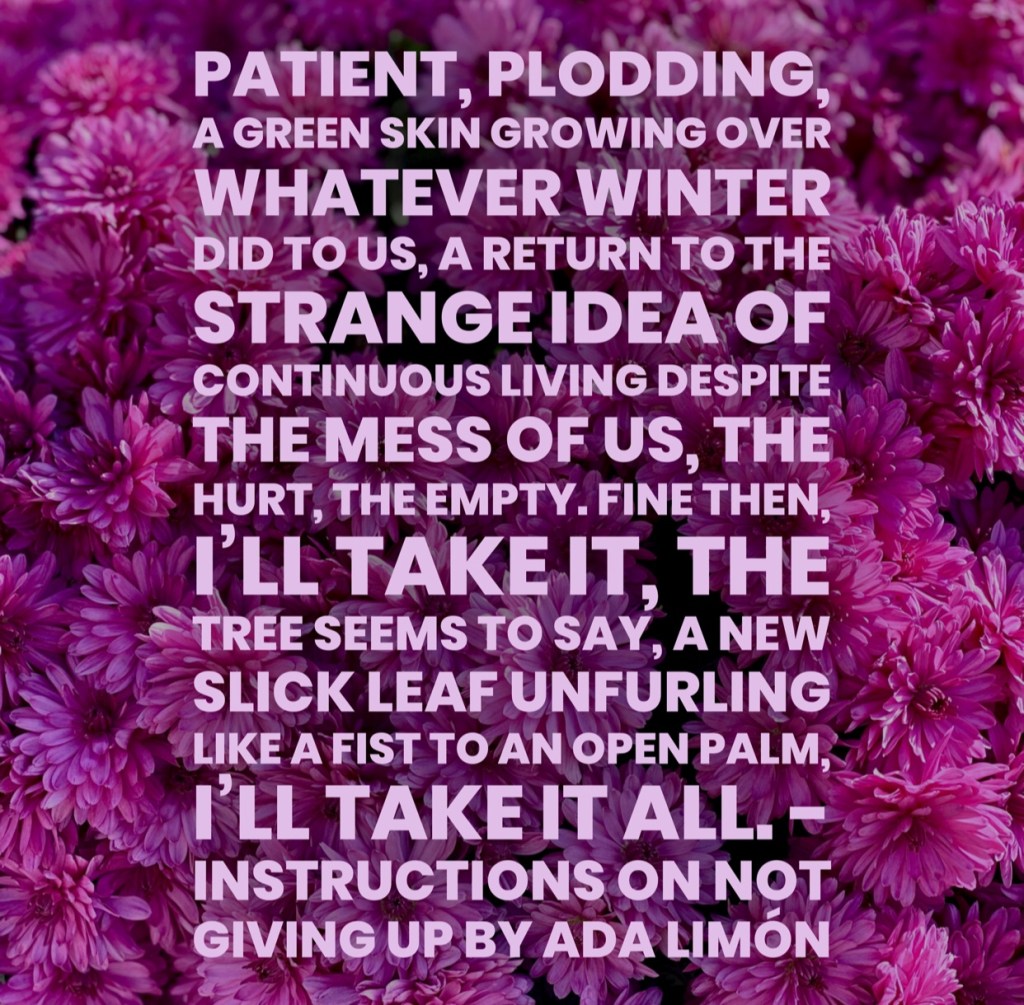
More than the fuchsia funnels breaking out
of the crabapple tree, more than the neighbor’s
almost obscene display of cherry limbs shoving
their cotton candy-colored blossoms to the slate
sky of Spring rains, it’s the greening of the trees
that really gets to me. When all the shock of
     white
and taffy, the world’s baubles and trinkets, leave
the pavement strewn with the confetti of
     aftermath,
the leaves come. Patient, plodding, a green skin
growing over whatever winter did to us, a return
to the strange idea of continuous living despite
the mess of us, the hurt, the empty. Fine then,
I’ll take it, the tree seems to say, a new slick leaf
unfurling like a fist to an open palm, I’ll take it all.
Thanks as always for being a faithful reader of The Voracious Bibliophile. If you like what you see, please like, comment, follow, and subscribe to my email list to get notified of new posts as soon as they drop. You can also email me at fred.slusher@thevoraciousbibliophile.com or catch me on Twitter and Instagram @voraciousbiblog. Keep reading the world, one page (or pixel) at a time.
***Note: I received a free digital review copy of this book from NetGalley in exchange for an honest review.***
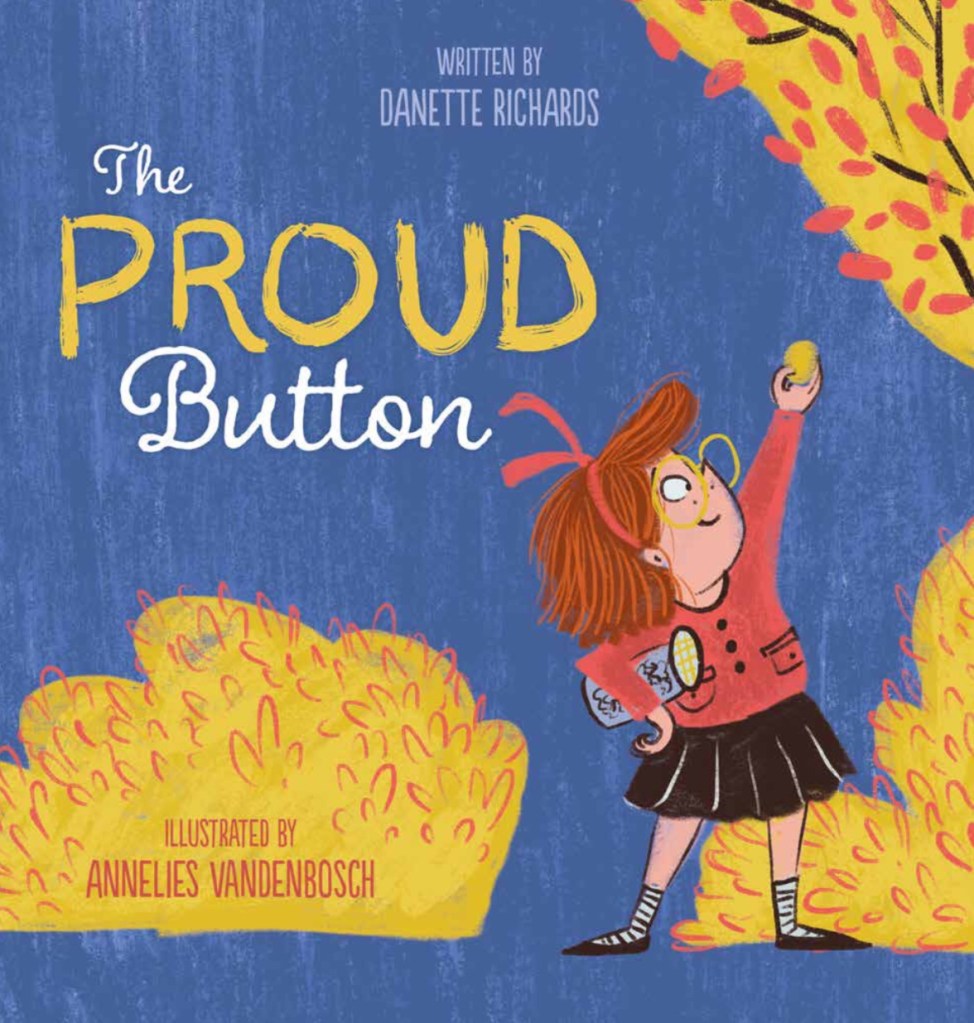
Isabelle is a bright and curious little girl who keeps a jar full of special treasures which she protects as if it were a pot of gold. She lives a happy life for the most part but she is sad because she has a lot of trouble connecting with other kids her age and making friends. Sometimes it’s easier for her to work alone in class or stay in her bedroom admiring the treasures in her treasure jar than it would be for her to work with others or to venture out and play with other children.
One day when Isabelle arrives home from school, she has a letter and a present from her Aunt Nancy waiting for her. The present is a yellow porcelain button her aunt found in a field near an abandoned button factory in France—and it is christened Isabel’s Proud Button—proud because she takes such pride in caring for her treasures.
Perhaps, she thinks, she can treat herself and the people around her the same way she treats her treasures. And maybe, just maybe, this will help her make friends who will value her back.
The notion of taking pride in things you care for strikes a chord in Isabelle. Perhaps, she thinks, she can treat herself and the people around her the same way she treats her treasures. And maybe, just maybe, this will help her make friends who will value her back.
Isabelle’s Proud Button gives her the courage to do just that, and soon she is connecting with others and learning the joys of friendship.
It [The Proud Button] teaches (or reminds) us that there’s nothing wrong with taking pride in the things you own but that it’s much more important to care for the people in your life because your stuff can’t love you back.
The Proud Button is a wonderful story that can be enjoyed by children and adults alike. It teaches (or reminds) us that there’s nothing wrong with taking pride in the things you own but that it’s much more important to care for the people in your life because your stuff can’t love you back.
The Proud Button is due to be released on September 14th, 2021 by Clavis and is now available to preorder wherever books are sold.
Thanks as always for being a faithful reader of The Voracious Bibliophile. If you like what you see, please like, comment, follow, and subscribe to my email list to get notified of new posts as soon as they drop. You can also email me at fred.slusher@thevoraciousbibliophile.com or catch me on Twitter and Instagram @voraciousbiblog. Keep reading the world, one page (or pixel) at a time.

I once read about a burglar’s lantern, made for sneaking around in the dark. A metal box built so not a single ray of light can escape without the owner opening one of its narrow shutters. I’m that flame. Every want I have meets with its metal walls, like a supernova locked in a titanium prison.
***Note: I received a free digital review copy of this book from NetGalley in exchange for an honest review.***
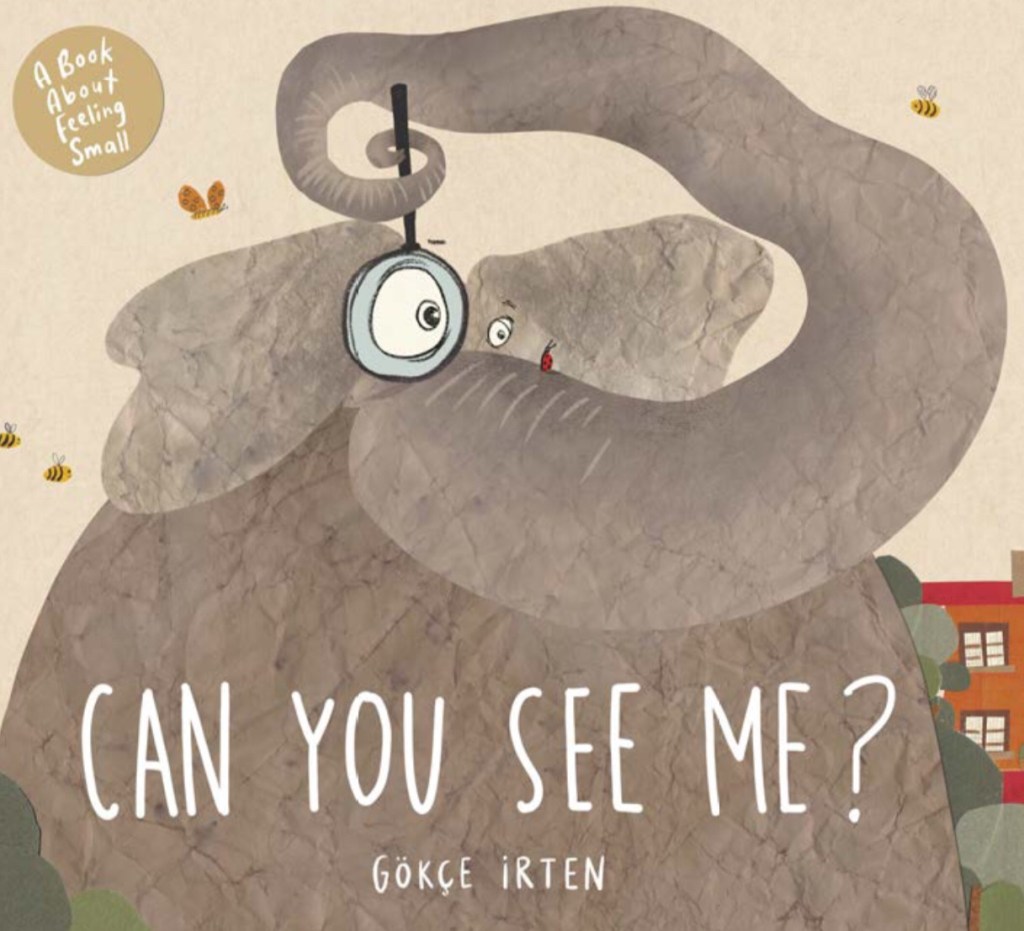
The world is a big and wonderful place but it can also be quite confusing. Why are elephants so big while ants are so tiny? Why do humans have two legs while spiders have eight legs and snakes have no legs? Gökçe İrten does a fantastic job of showing preschool-age children that our world is filled with a diverse array of creatures both big and small and that everything and everyone serves their own unique and special purpose. Can You See Me? is perfect for introducing young audiences to empathy- and perspective-building, and Gökçe İrten’s gorgeously rendered illustrations are sure to delight them as well. Can You See Me? is a book I’ll be eagerly recommending to parents, caregivers, and the children accompanying them.
Can You See Me?: A Book About Feeling Small by Gökçe İrten is due to be released on September 7th, 2021 by Kids Can Press and is now available to preorder wherever books are sold.
Thanks as always for being a faithful reader of The Voracious Bibliophile. If you like what you see, please like, comment, follow, and subscribe to my email list to get notified of new posts as soon as they drop. You can also email me at fred.slusher@thevoraciousbibliophile.com or catch me on Twitter and Instagram @voraciousbiblog. Keep reading the world, one page (or pixel) at a time.
 The Voracious Bibliophile