


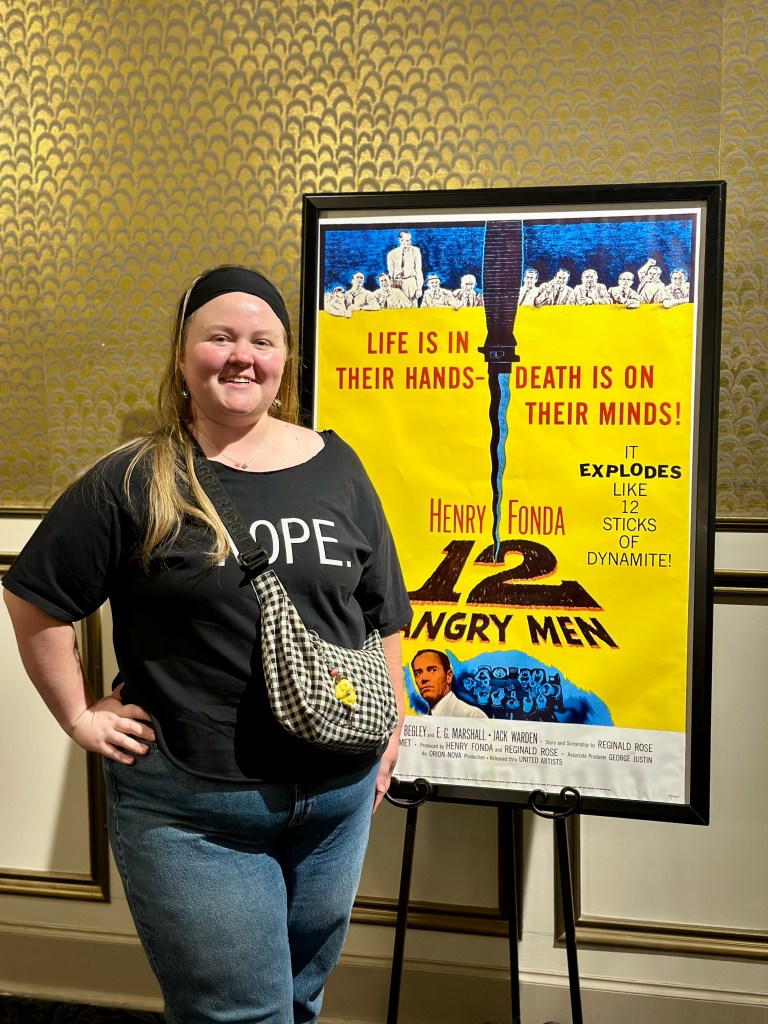


I’m on vacation this week (today is actually my last day), and one of the things I did this week was go on a date with my friend Shelby to the Kentucky Theatre in Lexington to see 12 Angry Men. We are both hardcore cinephiles. She recently made a joke on her Instagram about when she and her sisters were in a vendors mall that looked like the Criterion Closet and she filmed a little clip showing her picks. We love the movies everyone else likely hates, aside from film lovers like ourselves. Our tastes range from the artsy-yet-accessible to the experimental and avant-garde.
I had a recurring thought while 12 Angry Men was playing on the screen: It was highly probable that it had shown in the very screening room we were sitting in during its original run. What a full circle moment.
12 Angry Men made the third film we’ve seen in this theater (the first two were The Brutalist and I’m Still Here), which is one of the oldest in Kentucky. It has been in operation ever since the 1920s, so it feels particularly poignant and weighty in the best way to sit and watch a film here. I had a recurring thought while 12 Angry Men was playing on the screen: It was highly probable that it had shown in the very screening room we were sitting in during its original run. What a full circle moment.
If you’ve never had the chance to watch it, it’s truly one of the most electrifying and relevant films ever made. I feel like it’s more relevant now than it was in 1957. Directed by Sidney Lumet in his directorial debut, 12 Angry Men stars an ensemble cast which includes Henry Fonda, Lee J. Cobb, and Ed Begley. The story follows a jury of 12 men in a deliberation room after hearing a case of a young man (still a teenager) accused of killing his father. All the flimsy yet convenient circumstantial evidence points to his overwhelming guilt. On the surface level, it is easy to not see any possible reason why it was not this young man who killed his father. However, hesitant to end a man’s life without being absolutely certain of his guilt, Juror 8 (Henry Fonda) insists the men carefully review the facts of the case before they send him on his way to the electric chair.
All the flimsy yet convenient circumstantial evidence points to his overwhelming guilt.
12 Angry Men is one of those brilliant films that uses an enclosed space (these films are commonly referred to as chamber pieces) to heighten dramatic tension and force the characters therein to reckon with not only each other, but with themselves, on the deepest and most human level. The only other chamber piece I can think of that does this as well as 12 Angry Men is Rear Window, although an argument can also be made for The Shining. But I don’t think it’s fair to even call The Shining a chamber piece when there’s a significant portion of the film that occurs outside the Overlook Hotel.
12 Angry Men is one of those brilliant films that uses an enclosed space (these films are commonly referred to as chamber pieces) to heighten dramatic tension and force the characters therein to reckon with not only each other, but with themselves, on the deepest and most human level.
I’m not going to spoil how the rest of the movie goes, mainly because I want everyone alive in the Age of Trump to watch it. It has a lot of very important things to say about democracy, the pitfalls of a mob mentality, due process, and who is entitled to due process. It absolutely astounds me that this film didn’t receive any acting nominations at the Academy Awards, although it was nominated for Best Picture, Best Director, and Best Adapted Screenplay. Fonda himself should have been nominated for Best Actor. Lee J. Cobb and Joseph Sweeney also should have been nominated as Best Supporting Actors.

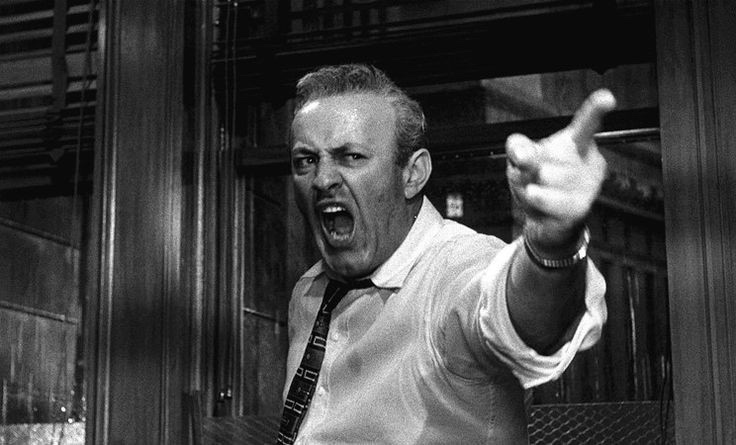


The Kentucky Theatre is doing a Summer Classics series with more classic film showings throughout the summer and I hope we’re able to go and see more of them. For anyone reading this, I want to encourage you to support your local theater in any way you can. Cinema is a living art form that teaches us not only about our past, present, and future, but offers us possibilities about other ways of living. About the ways in which other people live and love and believe and dream. Cinema at its core is a vehicle for empathy. There’s something sacred and profound about sitting a room with other people, watching the same moving image at the same time, and feeling a part of a conversation that started long before you were born and will be going on long after you’re dead. It is a holy space of being unlike any other in the world, and it deserves to be cherished and protected. It transmutes grief into hope, isolation into community, and sorrow into profoundest joy.
It [the cinema] is a holy space of being unlike any other in the world, and it deserves to be cherished and protected. It transmutes grief into hope, isolation into community, and sorrow into profoundest joy.
Thanks as always for being a faithful reader of The Voracious Bibliophile. If you like what you see, please like, comment, follow, and subscribe to my email list to get notified of new posts as soon as they drop. You can also email me at fred.slusher@thevoraciousbibliophile.com or catch me on Twitter, Instagram, TikTok, and Pinterest @voraciousbiblog. Keep reading the world, one page (or pixel) at a time.
 The Voracious Bibliophile